



DPN
Based on 17 publication(s) in Google Scholar
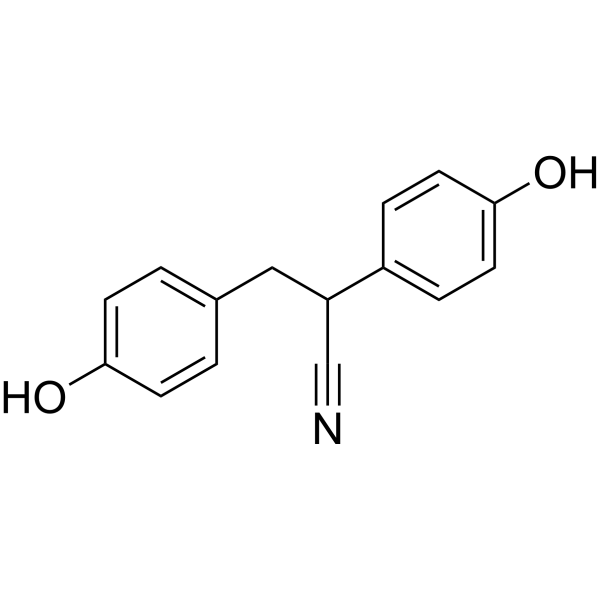
DPN (Diarylpropionitrile) is a non-steroidal estrogen receptor β (ERβ) selective ligand, with an EC50 of 0.85 nM. DPN has neuroprotective effects in a number of neurological diseases.
For research use only. We do not sell to patients.
- Purity : 99.66%
- CAS No.: 1428-67-7
- Formula: C15H13NO2
- Molecular Weight:239.27
-
Storage:Powder -20°C, 3 years , 4°C, 2 years ; In solvent -80°C, 2 years , -20°C, 1 year

To place orders, for customer services and technical support, please contact: MedChemExpress USA
Tel: 609-228-6898 E-mail: [email protected] [email protected]


-
 Biological Activity
-
Chemical Information
-
Solvent & Solubility
- Protocols
- Purity & Documentation
- References
-
 Help & FAQs


-
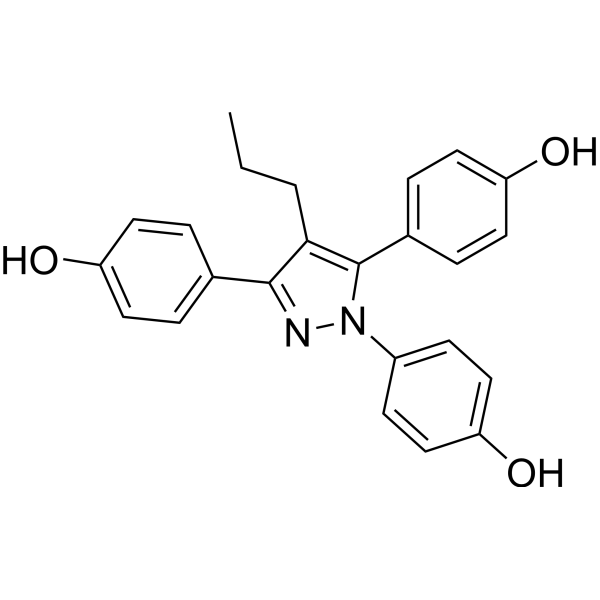
HY-100689
Propyl pyrazole triolERα Agonist -
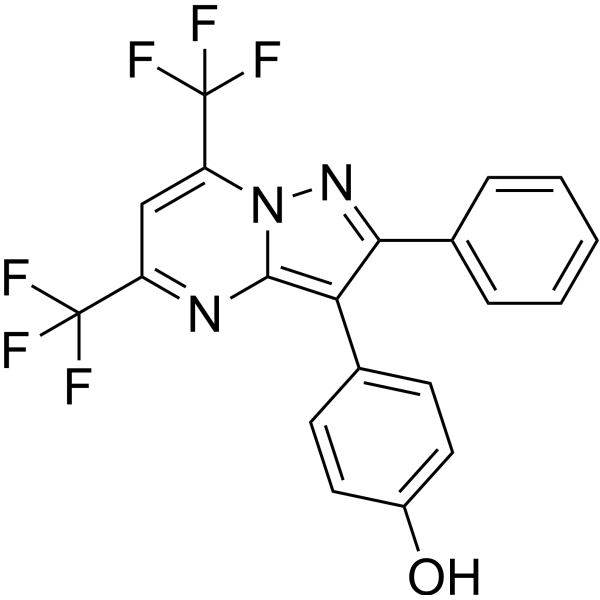
HY-103456
PHTPPERβ Antagonist -
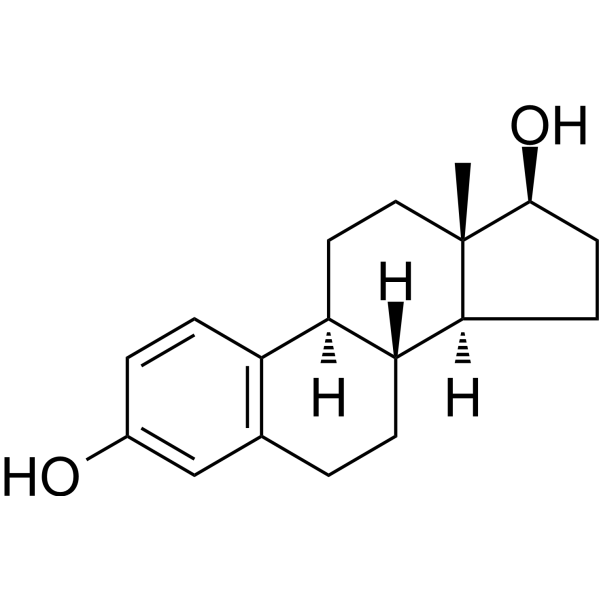
HY-B0141
EstradiolHuman Endogenous Metabolite -
HY-107216
G-1Estrogen Receptor/ERR Agonist -
HY-13636
FulvestrantEstrogen Receptor Antagonist -
HY-103449
G15GPR30 Antagonist -
HY-B0141R
Estradiol (Standard) -
HY-103450
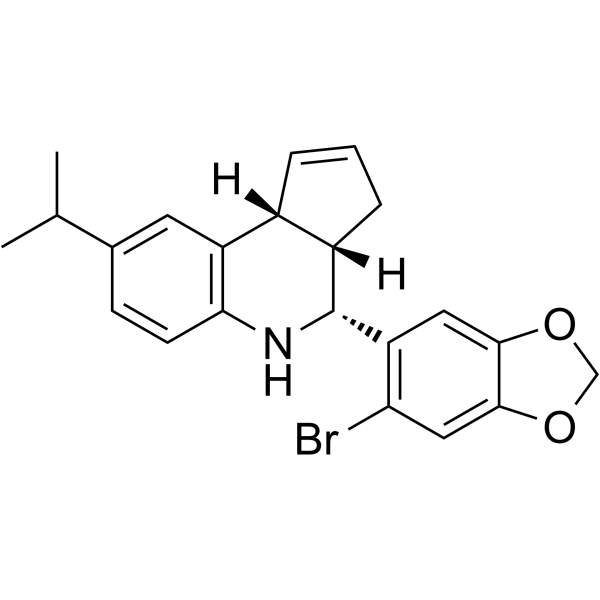
G36GPER/GPR30 Antagonist -
HY-12870
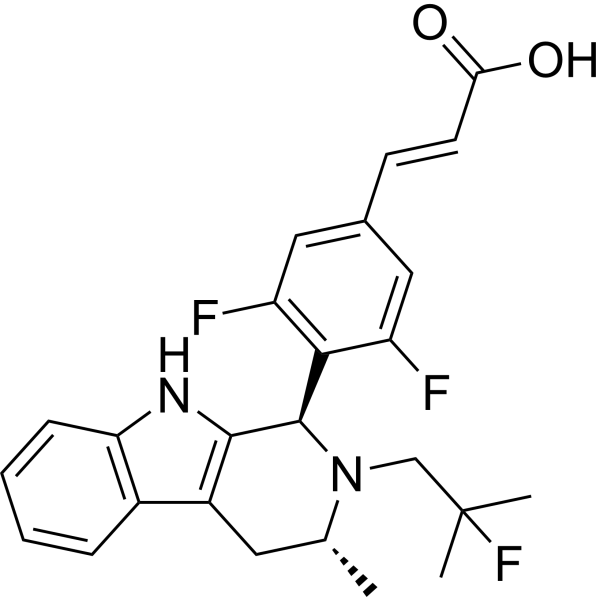
AZD9496ERα Antagonist -
HY-103454
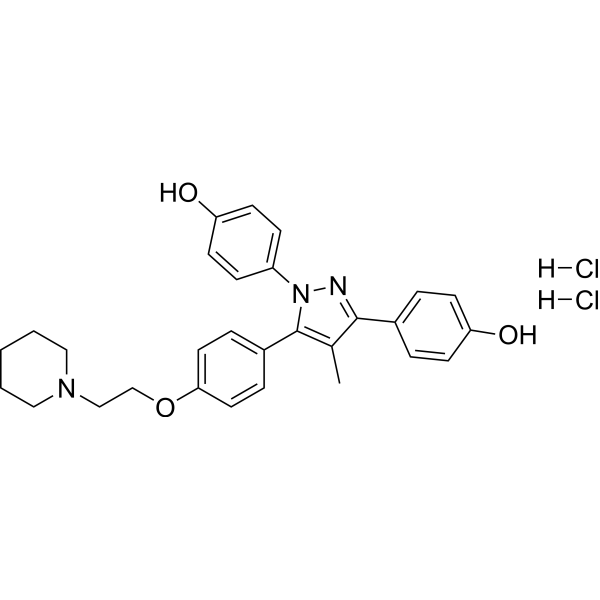
MPP dihydrochlorideER Modulator -
HY-14933
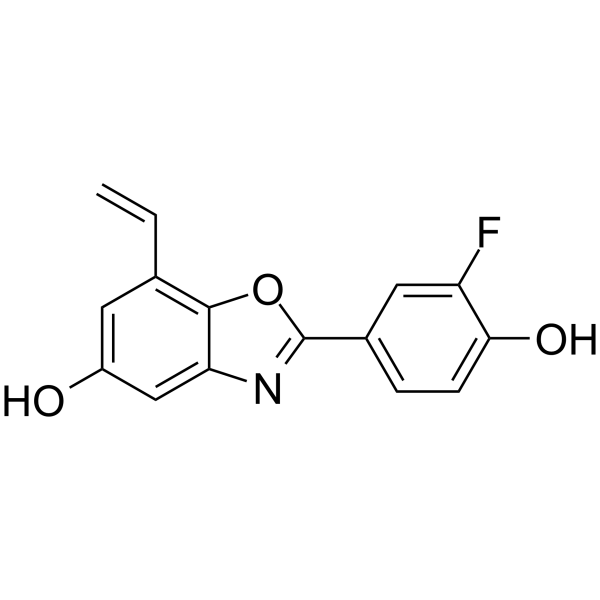
PrinaberelERβ Agonist -

HY-12452R
DPN (Standard)ERβ Agonist
Publications Citing Use of MedChemExpress (MCE) DPN
More- Cell Death Dis. 2021 Oct 5;12(10):907. [Abstract]
- Cell Death Dis. 2019 Jul 22;10(8):565. [Abstract]
- J Genet Genomics. 2024 Jun;51(6):617-629. [Abstract]
- Transl Psychiatry. 2024 Jul 12;14(1):283. [Abstract]
- Front Immunol. 2022 May 19;13:818173. [Abstract]
- Ecotoxicol Environ Saf. 2023 Jul 1:259:115060. [Abstract]
- Eur J Pharmacol. 2022 Jun 5;924:174939. [Abstract]
- J Clin Endocrinol Metab. 2021 Apr 23;106(5):1410-1426. [Abstract]
- Molecules. 2020 Apr 23;25(8):1960. [Abstract]
- Sci Rep. 2025 May 8;15(1):16053. [Abstract]
- J Dairy Sci. 2026 Jan 20:S0022-0302(26)00013-5. [Abstract]
- J Cell Mol Med. 2026 Jan;30(1):e71000. [Abstract]
- iScience. 2024 Jul 25;27(9):110585. [Abstract]
- Appl Biochem Biotechnol. 2022 Jun;194(6):2492-2502. [Abstract]
- Behav Brain Res. 2024 Jul 26:470:115094. [Abstract]
- J Gastrointest Oncol. 2020 Dec;11(6):1200-1213. [Abstract]
- J Cancer Ther. 2022 Mar;13(3):117-130. [Abstract]
 Customer Validation & Images

-
Histological Imaging/Staining
-
Flow Cytometry
-
Cell Imaging/Staining
-
WB
-
Cell Proliferation/Viability Assay


Biological Activity
Description
IC50 & Target
[1]|
ERβ 0.85 nM (EC50) |
Cellular Effect
|
Cell Line

|
Type | Value | Description | References |
|---|---|---|---|---|
| HEC-1 | EC50 |
0.85 nM
Compound: rac-5
|
Agonist activity at ERbeta expressed in human HEC1 cells assessed as transcriptional potency after 24 hrs by luciferase-beta galactosidase reporter gene assay
Agonist activity at ERbeta expressed in human HEC1 cells assessed as transcriptional potency after 24 hrs by luciferase-beta galactosidase reporter gene assay
|
[PMID: 19286283] |
| HEC-1 | EC50 |
3.3 nM
Compound: 1, rac-DPN
|
Agonist activity at human ERbeta expressed in HEC-1 cells coexpressing beta-gal assessed as luciferase activity after 24 hrs by reporter gene assay
Agonist activity at human ERbeta expressed in HEC-1 cells coexpressing beta-gal assessed as luciferase activity after 24 hrs by reporter gene assay
|
[PMID: 22122563] |
| HEC-1 | EC50 |
304 nM
Compound: 1, rac-DPN
|
Agonist activity at human ERalpha expressed in HEC-1 cells coexpressing beta-gal assessed as luciferase activity after 24 hrs by reporter gene assay
Agonist activity at human ERalpha expressed in HEC-1 cells coexpressing beta-gal assessed as luciferase activity after 24 hrs by reporter gene assay
|
[PMID: 22122563] |
| HEC-1 | EC50 |
66 nM
Compound: rac-5
|
Agonist activity at ERalpha expressed in human HEC1 cells assessed as transcriptional potency after 24 hrs by luciferase-beta galactosidase reporter gene assay
Agonist activity at ERalpha expressed in human HEC1 cells assessed as transcriptional potency after 24 hrs by luciferase-beta galactosidase reporter gene assay
|
[PMID: 19286283] |
| U2OS | EC50 |
208 nM
Compound: 1, rac-DPN
|
Agonist activity at human ERalpha expressed in U2OS cells coexpressing pCMX-hSRC3 assessed as luciferase activity after 24 hrs by reporter gene assay
Agonist activity at human ERalpha expressed in U2OS cells coexpressing pCMX-hSRC3 assessed as luciferase activity after 24 hrs by reporter gene assay
|
[PMID: 22122563] |
| U2OS | EC50 |
3.7 nM
Compound: 1, rac-DPN
|
Agonist activity at human ERbeta expressed in U2OS cells coexpressing pCMX-hSRC3 assessed as luciferase activity after 24 hrs by reporter gene assay
Agonist activity at human ERbeta expressed in U2OS cells coexpressing pCMX-hSRC3 assessed as luciferase activity after 24 hrs by reporter gene assay
|
[PMID: 22122563] |
In Vitro
DPN has a 70-fold ERα relative binding affinity selectivity, and it is a full ERα agonist with a 78-fold ERα potency selectivity (EC50=0.85 nM for ERβ; EC50=66 nM for ERα)[1].
DPN (10 nM) prevents morphological alterations from Aβ1-42 (10 μM)-induced toxicity in cultured cortical neurons[2].
DPN (0.1-100 nM) decreases ROS levels in a non-dose response manner[2].
DPN (0.1-100 nM) significantly reduces Aβ1-42-stimulated expression of Bax in a non-dose dependent manner[2].
DPN (0.1-100 nM) reduces activated IL-1 levels induced by Aβ1-42 treatment on cultured cortical neurons[2].
DPN (0.1-100 nM) suppresses the Aβ1-42-upregulated phosphorylation of JNK and p38[2].
MedChemExpress (MCE) has not independently confirmed the accuracy of these methods. They are for reference only. Further protocols information, click here.
In Vivo
MedChemExpress (MCE) has not independently confirmed the accuracy of these methods. They are for reference only.
-
Animal Model:Adult Sprague-Dawley female rats (220-250 g), ovariectomized animal models[3]
-
Dosage:10 μg/rat
-
Administration:Subcutaneous injections, daily, for 11 days
-
Result:Increased swimming and decreased immobility in the FST.


Chemical Information
-
CAS No. 1428-67-7
-
Appearance Solid
-
Molecular Weight 239.27
-
Formula C15H13NO2
-
Color White to off-white
-
SMILES
OC1=CC=C(CC(C#N)C2=CC=C(O)C=C2)C=C1
-
Synonyms
Diarylpropionitrile
-
Shipping
Room temperature in continental US; may vary elsewhere.
-
Storage
Powder -20°C 3 years 4°C 2 years In solvent -80°C 2 years -20°C 1 year


Publications (17)
-
Journal Impact Factor
-
Most Recent
-
Cell Death Dis
Astrocytic YAP prevents the demyelination through promoting expression of cholesterol synthesis genes in experimental autoimmune encephalomyelitis. [Abstract]2021 Oct 5;12(10):907. PMID: 34611127 -
Cell Death Dis
2019 Jul 22;10(8):565. PMID: 31332160
DPN purchased from MedChemExpress. Usage Cited in: Cell Death Dis. 2019 Jul 22;10(8):565. [Abstract]
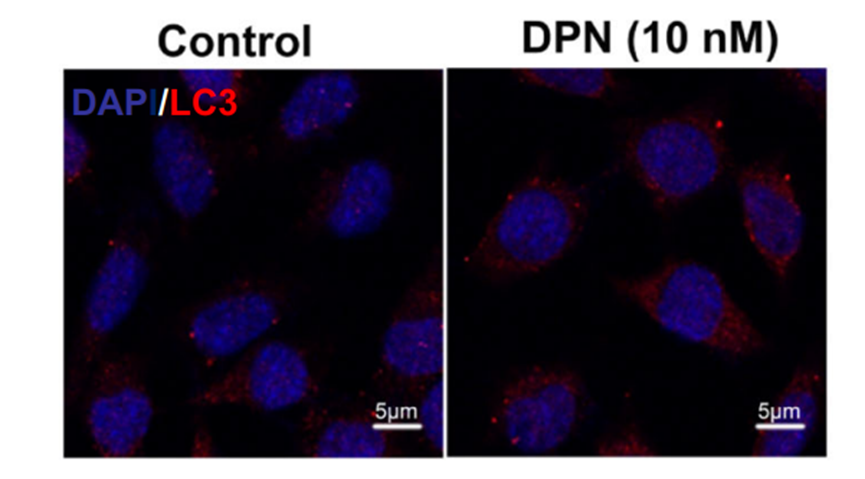
Cells were treated with DPN (10 nM), the cytoplasm distribution of endogenous LC3 punctate structures was observed by confocal microscopy in SH-SY5Y cells.
DPN purchased from MedChemExpress. Usage Cited in: Cell Death Dis. 2019 Jul 22;10(8):565. [Abstract]
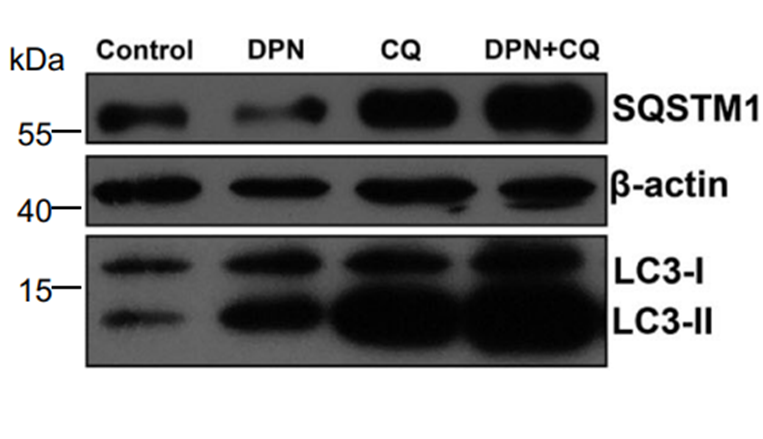
Cells were treated with DPN (10 nM), CQ (10 μM), and DPN plus CQ for 12 h. Cell lysates were analyzed by immunoblotting for LC3-II, SQSTM1, and β-actin protein expression.
DPN purchased from MedChemExpress. Usage Cited in: Cell Death Dis. 2019 Jul 22;10(8):565. [Abstract]
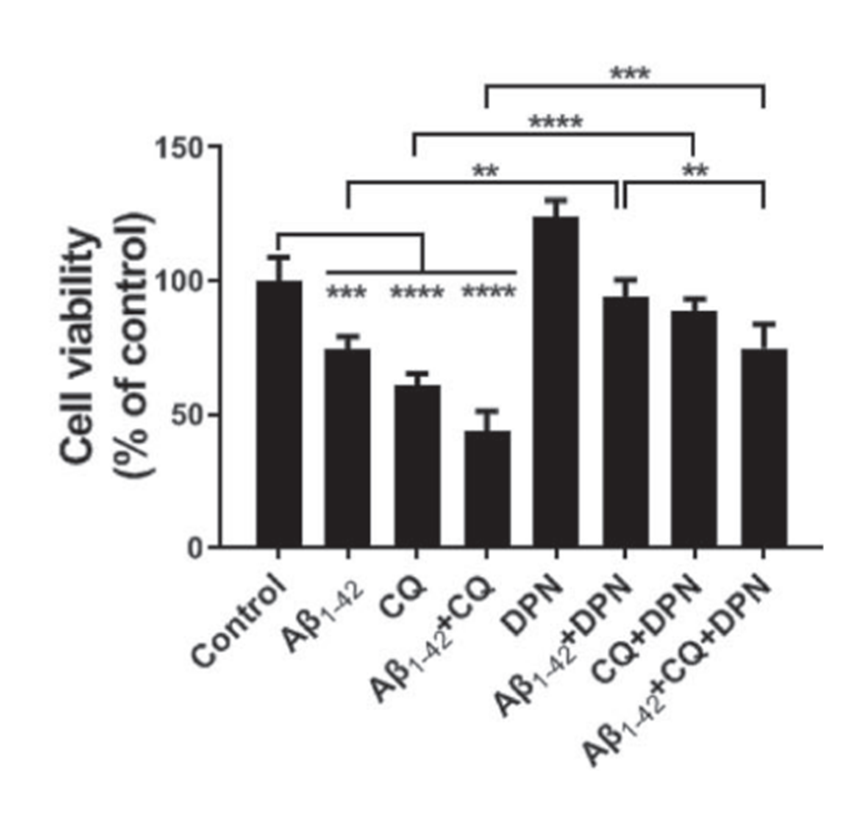
Cells were treated with DPN (10 nM) or Aβ1–42 (5 μM) for 12 h and then added CQ (10 μM) for another 12 h. The MTT assay was used to test cell viability.
-
J Genet Genomics
ERβ-activated LINC01018 promotes endometriosis development by regulating the CDC25C/CDK1/CyclinB1 pathway. [Abstract]2024 Jun;51(6):617-629. PMID: 38224945 -
Transl Psychiatry
Estrogen receptor beta signaling enhances extinction memory recall for heroin-conditioned cues in a sex- and region-specific manner. [Abstract]2024 Jul 12;14(1):283. PMID: 38997258 -
Front Immunol
Estrogen Acts Through Estrogen Receptor-β to Promote Mannan-Induced Psoriasis-Like Skin Inflammation. [Abstract]2022 May 19;13:818173. PMID: 35663991
DPN purchased from MedChemExpress. Usage Cited in: Front Immunol. 2022 May 19;13:818173. [Abstract]
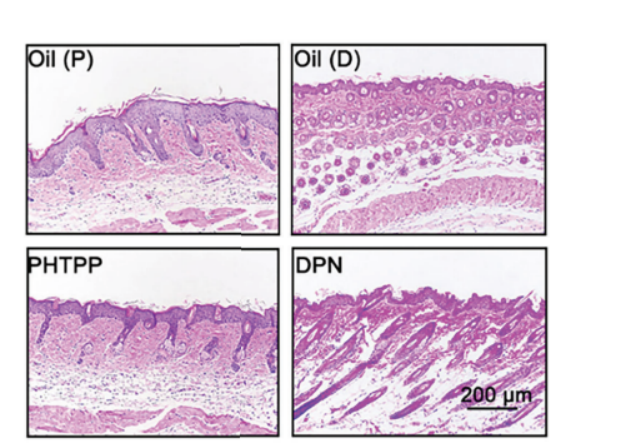
Epidermal thickness decreased after PHTPP treatment but increased after DPN (12 mg/kg, s.c.) injection by H&E-stained.
DPN purchased from MedChemExpress. Usage Cited in: Front Immunol. 2022 May 19;13:818173. [Abstract]
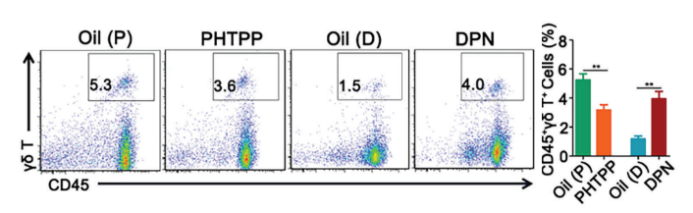
γδ T+ cells in the draining lymph nodes from female and male mice, OVX and sham operated mice, DPN (12 mg/kg, s.c.) treated mice with and without mannan application.
-
Ecotoxicol Environ Saf
Bisphenol A interferes with lncRNA Fhadlos2 and RUNX3 association in adolescent mouse ovary. [Abstract]2023 Jul 1:259:115060. PMID: 37229876 -
Eur J Pharmacol
Estradiol reduced 5-HT reuptake by downregulating the gene expression of Plasma Membrane Monoamine Transporter (PMAT, Slc29a4) through estrogen receptor β and the MAPK/ERK signaling pathway. [Abstract]2022 Jun 5;924:174939. PMID: 35398393 -
J Clin Endocrinol Metab
2021 Apr 23;106(5):1410-1426. PMID: 33524147 -
Molecules
Apigenin Inhibits Histamine-Induced Cervical Cancer Tumor Growth by Regulating Estrogen Receptor Expression. [Abstract]2020 Apr 23;25(8):1960. PMID: 32340124 -
Sci Rep
Estrogen regulates duodenal calcium absorption and improves postmenopausal osteoporosis by the effect of ERβ on PMCA1b. [Abstract]2025 May 8;15(1):16053. PMID: 40341576 -
J Dairy Sci
ERα-NOS/NO/cGMP/PKG-mTOR/KITL/FOXO3a signaling cascade mediates estrogen-induced primordial follicle activation in goats. [Abstract]2026 Jan 20:S0022-0302(26)00013-5. PMID: 41570914 -
J Cell Mol Med
Betulinic Acid Suppresses UBE2T Expression via MAPK/ERK Inhibition to Block FANCI and FANCD2 Monoubiquitination in Glioblastoma. [Abstract]2026 Jan;30(1):e71000. PMID: 41486508 -
iScience
Reiterated male-to-female violence disrupts hippocampal estrogen receptor β expression, prompting anxiety-like behavior. [Abstract]2024 Jul 25;27(9):110585. PMID: 39228787 -
Appl Biochem Biotechnol
ERα, but not ERβ and GPER, Mediates Estradiol-Induced Secretion of TSH in Mouse Pituitary. [Abstract]2022 Jun;194(6):2492-2502. PMID: 35138554 -
Behav Brain Res
Selective estrogen receptor activation prior to global cerebral ischemia in female rats impacts microglial activation and anxiety-like behaviors without effects on CA1 neuronal injury. [Abstract]2024 Jul 26:470:115094. PMID: 38844057 -
J Gastrointest Oncol
N-myc downstream-regulated gene 2 promotes the protein stability of estrogen receptor beta via inhibition of ubiquitin-protein ligase E3A to suppress colorectal cancer. [Abstract]2020 Dec;11(6):1200-1213. PMID: 33456993 -
J Cancer Ther
2022 Mar;13(3):117-130. PMID: 36311820


Solvent & Solubility
In Vitro:
DMSO : 100 mg/mL (417.93 mM; Need ultrasonic; Hygroscopic DMSO has a significant impact on the solubility of product, please use newly opened DMSO)
Please refer to the solubility information to select the appropriate solvent. Once prepared, please aliquot and store the solution to prevent product inactivation from repeated freeze-thaw cycles.
Storage method and period of stock solution: -80°C, 2 years; -20°C, 1 year. When stored at -80°C, please use it within 2 years. When stored at -20°C, please use it within 1 year.
Please refer to the solubility information to select the appropriate solvent. Once prepared, please aliquot and store the solution to prevent product inactivation from repeated freeze-thaw cycles.
Storage method and period of stock solution: -80°C, 2 years; -20°C, 1 year. When stored at -80°C, please use it within 2 years. When stored at -20°C, please use it within 1 year.
Concentration (start) × Volume (start) = Concentration (final) × Volume (final)
In Vivo:
Select the appropriate dissolution method based on your experimental animal and administration route.
- For the following dissolution methods, please ensure to first prepare a clear stock solution using an In Vitro approach and then sequentially add co-solvents:
- To ensure reliable experimental results, the clarified stock solution can be appropriately stored based on storage conditions. As for the working solution for In Vivo experiments, it is recommended to prepare freshly and use it on the same day.
- The percentages shown for the solvents indicate their volumetric ratio in the final prepared solution. If precipitation or phase separation occurs during preparation, heat and/or sonication can be used to aid dissolution.
Add each solvent one by one: 10% DMSO 40% PEG300 5% Tween-80 45% Saline
Solubility: ≥ 2.5 mg/mL (10.45 mM); Clear solution
This protocol yields a clear solution of ≥ 2.5 mg/mL (saturation unknown).
Taking 1 mL working solution as an example, add 100 μL DMSO stock solution (25.0 mg/mL) to 400 μL PEG300, and mix evenly; then add 50 μL Tween-80 and mix evenly; then add 450 μL Saline to adjust the volume to 1 mL.
Preparation of Saline: Dissolve 0.9 g sodium chloride in ddH₂O and dilute to 100 mL to obtain a clear Saline solution.
Add each solvent one by one: 10% DMSO 90% (20% SBE-β-CD in Saline)
Solubility: ≥ 2.5 mg/mL (10.45 mM); Clear solution
This protocol yields a clear solution of ≥ 2.5 mg/mL (saturation unknown).
Taking 1 mL working solution as an example, add 100 μL DMSO stock solution (25.0 mg/mL) to 900 μL 20% SBE-β-CD in Saline, and mix evenly.
Preparation of 20% SBE-β-CD in Saline (4°C, storage for one week): 2 g SBE-β-CD powder is dissolved in 10 mL Saline, completely dissolve until clear.
In Vivo Dissolution Calculator
Please enter the basic information of animal experiments:
-
-
-
-
Recommended: Prepare an additional quantity of animals to account for potential losses during experiments.
Please enter your animal formula composition:
-
%DMSO +
Recommended: Keep the proportion of DMSO in working solution below 2% if your animal is weak.
-
%+
-
+%Tween-80 + +
-
%Saline +
The co-solvents required include: DMSO, . All of co-solvents are available by MedChemExpress (MCE). , Tween 80. All of co-solvents are available by MedChemExpress (MCE).
Working solution concentration: 0.22 mg/mL
Method for preparing stock solution: mg drug dissolved in μL DMSO. Stock solution concentration: mg/mL.
1. Take μL DMSO stock solution;
2. Add μL .
μL , mix evenly;
3. Then add μL Tween 80, mix evenly;
4. Then add μL
Please ensure that the stock solution in the first step is dissolved to a clear state, and add co-solvents in sequence. You can use ultrasonic heating (ultrasonic cleaner, recommended frequency 20-40 kHz), vortexing, etc. to assist dissolution.

Protocols
-
Research Protocol for Endocrine Diseases
Endocrine diseases often arise from disrupted hormone production, hormone signaling, or target-tissue responsiveness; for diabetes-focused endocrine disease models, insulin signaling regulates glucose uptake, hepatic glucose output, lipid metabolism, and β-cell compensation. Type 2 diabetes develops through interacting defects in insulin resistance, β-cell dysfunction, adipose inflammation, hepatic glucose overproduction, altered incretin signaling, and ectopic lipid metabolism. A major unresolved question is whether endocrine dysfunction is driven primarily by target-tissue insulin resistance, intrinsic β-cell failure, immune/inflammatory stress, or combined multi-organ failure that differs by disease stage.


Purity & Documentation
-
Data Sheet (274 KB)
-
SDS (537 KB)
- English - EN (537 KB)
- Français - FR (537 KB)
- Deutsch - DE (537 KB)
- Norwegian - NO (537 KB)
- Español - ES (537 KB)
- Swedish - SV (537 KB)
- Italian - IT (537 KB)
- Korean - KR (537 KB)
- Portuguese - PT (537 KB)
-
Handling Instructions (2659 KB)
References
[1]. Meyers, M. J., et al. Estrogen Receptor-β Potency-Selective Ligands: Structure−Activity Relationship Studies of Diarylpropionitriles and Their Acetylene and Polar Analogues. Journal of Medicinal Chemistry, 2001. 44(24), 4230–4251. [Content Brief]
[2]. Suwanna N, et al. Neuroprotective effects of diarylpropionitrile against β-amyloid peptide-induced neurotoxicity in rat cultured cortical neurons. Neurosci Lett. 2014 Aug 22;578:44-9. [Content Brief]
[3]. Fuzhong Yang, et al. Physiological dosages of estradiol and diarylpropionitrile decrease depressive behavior and increase tryptophan hydroxylase expression in the dorsal raphe nucleus of rats subjected to the forced swim test. Neuroreport. 2019 Jan 16;30(2):66-70. [Content Brief]
[4]. Sherry A. Said, et al. Effects of long-term dietary administration of estrogen receptor-beta agonist diarylpropionitrile on ovariectomized female ICR (CD-1) mice. GeroScience. 2018 Aug; 40(4): 393–403. [Content Brief]


Complete Stock Solution Preparation Table
Please refer to the solubility information to select the appropriate solvent. Once prepared, please aliquot and store the solution to prevent product inactivation from repeated freeze-thaw cycles.
Storage method and period of stock solution: -80°C, 2 years; -20°C, 1 year. When stored at -80°C, please use it within 2 years. When stored at -20°C, please use it within 1 year.
| Optional Solvent | Concentration Solvent Mass | 1 mg | 5 mg | 10 mg | 25 mg |
|---|---|---|---|---|---|
| DMSO | 1 mM | 4.1793 mL | 20.8965 mL | 41.7931 mL | 104.4827 mL |
| 5 mM | 0.8359 mL | 4.1793 mL | 8.3586 mL | 20.8965 mL | |
| 10 mM | 0.4179 mL | 2.0897 mL | 4.1793 mL | 10.4483 mL | |
| 15 mM | 0.2786 mL | 1.3931 mL | 2.7862 mL | 6.9655 mL | |
| 20 mM | 0.2090 mL | 1.0448 mL | 2.0897 mL | 5.2241 mL | |
| 25 mM | 0.1672 mL | 0.8359 mL | 1.6717 mL | 4.1793 mL | |
| 30 mM | 0.1393 mL | 0.6966 mL | 1.3931 mL | 3.4828 mL | |
| 40 mM | 0.1045 mL | 0.5224 mL | 1.0448 mL | 2.6121 mL | |
| 50 mM | 0.0836 mL | 0.4179 mL | 0.8359 mL | 2.0897 mL | |
| 60 mM | 0.0697 mL | 0.3483 mL | 0.6966 mL | 1.7414 mL | |
| 80 mM | 0.0522 mL | 0.2612 mL | 0.5224 mL | 1.3060 mL | |
| 100 mM | 0.0418 mL | 0.2090 mL | 0.4179 mL | 1.0448 mL |


DPN Related Classifications
HY-12452 Related Classifications
 Powered by Bioz