Endocrinology
-
Endocrinology Related Products (3775)
Related Products (3775)

-
Antibodies (4)
-
Related Compound Screening Libraries (1)
-
ZD-7114 hydrochloride
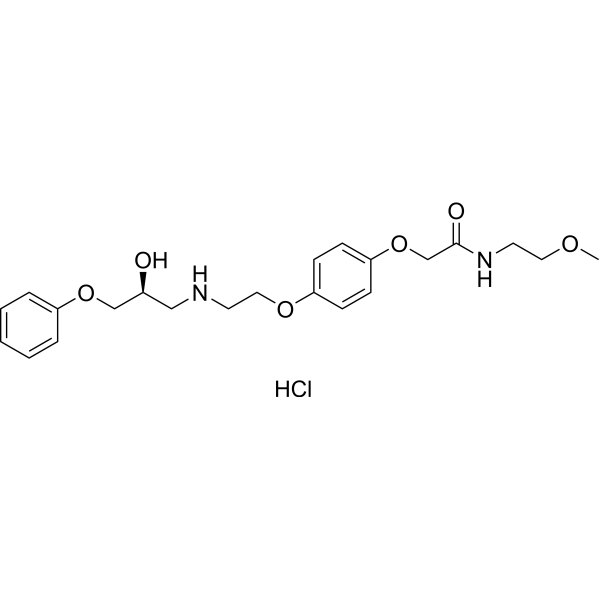 0 ImagesCat. No.: HY-101320ACAS No.: 129689-28-7Synonyms: ICI-D 7114 hydrochloride
ZD-7114 hydrochloride is a potent and selective agonist of β3-adrenergic. ZD-7114 hydrochloride is a selective thermogenic agent in vivo. ZD-7114 hydrochloride can be used in study obesity and diabetes.
-
C20 Sphingomyelin (d18:1/20:0)
 0 ImagesCat. No.: HY-145549CAS No.: 121999-68-6Synonyms: N-eicosanoyl-D-erythro-Sphingosylphosphorylcholine; SM(d18:1/20:0)
C20 Sphingomyelin (d18:1/20:0) (N-eicosanoyl-D-erythro-Sphingosylphosphorylcholine; SM(d18:1/20:0)) is a naturally occurring sphingolipid. C20 Sphingomyelin (d18:1/20:0) levels are upregulated in the hippocampus of streptozotocin (HY-13753)-induced diabetic rats and in human plasma, positively correlating with insulin resistance in obese humans. C20 Sphingomyelin (d18:1/20:0) is also upregulated in the liver of a mouse model of Niemann-Pick C1 disease, a neurodegenerative cholesterol sphingolipid lysosomal storage disorder.
-
Adrenosterone-13C3
 0 ImagesCat. No.: HY-W759219Synonyms: (+)-Adrenosterone-13C3; 11-Keto-androstedione-13C3
Adrenosterone-13C3 ((+)-Adrenosterone-13C3) is the 13C-labeled Adrenosterone (HY-17462). Adrenosterone ((+)-Adrenosterone) is a competitive hydroxysteroid (11-beta) dehydrogenase 1 (HSD11β1) inhibitor. Adrenosterone is a steroid hormone with weak androgenic effect. Adrenosterone is a dietary supplement that can decrease fat and increase muscle mass. Adrenosterone acts as a suppressor of metastatic progression of human cancer cells.
-
(E)-RNB-61
 0 ImagesCat. No.: HY-163825ACAS No.: 1217403-51-4
-
HIPK2-IN-1
 0 ImagesCat. No.: HY-189140
HIPK2-IN-1 is an orally active and selective HIPK2 inhibitor with an IC50 of 0.56 μM. HIPK2-IN-1 exerts antifibrotic and anti-inflammatory activities. HIPK2-IN-1 binds to HIPK2, inhibits the downstream TGF‑β/Smad3, p53, and TNF‑α/NF‑κB signaling pathways, reduces the expression of fibrotic markers, suppresses cell proliferation and migration, and alleviates renal tubular injury and collagen deposition. HIPK2-IN-1 is used for the study of renal fibrosis associated with chronic kidney disease.
-
CDD-1132
 0 ImagesCat. No.: HY-177145CAS No.: 2757619-83-1
CDD-1132 (Compound 8) is a potent inhibitor of BRDT-BD2. CDD-1132 has an IC50 of 13 nM against BRDT-BD2. CDD-1132 can be studied in research on nonhormonal contraceptive agent.
-
α-Glucosidase-IN-4
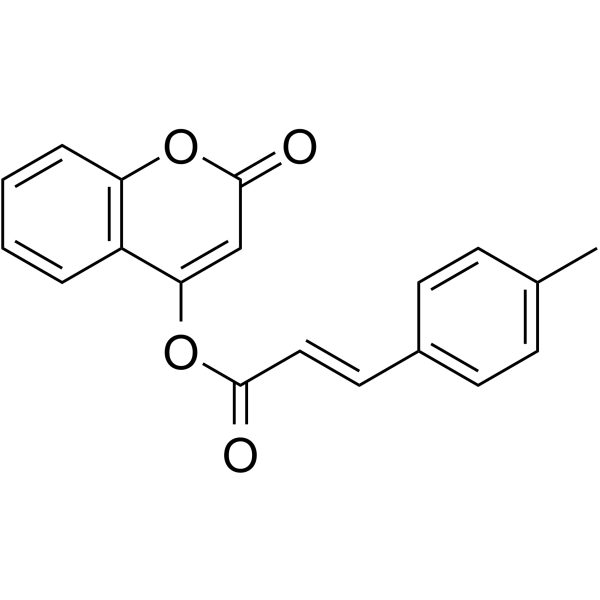 0 Images
α-Glucosidase-IN-4 is a reversible and mixed type α-glucosidase inhibitor with an IC50 of 12.98 μM, a KI of 27.02 μM, and a KIS of 13.65 μM, respectively.
-
Bombinakinin M
 0 ImagesCat. No.: HY-103296CAS No.: 509151-65-9
Bombinakinin M is a bradykinin receptor agonist with contractile activity in the guinea pig ileum.
-
KF20274
 0 ImagesCat. No.: HY-182340CAS No.: 143394-68-7
KF20274 is an orally active adenosine A1 receptor antagonist. KF20274 increases the fecal pellet output in rats, and does not affect small intestinal propulsion or gastric emptying at defecation-increasing doses. KF20274 does not induce diarrhea at defecation-increasing doses. KF20274 can be used for the research of constipation.
-
Lergotrile
 0 ImagesCat. No.: HY-107002CAS No.: 36945-03-6
Lergotrile is a potent and orally active dopamine agonist and a prolactin secretion inhibitor. Lergotrile inhibits prolactin release from pituitaries by activating an adenohypophyseal dopamine receptor. Lergotrile has the potential for the research of Parkinson's disease.
-
Cimbuterol (Standard)
 0 ImagesCat. No.: HY-131105RCAS No.: 54239-39-3
Cimbuterol (Standard) is the analytical standard of Cimbuterol (HY-131105). This product is intended for research and analytical applications. Cimbuterol is a β-adrenergic agonist. β-adrenergic agonists act as bronchodilators and tocolytics. β-adrenergic agonists promote growth.
-
Elagolix-13C,d3 sodium
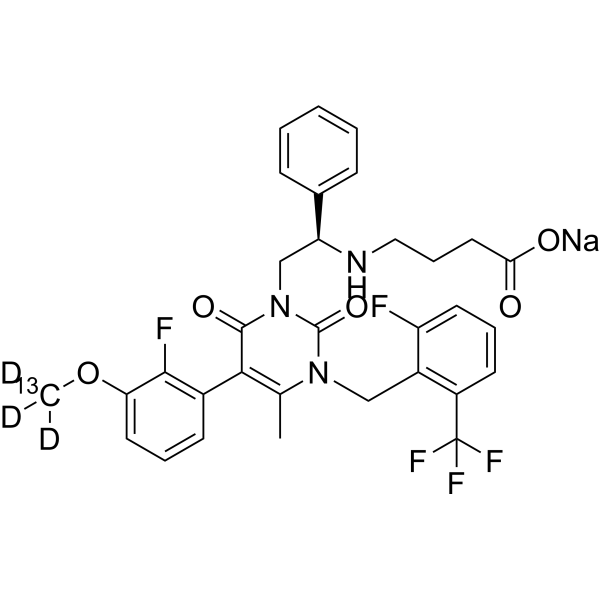 0 ImagesCat. No.: HY-14369SSynonyms: NBI-56418-13C,d3 sodium
Elagolix-13C,d3 (sodium) is the 13C- and deuterium labeled Elagolix sodium. Elagolix sodium is a human GnRH receptor (GnRHR) antagonist with an IC50 and Ki of 0.25 and 3.7 nM, respectively.
-
Hydrocortisone-OVA
 0 ImagesCat. No.: HY-NP0209
Hydrocortisone-OVA is a conjugate of Hydrocortisone (HY-N0583) and OVA peptide. Hydrocortisone (Cortisol) is a steroid hormone or glucocorticoid secreted by the adrenal cortex.
-
2'-Deoxyadenosine-15N1
 0 ImagesCat. No.: HY-W745905CAS No.: 106568-85-8
2'-Deoxyadenosine-15N1 is the 15N-labeled 2'-Deoxyadenosine (HY-W040329). 2′-Deoxyadenosine is an adenine nucleoside that inhibits glucose-stimulated insulin release. 2′-Deoxyadenosine inhibits glucose-stimulated increases seen in islet cyclic AMP (cAMP) accumulation. 2'-Deoxyadenosine activates caspase-3 and promotes apoptosis. 2'-Deoxyadenosine inhibits the activity of S-adenosyl-L-homocysteine hydrolase (SAHH). 2'-Deoxyadenosine inhibits the growth of various cells. 2'-Deoxyadenosine has an anticancer effect on colon cancer.
-
GPR54 antagonist-1
 0 ImagesCat. No.: HY-182421CAS No.: 925924-27-2
GPR54 antagonist‑1 is a GPR54 antagonist with IC50 values of 3.6 nM and 15 nM against human and rat GPR54, respectively. GPR54 antagonist‑1 shows blood‑brain barrier penetration. GPR54 antagonist‑1 blocks the function of human and rat GPR54 receptors. GPR54 antagonist‑1 suppresses plasma luteinizing hormone levels in castrated male rats. GPR54 antagonist‑1 can be used for the study of prostate cancer and endometriosis.
-
SaRI 59-801
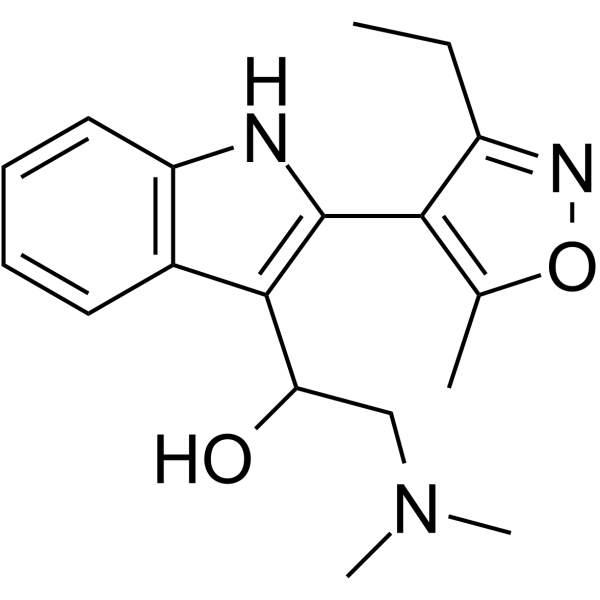 0 ImagesCat. No.: HY-121565CAS No.: 80565-58-8
-
pTH (13-34) (human)
 0 ImagesCat. No.: HY-P4690CAS No.: 81306-64-1
pTH (13-34) (human) is apTH ((Human parathyroid hormone) fragment.
-
N,N'-Methylenebisacrylamide-d6
 0 ImagesCat. No.: HY-W710827
N,N'-Methylenebisacrylamide-d6 is the deuterium labeled N,N'-Methylenebisacrylamide (HY-D0848). N,N'-Methylenebisacrylamide (Bisacrylamide) is an orally active acrylamide dimer and crosslinker. N,N'-Methylenebisacrylamide increases CYP2E1, P53, cleaved caspase-3. N,N'-Methylenebisacrylamide promotes hepatic cancer. N,N'-Methylenebisacrylamide changes sperm abnormality rate and sperm count. N,N'-Methylenebisacrylamide decreases the number of various cells in the blood as well as induces liver and testicular damage. N,N'-Methylenebisacrylamide is used to prepare polyacrylamide gel.
-
Gumelutamide monosuccinate
 0 ImagesCat. No.: HY-152850ACAS No.: 2842844-51-1
Gumelutamide (monosuccinate) is a tetrahydropyridopyrimidine compound, acting as an antiandrogen, antineoplastic agent. Gumelutamide (monosuccinate) is an androgen antagonist.
-
(R)-DPN
 0 ImagesCat. No.: HY-103453CAS No.: 524047-78-7