Endocrinology
-
Endocrinology Related Products (3763)
Related Products (3763)

-
Antibodies (4)
-
Related Compound Screening Libraries (1)
-
ent-Prostaglandin E2
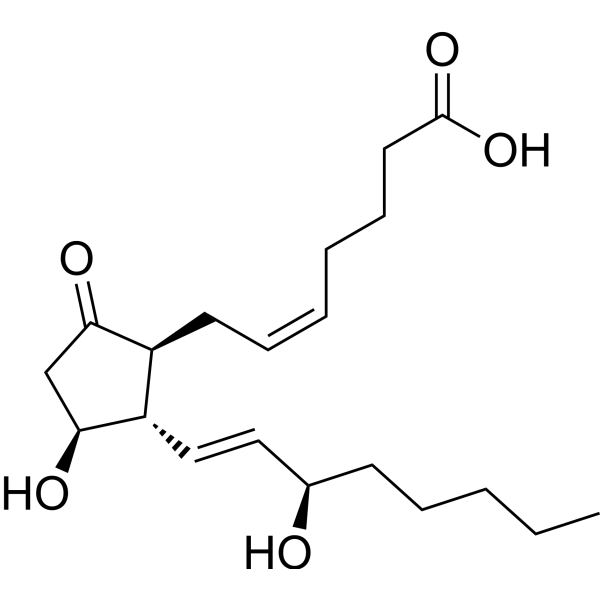 0 ImagesCat. No.: HY-118465CAS No.: 65085-69-0Synonyms: ent-PGE2
ent-Prostaglandin E2 (ent-PGE2) is an enantiomer of PGE2 (HY-101952). unlike PGE2, ent-PGE2 is a poor substrate for 15-hydroxyprostaglandin dehydrogenase.
-
(Ser(tBu)6,Azagly10)-LHRH
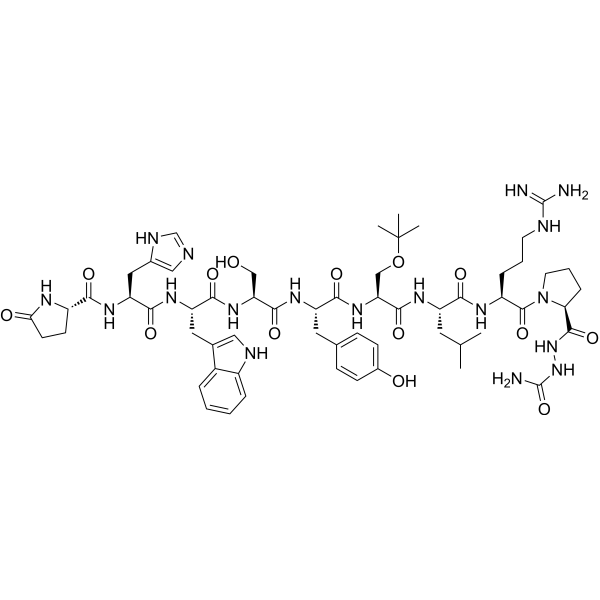 0 ImagesCat. No.: HY-P4693CAS No.: 184686-52-0
(Ser(tBu)6,Azagly10)-LHRH is a potent aza-GLY analog.
-
Federelin
 0 ImagesCat. No.: HY-P11278CAS No.: 57521-78-5Synonyms: Gonadorelin[6-D-Phe]; [D-Phe6]GnRH
Federelin (Gonadorelin[6-D-Phe]) is a gonadotropin (GnRH) analog.
-
LEK 8841 methanesulfonate
 0 ImagesCat. No.: HY-117063CAS No.: 145204-80-4
LEK 8841 methanesulfonate is a gastrointestinal calming agent with strong selective 5-HT2 receptor antagonist activity. The antipsychotic potential of LEK 8841 has made it the focus of research into alternative medicines. LEK 8841 behaves as a pure competitive antagonist in response to 5-HT and norepinephrine, with pA2 values of 7.93 and 6.45, respectively. The selectivity of LEK 8841 is better than that of the comparative drug ketanserin, making it an important reference value in corresponding receptor research. Studies related to structural modifications have shown that LEK 8841 exhibits high affinity for 5-HT2 receptors and low alpha-adrenergic receptor activity.
-
Mozavaptan-d6
 0 ImagesCat. No.: HY-18346SCAS No.: 2750534-83-7Synonyms: OPC-31260-d6
Mozavaptan-d6 (OPC-31260-d6) is the deuterium labeled Mozavaptan. Mozavaptan (OPC-31260) is a benzazepine derivative and a potent, selective, competitive and orally active vasopressin V2 receptor antagonist with an IC50 of 14 nM. Mozavaptan shows ~85-fold selectivity for V2 receptor over V1 receptor (IC50 of 1.2 μM), and can antagonize the antidiuretic action of arginine vasopressin (AVP) in vivo. Mozavaptan has the potential for hyponatremia, syndrome of inappropriate antidiuretic hormone (SIADH), and congestive heart failure treatment.
-
Org 214444-0
 0 ImagesCat. No.: HY-182705CAS No.: 914093-78-0
Org 214444-0 is an orally active, nanomolar-potent and selective FSHR agonist, with EC50 values of 2.0 nM and 1.2 nM in human and rat (measured in CHO cells). Org 214444-0 activates human granulosa cells in vitro, supports rat follicular development and induces ovulation in vivo. Org 214444-0 can be used for the research of infertility.
-
α-Muricholic acid (Standard)
 0 ImagesCat. No.: HY-115433RCAS No.: 2393-58-0
α-Muricholic acid (Standard) is the analytical standard of α-Muricholic acid. This product is intended for research and analytical applications. α-Muricholic acid is the most abundant primary bile acid in rodents.
-
LSALT peptide
 0 Images
LSALT peptide is a selective DPEP-1 inhibitor with selectivity over DPEP2/3. LSALT peptide inhibits neutrophil and monocyte/macrophage recruitment, inflammation, and tissue injury. LSALT peptide reduces kidney damage, improves survival in murine sepsis and endotoxemia models. LSALT peptide can be used for the research of COVID-19, sepsis, acute respiratory distress syndrome, and acute kidney injury.
-
Irbesartan (Standard)
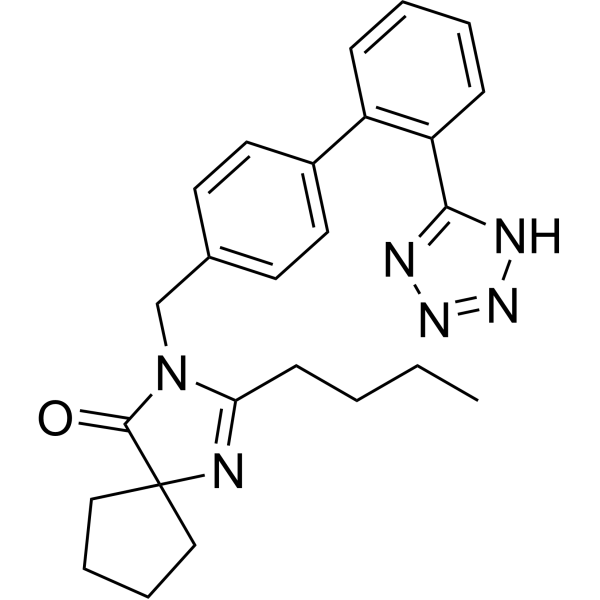 0 ImagesSynonyms: SR-47436 (Standard); BMS-186295 (Standard)
Irbesartan (Standard) is the analytical standard of Irbesartan. This product is intended for research and analytical applications. Irbesartan (SR-47436) is an orally active Ang II type 1 (AT1) receptor blocker (ARB). Irbesartan can relax the blood vessels, low blood pressure and increase the supply of blood and oxygen to the heart. Irbesartan can be used for the research of high blood pressure, heart failure, and diabetic kidney disease.
-
Pheniramine maleate (Standard)
 0 ImagesSynonyms: Prophenpyridamine maleate (Standard); Tripoton maleate (Standard); Pheniramine maleate (Standard)
Pheniramine (maleate) (Standard) is the analytical standard of Pheniramine (maleate). This product is intended for research and analytical applications. Pheniramine (Prophenpyridamine; Tripoton) maleate is a first-generation histamine H1 receptor antagonist, acts on the central nervous system (CNS) with sedative and hypnotic effect. Pheniramine maleate displays antitumor effect and induces leukemia cells apoptosis. Pheniramine maleate is also a safe and effective local agent that can suppress or relieve pain, with antipruritic effects.
-
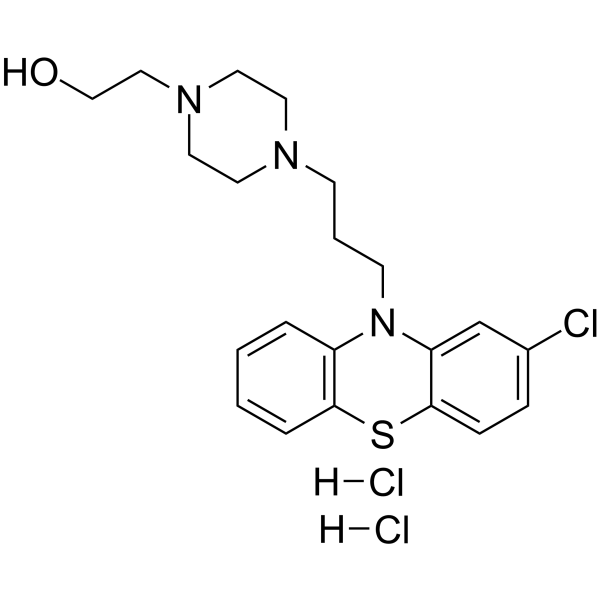
Perphenazine dihydrochloride
 0 Images
Perphenazine dihydrochloride is an orally active dopamine receptor and histamine-1 receptor antagonist, with Ki values of 0.56 nM (D2), 0.43 nM (D3), 6 nM (5-HT2A), respectively. Perphenazine dihydrochloride also binds to Alpha-1A adrenergic receptor. Perphenazine dihydrochloride inhibits cancer cell proliferation, and induces apoptosis. Perphenazine dihydrochloride can be used in the research of mental disease, cancer, inflammation.
-
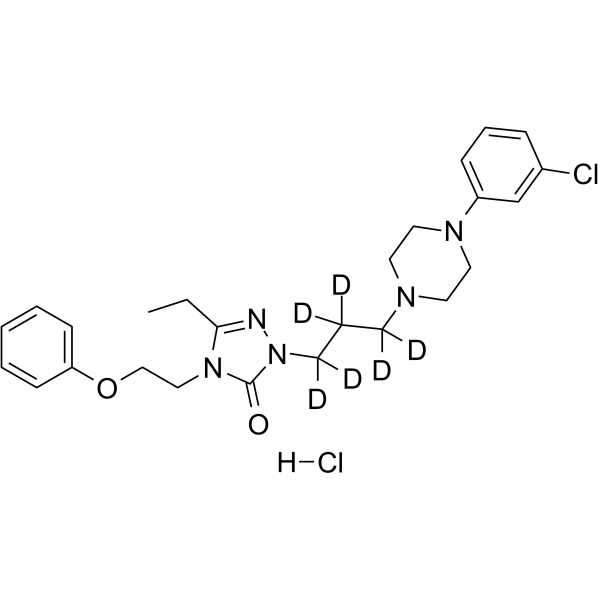
Nefazodone-d6 hydrochloride
 0 ImagesCat. No.: HY-B1396SSynonyms: BMY-13754-d6; MJ-13754-1-d6
Nefazodone-d6 (hydrochloride) is the deuterium labeled Nefazodone hydrochloride. Nefazodone hydrochloride (BMY-13754) is a potent and selective 5HT2A (Ki=5.8 nM) antagonist with moderate inhibition of 5-HT and noradrenaline uptake (IC50 of 290 and 300 nM, respectively). Nefazodone hydrochloride is a phenylpiperazine antidepressant with less alpha-adrenergic blocking activity.
-
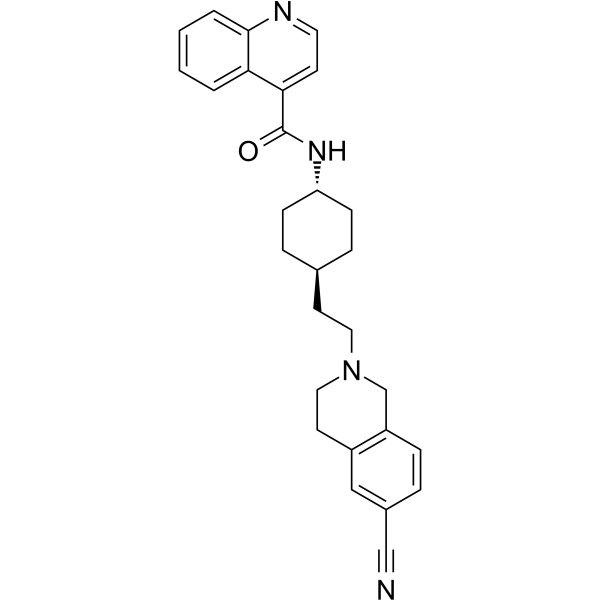
SB-277011
 0 ImagesCat. No.: HY-10847CAS No.: 215803-78-4Synonyms: SB-277011A
SB-277011 (SB-277011A) is a highly selective dopamine D3 receptor antagonist. SB-277011 induces ejaculation delay by inhibiting the expulsion phase of ejaculation, without impairing ejaculatory secretion or erectile function. SB-277011 also prolongs the post-ejaculatory refractory period. SB-277011 has no effect on the spontaneous preference of male rats for females in the sexually receptive phase. SB-277011 is widely applicable to studies related to premature ejaculation.
-
17-Trifluoromethylphenyl-13,14-dihydro trinor Prostaglandin F2α
 0 ImagesCat. No.: HY-137585CAS No.: 294856-01-2
17-Trifluoromethylphenyl-13,14-dihydro trinor Prostaglandin F2α is a derivative of Bimatoprost acid (HY-125774).
-
ABT-866
 0 ImagesCat. No.: HY-119262CAS No.: 258526-74-8
ABT-866 is an α1A-adrenoceptor agonist and an antagonist at the α1B- and α1D-adrenoceptor subtypes. ABT-866 has an EC50 of 0.60 μM for the α1A in the rabbit urethra. ABT-866 has a pA2 value of 5.4 for the α1B in the rat spleen. ABT-866 has a pA2 value of 6.2 for the α1D in the rat aorta. ABT-866 exhibits good urethral selectivity and lower cardiovascular side effects in stress urinary incontinence models. ABT-866 can be used for the research of diseases such as stress urinary incontinence.
-
Nocistatin (Bovine)
 0 ImagesCat. No.: HY-P0193CAS No.: 208253-85-4
Nocistatin (Bovine) is a nociceptin precursor contains another biologically active peptide. Nocistatin (Bovine) blocks nociception-induced allodynia and hyperalgesia. Nocistatin (Bovine) also attenuates pain evoked by prostaglandin E2. Nocistatin (Bovine) can bind to the membrane of mouse brain and spinal cord with high affinity. Nocistatin (Bovine) can be studied in research on pain transmission.
-
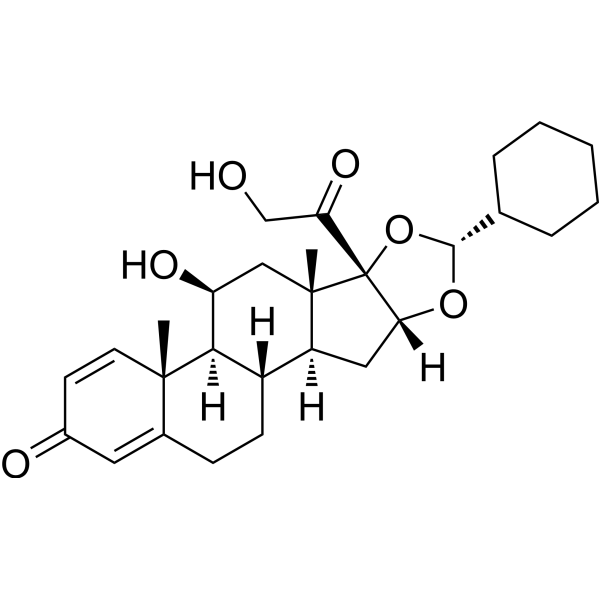
Desisobutyryl-ciclesonide (Standard)
 0 ImagesCat. No.: HY-111490RCAS No.: 161115-59-9Synonyms: CIC-AP(Standard); Ciclesonide active principle (Standard)
Desisobutyryl-ciclesonide (Standard) is the analytical standard of Desisobutyryl-ciclesonide. This product is intended for research and analytical applications. Desisobutyryl-ciclesonide is the active metabolite of Ciclesonide. Desisobutyryl-ciclesonide has affinity for the glucocorticoid receptor.
-
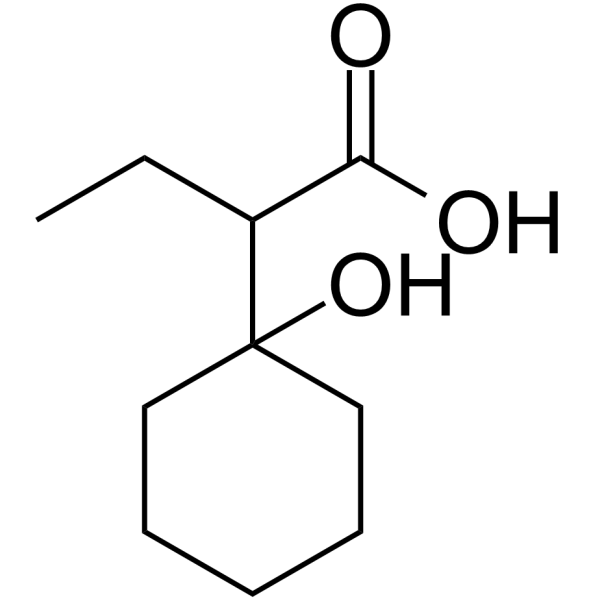
Cyclobutyrol
 0 Images
Cyclobutyrol is a potent choleretic agent. Cyclobutyrol also inhibits biliary lipid secretion. Cyclobutyrol induces choleretic is unrelated to bile acids. Cyclobutyrol and bile acids do not compete for the hepatobiliar transport mechanisms[1]
-
(±)-Penbutolol-d9 hydrochloride
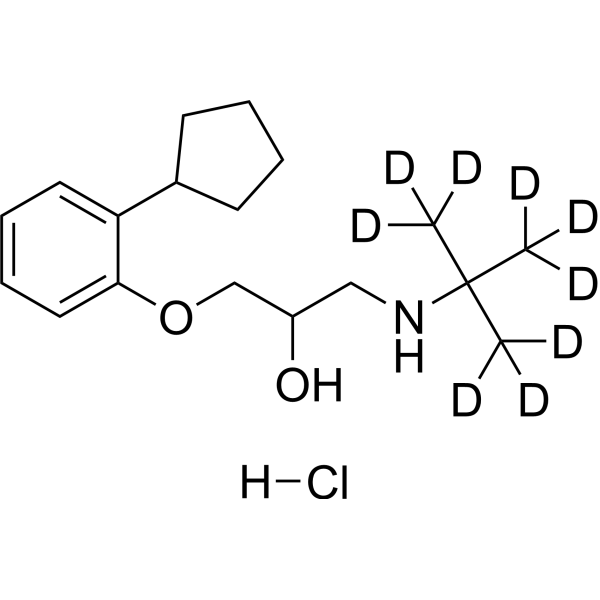 0 ImagesCat. No.: HY-116790BSACAS No.: 1346605-01-3Synonyms: (Rac)-Penbutolol-d9 hydrochloride; (±)-Isopenbutolol-d9 hydrochloride
(±)-Penbutolol-d9 (hydrochloride) is a deuterium labeled (±)-Penbutolol hydrochloride. (+)-Penbutolol hydrochloride is a β-adrenoceptor antagonist, with an IC50 of 0.74 μM.
-
Alfuzosin-13C,d3
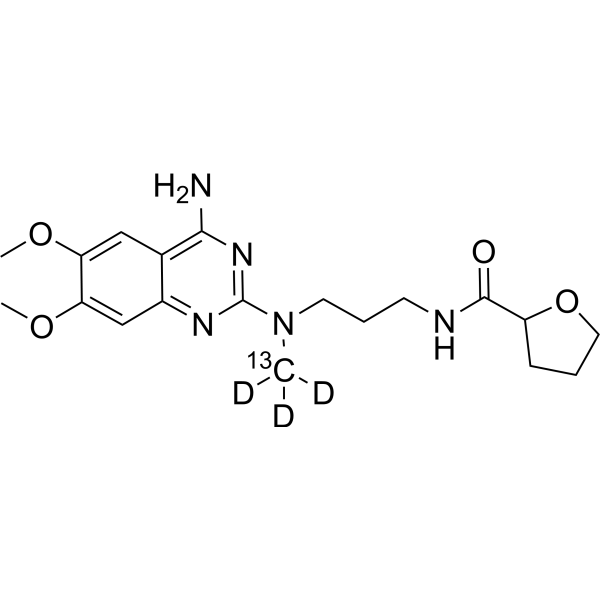 0 ImagesCat. No.: HY-B0192S1Synonyms: SL 77499-13C,d3
Alfuzosin-13C,d3 is the 13C- and deuterium labeled Alfuzosin.