Infection
-
Infection Related Products (18886)
Related Products (18886)

-
Antibodies (22)
-
Pseudane IX-d4
 0 ImagesCat. No.: HY-W555382SSynonyms: 2-Nonylquinolin-4(1H)-one-d4
-
PfGSK3/PfPK6-IN-2
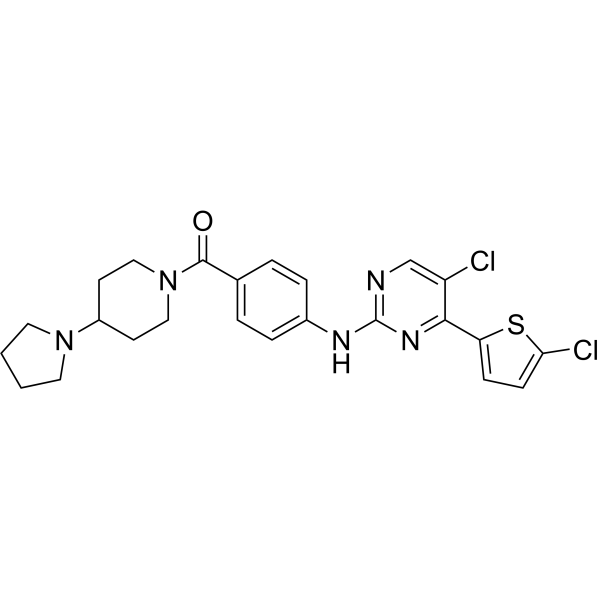 0 ImagesCat. No.: HY-151575CAS No.: 2797225-47-7
PfGSK3/PfPK6-IN-2 is a potent dual PfGSK3/PfPK6 (Plasmodium falciparum GSK3/PK6) inhibitor (IC50: 172 nM and 11 nM respectively). PfGSK3/PfPK6-IN-2 can be used in the research of Malaria.
-
Glyceryl 1-monooctanoate-d15
 0 ImagesCat. No.: HY-W012444S
Glyceryl 1-monooctanoate-d15 is the deuterium labeled Glyceryl 1-monooctanoate (HY-W012444). Glyceryl 1-monooctanoate is a glycerol monolaurate derivative. Glyceryl 1-monooctanoate is a broad-spectrum antimicrobial, suppresses the growth of pathogenic yeast (Candida albicans and Candida parapsilosis), as well as Gram-positive (Staphylococcus aureus) and Gram-negative (Escherichia coli, Klebsiella pneumoniae) bacteria.
-
N-Desmethyl clindamycin hydrochloride
 0 ImagesCat. No.: HY-180469CAS No.: 25532-03-0
N-Desmethyl clindamycin hydrochloride is the main metabolite of Clindamycin (HY-B1455). N-Desmethyl clindamycin hydrochloride shows potent cytotoxicity against L1210, KB,RPMI 6410 and RPMI 1788 cancer cells with LD50 values of 0.07, 0.29, 0.13 and 0.32 μM. N-Desmethyl clindamycin hydrochloride can inhibit cell DNA, RNA and protein synthesis. N-Desmethyl clindamycin hydrochloride can be used for the research of infection and cancer.
-
5'-Azido-5'-deoxythymidine
 0 Images
5'-Azido-5'-deoxythymidine (Compound 7), a nucleoside analogue, is a reverse transcriptase inhibitor. 5'-Azido-5'-deoxythymidine mimics nucleosides and is incorporated into the viral DNA chain to terminate chain elongation, inhibiting viral replication. 5'-Azido-5'-deoxythymidine is promising for research of retroviral infection diseases such as AIDS.
-
Thiolopyrrolone A
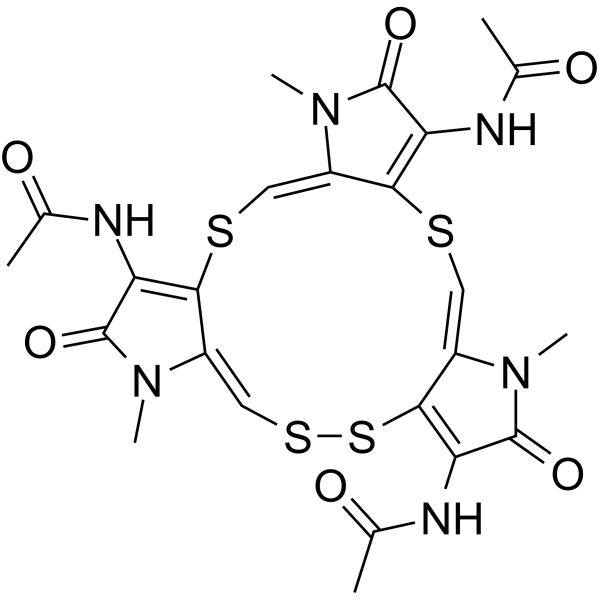 0 ImagesCat. No.: HY-N12600CAS No.: 3034042-33-3
Thiolopyrrolone A (compound 1) exhibits antibacterial activities against BCG, M. tuberculosis and S. aureus with minimum inhibitory concentrations (MIC) of 10, 10 and 100 μg/mL, respectively.
-
IE1 peptide
 0 ImagesCat. No.: HY-P10509CAS No.: 127902-44-7
IE1 peptide refers to an antigenic peptide encoded by the immediate early (IE) gene of mouse cytomegalovirus (mCMV). IE1 peptide is one of the key antigenic peptides expressed during mCMV infection, plays a role in transcriptional activation in the life cycle of mCMV, and is one of the earliest genes expressed in the viral replication cycle. IE1 peptide is an important target for CD8+ T cell response and can be used to study the host immune response to mCMV infection.
-
APA-H-MPO hydrochloride
 0 ImagesCat. No.: HY-115829CAS No.: 1610362-93-0
APA-H-MPO hydrochloride is an inhibitor of PCAF bromodomain/Tat-AcK50 interaction with potential for anti-HIV/AIDS. APA-H-MPO hydrochloride can effectively inhibit the binding of PCAF bromodomain to Tat-AcK50. APA-H-MPO hydrochloride showed low cytotoxicity in preliminary cell studies. APA-H-MPO hydrochloride is considered a potential candidate for a promising inhibitory strategy targeting the host cell protein PCAF BRD to block HIV replication.
-
CPZEN-45
 0 ImagesCat. No.: HY-171151CAS No.: 737759-36-3
CPZEN-45 is a bacterial translocase I inhibitor with potent anti-tuberculosis activity. CPZEN-45 is promising for research of tuberculosis.
-
Imidocarb dihydrochloride monohydrate
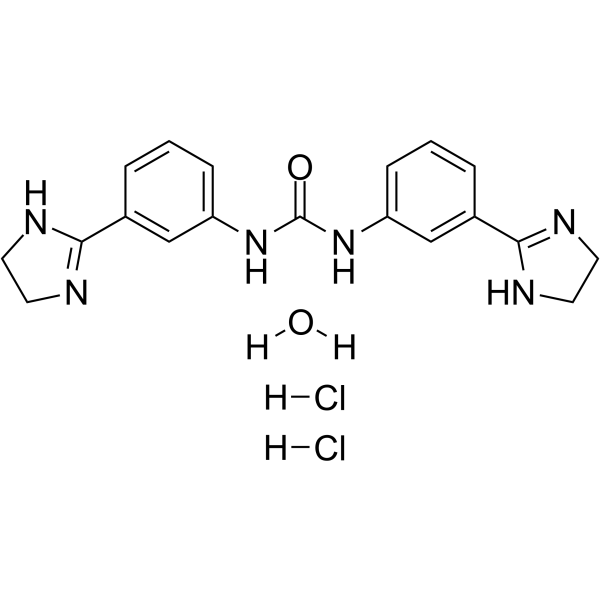 0 ImagesCat. No.: HY-135611A
Imidocarb dihydrochloride monohydrate is a potent antiprotozoal agent. Imidocarb dihydrochloride monohydrate is active against the parasite B. bovis with an IC50 of 87 μg/mL.
-
Pulixin
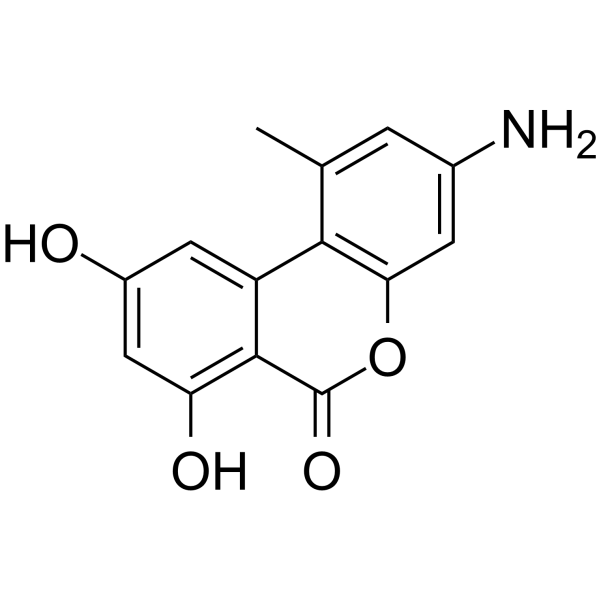 0 ImagesCat. No.: HY-N10197CAS No.: 2826264-81-5
Pulixin prevents FREP1 from binding to P. falciparum-infected cell lysate. Pulixin blocks the transmission of the parasite to mosquitoes with an EC50 of 11 µM. Pulixin also inhibits the proliferation of asexual-stage P. falciparum with an EC50 of 47 nM.
-
MK-1220
 0 ImagesCat. No.: HY-14404CAS No.: 924270-31-5
MK-1220 is a covalently reversible inhibitor of the hepatitis C virus (HCV) NS3/4A protease (NS3/4A protease) with a Ki of 0.02 nM. MK-1220 in cell models simulating viral replication exhibits EC50s of 4 (with 10% fetal bovine serum) and 11 nM (50% normal human serum). MK-1220 can be used for the study of chronic hepatitis C virus infection.
-
Etisazole
 0 Images
Etisazole (Ectimar; Bay Va 5387) is an animal antifungal agent with skin sensitizing properties in humans.
-
Dendroside D
 0 ImagesCat. No.: HY-N21759CAS No.: 503443-09-2
Dendroside D is a sesquiterpenoid compound. Dendroside D binds to the RNA site of RNA-dependent RNA polymerase and the active site of SARS-CoV-2 main protease through hydrogen bonds, electrostatic interactions, and hydrophobic interactions, thereby blocking viral replication. Dendroside D stimulates the proliferation of mouse T and B lymphocytes, promotes T and B lymphocyte proliferation, and exhibits immunomodulatory activity. Dendroside D can be used for viral infection and immune-related research.
-
Arg-Val-(Nle-p-nitro)-Phe-Glu-Ala-Nle-NH2
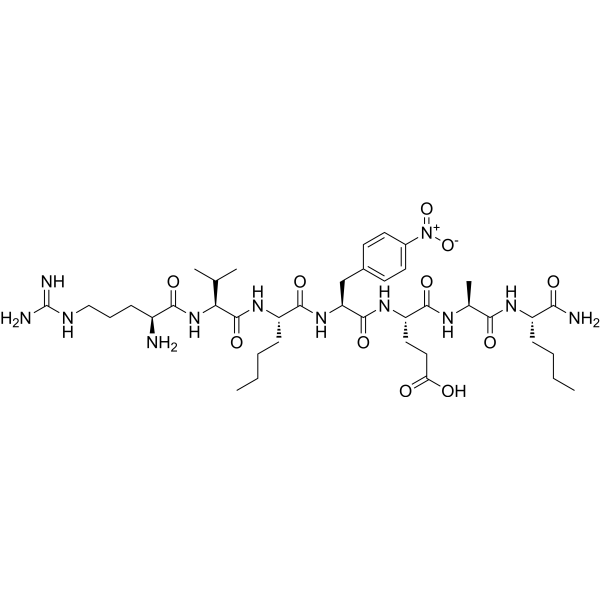 0 ImagesCat. No.: HY-P4466CAS No.: 130877-92-8
Arg-Val-(Nle-p-nitro)-Phe-Glu-Ala-Nle-NH2 is a fluorogenic substrate of HIV-1 protease. Arg-Val-(Nle-p-nitro)-Phe-Glu-Ala-Nle-NH2 can be used to test HIV-1 protease activity.
-
Procaine benzylpenicillin
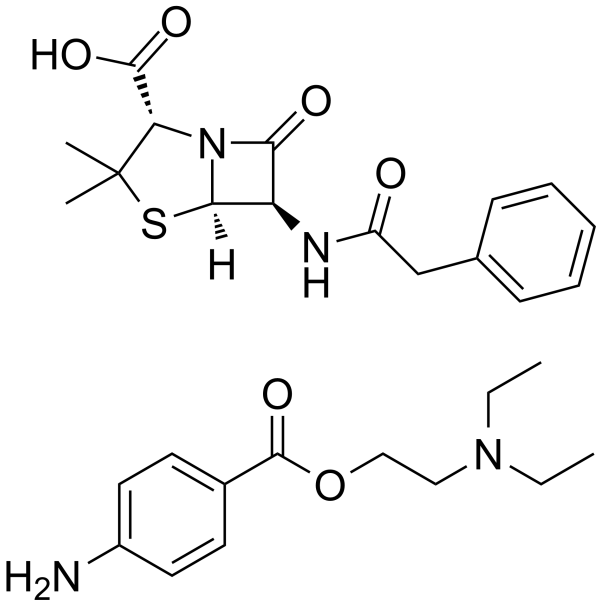 0 Images
Procaine benzylpenicillin (Penicillin G procaine) is an antimicrobial agent. Procaine benzylpenicillin shows inhibitory activity against gram-positive bacteria and synergistic activity with Neomycin (HY-B0470). Procaine benzylpenicillin can be used in the study of bovine mastitis in animal husbandry.
-
Salazinic acid
 0 Images
Salazinic acid has antibacterial activity against bacteria and fungi. Salazinic acid does not show antibacterial activity against Listeria monocytogenes, Pseudomonas aeruginosa, Yersinia enterocolitica, and Enterococcus faecalis, but it does have antibacterial activity against Pseudomonas aeruginosa and Salmonella typhimurium.
-
Polyketide synthase 13-IN-3
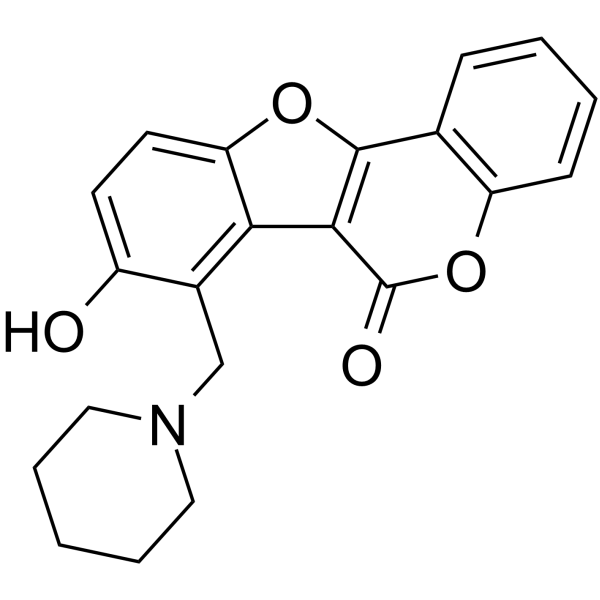 0 ImagesCat. No.: HY-139596CAS No.: 2221801-50-7
Polyketide synthase 13-IN-3 (compound 41) is a polyketide synthase 13 inhibitor,with a MIC of 0.0625-0.125 μg/mL against the M. tuberculosis strain H37Rv.
-
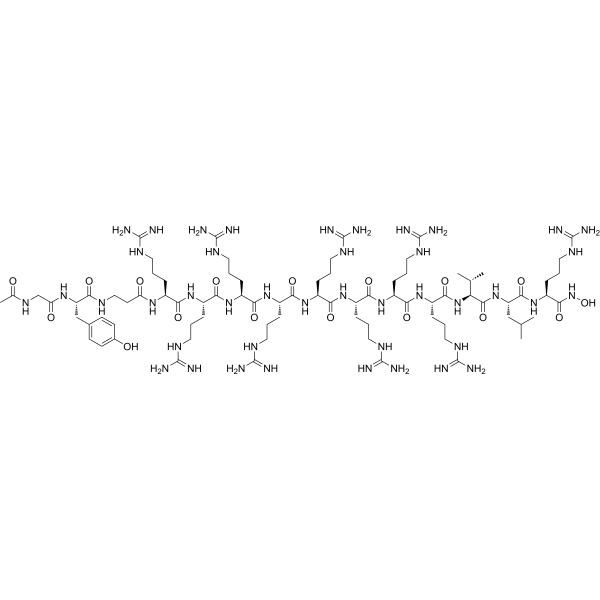
IN-2-LF
 0 ImagesCat. No.: HY-P10150CAS No.: 749879-64-9
IN-2-LF is an inhibitor of lethal factor. IN-2-LF also inhibits furin with an IC50 of 2 μM. IN-2-LF enhances protection against anthrax lethal toxin when in combination with D6R.