Others
-
Others Related Products (76650)
Related Products (76650)

-
Poly(acrylic acid) (MW 450000)
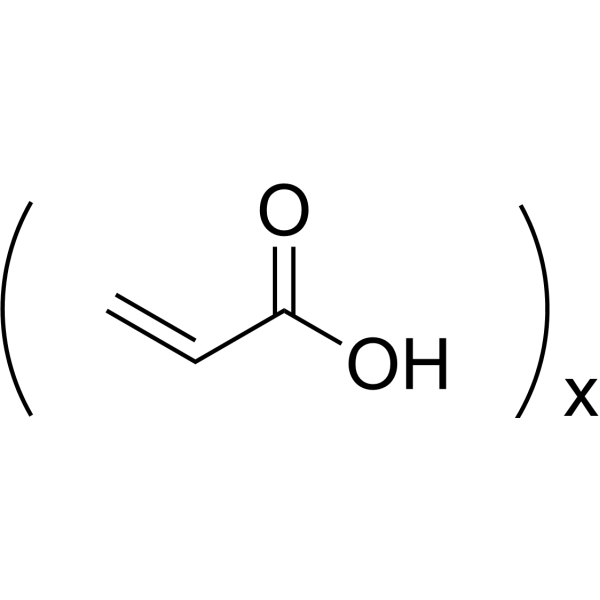 0 ImagesCat. No.: HY-W243303ECAS No.: 9003-01-4
Poly(acrylic acid) (MW 450000) is a polyacrylic acid with a molecular weight of 450000. Poly(acrylic acid) (MW 450000) is an anionic polymer. Poly(acrylic acid) (MW 450000) can be as a corrosion-mitigating and surface-stabilizing agent.

-
Thioxanthone
 0 Images
Thioxanthone is a powerful photocatalyst for organic reactions. Thioxanthone mediates energy transfer, single-electron transfer, and hydrogen atom transfer processes. As a photoredox catalyst, Thioxanthone is used in nickel-catalyzed self-coupling reactions of aryl halides, arylation reactions of H-phosphine oxides/H-phosphites, decarbonylation reactions of cyclopropenones, and reactions generating acyl radicals from aromatic aldehydes.

-
(S)-6-Methyl-1,4-oxazepan-6-ol hydrochloride
 0 Images
(S)-6-Methyl-1,4-oxazepan-6-ol hydrochloride is a drug intermediate for synthesis of various active compounds.
-
4-Chloro-5-nitro-1-tosyl-1H-pyrrolo[2,3-b]pyridine
![4-Chloro-5-nitro-1-tosyl-1H-pyrrolo[2,3-b]pyridine](https://file.medchemexpress.com/product_pic/hy-45448.gif "Click to View 4-Chloro-5-nitro-1-tosyl-1H-pyrrolo[2,3-b]pyridine Product Detail") 0 Images
0 Images4-Chloro-5-nitro-1-tosyl-1H-pyrrolo[2,3-b]pyridine is a drug intermediate for synthesis of various active compounds.
-
Ethylparaben
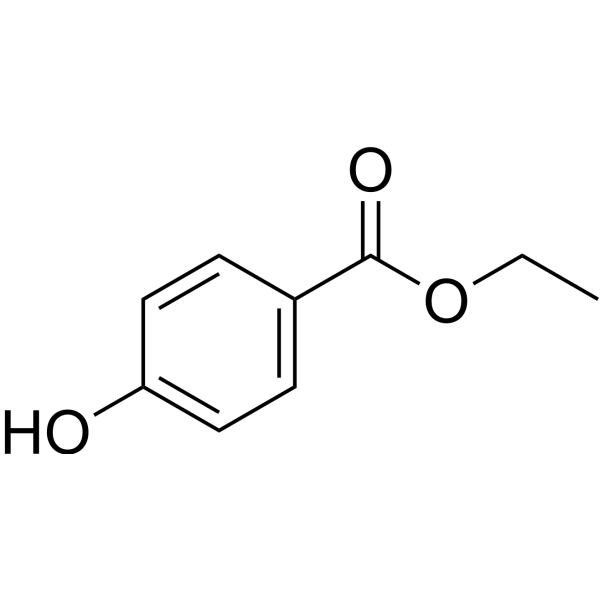 0 ImagesSynonyms: Ethyl parahydroxybenzoate; Ethyl 4-hydroxybenzoate
Ethylparaben is the ethyl ester of paraben and is used as an antifungal preservative and food additive.
-
L-Citrulline (Standard)
 0 Images
L-Citrulline (Standard) is the analytical standard of L-Citrulline. This product is intended for research and analytical applications. L-Citrulline is an amino acid derived from ornithine in the catabolism of proline or glutamine and glutamate, or from l-arginine via arginine-citrulline pathway.
-
Aviglycine hydrochloride
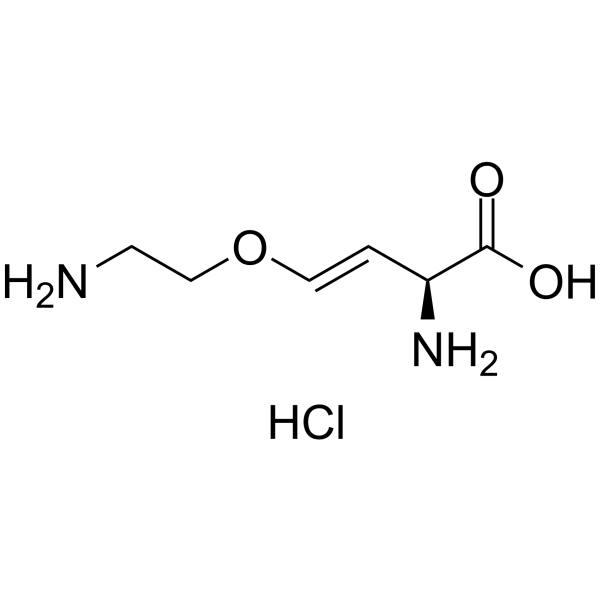 0 ImagesSynonyms: ABG-3168
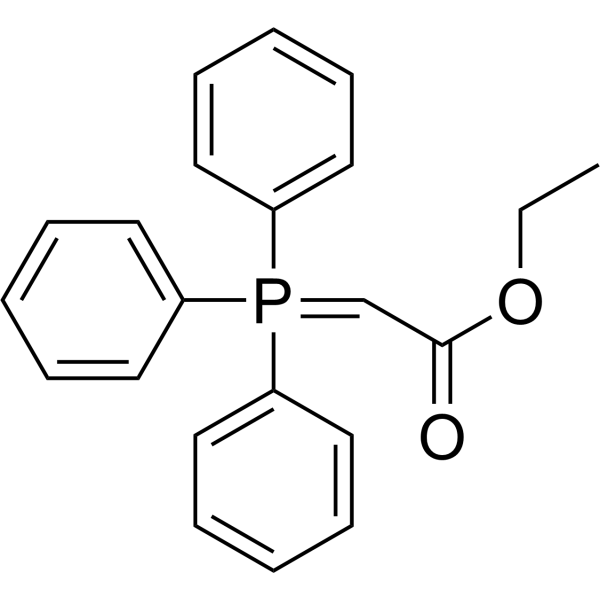
Aviglycine hydrochloride (ABG-3168) is an inhibitor of ethylene biosynthesis. The use of Aviglycine hydrochloride (ABG-3168) delays the natural flowering of pineapples, reduces fruit drop, and maintains fruit firmness.
-
Sevasemten
 0 ImagesSynonyms: EDG-5506
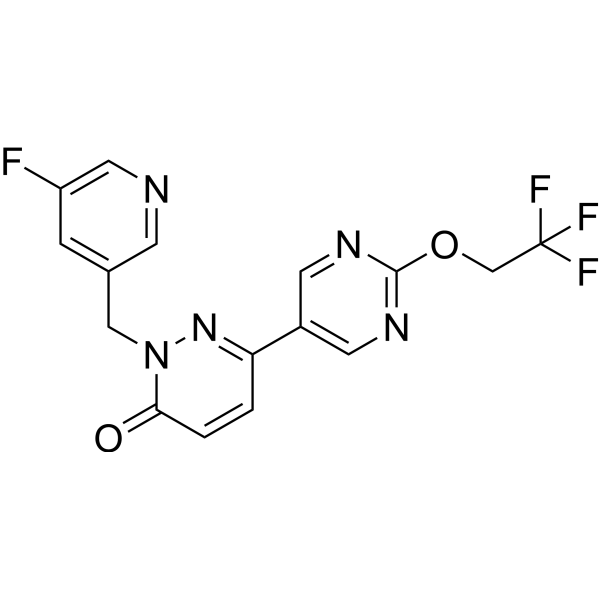
Sevasemten is an orally active, selective allosteric inhibitor of skeletal muscle myosin that protects skeletal muscle from contraction-induced injury. Sevasemten decreases muscle damage biomarkers and fibrosis while increasing muscle strength and activity in in Duchenne muscular dystrophy disease models.
-
Salicylhydroxamic acid
 0 ImagesSynonyms: 2-Hydroxybenzohydroxamic acid; N,2-Dihydroxybenzamide
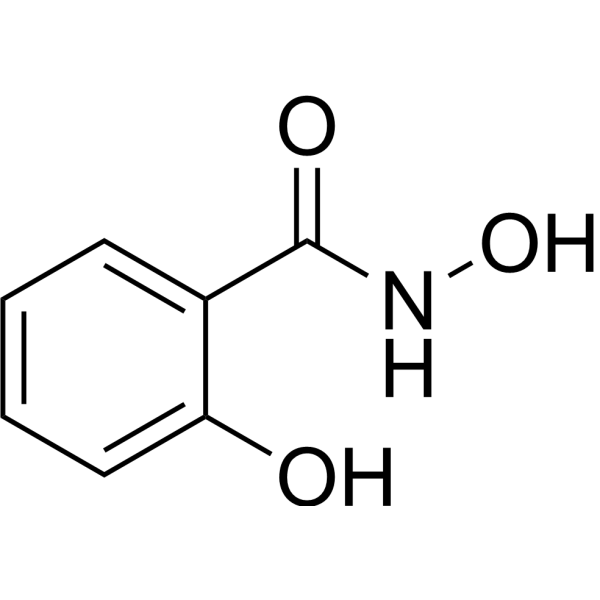
Salicylhydroxamic acid (2-Hydroxybenzohydroxamic acid; N,2-Dihydroxybenzamide) is a biochemical reagent that can be used as a biological material or organic compound for life science related research.
-
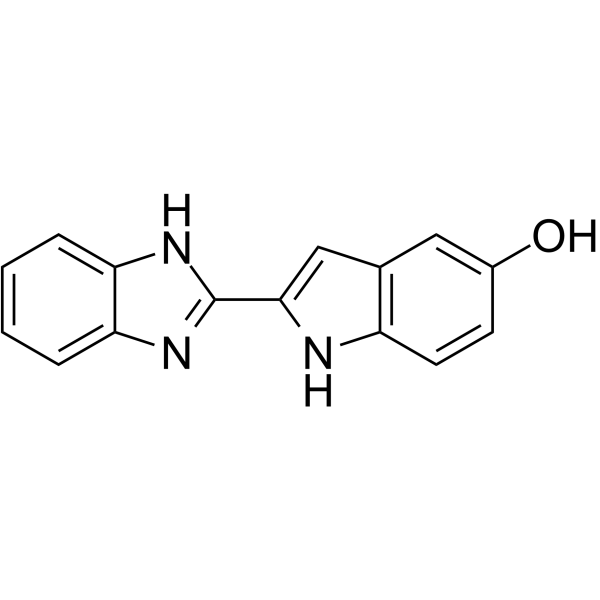
SY-LB-35
 0 Images
SY-LB-35 is a potent bone morphogenetic protein (BMP) receptor agonist. SY-LB-35 can stimulate significant increases in cell number and cell viability in the C2C12 myoblast cell line, and causes shifts towards the S and G2/M phases of the cell cycle. SY-LB-35 stimulates canonical Smad and non-canonical PI3K/Akt, ERK, p38 and JNK intracellular signaling pathways.
-
TRITC-dextran, MW 40000
 0 ImagesCat. No.: HY-158082BSynonyms: Tetramethyl rhodamine isothiocyanate glucan, MW 40000
TRITC-dextran (Tetramethyl rhodamine isothiocyanate glucan), MW 40000 is a TRITC (HY-D0791)-labeled neutral 40 kDa fluorescent polysaccharide probe. TRITC-dextran, MW 40000 forms a membrane layer on the surface of protocells composed of protamine/folate condensates, and is used to assess membrane fluidity via fluorescence recovery after photobleaching. TRITC-dextran, MW 40000 can also be used to evaluate the anti-bacterial invasion ability and colloidal stability of coated condensates, as well as analyze the permeability of vascular and lymphatic endothelial cell layers.
-
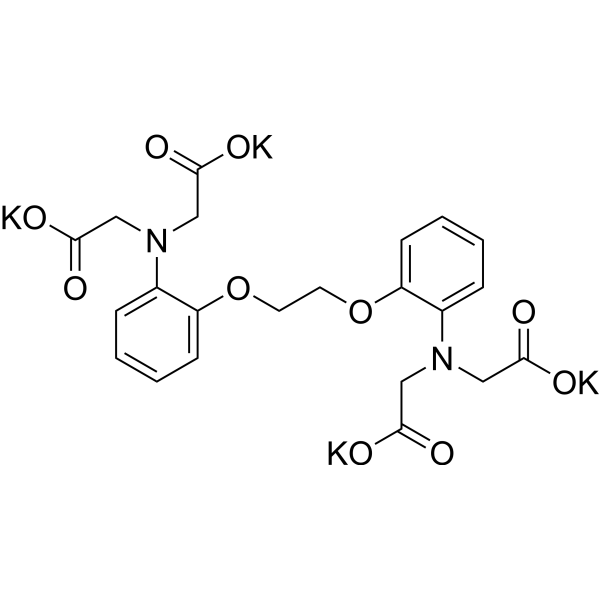
BAPTA tetrapotassium
 0 Images
BAPTA tetrapotassium is a selective and cell-impermeant chelator for calcium. BAPTA has high selectivity against magnesium and calcium. BAPTA tetrapotassium can also inhibit phospholipase C activity independently of their role as Ca2+ chelators.
-
Fructooligosaccharides
 0 ImagesSynonyms: Oligolevulose
Fructooligosaccharides (Oligolevulose) are a class of orally active dietary fibers and prebiotics. Fructooligosaccharides exist in foods such as breast milk, wheat, honey, onions, garlic and bananas. Fructooligosaccharides resist hydrolysis by the body's digestive enzymes and stimulate the growth of beneficial intestinal bacteria through colonic fermentation. Fructooligosaccharides significantly prevent bone loss in the femur and lumbar spine.
-
TLCK-treated Chymotrypsin
 0 ImagesCat. No.: HY-108910BCAS No.: 9004-07-3
TLCK-treated Chymotrypsin is a serine protease. Chymotrypsin cleaves protein chains at the carboxyl side of aromatic amino acids. TLCK treated to inactivate residual tryspin activity.
-
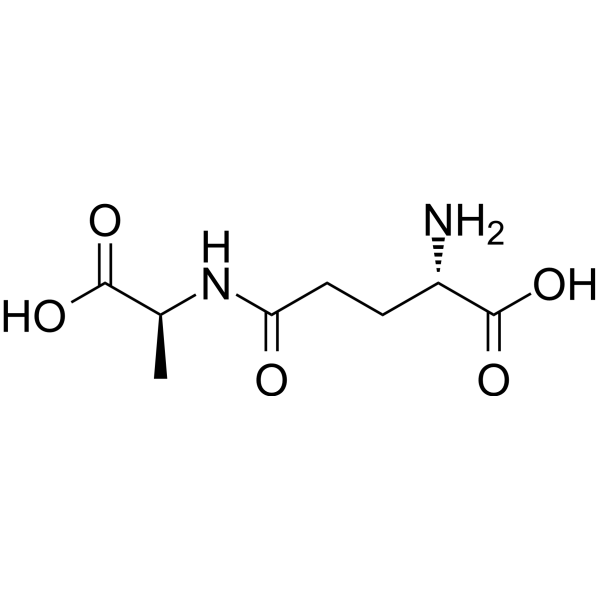
γ-L-Glutamyl-L-alanine
 0 Images
γ-L-Glutamyl-L-alanine (γ-Glu-Ala), composed of gamma-glutamate and alanine, is a proteolytic breakdown product of larger proteins. γ-L-Glutamyl-L-alanine is a natural substrate of the γ-Glutamylcyclotransferase. γ-L-Glutamyl-L-alanine is a positive modulator of calcium-sensing receptor (CaR) function.