



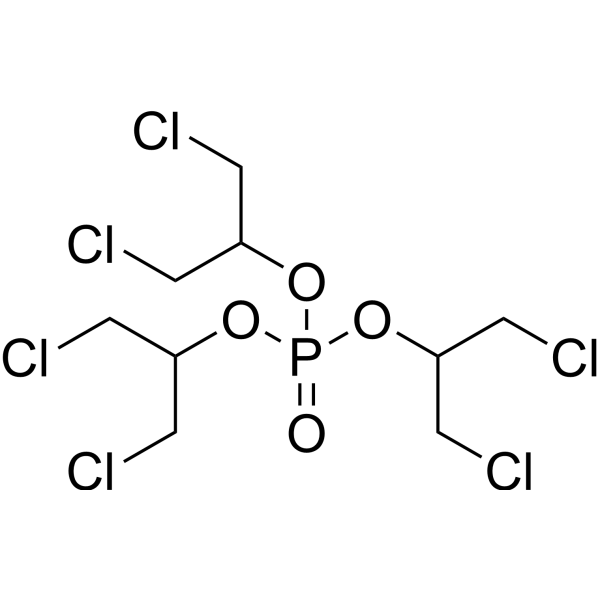
TDCPP
Based on 11 publication(s) in Google Scholar
TDCPP is a chlorinated analog of tris(2,3-dibromopropyl)phosphate (Tris) which is one of the most detected organophosphorus flame retardants (OPFRs) in the environment.
For research use only. We do not sell to patients.
- Purity : 99.71%
- CAS No.: 13674-87-8
- Formula: C9H15Cl6O4P
- Molecular Weight:430.90
-
Storage:Pure form -20°C, 3 years , 4°C, 2 years ; In solvent -80°C, 6 months , -20°C, 1 month

To place orders, for customer services and technical support, please contact: MedChemExpress USA
Tel: 609-228-6898 E-mail: [email protected] [email protected]


-
 Biological Activity
-
Chemical Information
-
Solvent & Solubility
- Purity & Documentation
- References
-
 Help & FAQs


-

HY-Y1322
Triphenyl phosphateEndocrine Disruptor -
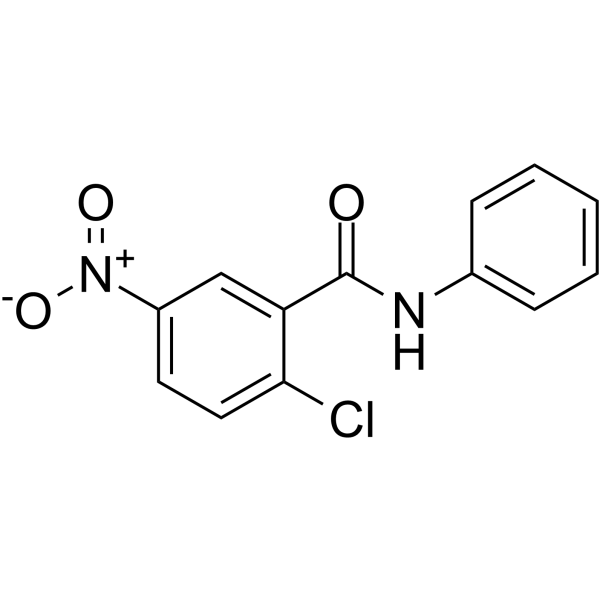
HY-16578
GW9662PPARγ Antagonist -

HY-108712R
TDCPP (Standard)Flame Retardant -

HY-107859
Tris(2-chloroethyl) phosphateFlame-retardant Plasticizer -

HY-W250743
Cresyl diphenyl phosphate -

HY-W011086
Tri-O-tolyl phosphateBiochemical Reagent -
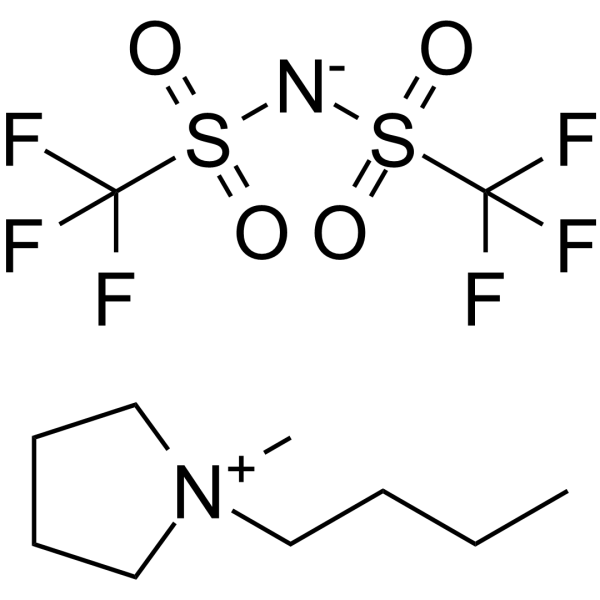
HY-W010929
PYR14-TFSIBiochemical Assay Reagent -

HY-W009066
2-Ethylhexyl diphenyl phosphatePPARG Agonist -

HY-Y0481
Tin(II) chloride, 98%Biochemical Assay Reagents -

HY-W011086R
Tri-O-tolyl phosphate (Standard)Biochemical Reagent -
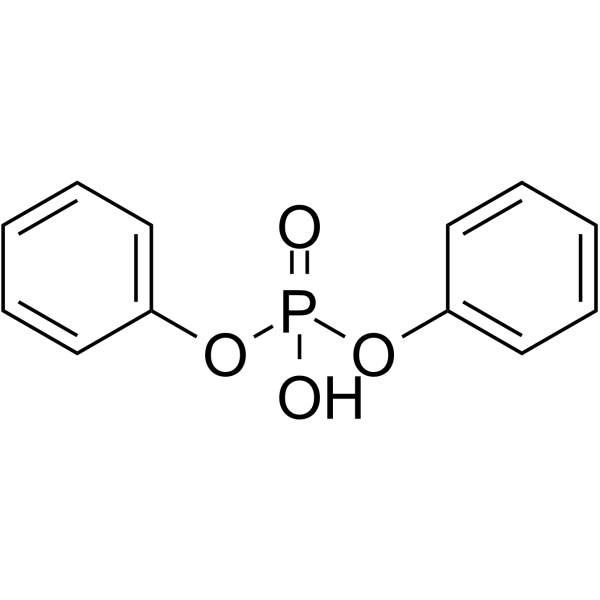
HY-W008151
Diphenyl PhosphateMetabolic Inhibitor -

HY-W010479
Propane sultoneBiochemical Assay Reagent
Publications Citing Use of MedChemExpress (MCE) TDCPP
More- J Hazard Mater. 2022 Jul 15;434:128824. [Abstract]
- Environ Int. 2026 Jun 15:214:110373. [Abstract]
- Anal Chem. 2025 Jun 3;97(21):11099-11109. [Abstract]
- Environ Pollut. 2024 Apr 15:347:123740. [Abstract]
- J Cereb Blood Flow Metab. 2024 Dec;44(12):1487-1500. [Abstract]
- Neurochem Res. 2024 Sep;49(9):2453-2468. [Abstract]
- Reprod Toxicol. 2026 May 28:144:109269. [Abstract]
- Food Chem Toxicol. 2026 Jul:213:116103. [Abstract]
- Gene. 2022 May 15:822:146349. [Abstract]
- Sci Total Environ. 2025 Jan 20:961:178429. [Abstract]
- Chemosphere. 2022 Dec;308(Pt 2):136345. [Abstract]


Biological Activity
Description
In Vitro
Exposure to TDCPP does not significantly affect cell viability until at concentration >68 μg/mL. HCECs show a 16% cell viability loss after exposing to 136 μg/mL TDCPP. Moreover, TDCPP induces a sharp decrease in viable cells (87%) after exposing to ≥272 μg/mL TDCPP. Based on cell viability, the LC50 value for TDCPP is 202 μg/mL using a nonlinear regression. Compare to controls, TDCPP-exposed cells exhibit a concentration-dependent increase in apoptosis. Anti-apoptotic Bcl-2 protein expression is increased to 1.4 fold after exposing to 2 μg/mL TDCPP, 1.2-folds at 20 μg/mL but dynamically decreased to 0.4 fold at 200 μg/mL compare to control. The caspase-3 activity is increased to 2.1 folds of the control at 200 μg/mL TDCPP[1]. TDCPP inhibits cell growth at lower concentrations (IC50 of 27 μM), while cell viability and toxicity are affected at higher concentrations (IC50 of 171 μM and 168 μM, respectively)[2].
MedChemExpress (MCE) has not independently confirmed the accuracy of these methods. They are for reference only.


Chemical Information
-
CAS No. 13674-87-8
-
Appearance Liquid (Density: 1.512 g/cm3)
-
Molecular Weight 430.90
-
Formula C9H15Cl6O4P
-
Color Colorless to light yellow
-
SMILES
O=P(OC(CCl)CCl)(OC(CCl)CCl)OC(CCl)CCl
-
Synonyms
Tris(1,3-dichloroisopropyl)phosphate
-
Shipping
Room temperature in continental US; may vary elsewhere.
-
Storage
Pure form -20°C 3 years 4°C 2 years In solvent -80°C 6 months -20°C 1 month


Publications (11)
-
Journal Impact Factor
-
Most Recent
-
J Hazard Mater
Toxicological effects of tris(1,3-dichloro-2-propyl) phosphate in oyster Crassostrea gigas using proteomic and phosphoproteomic analyses. [Abstract]2022 Jul 15;434:128824. PMID: 35427976 -
Environ Int
Integrated network toxicology and transcriptomics reveal NF-κB signaling as a key mediator of TDCPP-induced inflammatory responses in human microglia. [Abstract]2026 Jun 15:214:110373. PMID: 42314475 -
Anal Chem
Exposome-Scale Investigation of Cl-/Br-Containing Chemicals Using High-Resolution Mass Spectrometry, Multistage Machine Learning, and Cloud Computing. [Abstract]2025 Jun 3;97(21):11099-11109. PMID: 40401576 -
Environ Pollut
TDCPP and TiO2 NPs aggregates synergistically induce SH-SY5Y cell neurotoxicity by excessive mitochondrial fission and mitophagy inhibition. [Abstract]2024 Apr 15:347:123740. PMID: 38462198 -
J Cereb Blood Flow Metab
Agomelatine promotes differentiation of oligodendrocyte precursor cells and preserves white matter integrity after cerebral ischemic stroke. [Abstract]2024 Dec;44(12):1487-1500. PMID: 38853430 -
Neurochem Res
The Role and Mechanism of Ambra1-Mediated Mitophagy in TDCPP-Exposed Mouse Hippocampal Neurons. [Abstract]2024 Sep;49(9):2453-2468. PMID: 38850437 -
Reprod Toxicol
Long-term and low-dose exposure to TDCPP reduces reproductive capacity by enhancing germline apoptosis associated with activation of DNA damage in Caenorhabditis elegans. [Abstract]2026 May 28:144:109269. PMID: 42214638 -
Food Chem Toxicol
TDCIPP induces placental dysfunction and fetal growth restriction via oxidative stress-mediated PINK1/Parkin mitophagy. [Abstract]2026 Jul:213:116103. PMID: 42001928 -
Gene
Transcriptomic investigation of the effects of TDCPP on PC12 and GC2 cells with experimental validation. [Abstract]2022 May 15:822:146349. PMID: 35182677 -
Sci Total Environ
TDCPP promotes apoptosis and inhibits the calcium signaling pathway in human neural stem cells. [Abstract]2025 Jan 20:961:178429. PMID: 39798459 -
Chemosphere
Organophosphorus flame retardant TDCPP induces neurotoxicity via mitophagy-related ferroptosis in vivo and in vitro. [Abstract]2022 Dec;308(Pt 2):136345. PMID: 36087716


Solvent & Solubility
In Vitro:
Ethanol : 100 mg/mL (232.07 mM; Need ultrasonic)
DMSO : ≥ 62.5 mg/mL (145.05 mM; Hygroscopic DMSO has a significant impact on the solubility of product, please use newly opened DMSO)
* "≥" means soluble, but saturation unknown.
Please refer to the solubility information to select the appropriate solvent. Once prepared, please aliquot and store the solution to prevent product inactivation from repeated freeze-thaw cycles.
Storage method and period of stock solution: -80°C, 6 months; -20°C, 1 month. When stored at -80°C, please use it within 6 months. When stored at -20°C, please use it within 1 month.
Please refer to the solubility information to select the appropriate solvent. Once prepared, please aliquot and store the solution to prevent product inactivation from repeated freeze-thaw cycles.
Storage method and period of stock solution: -80°C, 6 months; -20°C, 1 month. When stored at -80°C, please use it within 6 months. When stored at -20°C, please use it within 1 month.
Concentration (start) × Volume (start) = Concentration (final) × Volume (final)
In Vivo:
Select the appropriate dissolution method based on your experimental animal and administration route.
- For the following dissolution methods, please ensure to first prepare a clear stock solution using an In Vitro approach and then sequentially add co-solvents:
- To ensure reliable experimental results, the clarified stock solution can be appropriately stored based on storage conditions. As for the working solution for In Vivo experiments, it is recommended to prepare freshly and use it on the same day.
- The percentages shown for the solvents indicate their volumetric ratio in the final prepared solution. If precipitation or phase separation occurs during preparation, heat and/or sonication can be used to aid dissolution.
Add each solvent one by one: 10% DMSO 40% PEG300 5% Tween-80 45% Saline
Solubility: ≥ 2.08 mg/mL (4.83 mM); Clear solution
This protocol yields a clear solution of ≥ 2.08 mg/mL (saturation unknown).
Taking 1 mL working solution as an example, add 100 μL DMSO stock solution (20.8 mg/mL) to 400 μL PEG300, and mix evenly; then add 50 μL Tween-80 and mix evenly; then add 450 μL Saline to adjust the volume to 1 mL.
Preparation of Saline: Dissolve 0.9 g sodium chloride in ddH₂O and dilute to 100 mL to obtain a clear Saline solution.
Add each solvent one by one: 10% DMSO 90% (20% SBE-β-CD in Saline)
Solubility: ≥ 2.08 mg/mL (4.83 mM); Clear solution
This protocol yields a clear solution of ≥ 2.08 mg/mL (saturation unknown).
Taking 1 mL working solution as an example, add 100 μL DMSO stock solution (20.8 mg/mL) to 900 μL 20% SBE-β-CD in Saline, and mix evenly.
Preparation of 20% SBE-β-CD in Saline (4°C, storage for one week): 2 g SBE-β-CD powder is dissolved in 10 mL Saline, completely dissolve until clear.
For the following dissolution methods, please prepare the working solution directly:
It is recommended to prepare fresh solutions and use them promptly within a short period of time.
The percentages shown for the solvents indicate their volumetric ratio in the final prepared solution. If precipitation or phase separation occurs during preparation, heat and/or sonication can be used to aid dissolution.
Add each solvent one by one: 50% PEG300 50% Saline
Solubility: 33.33 mg/mL (77.35 mM); Suspended solution; Need ultrasonic
Add each solvent one by one: 15% Cremophor EL 85% Saline
Solubility: 33.33 mg/mL (77.35 mM); Suspended solution; Need ultrasonic
In Vivo Dissolution Calculator
Please enter the basic information of animal experiments:
-
-
-
-
Recommended: Prepare an additional quantity of animals to account for potential losses during experiments.
Please enter your animal formula composition:
-
%DMSO +
Recommended: Keep the proportion of DMSO in working solution below 2% if your animal is weak.
-
%+
-
+%Tween-80 + +
-
%Saline +
The co-solvents required include: DMSO, . All of co-solvents are available by MedChemExpress (MCE). , Tween 80. All of co-solvents are available by MedChemExpress (MCE).
Working solution concentration: 0.22 mg/mL
Method for preparing stock solution: mg drug dissolved in μL DMSO. Stock solution concentration: mg/mL.
1. Take μL DMSO stock solution;
2. Add μL .
μL , mix evenly;
3. Then add μL Tween 80, mix evenly;
4. Then add μL
Please ensure that the stock solution in the first step is dissolved to a clear state, and add co-solvents in sequence. You can use ultrasonic heating (ultrasonic cleaner, recommended frequency 20-40 kHz), vortexing, etc. to assist dissolution.


Purity & Documentation
-
Data Sheet (279 KB)
-
SDS (623 KB)
- English - EN (623 KB)
- Français - FR (623 KB)
- Deutsch - DE (623 KB)
- Norwegian - NO (623 KB)
- Español - ES (623 KB)
- Swedish - SV (623 KB)
- Italian - IT (623 KB)
- Korean - KR (623 KB)
- Portuguese - PT (623 KB)
-
Handling Instructions (2659 KB)
References
[1]. Xiang P, et al. Effects of organophosphorus flame retardant TDCPP on normal human corneal epithelial cells: Implications for human health. Environ Pollut. 2017 Nov;230:22-30. [Content Brief]
[2]. Killilea DW, et al. Flame retardant tris(1,3-dichloro-2-propyl)phosphate (TDCPP) toxicity is attenuated by N-acetylcysteine in human kidney cells. Toxicol Rep. 2017 May 17;4:260-264. [Content Brief]


Complete Stock Solution Preparation Table
Please refer to the solubility information to select the appropriate solvent. Once prepared, please aliquot and store the solution to prevent product inactivation from repeated freeze-thaw cycles.
Storage method and period of stock solution: -80°C, 6 months; -20°C, 1 month. When stored at -80°C, please use it within 6 months. When stored at -20°C, please use it within 1 month.
| Optional Solvent | Concentration Solvent Mass | 1 mg | 5 mg | 10 mg | 25 mg |
|---|---|---|---|---|---|
| DMSO / Ethanol | 1 mM | 2.3207 mL | 11.6036 mL | 23.2072 mL | 58.0181 mL |
| 5 mM | 0.4641 mL | 2.3207 mL | 4.6414 mL | 11.6036 mL | |
| 10 mM | 0.2321 mL | 1.1604 mL | 2.3207 mL | 5.8018 mL | |
| 15 mM | 0.1547 mL | 0.7736 mL | 1.5471 mL | 3.8679 mL | |
| 20 mM | 0.1160 mL | 0.5802 mL | 1.1604 mL | 2.9009 mL | |
| 25 mM | 0.0928 mL | 0.4641 mL | 0.9283 mL | 2.3207 mL | |
| 30 mM | 0.0774 mL | 0.3868 mL | 0.7736 mL | 1.9339 mL | |
| 40 mM | 0.0580 mL | 0.2901 mL | 0.5802 mL | 1.4505 mL | |
| 50 mM | 0.0464 mL | 0.2321 mL | 0.4641 mL | 1.1604 mL | |
| 60 mM | 0.0387 mL | 0.1934 mL | 0.3868 mL | 0.9670 mL | |
| 80 mM | 0.0290 mL | 0.1450 mL | 0.2901 mL | 0.7252 mL | |
| 100 mM | 0.0232 mL | 0.1160 mL | 0.2321 mL | 0.5802 mL |


TDCPP Related Classifications
HY-108712 Related Classifications
 Powered by Bioz