



Amyloid-β
β-amyloid peptide; Aβ; Abeta
Amyloid-β (Aβ) denotes peptides of 36–43 amino acids that are crucially involved in Alzheimer's disease as the main component of theamyloid plaques found in the brains of Alzheimer patients. The peptides result from the amyloid precursor protein (APP), which is being cut by certain enzymes to yield Aβ. Amyloid-β molecules can aggregate to form flexible soluble oligomers which may exist in several forms. Amyloid-β peptide is due to overproduction of Aβ and/or the failure of clearance mechanisms. Amyloid-β self-aggregates into oligomers, which can be of various sizes, and forms diffuse and neuritic plaques in the parenchyma and blood vessels. Amyloid-β oligomers and plaques are potent synaptotoxins, block proteasome function, inhibit mitochondrial activity, alter intracellular Ca2+levels and stimulate inflammatory processes. Loss of the normal physiological functions of Aβ is also thought to contribute to neuronal dysfunction.
All Product Categories
-
Amyloid-β Inhibitors
(467)
View all products
-
Amyloid-β Agonists
(2)
View all products
-
Amyloid-β Antagonists
(5)
View all products
-
Amyloid-β Activators
(5)
View all products
-
Amyloid-β Modulators
(4)
View all products
-
Amyloid-β Chemicals
(7)
View all products
-
Amyloid-β Inducers
(5)
View all products
-
Amyloid-β Degraders
(6)
View all products
-
Amyloid-β Controls
(3)
View all products
-
Amyloid-β Substrate
(1)
View all products
-
Amyloid-β Ligands
(11)
View all products
-
Amyloid-β Related Products (743)
Related Products (743)

-
Antibodies (9)
-
β-Amyloid (13-27)
 0 ImagesCat. No.: HY-P1898CAS No.: 148270-13-7β-Amyloid (13-27) is a peptide consisting of amino acid of 13 to 27 of beta amyloid protein.
-
Latrepirdine dihydrochloride (Standard)
 0 ImagesSynonyms: Dimebolin dihydrochloride (Standard)Latrepirdine (dihydrochloride) (Standard) is the analytical standard of Latrepirdine (dihydrochloride). This product is intended for research and analytical applications. Latrepirdine dihydrochloride is a neuroactive compound with antagonist activity at histaminergic, α-adrenergic, and serotonergic receptors. Latrepirdine stimulates amyloid precursor protein (APP) catabolism and amyloid-β (Aβ) secretion.
-
Rutin hydrate (Standard)
 0 ImagesCat. No.: HY-N0148ARCAS No.: 207671-50-9Synonyms: Rutoside hydrate (Standard); Quercetin 3-O-rutinoside hydrate (Standard)Rutin (hydrate) (Standard) is the analytical standard of Rutin (hydrate). This product is intended for research and analytical applications. Rutin (Rutoside) hydrate is a flavonoid found in many plants and shows a wide range of biological activities including anti-inflammatory, antidiabetic, antioxidant, neuroprotective, nephroprotective, hepatoprotective and reducing Aβ oligomer activities. Rutin hydrate can cross the blood brain barrier. Rutin hydrate attenuates vancomycin-induced renal tubular cell apoptosis via suppression of apoptosis, mitochondrial dysfunction, and oxidative stress.
-
Methoxy-X04 (Standard)
 0 ImagesCat. No.: HY-103240RCAS No.: 863918-78-9Methoxy-X04 (Standard) is the analytical standard of Methoxy-X04 (HY-103240). This product is intended for research and analytical applications. Methoxy-X04 is a fluorescent dye that crosses the blood-brain barrier and selectively binds to beta-pleated sheets found in dense core amyloid Aβ plaques. Methoxy-X04 retains in vitro binding affinity for amyloid b (Ab) fibrils (Ki= 26.8 nM). Methoxy-X04 is fluorescent and stains plaques, tangles, and cerebrovascular amyloid in postmortem sections of AD brain with good specificity.
-
β Amyloid (1-42) (scrambled)
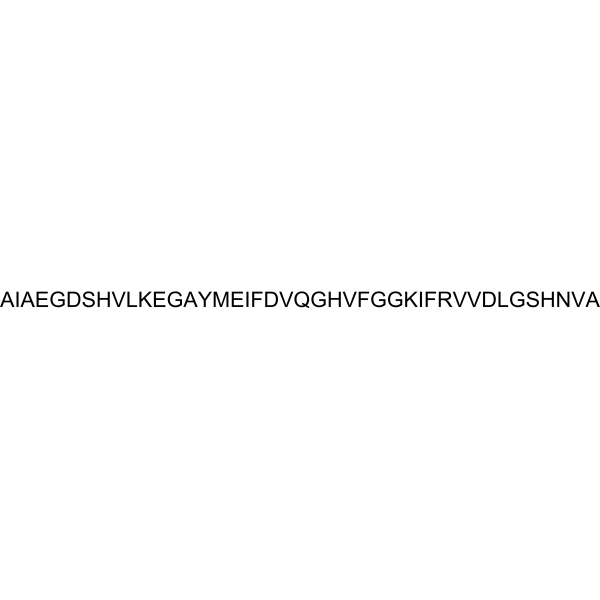 0 ImagesCat. No.: HY-P4867CAS No.: 1678415-52-5β Amyloid (1-42) (scrambled) is a negative control of β-Amyloid (1-42), human (HY-P1363A).
-
Thiethylperazine dimaleate (Standard)
 0 ImagesThiethylperazine (dimaleate) (Standard) is the analytical standard of Thiethylperazine (dimaleate). This product is intended for research and analytical applications. Thiethylperazine dimaleate, a phenothiazine derivate, is an orally active and potent dopamine D2-receptor and histamine H1-receptor antagonist. Thiethylperazine dimaleate is also a selective ABCC1activator that reduces amyloid-β (Aβ) load in mice. Thiethylperazine dimaleate has anti-emetic, antipsychotic and antimicrobial effects.
-
(R)-JNJ-40418677 (Standard)
 0 Images(R)-JNJ-40418677 (Standard) is the analytical standard of (R)-JNJ-40418677 (HY-100604A). This product is intended for research and analytical applications. (R)-JNJ-40418677 is the R-enantiomer of JNJ-40418677 (HY-100604).
-
Dyclonine hydrochloride (Standard)
 0 ImagesSynonyms: Dyclocaine hydrochloride (Standard)Dyclonine hydrochloride (Standard) (Dyclocaine hydrochloride (Standard)) is the analytical standard of Dyclonine hydrochloride (HY-B0364A). This product is intended for research and analytical applications. Dyclonine hydrochloride (Dyclocaine hydrochloride) is an orally active, blood-brain barrier-permeable piperidine phenylacetone small molecule commonly used as a local anesthetic. Dyclonine hydrochloride acts as a highly selective allosteric antagonist of TRPV3; it also reversibly inhibits G9a, ALDH2 and ALDH3A1, non-competitively blocks AChE. Dyclonine hydrochloride activates the Nrf2/ARE pathway, relieves the epigenetic silencing of FXN, blocks Aβ42 aggregation, and promotes remyelination and reparative polarization of microglia. Dyclonine hydrochloride alleviates pruritus via TRPV3 inhibition; it is used in studies of neurodegenerative disease models based on its AChE inhibitory, antioxidant and remyelinating effects; it sensitizes drug-resistant tumors through ALDH inhibition, and combined use with protease inhibitors induces more tumor cell apoptosis; it inhibits Candida albicans in vitro. Dyclonine hydrochloride can be used for research on multiple diseases including neurodegenerative diseases, cancer and pruritic dermatitis.
-
CHF5022
 0 ImagesCat. No.: HY-123228CAS No.: 749269-77-0CHF5022 is an inhibitor of Aβ42 secretion (IC50=92 μM). CHF5022 retains a modest activity on Aβ40 at non-cytotoxic concentrations (−22.2±4.8% at 100 μM).
-
Isoacteoside (Standard)
 0 ImagesSynonyms: Isoverbascoside (Standard)Isoacteoside (Standard) is the analytical standard of Isoacteoside. This product is intended for research and analytical applications. Isoacteoside is a natural product that can significantly inhibit the formation of glycation end products. Isoacteoside Standard regulates the AKT/PI3K/m-TOR/NF-κB signaling pathway, induces apoptosis in OVCAR-3 cell. Isoacteoside Standard exhibits antitumor, anti-inflammatory, anti-obesity and neuroprotective activities.
-
Valiltramiprosate-d6
 0 ImagesCat. No.: HY-117259SSynonyms: ALZ-801-d6Valiltramiprosate-d6 (ALZ-801-d6) is deuterium labeled Valiltramiprosate. ALZ-801 is a potent and orally available small-molecule β-amyloid (Aβ) anti-oligomer and aggregation inhibitor, valine-conjugated proagent of Tramiprosate with substantially improved PK properties and gastrointestinal tolerability compared with the parent compound. ALZ-801 is an advanced and markedly improved candidate for the treatment of alzheimer’s disease.

-
Azeliragon (Standard)
 0 ImagesSynonyms: TTP488 (Standard); PF-04494700 (Standard)Azeliragon (Standard) is the analytical standard of Azeliragon. This product is intended for research and analytical applications. Azeliragon (TTP488) is an orally bioavailable inhibitor of the receptor for advanced glycation end products (RAGE) in development as a potential treatment to slow disease progression with mild Alzheimer’s disease (AD). Azeliragon also can cross the blood-brain barrier (BBB).
-
Tolcapone 3-β-D-glucuronide
 0 ImagesCat. No.: HY-126194CAS No.: 204853-33-8Synonyms: Ro 61-1448Tolcapone 3-β-D-glucuronide (Ro 61-1448) is an O-methyl metabolite of Tolcapone (HY-17406) and is pharmacologically inactive. Tolcapone (Ro 40-7592) is a selective, potent and orally active COMT inhibitor with an IC50of 773 nM. Tolcapone can inhibits α-syn and Aβ42 oligomerization and fibrillogenesis. Tolcapone can cause oxidative stress and induce cancer cells apoptosis and ROS production. Tolcapone can be used for the researches of cancer and neurological disease, such as Parkinson disease and neuroblastoma.
-
Davunetide (Standard)
 0 ImagesCat. No.: HY-105066RCAS No.: 211439-12-2Davunetide (Standard) is the analytical standard of Davunetide (HY-105066). This product is intended for research and analytical applications. Davunetide is an eight amino acid snippet derived from activity-dependent neuroprotective protein (ADNP), a neurotrophic factor that exists in the mammalian CNS. Davunetide possesses neuroprotective, neurotrophic and cognitive protective roperties. Davunetide, a microtubule-stabilizing peptide, interacts with and stabilises neuron-specific βIII-tubulin in vitro. Davunetide penetrates the blood-brain barrier and is non-toxic. Davunetide inhibits Aβ aggregation and Aβ-induced neurotoxicity.
-
CGP52411 (Standard)
 0 ImagesCat. No.: HY-103442RCAS No.: 145915-58-8Synonyms: DAPH (Standard)CGP52411 (Standard) is the analytical standard of CGP52411 (HY-103442). This product is intended for research and analytical applications. CGP52411 (DAPH) is a high selective, potent, orally active and ATP-competitive EGFR inhibitor with an IC50 of 0.3 μM. CGP52411 blocks the toxic influx of Ca2+ ions into neuronal cells, and dramatic inhibits and reverses the formation of β-amyloid (Aβ42) fibril aggregates associated with Alzheimer's disease.
-
TH-237A
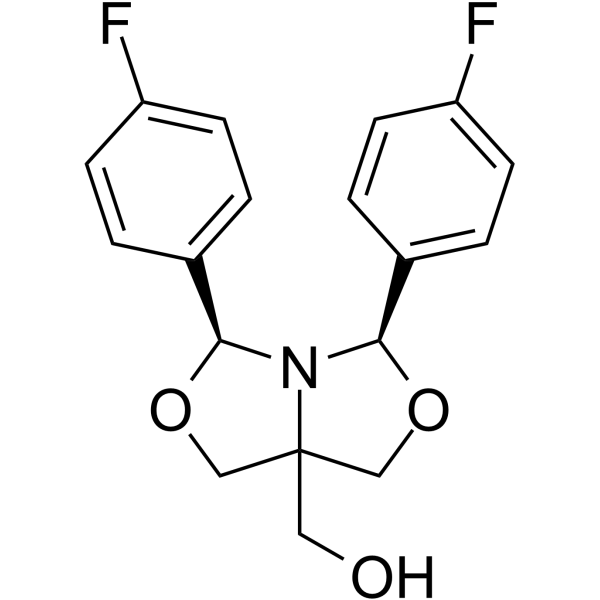 0 ImagesSynonyms: meso-GS 164TH-237A(meso-GS 164) is a neuroprotective agent with good blood-brain barrier permeability.
-
3-O-Methyltolcapone (Standard)
 0 ImagesCat. No.: HY-100642RCAS No.: 134612-80-9Synonyms: Ro 40-7591 (Standard)3-O-Methyltolcapone (Standard) (Ro 40-7591 (Standard)) is the analytical standard of 3-O-Methyltolcapone (HY-174062). 3-O-Methyltolcapone (Ro 40-7591) is a metabolite of Tolcapone (HY-17406). Tolcapone (Ro 40-7592) is a selective, potent and orally active COMT inhibitor with an IC50of 773 nM. Tolcapone can inhibits α-syn and Aβ42 oligomerization and fibrillogenesis. Tolcapone can cause oxidative stress and induce cancer cells apoptosis and ROS production. Tolcapone can be used for the researches of cancer and neurological disease, such as Parkinson disease and neuroblastoma.
-
β-Amyloid (1-8, A2V)
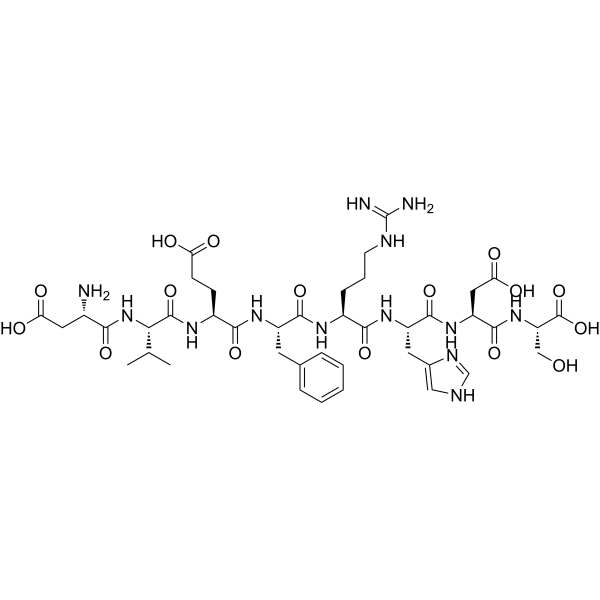 0 ImagesCat. No.: HY-P5945β-Amyloid (1-8, A2V) is amutantion of β-Amyloid (1-8) (HY-P5946).
-
(-)-Secoisolariciresinol 4-O-β-D-glucopyranoside
 0 ImagesCat. No.: HY-N20640CAS No.: 129102-89-2(-)-Secoisolariciresinol 4-O-β-D-glucopyranoside is a lignan that can be found in the roots and rhizomes of Valeriana amurensis. (-)-Secoisolariciresinol 4-O-β-D-glucopyranoside shows no significant neuroprotective effect against Aβ1-42-induced injury to neuronal cells.




