



Bacterial
Anything that destroys bacteria or suppresses their growth or their ability to reproduce. Heat, chemicals such as chlorine, and antibiotic drugs all have antibacterial properties. Many antibacterial products for cleaning and handwashing are sold today. Such products do not reduce the risk for symptoms of viral infectious diseases in otherwise healthy persons. This does not preclude the potential contribution of antibacterial products to reducing symptoms of bacterial diseases in the home.
All Product Categories
-
Bacterial Inhibitors
(7433)
View all products
-
Bacterial Agonists
(3)
View all products
-
Bacterial Antagonists
(9)
View all products
-
Bacterial Activators
(23)
View all products
-
Bacterial Modulators
(20)
View all products
-
Bacterial Chemicals
(2)
View all products
-
Bacterial Inducers
(7)
View all products
-
Bacterial Controls
(14)
View all products
-
Bacterial Substrates
(2)
View all products
-
Bacterial Ligand
(1)
View all products
-
Bacterial Related Products (8732)
Related Products (8732)

-
Antibodies (14)
-
Related Compound Screening Libraries (1)
-
Exfoliamycin
 0 ImagesCat. No.: HY-N14246CAS No.: 148084-37-1Exfoliamycin is a naphthoquinone antibiotic found by Streptomyces Exfoliamycin Tu 1424 and is active against Gram-positive bacteria.
-
Feglymycin
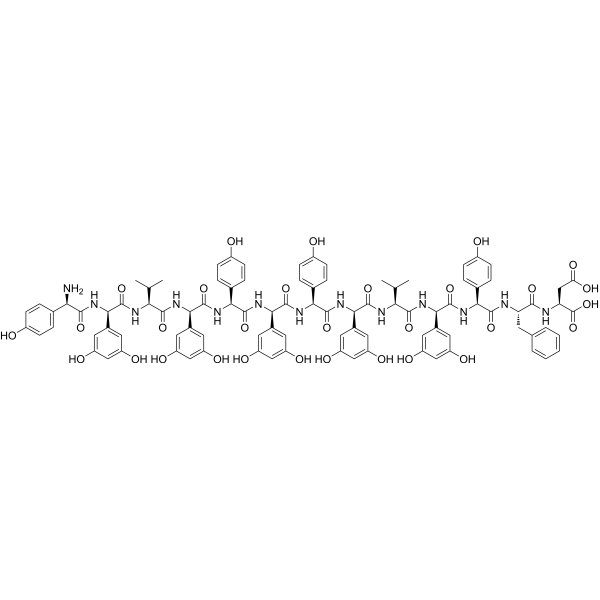 0 ImagesCat. No.: HY-W714002CAS No.: 209335-49-9Feglymycin is a HIV replication inhibitor. Feglymycin is also an antibiotic peptide that has antibacterial activity (MIC: 32-64 μg/mL for Staphylococcus aureus).
-
Telacebec ditosylate
 0 ImagesCat. No.: HY-101040ACAS No.: 1566517-83-6Synonyms: Q203 ditosylate; IAP6 ditosylateTelacebec ditosylate is a midazopyridine amide compound. Telacebec ditosylate is active against Mycobacterium tuberculosis H37Rv with an MIC50 of 2.7 nM in culture broth medium.
-
Marbofloxacin-d8(hydrochloride)
 0 ImagesCat. No.: HY-B0126ASMarbofloxacin-d8 (hydrochloride) is deuterium labeled Marbofloxacin (hydrochloride). Marbofloxacin hydrochloride is a third generation fluoroquinolone and orally active antimicrobial agent, which has a broad spectrum bactericidal activity and good efficacy. Marbofloxacin hydrochloride can be used for the research of infections by Gram-positive and Gram-negative bacteria and Mycoplasma.
-
Antibacterial synergist 3
 0 ImagesCat. No.: HY-173270Antibacterial synergist 3 is a dual-acting inhibitor of biofilm (IC50 of PAO1: 0.40 μM and IC50 of PA14: 1.45 μM). Antibacterial synergist 3 reduces virulence production by inhibiting the quorum sensing (QS) system and induces iron deficiency in P. aeruginosa PAO1. Antibacterial synergist 3 enhances the efficacy of Tobramycin (HY-B0441) and Ciprofloxacin (HY-B0356) in a mouse wound infection model. Antibacterial synergist 3 can be used for the research of P. aeruginosa infections.
-
Colupulone
 0 ImagesCat. No.: HY-167627CAS No.: 21621-94-3Colupulone is a β-acid resin component found in hops (Humulus lupulus) and exhibits antibacterial and anti-larval activity against Culex mosquitoes. Colupulone can be used in studies related to infectious diseases.
-
Pneumocandin A1
 0 ImagesCat. No.: HY-N14464CAS No.: 135862-90-7Pneumocandin A1 is a lipopeptide antibiotic. Pneumocandin A1 has a strong anti-Candida effect. Pneumocandin A1 has the effect of inhibiting the synthesis of 1,3 early-glucan in vitro, with an IC50 of 0.07-0.5 μg/mL.
-
Kerriamycin C
 0 ImagesCat. No.: HY-N14259CAS No.: 98495-38-6
-
Anti-MRSA agent 37
 0 ImagesCat. No.: HY-178493CAS No.: 3064702-33-3Anti-MRSA agent 37 (Compound 5B) is an antibacterial agent against methicillin-resistant Staphylococcus aureus (MRSA) (MIC=0.25-0.5 μg/mL). Anti-MRSA agent 37 inhibits biofilm formation, disrupts cell wall integrit, attacks cell membrane and induces oxidative stress. Anti-MRSA agent 37 is promising for research of MRSA-related diseases such as skin infections.
-
Bekanamycin sulfate
 0 ImagesCat. No.: HY-B1174ACAS No.: 29701-07-3Synonyms: Kanamycin B sulfateBekanamycin (Kanamycin B) sulfate is a minor component of the kanamycin complex, an aminoglycoside antibiotic isolated from Streptomyces kanamyceticus, with antibacterial activity.
-
Variculanol
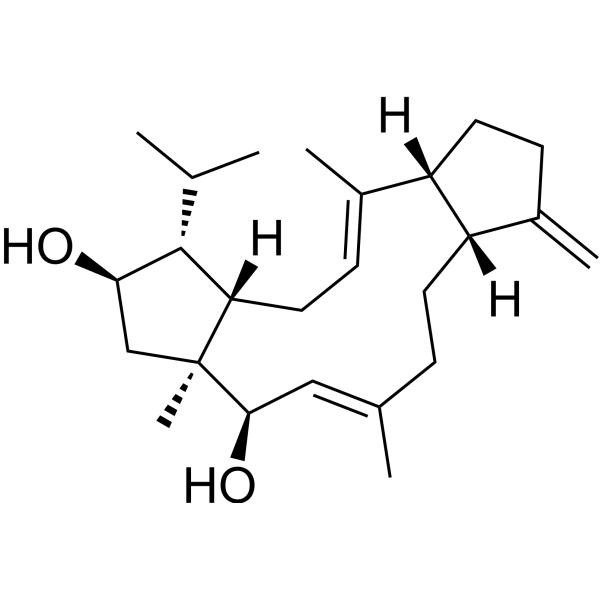 0 ImagesCat. No.: HY-N8520CAS No.: 135513-21-2Variculanol is an antimicrobial, anticancer and anti-HCV NS3/4A Protease agent which can be extracted from marine fungus Aspergillus versicolor.
-
Aloe vera
 0 ImagesCat. No.: HY-N13301CAS No.: 85507-69-3Aloe vera is an herbal plant known for its anti-inflammatory, antibacterial, anticancer, antioxidant, heart-protective, and wound-healing properties. Aloe vera can be used in research for tumors, diabetes, bone diseases, and cardiovascular diseases.
-
Aerothionin
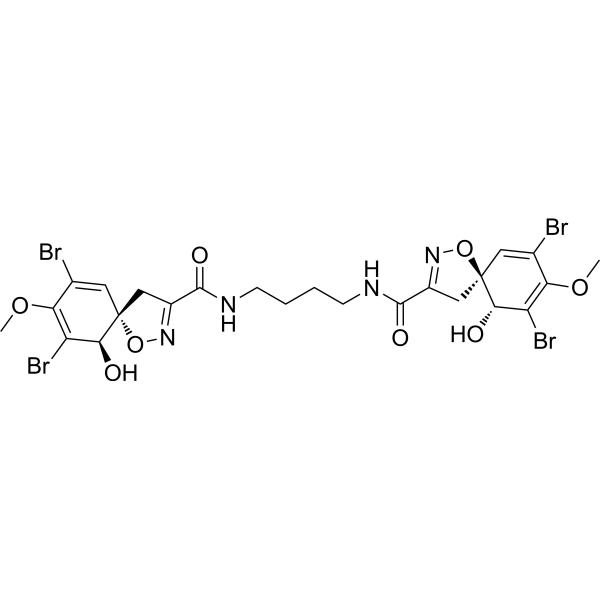 0 ImagesCat. No.: HY-121349CAS No.: 28714-26-3Aerothionin is an antibiotic with potent antimicrobial efficacy against bacteria and fungi. Aerothionin exhibits antitumor efficacy against adrenal pheochromocytomas and extra-adrenal paragangliomas (PPGLs).
-
Hongoquercin B
 0 ImagesCat. No.: HY-N14316CAS No.: 213338-47-7Hongoquercin B is a sesquiterpene antibiotic. Hongoquercin B is only resistant to Vancomycin-resistant Enterococcus faecium at high concentrations.
-
Swertianolin (Standard)
 0 ImagesCat. No.: HY-N2192RCAS No.: 23445-00-3Swertianolin (Standard) is the analytical standard of Swertianolin (HY-N2192). This product is intended for research and analytical applications. Swertianolin is a xanthone glycoside. Swertianolin can be isolated from plants of the Gentianaceae family (e.g., Gentiana campestris and Swertia punicea). Swertianolin inhibits p38 phosphorylation and NF-κB activation, and reduces NO and ROS production. Swertianolin exhibits anti-Helicobacter pylori activity with an IC50 of 6.1 μM and a minimum bactericidal concentration of 91.7 μM. Swertianolin modulates immune function in sepsis. Swertianolin is useful in the research of diseases such as Alzheimer's disease, hepatitis B, Helicobacter pylori infection, and sepsis.
-
2'''-Hydroxychlorothricin
 0 ImagesCat. No.: HY-N14350CAS No.: 111810-18-5Hydroxychlorothricin is an antibiotic of the chlorothricin group. Hydroxychlorothricin can be found in Streptomyces sp. K818. Hydroxychlorothricin has anti-tumor effect and can prolong the survival period of ICR mice inoculated with Ehrlich cancer cells.
-
Steffimycin B
 0 ImagesCat. No.: HY-N8470CAS No.: 54526-94-2Synonyms: NSC 204855; U 40615Steffimycin B is an anthracycline bacterial metabolite originally isolated from Streptomyces. It binds to DNA, preferentially intercalating at sites containing cytosine and guanine.2 Steffimycin B is cytotoxic to MCF-7, KB, NCI-H187, and Vero cells (IC50s=3.5, 6.75, 3.28, and 10.5 μM, respectively). It is active against M. tuberculosis (MIC=5.2 nM), B. cereus (MIC=1.56 μg/mL), and P. falciparum (IC50=2.19 μM).
-
α-Terpineol-d6
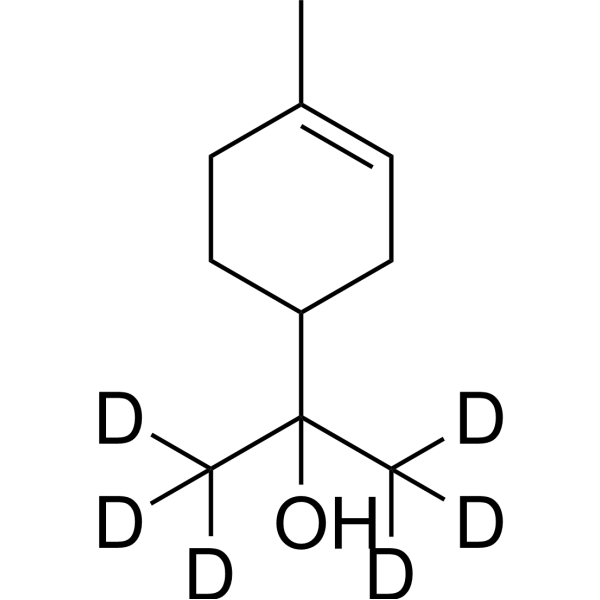 0 ImagesCat. No.: HY-N5142S1CAS No.: 1263090-98-7α-Terpineol-d6 is deuterated labeled α-Terpineol (HY-N5142). α-Terpineol (with oral activity) can be found in Eucalyptus globulus Labill. α-Terpineol exhibits strong antimicrobial activity against periodontopathic and cariogenic bacteria.α-Terpineol possesses antifungal activity against T. mentagrophytes, and the activity might lead to irreversible cellular disruption. In addition, α-Terpineol exhibits antineuropathic and anti-inflammatory activities. α-Terpineol can be utilized in research related to diarrhea, neuropathic pain, infections, and inflammation.
-
Mycoplanecin A
 0 ImagesCat. No.: HY-N13075CAS No.: 72993-51-2Mycoplanecin A is a cyclic peptide antibiotic. Mycoplanecin A has strong anti-mycobacterial, luteus, and Hypococcus activity. Mycoplanecin A also has moderate anti-Xanthomonas oryzae activity. Mycoplanecin A also has antibacterial effect on some strains of Actinomycetes.
-
Antibiofilm agent-4
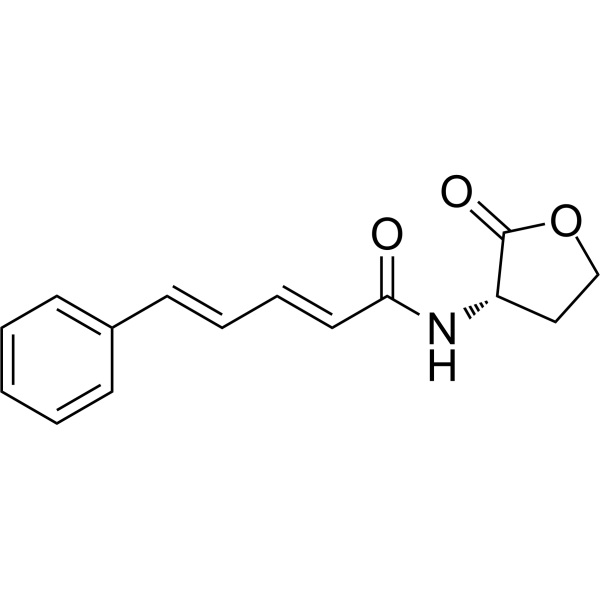 0 ImagesCat. No.: HY-161086CAS No.: 3027083-73-1Antibiofilm agent-4 (compound 4p) is a LasR inhibitor. Antibiofilm agent-4 shows the best antibiofilm and anti-QS properties.




