



Fungal
An antifungal agent is a drug that selectively eliminates fungal pathogens from a host with minimal toxicity to the host.
Classes: 1. Polyene Antifungal Drugs: Amphotericin, nystatin, and pimaricin interact with sterols in the cell membrane (ergosterol in fungi, cholesterol in humans) to form channels through which small molecules leak from the inside of the fungal cell to the outside. 2. Azole Antifungal Drugs: Fluconazole, itraconazole, and ketoconazole inhibit cytochrome P450-dependent enzymes (particularly C14-demethylase) involved in the biosynthesis of ergosterol, which is required for fungal cell membrane structure and function. 3. Allylamine and Morpholine Antifungal Drugs: lylamines (naftifine, terbinafine) inhibit ergosterol biosynthesis at the level of squalene epoxidase. The morpholine drug, amorolfine, inhibits the same pathway at a later step. 4. Antimetabolite Antifungal Drugs: 5-Fluorocytosine acts as an inhibitor of both DNA and RNA synthesis via the intracytoplasmic conversion of 5-fluorocytosine to 5-fluorouracil.
All Product Categories
-
Fungal Related Products (2768)
Related Products (2768)

-
Antibodies (1)
-
Related Compound Screening Libraries (1)
-
Sortin2
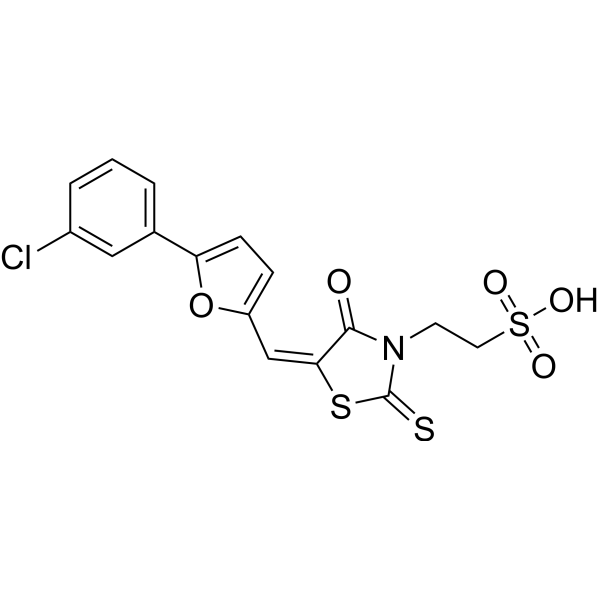 0 ImagesCat. No.: HY-122245CAS No.: 372972-39-9Sortin2 is a synthetic compound and a Yeast vacuolar protein sorting (vps) inhibitor . Sortin2 can affect protein targeting to the vacuole in Saccharomyces cerevisiae.
-
Dimethomorph-d8
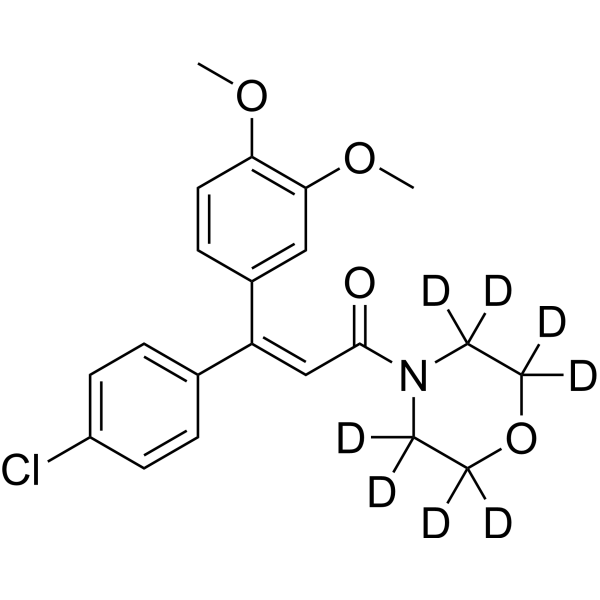 0 ImagesCat. No.: HY-B0846SCAS No.: 1346606-71-0Dimethomorph-d8 is the deuterium labeled Dimethomorph. Dimethomorph is a fungicide belongs to the fungicide group of sterol biosynthesis inhibitor. Dimethomorph can inhibit fungal cell wall formation. Dimethomorph also inhibits androgen receptor (AR) activity in MDA-kb2 cells with an IC20 of 0.263 μM.
-
Pterolactam
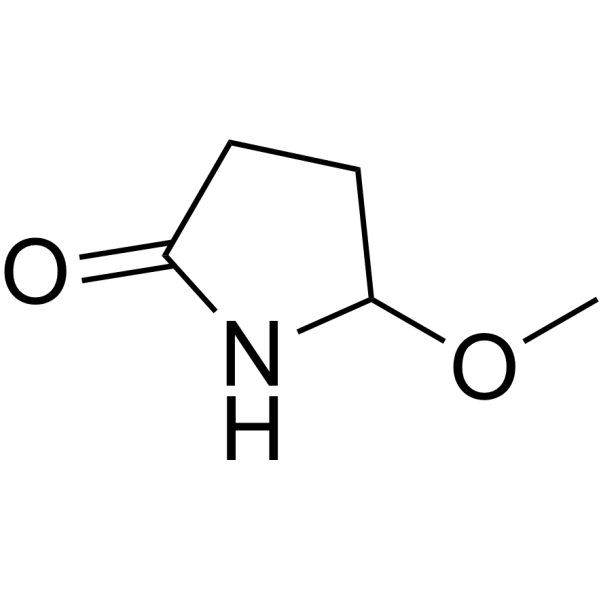 0 ImagesCat. No.: HY-N1567CAS No.: 38072-88-7Pterolactam can be isolated from Chrysanthemum coronarium L. Pterolactam derivates serval analogues that Mannich bases of amide with antifungal activities and cytotoxicity.
-
F2928-1
 0 ImagesCat. No.: HY-N19242CAS No.: 877060-85-0F2928-1 is a small-molecule polyketide antifungal antibiotic. F2928-1 can kill harmful fungi such as Aspergillus fumigatus. F2928-1 can be used in studies related to aspergillosis and candidiasis.
-
8-Acetonyldihydronitidine
 0 ImagesCat. No.: HY-N21597CAS No.: 80330-39-88‑Acetonyldihydronitidine is a naturally occurring benzophenanthridine alkaloid with antibacterial, antifungal, and anti-proliferative activities against colorectal cancer cells. 8‑Acetonyldihydronitidine inhibits Staphylococcus aureus and exerts a potent antifungal effect against Cladosporium cladosporioides. 8‑Acetonyldihydronitidine activates the p53 signaling pathway, upregulates the expression of target genes including p21, BAX, and FAS, downregulates cyclin A and cyclin B, and induces cell cycle arrest and apoptosis, thereby suppressing the proliferation of colorectal cancer cells. 8‑Acetonyldihydronitidine is used in research related to colorectal cancer, fungal infections, and bacterial infections.
-
Sertaconazole
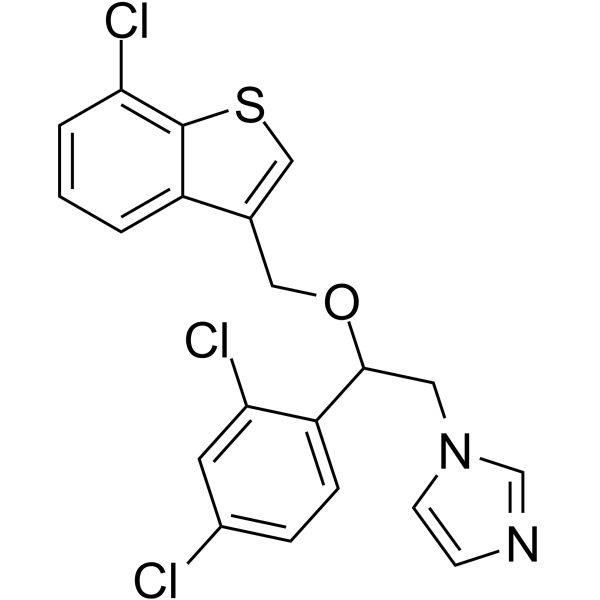 0 ImagesSynonyms: FI7056 free baseSertaconazole (FI7056 free base) is a broad-spectrum topical antifungal agent, exhibits anti-inflammatory activity via activation of a p38-COX-2-PGE2 pathway. Sertaconazole is also a microtubule inhibitor, shows antiproliferative effect, induces apoptosis and autophagy, and can also inhibit the migration of cells.
-
DHFR-IN-1
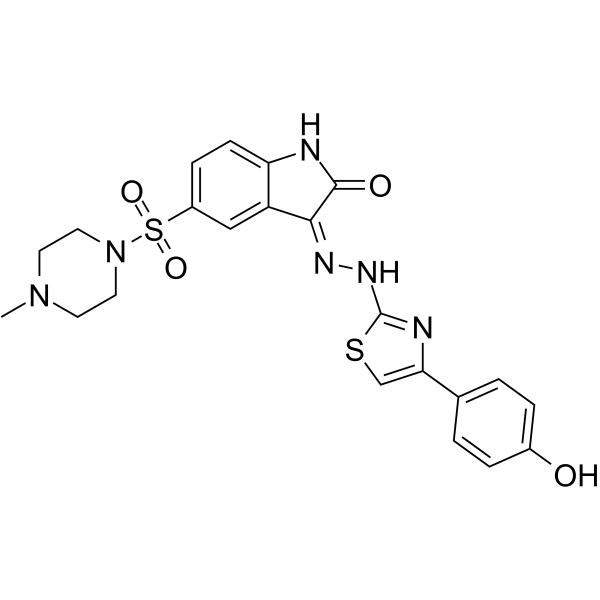 0 ImagesCat. No.: HY-143236CAS No.: 2757991-65-2DHFR-IN-1 (compound 12) is a potent and selective DHFR (dihydrofolate reductase)inhibitor, with an IC50 of 40.71 nM. DHFR-IN-1 exhibits promising antibacterial activity against gram-positive and gram-negative bacteria. DHFR-IN-1 exhibits moderate antifungal activities. DHFR-IN-1 exhibits a high synergistic effect with Levofloxacin (HY-B0330), where the FIC (fractional inhibitory concentration index) value is 0.249.
-
Lyoniside
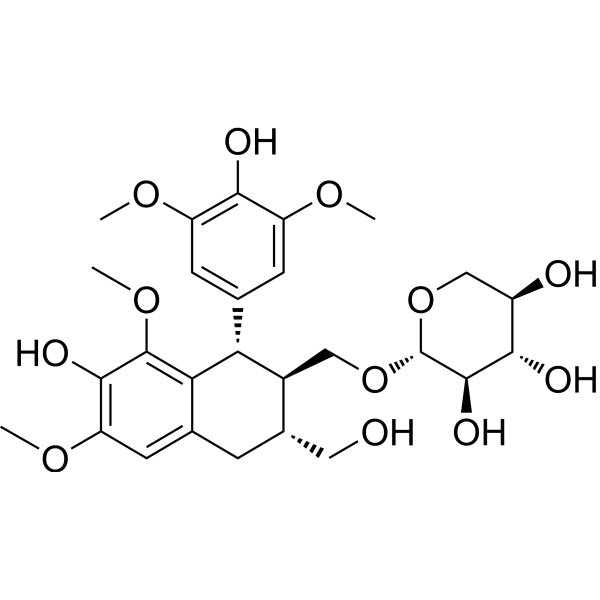 0 ImagesCat. No.: HY-N3348CAS No.: 34425-25-7Lyoniside is a lignan glycoside with antioxidant, allelopathic and antifungal activities, which can be isolated from the rhizomes and stems of bilberry (Vaccinium myrtillus L.). Lyoniside exhibits radical scavenging properties with an IC50 value of 23 μg/mL in DPPH assay. Lyoniside inhibits the mycelial growth of Fusarium oxysporum and Mucor hiemalis at 50 μg/mL with inhibitory rates of 78% and 80%, respectively.
-
Acremorin E
 0 ImagesCat. No.: HY-N15300Acremorin E (Compound 7) is a terpenoid compound with antifungal activity. Acremorin E exerts its anti-C. gattiii effect by upregulating genes related to biosynthesis and RNA binding of ribosomes, as well as inhibiting RNA and nucleic acid metabolism and ATPase activity (MIC: 8 μg/mL).
-
Antifungal agent 72
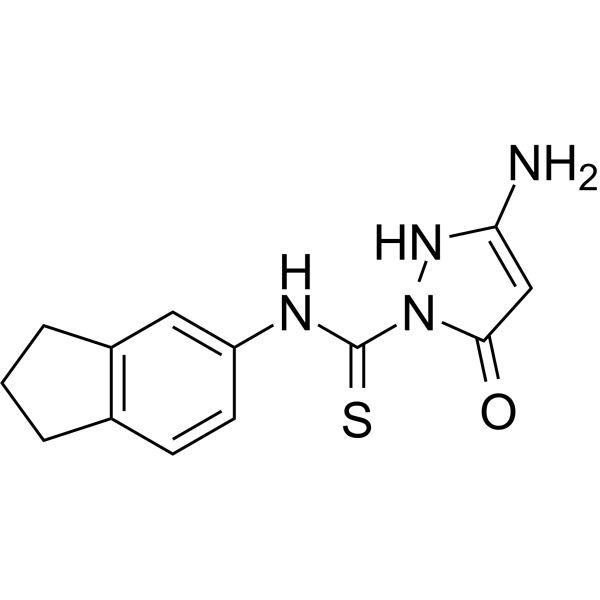 0 ImagesCat. No.: HY-155198CAS No.: 3032485-62-1Antifungal agent 72 (Compound B8) is a potent antifungal agent. Antifungal agent 72 suppresses the function of efflux pump and down-regulates the resistance-associated genes through blocking the Pdr1-KIX interaction (Ki: 11.7 μM). Antifungal agent 72 is active against Fluconazole (HY-B0101)-resistant with a MIC value of 63 ng/mL, and shows synergistic inhibitory activity with Fluconazole. Antifungal agent 72 can be used for C. glabrata infection research.
-
Janthitrem G
 0 ImagesCat. No.: HY-N7221CAS No.: 90986-51-9Janthitrem G is a microbial metabolite that can be isolated from cultures of Penicillium.
-
TMV-IN-5
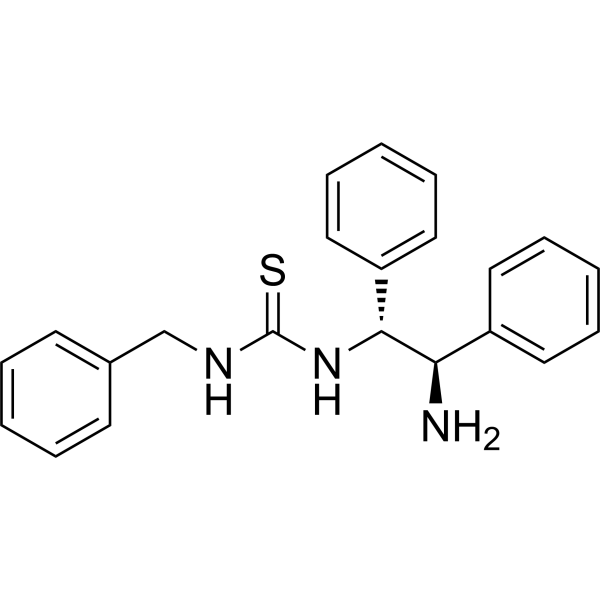 0 ImagesCat. No.: HY-155044CAS No.: 1207318-92-0TMV-IN-5 (compound 1a) is an anti-plant virus/fungal agent. TMV-IN-5 inhibits viral assembly by binding to tobacco mosaic virus (TMV) CP. TMV-IN-5 can be used in the development of pesticides.
-
Alteconazole
 0 ImagesCat. No.: HY-122380CAS No.: 93479-96-0Alteconazole is a compound with antifungal activity that belongs to the class of azole derivatives.
-
Plipastatin B1
 0 ImagesCat. No.: HY-113560CAS No.: 103955-73-3Plipastatin B1 is a lipopeptide antibiotic, an inhibitor of phospholipase A2 (PLA2), which has antifungal activity.
-
Antibacterial agent 133
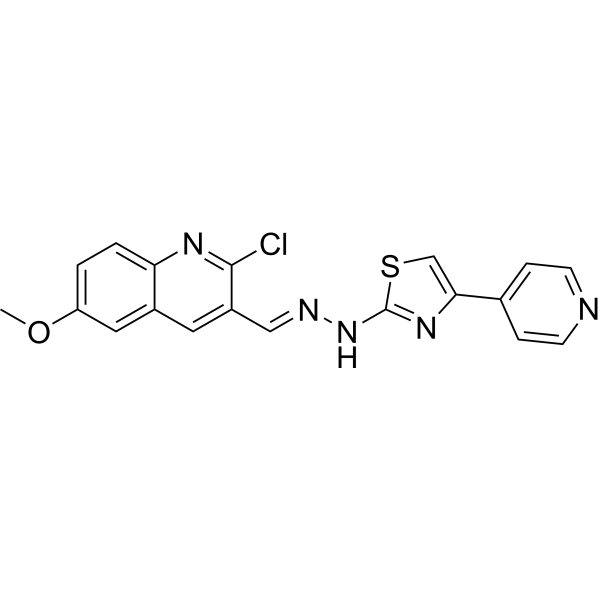 0 ImagesCat. No.: HY-152252Antibacterial agent 133 (4l) is an antimicrobial agent that has shown anti-Candida activity, particularly through LMD enzyme inhibition. Antibacterial agent 133 shows MIC90 values of 1.95 μg/mL against Candida albicans ATCC 24433, Candida smoothis ATCC 90030 and Candida subtilis ATCC 22019.
-
Dendryphiellin D
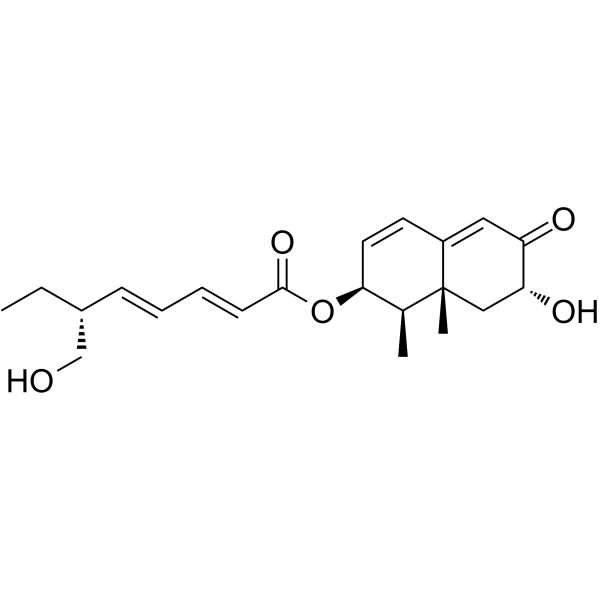 0 ImagesCat. No.: HY-N10212CAS No.: 121678-87-3Dendryphiellin D is a compound isolated from fungus Septoria rudbeckiae, a plant pathogenic fungus isolated from the halophyte Karelinia caspia. Dendryphiellin D significantly inhibits the production of nitric oxide (NO).
-
Aurachin D (Standard)
 0 ImagesCat. No.: HY-N7151RCAS No.: 108354-13-8Aurachin D (Standard) is the analytical standard of Aurachin D (HY-N7151). This product is intended for research and analytical applications. Aurachin D is an antibiotic and selective cytochrome bd oxidase inhibitor. Aurachin D exhibits inhibitory effects against Gram-positive bacteria and a small number of fungi, with an IC50 value of 0.1 μM against Escherichia coli and an IC50 value ranging from 0.13 to 33 μM against Mycobacterium tuberculosis. Aurachin D binds to and inhibits cytochrome bd oxidase, thereby blocking the electron transfer process, disrupting the respiratory chain and energy metabolism of pathogens. Aurachin D can be used in research related to leishmaniasis, malaria, Chagas disease, African trypanosomiasis, and tuberculosis[2].
-
Antifungal agent 120
 0 ImagesCat. No.: HY-167697CAS No.: 387371-82-6Antifungal agent 120 exhibits antifungal properties against S. dermatitidis (skin-infecting fungi) and its efficacy against other fungal species is yet to be investigated.
-
Levoketoconazole-d3
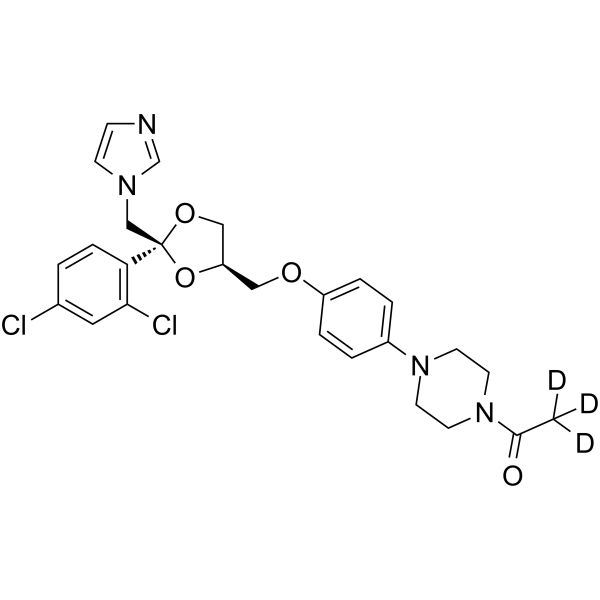 0 ImagesCat. No.: HY-B0105BSCAS No.: 1217766-70-5Synonyms: (-)-Ketoconazole-d3; (-)-Ketoconazol-d3; (-)-R 41400-d3(-)-Ketoconazole-d3 is deuterium labeled (-)-Ketoconazole. (-)-Ketoconazole ((-)-R 41400) is one of the enantiomer of Ketoconazole. Ketoconazole is a racemic mixture of two enantiomers, levoketoconazole ((2S,4R)-(−)-ketoconazole) and dextroketoconazole ((2R,4S)-(+)-ketoconazole).
-
Sporminarin A
 0 ImagesCat. No.: HY-N16443CAS No.: 915403-42-8Sporminarin A (Compound 1), a polyketide, is a microbial secondary metabolite. Sporminarin A can be isolated from the Sporormiella minimoides. Sporminarin A has significant antifungal activity against Aspergillus flavus with an MIC50 of 25 μg/mL. Sporminarin A also has antibacterial activity against Staphylococcus aureus (ATCC 29213) and Candida albicans (ATCC 14053).




