



Glycosidase
Glycosidase
Glycosidase are a class of enzymes which catalyze the hydrolysis of glycosidic bonds. In living organisms, Glycosidase are involved in carbohydrate metabolism. They can degrade polysaccharides such as starch and glycogen into monosaccharides, providing energy for cells. Glycosidase also participate in the synthesis and modification of biological macromolecules such as glycoproteins and glycolipids, playing a crucial role in cell recognition and signal transduction. Additionally, in plants and microorganisms, Glycosidase are involved in the metabolism of cell wall polysaccharide components, affecting cell growth, differentiation, and morphogenesis. Gene mutations of Glycosidase can trigger genetic diseases, leading to abnormal metabolism in the body and damage to organ functions. Changes in their activity are associated with various diseases such as diabetes, infectious diseases, and tumors, and can influence the occurrence and development of diseases[1][2].
References:
- [1]. Wang X, et al. Metabolites extracted from microorganisms as potential inhibitors of glycosidases (α-glucosidase and α-amylase): A review. Front Microbiol. 2022 Nov 17;13:1050869.
- [2]. Ohtsubo K, et al. Glycosylation in cellular mechanisms of health and disease. Cell. 2006 Sep 8;126(5):855-67. [Content Brief]
All Product Categories
-
Glycosidase Inhibitors
(456)
View all products
-
Glycosidase Antagonist
(1)
View all products
-
Glycosidase Activators
(20)
View all products
-
Glycosidase Modulators
(8)
View all products
-
Glycosidase Chemical
(1)
View all products
-
Glycosidase Inducers
(2)
View all products
-
Glycosidase Degrader
(1)
View all products
-
Glycosidase Controls
(6)
View all products
-
Glycosidase Substrates
(25)
View all products
-
Glycosidase Ligands
(3)
View all products
-
Glycosidase Related Products (697)
Related Products (697)

-
Antibodies (3)
-
L-Afegostat
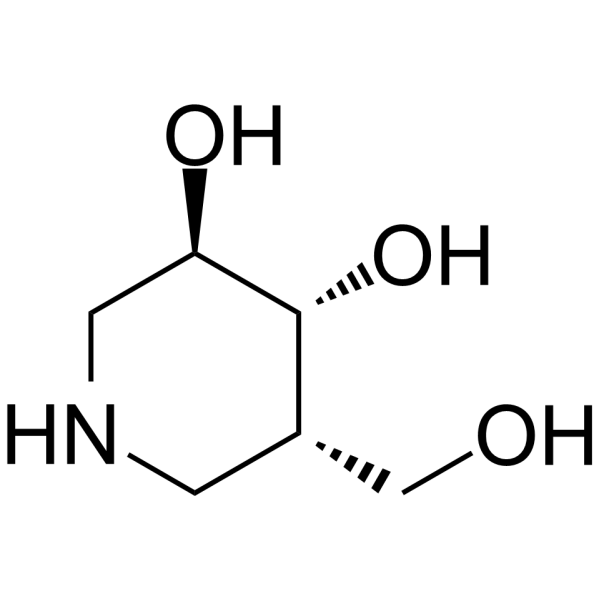 0 ImagesCat. No.: HY-14829FCAS No.: 202979-51-9Synonyms: 5-epi-IsofagomineL-Afegostat (5-epi-Isofagomine) is a glycosidase inhibitor. L-Afegostat is an iminosugar that can be used for the synthesis of carbohydrates. L-Afegostat shows enzyme inhibition to β-Glucosidase with an Ki of 30 μM.
-
α-Glucosidase-IN-43
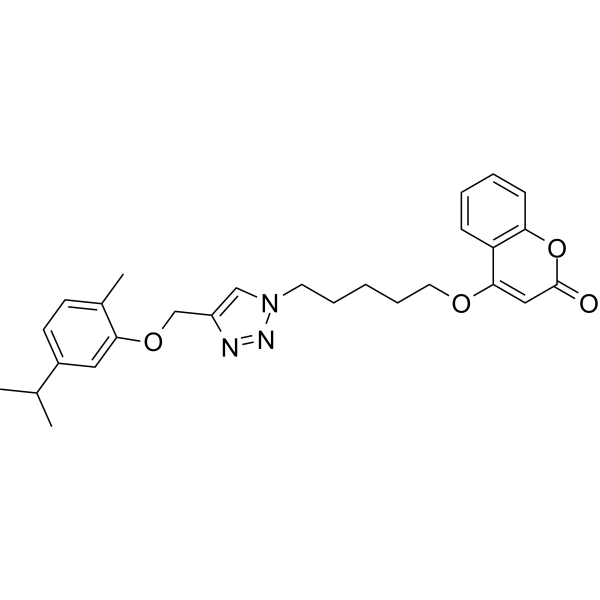 0 ImagesCat. No.: HY-163005CAS No.: 3018963-27-1α-Glucosidase-IN-43 (compound AS14) is an α-glucosidase inhibitor (IC50: 4.32 μM) with acute hypoglycemic activity. α-Glucosidase-IN-43 exhibits safety and in vivo efficacy, is nontoxic to normal mouse fibroblasts, and is able to rescue streptozotocin (HY-13753)-induced diabetic rats. α-Glucosidase-IN-43 can be used to study postprandial hyperglycemia in diabetic patients.

-
Isoamylase, Pseudomonas sp.
 0 ImagesCat. No.: HY-E70116AIsoamylase, Pseudomonas sp. (EC 3.2.1.68) is an enzyme systematically named glycogen 6-α-D-glucan hydrolase. Isoamylase catalyzes the hydrolysis of (1→6)-α-D-glycosidic bonds in glycogen, amylopectin, and their β-limited dextrins. Isoamylase can also effectively hydrolyze amylopectin.
-
α-Glucosidase-IN-46
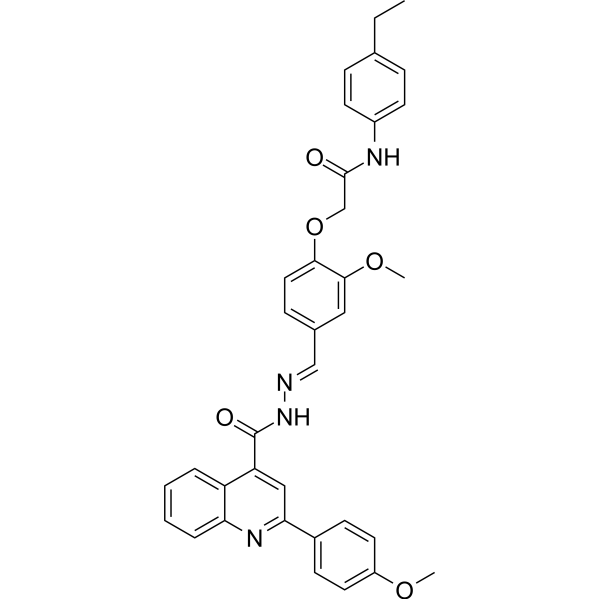 0 ImagesCat. No.: HY-157488α-Glucosidase-IN-46 is a potent α-glucosidase inhibitor with an IC50 of 26.0 μM. α-Glucosidase-IN-46 can be used for the research of type 2 diabetes.
-
Chrysophanol triglucoside
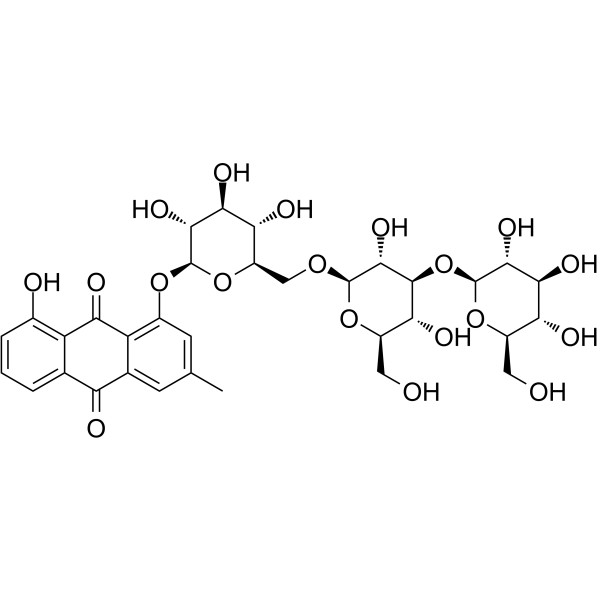 0 ImagesCat. No.: HY-N7599CAS No.: 120181-07-9Chrysophanol triglucoside is an anthraquinone isolated from Cassia obtusifolia, inhibits protein tyrosine phosphatases 1B (PTP1B) and α-glucosidase with IC50s of 80.17 and 197.06 µM, respectively. Chrysophanol triglucoside has the potential for diabetes research.

-
Nojirimycin
 0 ImagesCat. No.: HY-W995365CAS No.: 15218-38-9Nojirimycin is a nitrogen-containing sugar analog and glycosidase inhibitor. Nojirimycin contains a ring nitrogen atom, which acts as an isostere of the ring oxygen atom to inhibit glycosidases. Nojirimycin belongs to a class of nitrogen-containing sugar analogs with a ring nitrogen atom.
-
Anti-hyperglycemic agent-1
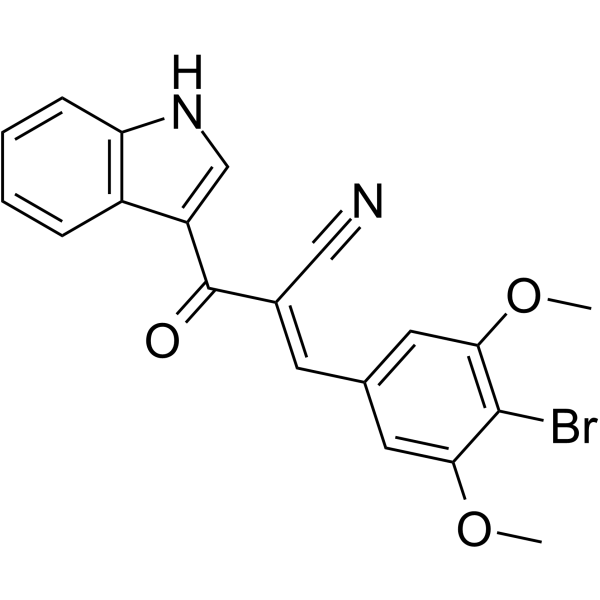 0 ImagesCat. No.: HY-146128CAS No.: 2488372-34-3Anti-hyperglycemic agent-1 (compound 10) is a potent α-Glucosidase inhibitor, with an IC50 of 0.53 μM. Anti-hyperglycemic agent-1 can be used for diabetes research.
-
Agarase
 0 ImagesCat. No.: HY-P2769CAS No.: 37288-57-6Agarase is a glycosidase that catalyzes the hydrolysis of agar into oligosaccharides.
-
Falandioside B
 0 ImagesCat. No.: HY-N17925CAS No.: 1809429-26-2Falandioside B is an α-glucosidase inhibitor with an IC50 of 107.52 μM. Falandioside B scavenges ABTS radical cations. Falandioside B is applicable to research related to postprandial hyperglycemia.
-
α-Amylase/α-Glucosidase-IN-24
 0 ImagesCat. No.: HY-184380CAS No.: 450380-22-0α-Amylase/α-Glucosidase-IN-24 is a dual inhibitor of α-amylase and α-glucosidase, with IC50 values of 40.18 μg/mL and 31.80 μg/mL, respectively. α-Amylase/α-Glucosidase-IN-24 exhibits weak anti-inflammatory and antioxidant activities, as well as moderate antibacterial activity. α-Amylase/α-Glucosidase-IN-24 can be used for the research of type 2 diabetes.
-
β-Galactosidase 42A, Thermotoga maritima
 0 ImagesCat. No.: HY-E71299Bβ-Galactosidase 42A, Thermotoga maritima (EC 3.2.1.23) is a hydrolase enzyme that catalyzes the hydrolysis of β-galactosides into monosaccharides. Substrates of different β-galactosidases include ganglioside GM1, lactosylceramides, lactose, and various glycoproteins.
-
HMRef-αMan
 0 ImagesCat. No.: HY-D3187CAS No.: 2484831-02-7HMRef-αMan is a substrate-based green fluorescent probe (Ex/Em=465 nm/515 nm) targeting MAN2C1 (α-mannosidase). HMRef-αMan can be specifically cleaved by MAN2C1 to generate a highly fluorescent product, which thus gets activated to produce green fluorescence in malignant breast tissues, benign lesions and living cancer cells. The signal intensity of HMRef-αMan is directly correlated with MAN2C1 activity, and it can effectively detect tiny breast cancer lesions with a diameter of less than 1 mm. When used in combination with the red-emitting γ-glutamyl transpeptidase (GGT) probe gGlu-2OMe SiR600 (HY-D3188), HMRef-αMan enables precise optical differentiation of breast tissue types via a dual-color imaging strategy. HMRef-αMan has been widely used in the research of breast diseases such as breast cancer, fibroadenoma, phyllodes tumor and various types of papilloma.
-
α-Glucosidase-IN-9
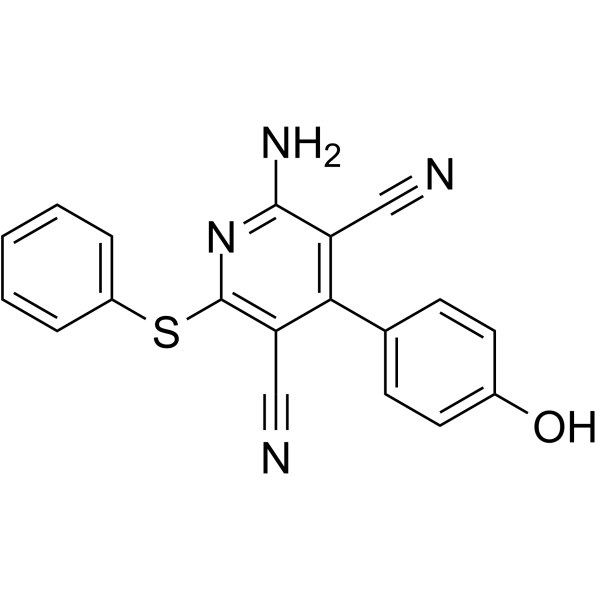 0 ImagesCat. No.: HY-147964CAS No.: 735273-33-3α-Glucosidase-IN-9 (compound 7) is a potent α-glucosidase inhibitor, with an IC50 of 55.6 μM. α-Glucosidase-IN-9 can be used for type II diabetes research.
-
5,7,2'-Trihydroxy-8,6'-dimethoxyflavone
 0 ImagesCat. No.: HY-N19705CAS No.: 92519-90-95,7,2'-Trihydroxy-8,6'-dimethoxyflavone is a flavone compound found in the whole herb of Lagochilus leiacanthus. 5,7,2'-Trihydroxy-8,6'-dimethoxyflavone inhibits β-hexosaminidase release, a marker of mast cell degranulation. 5,7,2'-Trihydroxy-8,6'-dimethoxyflavone can be used for the research of allergic reactions.
-
Imiglucerase
 0 ImagesCat. No.: HY-109514CAS No.: 154248-97-2Synonyms: Recombinant GCase (glucocerebrosidase)Imiglucerase is a recombinant human glucocerebrosidase that glucosylceramide to glucose and ceramide. Imiglucerase can be used for the study of type 1 (non-neuronopathic) and type 3 (chronic neuronopathic) Gaucher's disease.
-
α-Rhamnosidase, Penicillium sp.
 0 ImagesCat. No.: HY-E70104Aα-Rhamnosidase, Penicillium sp. is a kind of glycoside hydrolase. α-Rhamnosidase, Penicillium sp. exhibits activity against Naringin (HY-N0153), 4-NRP, flavonoid glycosides and flavanone rhamnosides, and can hydrolyze the corresponding glycosidic bonds to release L-Rhamnose (Rhamnose) (HY-N1420) and other products. α-Rhamnosidase, Penicillium sp. promotes the release of total flavonoids, ginkgolides and aroma components from ginkgo tea, while also enhancing the free radical scavenging capacity of the leachate, inhibiting inflammatory cell activation and increasing its cytotoxicity against tumor cells. α-Rhamnosidase, Penicillium sp. can be used in research related to bacillary dysentery and cancer.
-
α-Glucosidase-IN-123
 0 ImagesCat. No.: HY-187714α-Glucosidase-IN-123, a hybrid derivative of baicalein and cinnamic acid, acts as an inhibitor of α-glucosidase. α-Glucosidase-IN-123 enhances glucose uptake in insulin-resistant hepatocytes without significant cytotoxicity. α-Glucosidase-IN-123 exhibits lipase inhibitory activity and DPPH free radical scavenging activity, and it can be used in the research of type 2 diabetes.
-
α-Glucosidase-IN-92
 0 ImagesCat. No.: HY-176221α-Glucosidase-IN-92 (compound 14b) is a non-competitive inhibitor targeting α-glucosidase (IC50=64.0 μM), with better inhibitory potency than Acarbose (HY-B0089) (IC50=750 μM). α-Glucosidase-IN-92 has good oral bioavailability and can cross the blood-brain barrier. α-Glucosidase-IN-92 can delay carbohydrate hydrolysis and reduce postprandial blood glucose. α-Glucosidase-IN-92 can be used in anti-glycemic research for type 2 diabetes.




