



Isotope-Labeled Compounds
Isotope-labeled compounds are chemical substances in which some atoms in their molecules are replaced by isotope atoms. The range of stable isotope products can cover from gases to complex molecules. Isotope-labeled compounds could provide a site-specific investigation of structures, making molecules easily detectable by mass spectrometry and NMR, and maintaining the physico-chemical properties of the target molecule at the same time.
MCE isotope-labeled compounds are all stable isotope-labeled compounds and are non-radioactive labeled substances. MCE isotope-labeled compounds are unique tools for identifying and understanding biological and chemical processes. Stable isotope-labeled products are now getting more and more popular among scientists. The scope of application is gradually penetrating into various scientific fields, such as life sciences, food and medicine, agriculture, environment, geology, etc. Stable isotope-labeled compounds have a wide range of applications in the Life Science areas, such as Metabolomics, Proteomics, Clinical studies, Deuterium drugs, etc.
All Product Categories
-
Isotope-Labeled Compounds Related Products (11097)
Related Products (11097)

-
5-PAHSA-d31
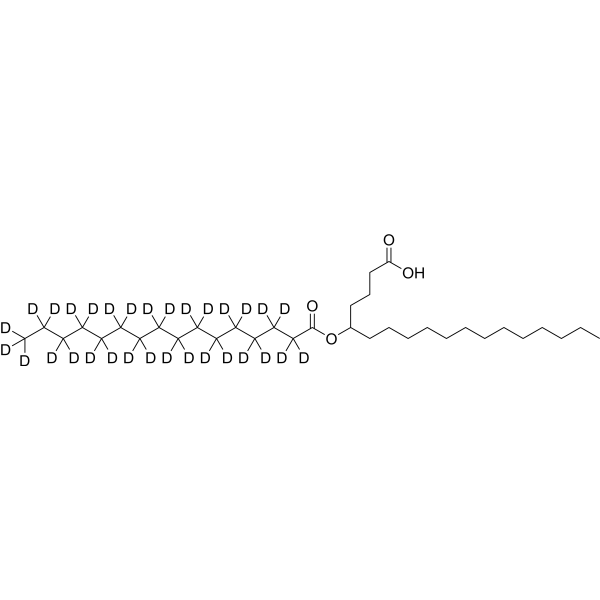 0 ImagesCat. No.: HY-116193SCAS No.: 2749807-01-85-PAHSA-d31 is the deuterium labeled 5-PAHSA.
-
Harmane-d4
 0 ImagesCat. No.: HY-101392S2CAS No.: 2012598-89-7
-
3,5-Dimethyl-2E-(propenyl)pyrazine-d3
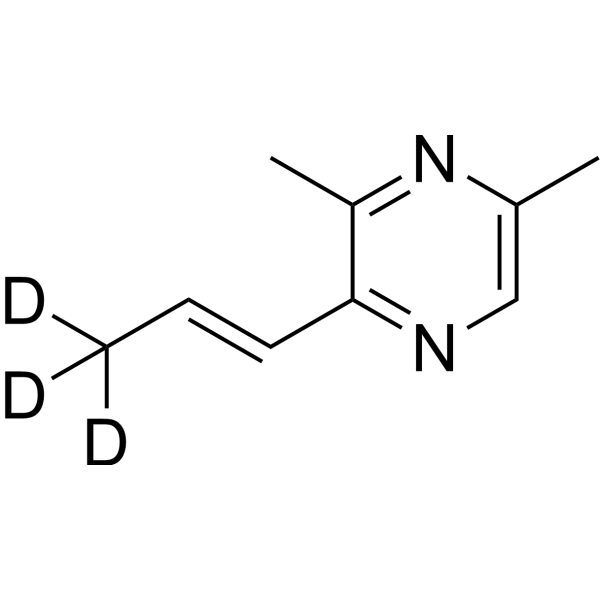 0 ImagesCat. No.: HY-156486SCAS No.: 1335436-58-23,5-Dimethyl-2E-(propenyl)pyrazine-d3 is deuterated labeled 3,5-Dimethyl-2E-(propenyl)pyrazine.
-
Chlorzoxazone-13C,15N,d2
 0 ImagesCat. No.: HY-B1462S2
-
Migalastat-d5
 0 ImagesCat. No.: HY-W728096Synonyms: GR181413A-d5 free baseMigalastat-d5 (GR181413A-d5 (free base)) is deuterium labeled Migalastat. Migalastat (GR181413A free base) is an orally active α-galactosidase A molecular chaperone, with an IC50 value of 0.04 μM for human α-Gal A. Migalastat binds to the active site of certain unstable mutant forms of α-galactosidase A, facilitating their transport to the lysosome. After dissociation in the acidic environment, Migalastat enables the mutant α-galactosidase A to exhibit biological activity.
-
Meconine-d3
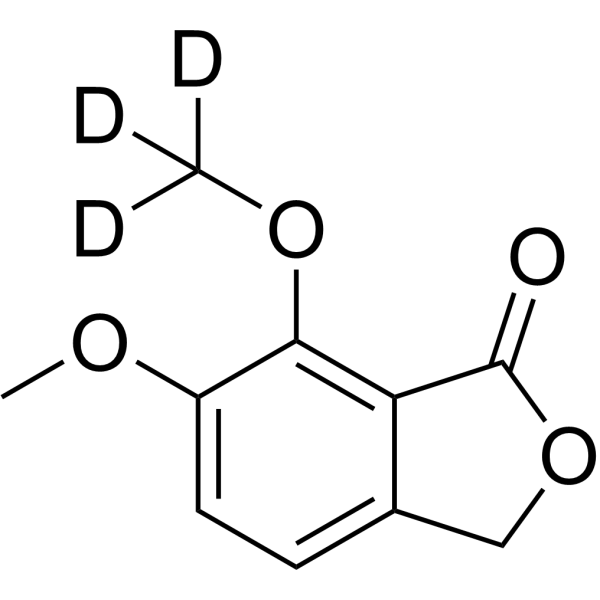 0 ImagesCat. No.: HY-W019151SCAS No.: 29809-15-2Meconine-d3 is the deuterium labeled Meconine (HY-W019151). Meconine is an endogenous metabolite of Noscapine (HY-13716). Meconine is the major metabolite in all three species, accounting for about 3, 8 and 2% of the dose in the first 24 h urines of rats, rabbits and humans, respectively. Meconine can be used as a marker to detect illicit opiate use.
-
2,8-Dichloro dibenzo-p-dioxin-13C12
 0 ImagesCat. No.: HY-W552229S2,8-Dichloro dibenzo-p-dioxin-13C12 is 13C labeled 2,8-Dichlorodibenzo[b,e][1,4]dioxine.
-
Floxuridine-d3
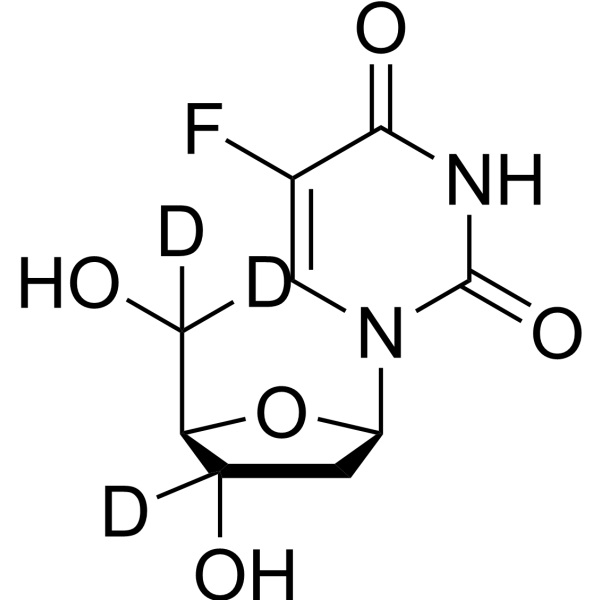 0 ImagesCat. No.: HY-154778SFloxuridine-d3 is deuterated labeled Floxuridine.
-
Alternariol-9-monomethylether sulfate-d3 ammonium
 0 ImagesCat. No.: HY-W780275SAlternariol-9-monomethylether sulfate-d3 (ammonium) is deuterium labeled Alternariol 9-Methyl Ether 3-Sulfate Ammonium Salt.
-
Topiramate-13C6-1
 0 ImagesCat. No.: HY-B0122SS1Synonyms: McN 4853-13C6-1; RWJ 17021-13C6-1
-
GPAAGPQGP-Arg(13C6,15N4) TFA
 0 ImagesCat. No.: HY-176032SGPAAGPQGP-Arg(13C6,15N4) TFA is the 13C- and 15N-labeled GPAAGPQGP-Arg TFA.
-
Fluoxetine-d6
 0 ImagesCat. No.: HY-B0102SCAS No.: 2319722-07-9Synonyms: LY-110140 free base-d6Fluoxetine-d6 (LY-110140 (free base)-d6) is deuterium labeled Fluoxetine. Fluoxetine (LY-110140 free base) is a selective serotonin reuptake inhibitor (SSRI) class used for antidepressant research.
-
Mexiletine-d3
 0 ImagesCat. No.: HY-119521SSynonyms: KOE-1173-d3Mexiletine-d3 (KOE-1173-d3) is deuterium labeled Mexiletine. Mexiletine is an orally effective antiarrhythmic agent which has also been found to be effective for myotonia and neuropathic pain. Mexiletine exerts its efficacy through blocking sodium channels (IC50 : 75±8 μM for tonic block, 23.6±2.8 μM for use-dependent block), therefore can be used for cardiovascular and neurological research.
-
L-5-Hydroxytryptophan-d3 hydrate
 0 ImagesCat. No.: HY-B1716SASynonyms: L-5-HTP-d3 hydrate; Oxitriptan-d3 hydrateL-5-Hydroxytryptophan-d3 (L-5-HTP-d3) hydrate is the deuterium labeled L-5-Hydroxytryptophan (HY-B1716). L-5-Hydroxytryptophan-d3 is the deuterium labeled L-5-Hydroxytryptophan. L-5-Hydroxytryptophan (L-5-HTP), a naturally occurring amino acid and a dietary supplement for use as an antidepressant, appetite suppressant, and sleep aid, is the immediate precursor of the neurotransmitter serotonin and a reserpine antagonist. L-5-Hydroxytryptophan (L-5-HTP) is used to treat fibromyalgia, myoclonus, migraine, and cerebellar ataxia.
-
1,1-Diethoxyoctane-d10
 0 ImagesCat. No.: HY-W342450SSynonyms: n-Octyl aldehyde diethyl acetal-d101,1-Diethoxyoctane-d10 is a deuterated labeled 1,1-Diethoxyoctane.
-
Tonabersat-d6
 0 ImagesCat. No.: HY-15204SCAS No.: 1329837-33-3Synonyms: SB-220453-d6Tonabersat-d6 (SB-220453-d6) is deuterium labeled Tonabersat. Tonabersat (SB-220453) is a gap-junction modulator. Tonabersat prevents inflammatory damage in the central nervous system.
-
Raltegravir-d4 potassium
 0 ImagesCat. No.: HY-10353AS2Synonyms: MK 0518-d4 potassiumRaltegravir-d4 (potassium) (MK 0518-d4 (potassium)) is deuterium labeled Raltegravir (potassium). Raltegravir (MK 0518) potassium is a potent integrase (IN) inhibitor, used to treat HIV infection.
-
S-(5’-Adenosyl)-L-methionine-d3 (disulfate)
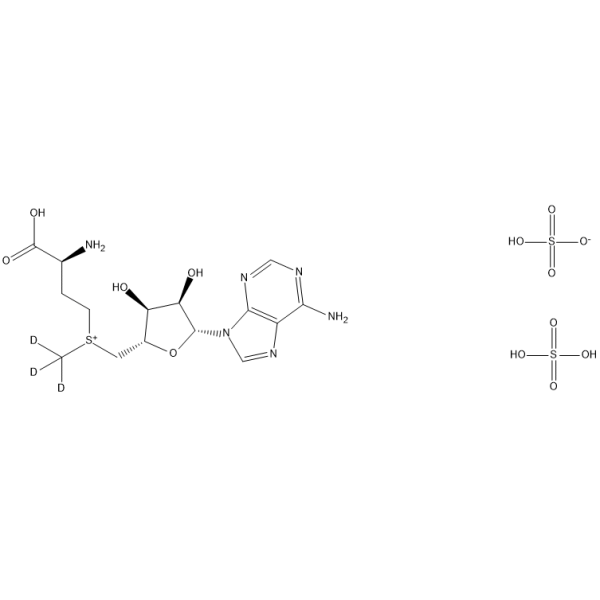 0 ImagesCat. No.: HY-144370SS-(5’-Adenosyl)-L-methionine-d3 disulfate is the deuterium labeled S-(5’-Adenosyl)-L-methionine disulfate.
-
Timolol-d9 maleate
 0 ImagesCat. No.: HY-17494S1Timolol-d9 (maleate) is deuterium labeled Timolol. Timolol is a β-blocker available for both topical and systemic administration. Topical Timolol is primarily used to reduce intraocular pressure with open-angle glaucoma and ocular hypertension. Timolol can also be used for the research of infantile hemangiomas, hypertension, myocardial infarction, migraine prophylaxis, and atrial fibrillation.Timolol also has cardioprotective effect.
-
8-(2-Hydroxybenzamido)octanoic acid-d4
 0 ImagesCat. No.: HY-W7283688-(2-Hydroxybenzamido)octanoic acid-d4 is the deuterium labeled 8-(2-Hydroxybenzamido)octanoic acid.



