



Kinesin-5/Eg5/KSP
Kinesin-5 (Eg5, also known as KSP or KIF11) is a plus-end-directed motor protein that drives mitotic spindle bipolarization by sliding anti-parallel microtubules apart[1][2]. This motor operates as a homotetramer and contributes force to maintain spindle integrity during mitosis, ensuring accurate chromosome segregation[1][2][3]. Mechanistically, Eg5 couples ATP hydrolysis to conformational changes that generate microtubule-directed movement, with microtubule binding accelerating its ATPase cycle and force production[3]. In disease models, Eg5 is overexpressed in various cancers, including breast cancer and leukemia, where it supports uncontrolled proliferation and is a validated anticancer target[2][4][5]. Compared with other mitotic kinesins, such as kinesin-12 (Kif15), Eg5 is uniquely required for centrosome separation, though compensatory pathways can mitigate inhibition under selective pressure[6][7][8]. Small-molecule inhibitors, including monastrol, K858, SB-743921, and BRD9876, selectively block Eg5 ATPase activity or microtubule binding, causing mitotic arrest, apoptosis, or reduced angiogenesis in cancer and endothelial models[1][9][10][11]. Some allosteric inhibitors overcome resistance mechanisms by targeting unique binding sites, whereas ATP-competitive inhibitors provide alternative strategies to circumvent Eg5 mutation-mediated drug resistance[12][13]. These inhibitors have also been applied in mechanistic studies of spindle dynamics, neuronal transport, and angiogenesis, demonstrating broad utility in experimental and translational research[14][11].
References:
- [1]. Sturgill EG, et al. Kinesin-5 inhibitor resistance is driven by kinesin-12. J Cell Biol. 2016 Apr 25;213(2):213-27. [Content Brief]
- [2]. Wojcik EJ, et al. Kinesin-5: cross-bridging mechanism to targeted clinical therapy. Gene. 2013 Dec 1;531(2):133-49. [Content Brief]
- [3]. Ari C, et al. Alzheimer amyloid beta inhibition of Eg5/kinesin 5 reduces neurotrophin and/or transmitter receptor function. Neurobiol Aging. 2014 Aug;35(8):1839-49. [Content Brief]
- [4]. Raaijmakers JA, et al. Nuclear envelope-associated dynein drives prophase centrosome separation and enables Eg5-independent bipolar spindle formation. EMBO J. 2012 Nov 5;31(21):4179-90. [Content Brief]
- [5]. Bongero D, et al. The novel kinesin spindle protein (KSP) inhibitor SB-743921 exhibits marked activity in in vivo and in vitro models of aggressive large B-cell lymphoma. Leuk Lymphoma. 2015;56(10):2945-52. [Content Brief]
- [6]. Dumas ME, et al. Resistance is not futile: Surviving Eg5 inhibition. Cell Cycle. 2016 Nov;15(21):2845-2847. [Content Brief]
- [7]. Chattopadhyay S, et al. Niche-Based Screening in Multiple Myeloma Identifies a Kinesin-5 Inhibitor with Improved Selectivity over Hematopoietic Progenitors. Cell Rep. 2015 Feb 10;10(5):755-770. [Content Brief]
- [8]. Nakai R, et al. K858, a novel inhibitor of mitotic kinesin Eg5 and antitumor agent, induces cell death in cancer cells. Cancer Res. 2009 May 1;69(9):3901-9. [Content Brief]
- [9]. Silva JPN, et al. Kinesin Spindle Protein (KIF11) in Mitosis and Cancer. Int J Mol Sci. 2025;26(18):8975. [Content Brief]
- [10]. Shukla M, et al. Polyphenol MHQP as an allosteric inhibitor of Kinesin-5: cease the molecular catwalk of “Drunken Sailor”. Indian J Biochem Biophys. 2023;60:703-709.
- [11]. Cochran JC, et al. Pathway of ATP hydrolysis by monomeric kinesin Eg5. Biochemistry. 2006 Oct 10;45(40):12334-44. [Content Brief]
- [12]. Exertier P, et al. Impaired angiogenesis and tumor development by inhibition of the mitotic kinesin Eg5. Oncotarget. 2013 Dec;4(12):2302-16. [Content Brief]
- [13]. Ricci A, et al. Kinesin Eg5 Selective Inhibition by Newly Synthesized Molecules as an Alternative Approach to Counteract Breast Cancer Progression: An In Vitro Study. Biology (Basel). 2022 Oct 2;11(10):1450. [Content Brief]
- [14]. Yin Y, et al. Kinesin spindle protein inhibitor SB743921 induces mitotic arrest and apoptosis and overcomes imatinib resistance of chronic myeloid leukemia cells. Leuk Lymphoma. 2015 Jun;56(6):1813-20. [Content Brief]
-
Kinesin-5/Eg5/KSP Related Products (23)
Related Products (23)

- 1
- 2
-
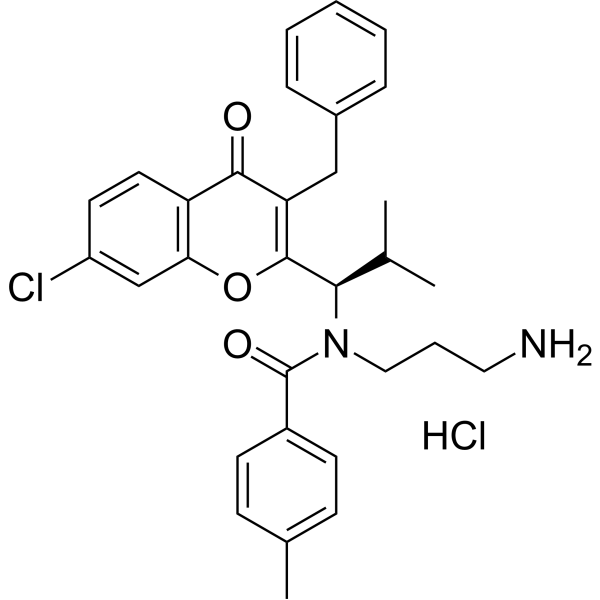
S-Trityl-L-cysteine
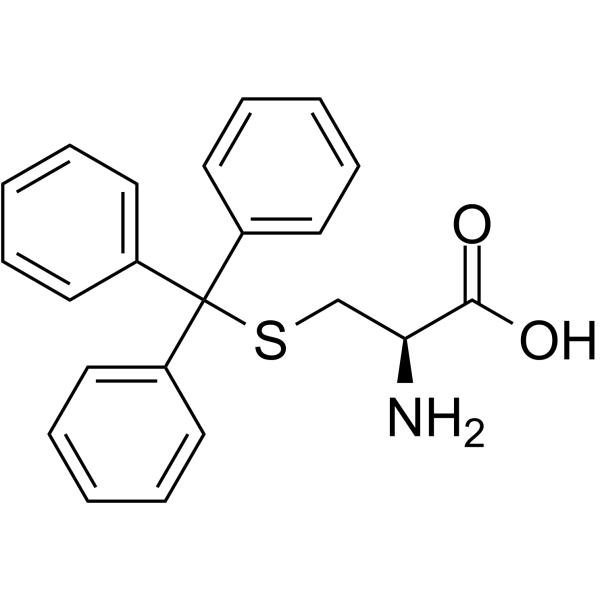 0 ImagesSynonyms: NSC 83265; S-Tritylcysteine; 3-Tritylthio-L-alanineS-Trityl-L-cysteine (NSC 83265) is a selective and allosteric kinesin Eg5 inhibitor with an IC50 of 1 μM for the inhibition of basal ATPase activity and 140 nM for the microtubule-activated ATPase activity. S-Trityl-L-cysteine has antitumor activities.
-
Kolaflavanone
 0 ImagesCat. No.: HY-121816CAS No.: 68705-66-8Kolaflavanone is an biflavonoid allosteric inhibitor of Eg5. Kolaflavanone inhibits the ATPase and tyrosinase activities of Eg5 under both basal and microtubule-activated conditions, suppresses microtubule sliding activity, binds to the L5/α2/α3 allosteric pocket of Eg5, induces conformational changes of Eg5 and microtubule dissociation, interacts with aldehyde dehydrogenase, inhibits the ATPase activity of kinesin-1, and binds to HSA via pH-dependent forces. Kolaflavanone exhibits antihepatotoxic activity and can be used in studies related to Phalloidin (HY-P0028)-induced liver injury.
-
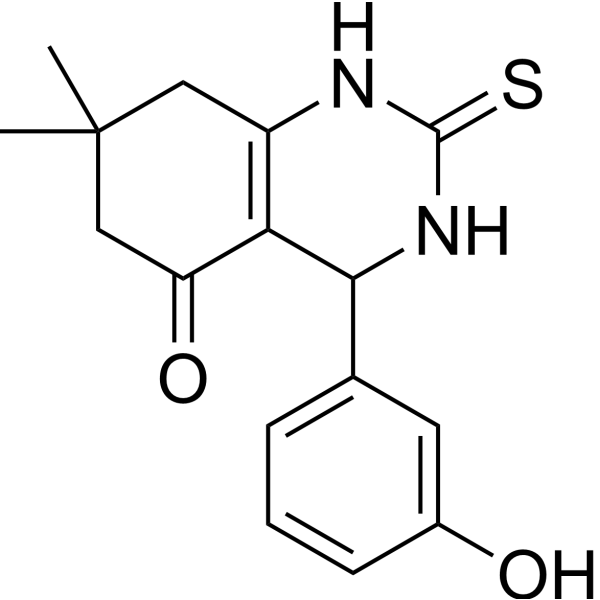
O-Trityl-L-serine
 0 ImagesCat. No.: HY-W1143950CAS No.: 25840-83-9
-
MK-0731
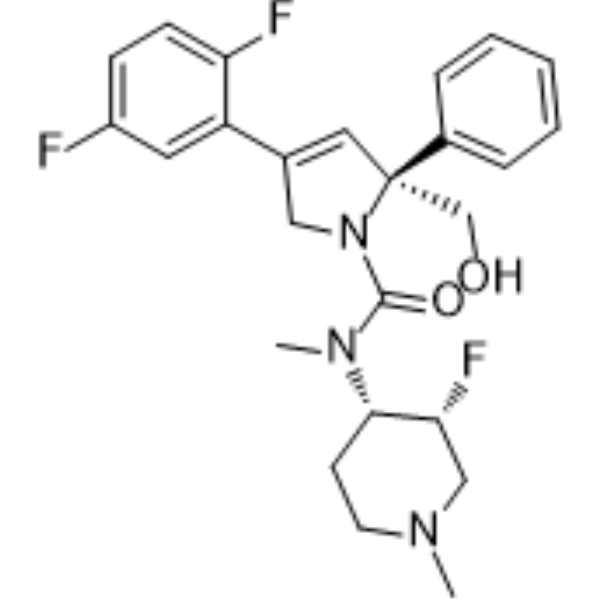 0 ImagesMK-0731 is a selective, non-competitive and allosteric kinesin spindle protein (KSP) inhibitor with an IC50 of 2.2 nM and a pKa of 7.6. MK-0731 is >20,000 fold selectivity against other kinesins. MK-0731 induces mitotic arrest and induces apoptosis in tumors. MK-0731 provides significant antitumor efficacy.
-
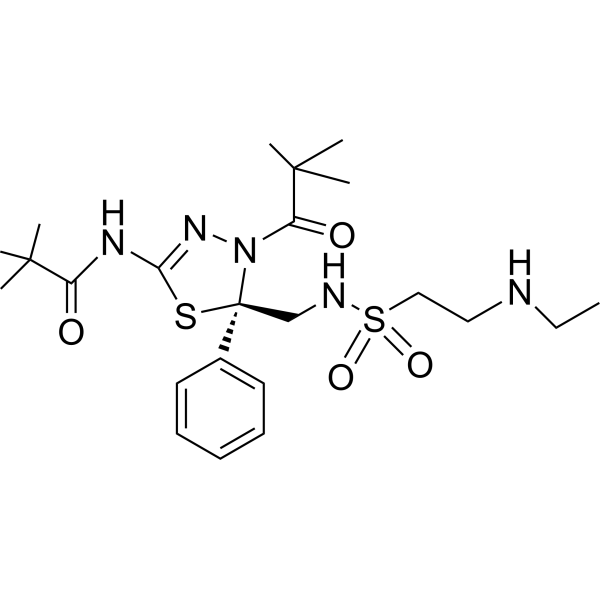
EMD534085
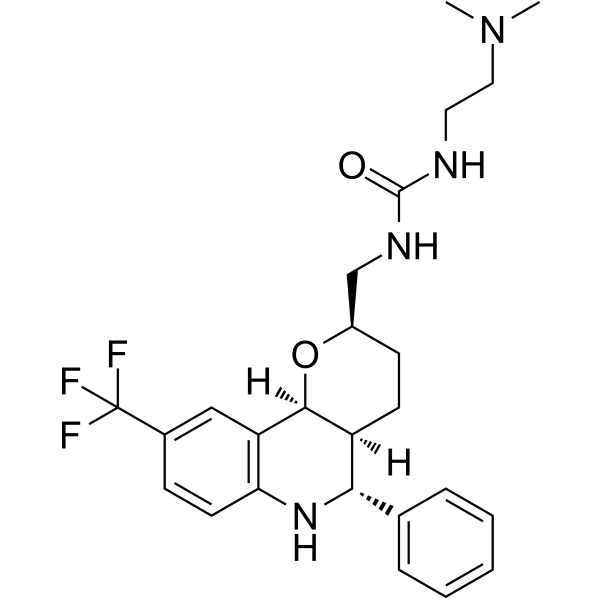 0 ImagesEMD534085 is a potent and selective inhibitor of the mitotic kinesin-5 with an IC50 of 8 nM.
-
PVZB1194
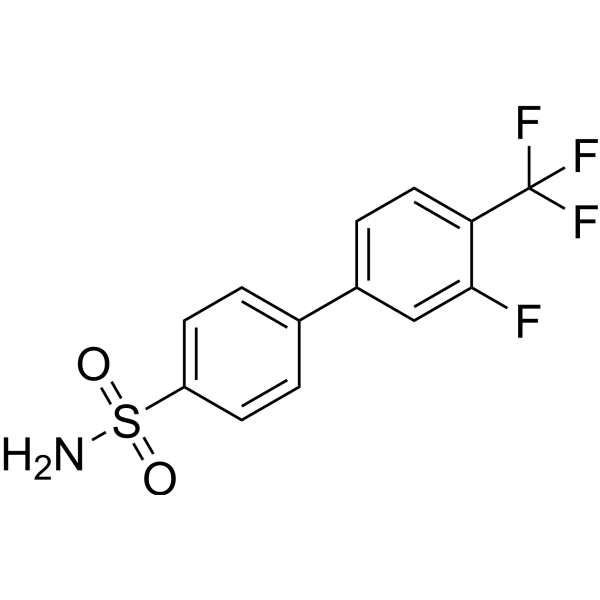 0 ImagesPVZB1194 is a biphenyl-type inhibitor of Kinesin-5 ATPase activity that binds to the α4/α6 site of the motor domain in a nucleotide competitive manner. PVZB1194 has an IC50 of 0.12 μM for KSP ATPase. PVZB1194 induces mitotic arrest with the formation of a monopolar spindle, and inhibits HeLa cells proliferatio (IC50: 5.5 μM). PVZB1194 can be used in the study of tumors.
-
ARQ 621
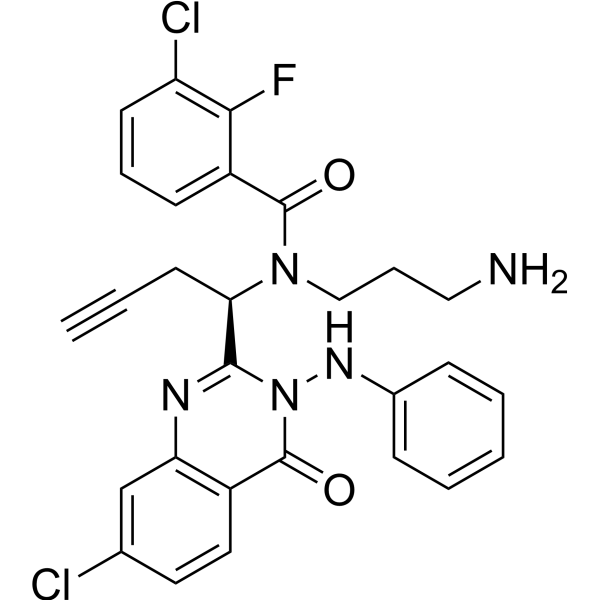 0 ImagesARQ 621 is an allosteric, potent and selective inhibitor of Eg5, a microtubule-based ATPase motor protein involved in cell division. Anti-tumor activity. ARQ 621 is a kinesin inhibitor. ARQ 621 is a click chemistry reagent, it contains an Alkyne group and can undergo copper-catalyzed azide-alkyne cycloaddition (CuAAc) with molecules containing Azide groups.
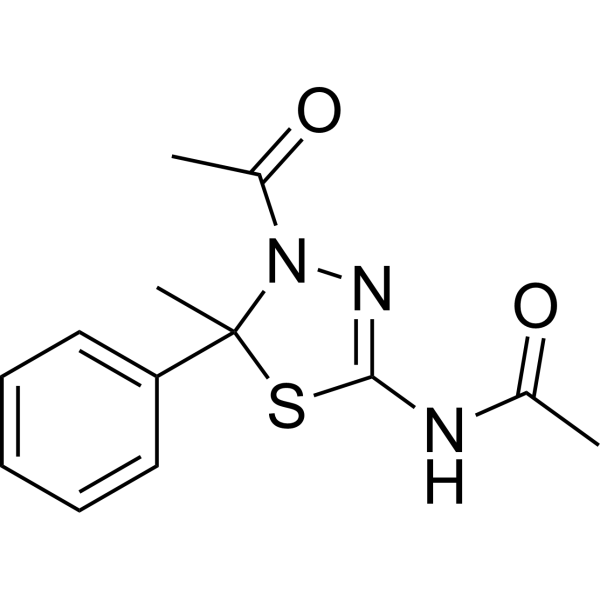
-
LP-6 TFA
 0 ImagesCat. No.: HY-157079ACAS No.: 1629741-09-8LP-6 TFA is a Drug-Linker Conjugate for ADC, and can be used for synthesis of ADCs. LP-6 TFA consists of an Eg5 inhibitor and a linker.
-
LP-6
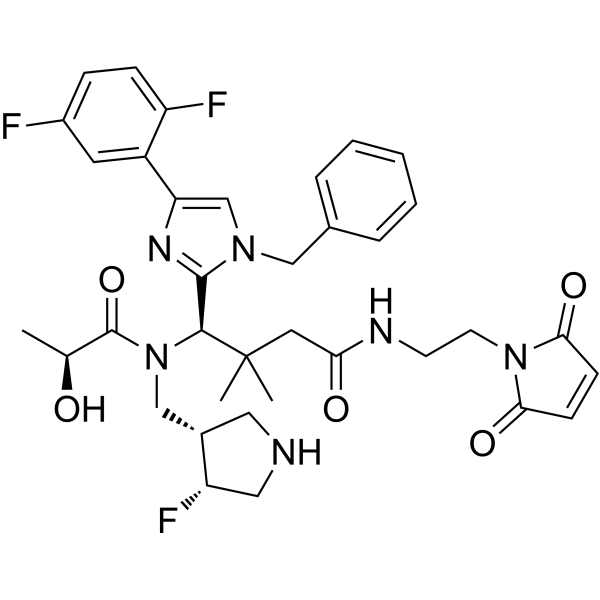 0 ImagesCat. No.: HY-157079CAS No.: 1629736-79-3LP-6 is a Drug-Linker Conjugate for ADC, and can be used for synthesis of ADCs. LP-6 consists of an Eg5 inhibitor and a linker.
-
CCT368772
 0 ImagesCat. No.: HY-155865CAS No.: 2902671-74-1
-
NVP-BQS481
 0 ImagesCat. No.: HY-177285CAS No.: 1161925-41-2NVP-BQS481 (Compound 1) is a selective Kinesin spindle protein-5 (Eg5) inhibitor with an IC50< 0.5 nM. NVP-BQS481 has significant antimitotic and antitumor activity (IC50: 0.0.9 nM for SK-OV-3ip cells). NVP-BQS481 can be used as a cytotoxic payload for synthesis of antibody-drug conjugates (ADCs).
-
Terpendole E
 0 ImagesCat. No.: HY-119407CAS No.: 167427-23-8Terpendole E is a mitotic kinesin Eg5 inhibitor. Terpendole E inhibits both motor and microtubule-stimulated ATPase activities of human Eg5. Terpendole E induces formation of a monoastral spindle in M phase.
- 1
- 2



