



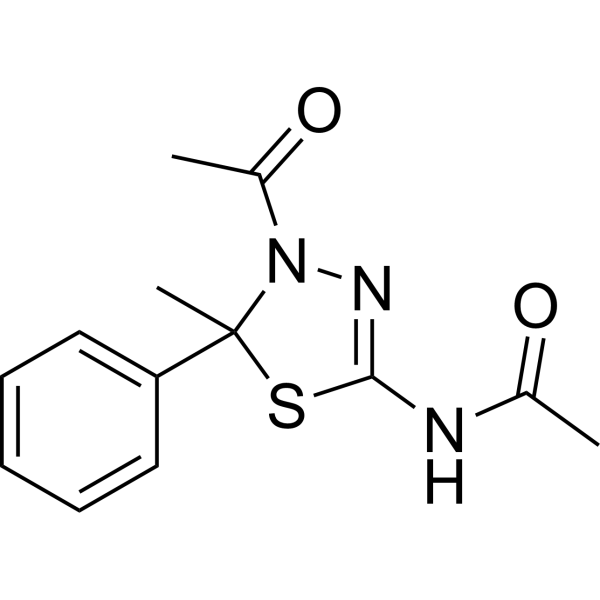
K858 (Racemic)
Based on 1 publication(s) in Google Scholar
K858 Racemic is an ATP-uncompetitive inhibitor of kinesin Eg5 with an IC50 of 1.3 μM.
Nur für Forschungszwecke. Wir verkaufen nicht an Patienten.
- Reinheit : 99.93%
- CAS. Nr.: 72926-24-0
- Formel: C13H15N3O2S
- Molecular Weight:277.35
-
Speicherung:Powder -20°C, 3 years , 4°C, 2 years ; In solvent -80°C, 2 years , -20°C, 1 year

To place orders, for customer services and technical support, please contact: MedChemExpress USA
Tel: 609-228-6898 E-mail: [email protected] [email protected]


-
 Biologische Aktivität
-
Chemical Information
-
Lösungsmittel & Löslichkeit
- Reinheit & Dokumentation
- Verweise
-
 Help & FAQs


-
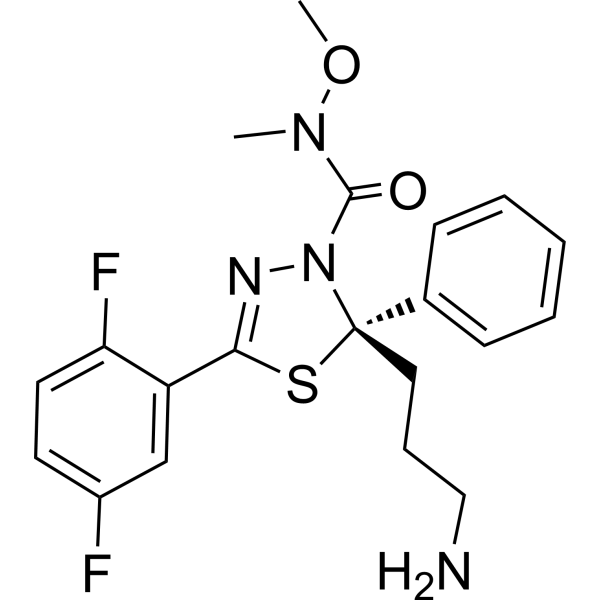
HY-15187
FilanesibKSP Inhibitor -
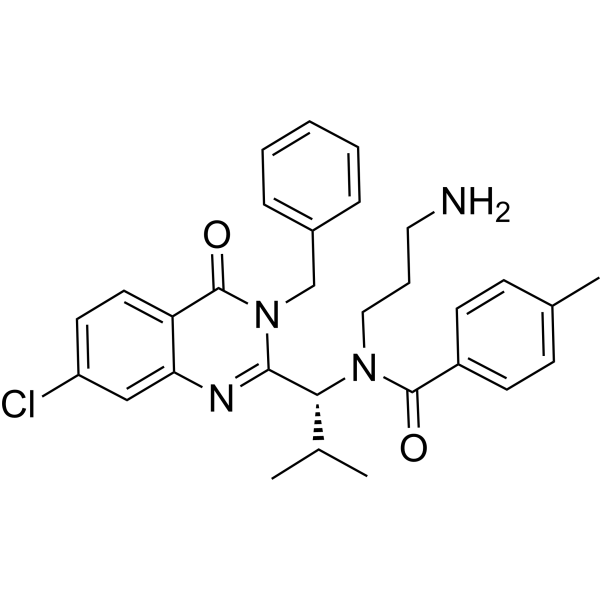
HY-50759
IspinesibKSP Inhibitor -
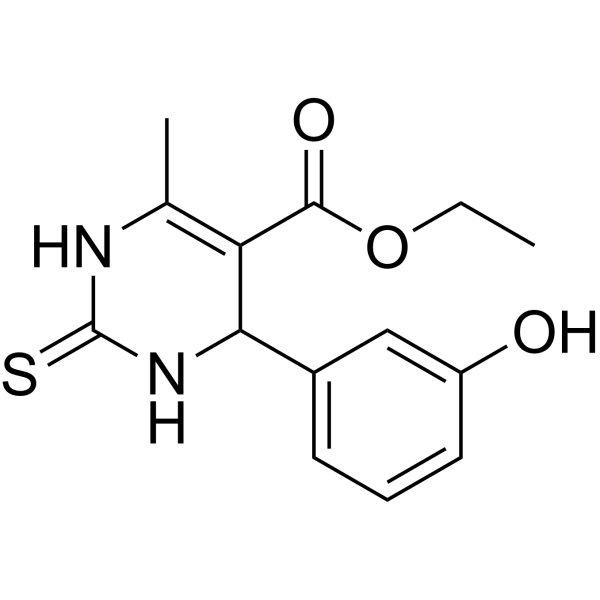
HY-101071A
MonastrolMitotic Kinesin Eg5 Inhibitor -
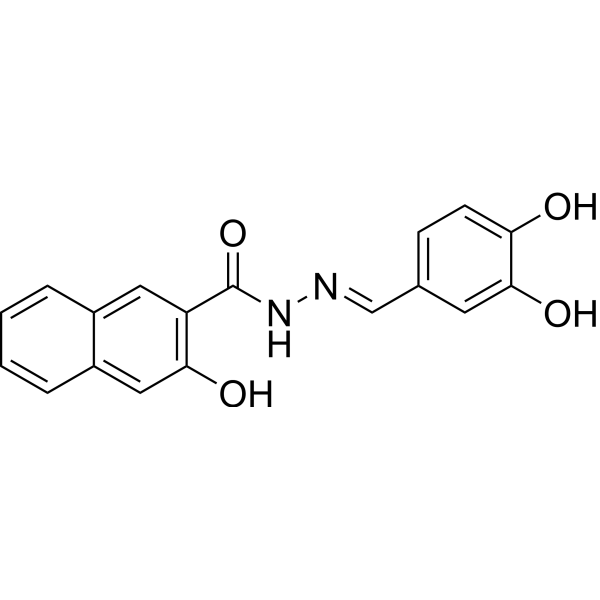
HY-15304
DynasoreAutophagy Inducer -
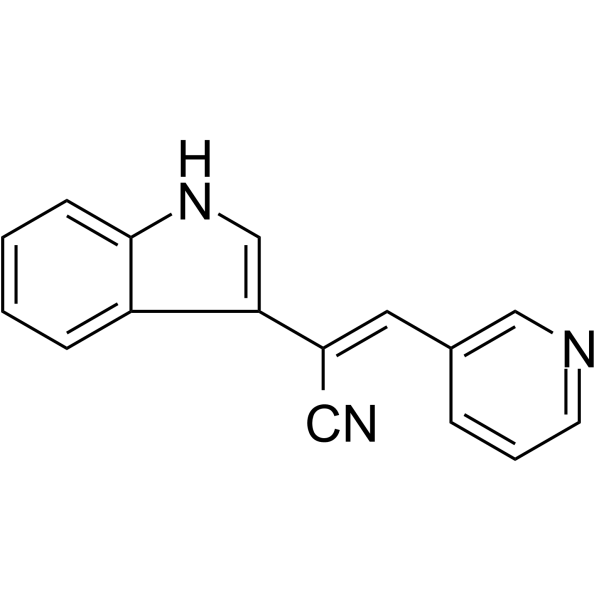
HY-101298
PaprotrainMKLP-2 Inhibitor -
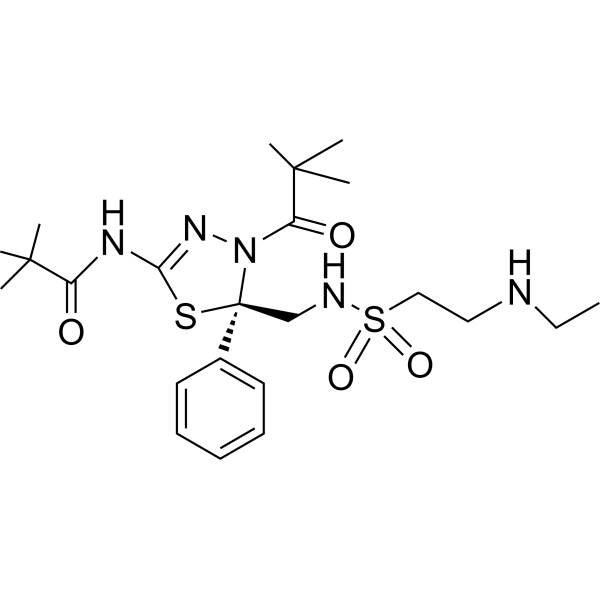
HY-14846
LitronesibKinesin Inhibitor -
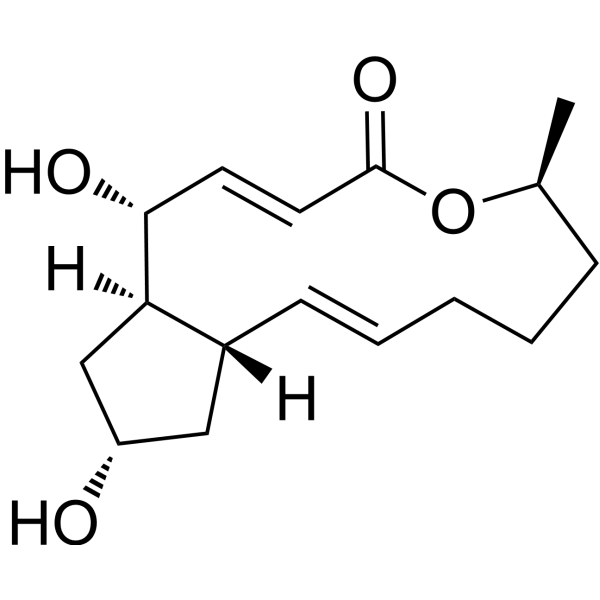
HY-16592
Brefeldin AProtein Transport Inhibitor -
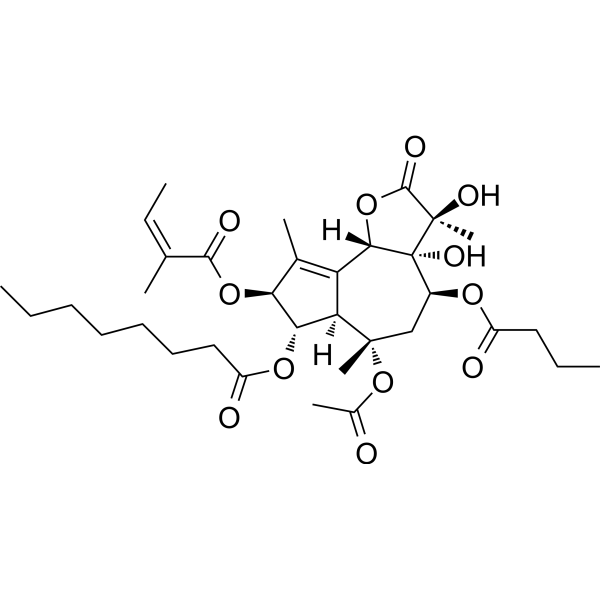
HY-13433
ThapsigarginER Stress Inducer -

HY-50759R
Ispinesib (Standard)KSP Inhibitor -
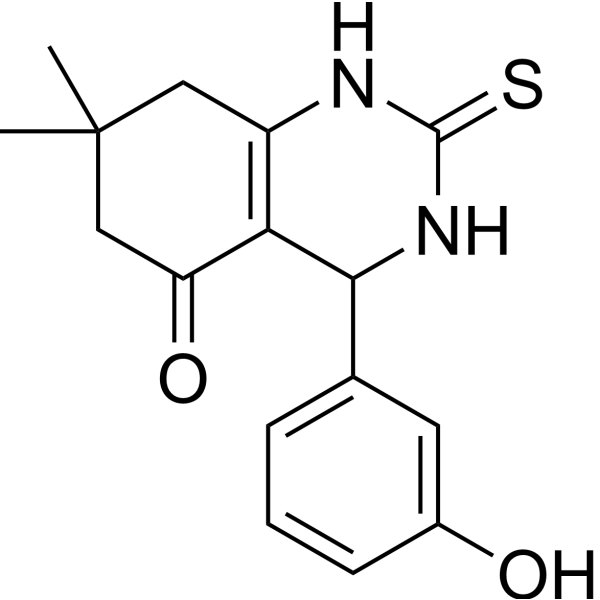
HY-19944
DimethylenastronKinesin Inhibitor -
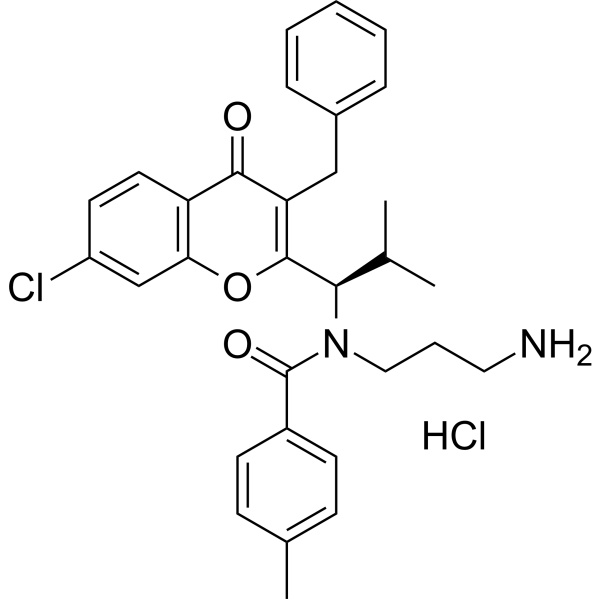
HY-12069
SB-743921 hydrochlorideEg5 Inhibitor -
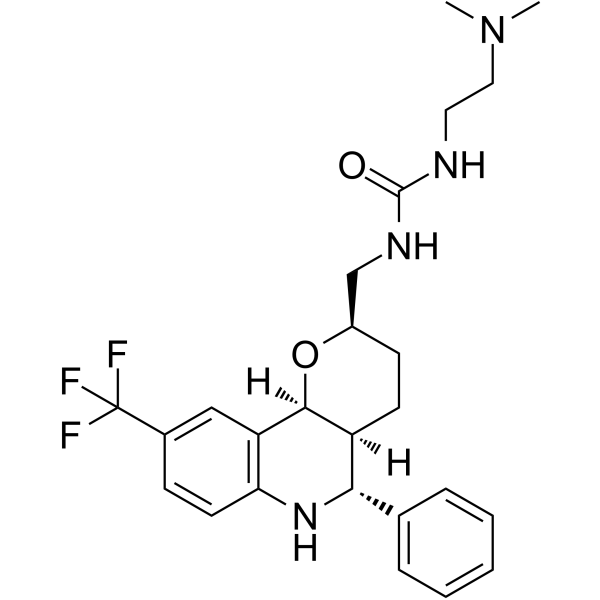
HY-15000
EMD534085Kinesin Inhibitor
Publications Citing Use of MedChemExpress (MCE) K858 (Racemic)
MoreAlle Kinesin Isoform-spezifische Produkte anzeigen
More

Biologische Aktivität
Beschreibung
IC50 & Target
[1]|
Eg5 1.3 μM (IC50) |
Cellular Effect
|
Cell Line

|
Type | Value | Description | References |
|---|---|---|---|---|
| HCT-116 | IC50 |
1.3 μM
Compound: 43, K858
|
Inhibition of Eg5 in human HCT116 cells assessed as inhibition of microtubule-induced ATPase activity after 18 hrs
Inhibition of Eg5 in human HCT116 cells assessed as inhibition of microtubule-induced ATPase activity after 18 hrs
|
[PMID: 23434636] |
| HCT-116 | GI50 |
1 μM
Compound: 1a
|
Growth inhibition of human HCT116 cells
Growth inhibition of human HCT116 cells
|
[PMID: 25001485] |
In Vitro
K858 Racemic is an ATP-uncompetitive inhibitor of Eg5 with an IC50 of 1.3 μM. K858 does not inhibit the ATPase activity of the mitotic kinesins CENP-E and MKLP1, or the conventional kinesin heavy chain even at 200 μM. K858 induces mitotic arrest and growth inhibition via the activation of the Mad2-mediated spindle checkpoint. K858 (5 μM) induces mitotic cell death in cancer cells but not in normal cells[1]. K858 (1, 10, 100 μM) inhibits the MCF7, BT474 and SKBR3 cell lines, and only at 10 and 100 μM suppresses MDA-MB231 cell line after treatment for 24 h. K858 incereases Bax/Bcl2 RNA ratio and survivin in the four cell lines. Furthermore, the up-regulation of survivin is totally reversed by wortmannin (phosphoinositide 3-kinase AKT) in MCF7 cells[2].
MedChemExpress (MCE) has not independently confirmed the accuracy of these methods. They are for reference only.
In Vivo
MedChemExpress (MCE) has not independently confirmed the accuracy of these methods. They are for reference only.


Chemical Information
-
CAS. Nr. 72926-24-0
-
Appearance Solid
-
Molecular Weight 277.35
-
Formel C13H15N3O2S
-
Color White to off-white
-
SMILES
CC(NC1=NN(C(C)=O)C(C2=CC=CC=C2)(C)S1)=O
-
Versand
Room temperature in continental US; may vary elsewhere.
-
Speicherung
Powder -20°C 3 years 4°C 2 years In solvent -80°C 2 years -20°C 1 year


Publications (1)
-
Journal Impact Factor
-
Most Recent
-
Gene
2025 Jul 5:955:149458. PMID: 40187619


Lösungsmittel & Löslichkeit
In Vitro:
DMSO : 100 mg/mL (360.56 mM; Need ultrasonic; Hygroscopic DMSO has a significant impact on the solubility of product, please use newly opened DMSO)
Please refer to the solubility information to select the appropriate solvent. Once prepared, please aliquot and store the solution to prevent product inactivation from repeated freeze-thaw cycles.
Storage method and period of stock solution: -80°C, 2 years; -20°C, 1 year. When stored at -80°C, please use it within 2 years. When stored at -20°C, please use it within 1 year.
Please refer to the solubility information to select the appropriate solvent. Once prepared, please aliquot and store the solution to prevent product inactivation from repeated freeze-thaw cycles.
Storage method and period of stock solution: -80°C, 2 years; -20°C, 1 year. When stored at -80°C, please use it within 2 years. When stored at -20°C, please use it within 1 year.
Konzentration (Stammlösung) × Volumen (Stammlösung) = Konzentration (Ziellösung) × Volumen (Ziellösung)
In Vivo:
Select the appropriate dissolution method based on your experimental animal and administration route.
- For the following dissolution methods, please ensure to first prepare a clear stock solution using an In Vitro approach and then sequentially add co-solvents:
- To ensure reliable experimental results, the clarified stock solution can be appropriately stored based on storage conditions. As for the working solution for In Vivo experiments, it is recommended to prepare freshly and use it on the same day.
- The percentages shown for the solvents indicate their volumetric ratio in the final prepared solution. If precipitation or phase separation occurs during preparation, heat and/or sonication can be used to aid dissolution.
Add each solvent one by one: 10% DMSO 40% PEG300 5% Tween-80 45% Saline
Solubility: ≥ 2.5 mg/mL (9.01 mM); Clear solution
This protocol yields a clear solution of ≥ 2.5 mg/mL (saturation unknown).
Taking 1 mL working solution as an example, add 100 μL DMSO stock solution (25.0 mg/mL) to 400 μL PEG300, and mix evenly; then add 50 μL Tween-80 and mix evenly; then add 450 μL Saline to adjust the volume to 1 mL.
Preparation of Saline: Dissolve 0.9 g sodium chloride in ddH₂O and dilute to 100 mL to obtain a clear Saline solution.
In Vivo Dissolution Calculator
Please enter the basic information of animal experiments:
-
-
-
-
Recommended: Prepare an additional quantity of animals to account for potential losses during experiments.
Please enter your animal formula composition:
-
%DMSO +
Recommended: Keep the proportion of DMSO in working solution below 2% if your animal is weak.
-
%+
-
+%Tween-80 + +
-
%Saline +
The co-solvents required include: DMSO, . All of co-solvents are available by MedChemExpress (MCE). , Tween 80. All of co-solvents are available by MedChemExpress (MCE).
Working solution concentration: 0.22 mg/mL
Method for preparing stock solution: mg drug dissolved in μL DMSO. Stock solution concentration: mg/mL.
1. Take μL DMSO stock solution;
2. Add μL .
μL , mix evenly;
3. Then add μL Tween 80, mix evenly;
4. Then add μL
Please ensure that the stock solution in the first step is dissolved to a clear state, and add co-solvents in sequence. You can use ultrasonic heating (ultrasonic cleaner, recommended frequency 20-40 kHz), vortexing, etc. to assist dissolution.


Reinheit & Dokumentation
-
Data Sheet (280 KB)
-
SDS (396 KB)
- English - EN (396 KB)
- Français - FR (396 KB)
- Deutsch - DE (396 KB)
- Norwegian - NO (396 KB)
- Español - ES (396 KB)
- Swedish - SV (396 KB)
- Italian - IT (396 KB)
- Korean - KR (396 KB)
- Portuguese - PT (396 KB)
-
Handling Instructions (2659 KB)
Verweise
[1]. Nakai R, et al. K858, a novel inhibitor of mitotic kinesin Eg5 and antitumor agent, induces cell death in cancer cells. Cancer Res. 2009 May 1;69(9):3901-9. [Content Brief]
[2]. De Iuliis F, et al. The kinesin Eg5 inhibitor K858 induces apoptosis but also survivin-related chemoresistance in breast cancer cells. Invest New Drugs. 2016 Aug;34(4):399-406. [Content Brief]


Complete Stock Solution Preparation Table
Please refer to the solubility information to select the appropriate solvent. Once prepared, please aliquot and store the solution to prevent product inactivation from repeated freeze-thaw cycles.
Storage method and period of stock solution: -80°C, 2 years; -20°C, 1 year. When stored at -80°C, please use it within 2 years. When stored at -20°C, please use it within 1 year.
| Optional Solvent | Concentration Solvent Mass | 1 mg | 5 mg | 10 mg | 25 mg |
|---|---|---|---|---|---|
| DMSO | 1 mM | 3.6056 mL | 18.0278 mL | 36.0557 mL | 90.1391 mL |
| 5 mM | 0.7211 mL | 3.6056 mL | 7.2111 mL | 18.0278 mL | |
| 10 mM | 0.3606 mL | 1.8028 mL | 3.6056 mL | 9.0139 mL | |
| 15 mM | 0.2404 mL | 1.2019 mL | 2.4037 mL | 6.0093 mL | |
| 20 mM | 0.1803 mL | 0.9014 mL | 1.8028 mL | 4.5070 mL | |
| 25 mM | 0.1442 mL | 0.7211 mL | 1.4422 mL | 3.6056 mL | |
| 30 mM | 0.1202 mL | 0.6009 mL | 1.2019 mL | 3.0046 mL | |
| 40 mM | 0.0901 mL | 0.4507 mL | 0.9014 mL | 2.2535 mL | |
| 50 mM | 0.0721 mL | 0.3606 mL | 0.7211 mL | 1.8028 mL | |
| 60 mM | 0.0601 mL | 0.3005 mL | 0.6009 mL | 1.5023 mL | |
| 80 mM | 0.0451 mL | 0.2253 mL | 0.4507 mL | 1.1267 mL | |
| 100 mM | 0.0361 mL | 0.1803 mL | 0.3606 mL | 0.9014 mL |


K858 (Racemic) Related Classifications
HY-19966 Related Classifications
 Powered by Bioz