



ARQ 621

Based on 1 Customer Validation
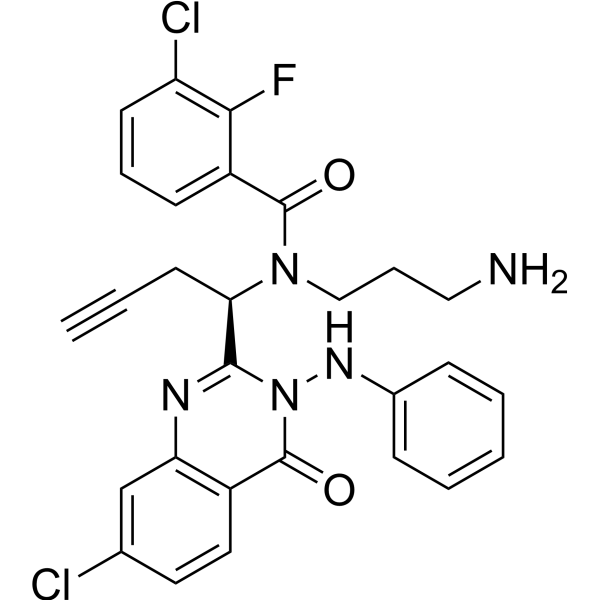
ARQ 621 is an allosteric, potent and selective inhibitor of Eg5, a microtubule-based ATPase motor protein involved in cell division. Anti-tumor activity. ARQ 621 is a kinesin inhibitor. ARQ 621 is a click chemistry reagent, it contains an Alkyne group and can undergo copper-catalyzed azide-alkyne cycloaddition (CuAAc) with molecules containing Azide groups.
For research use only. We do not sell to patients.
- Purity : 98.09%
- CAS No.: 1095253-39-6
- Formula: C28H24Cl2FN5O2
- Molecular Weight:552.43
-
Storage:
-20°C, protect from light
* In solvent : -80°C, 6 months; -20°C, 1 month (protect from light)

To place orders, for customer services and technical support, please contact: MedChemExpress USA
Tel: 609-228-6898 E-mail: [email protected] [email protected]


-
 Biological Activity
-
Chemical Information
-
Solvent & Solubility
- Protocols
- Purity & Documentation
- References
-
 Help & FAQs


-
HY-50759
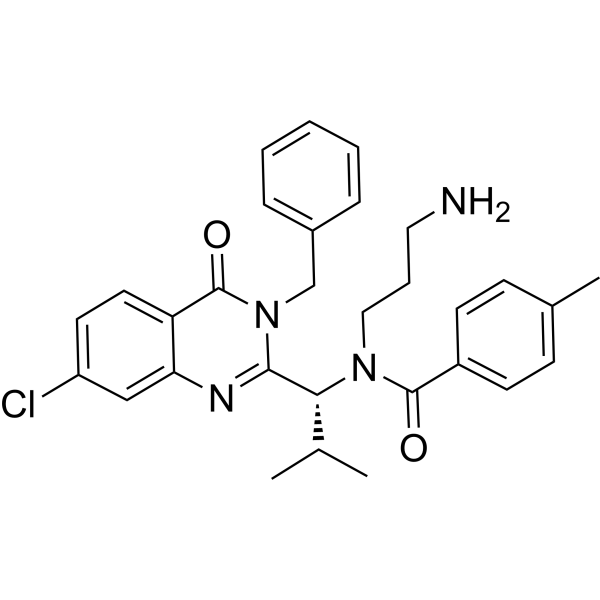
IspinesibKSP Inhibitor -
HY-15000
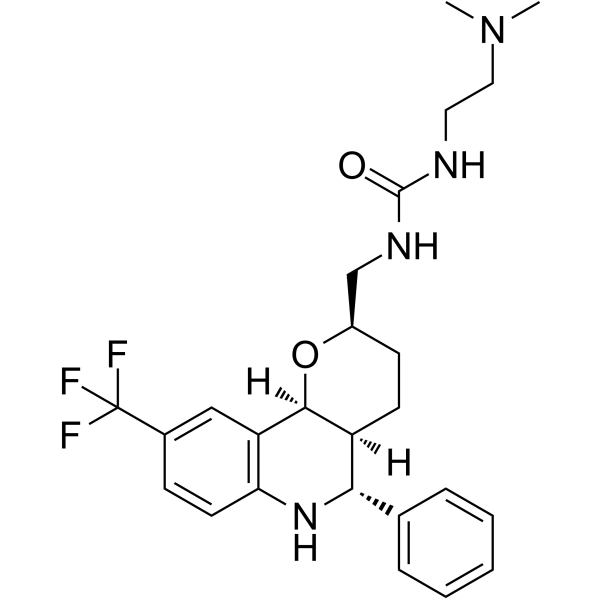
EMD534085Kinesin Inhibitor -
HY-15187
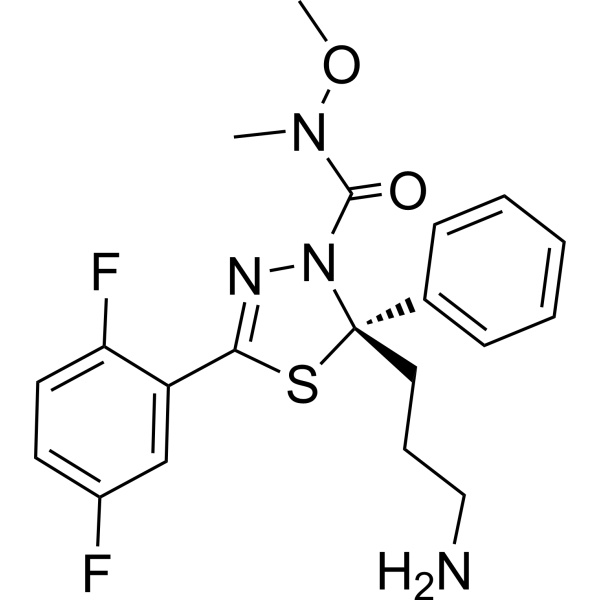
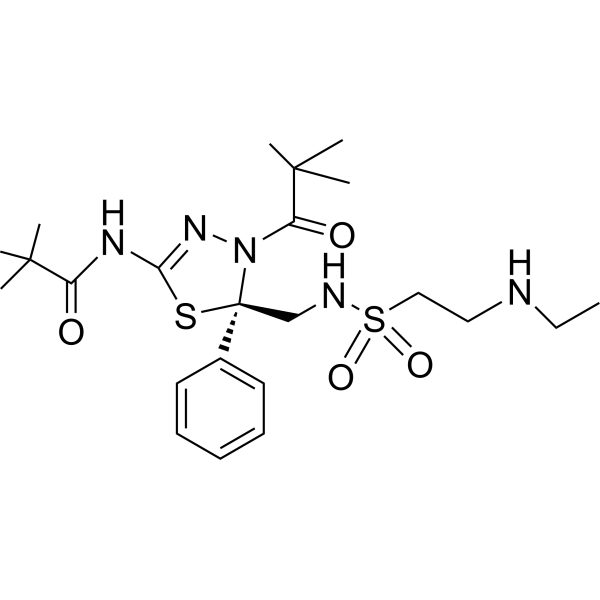
FilanesibKSP Inhibitor -
HY-14846
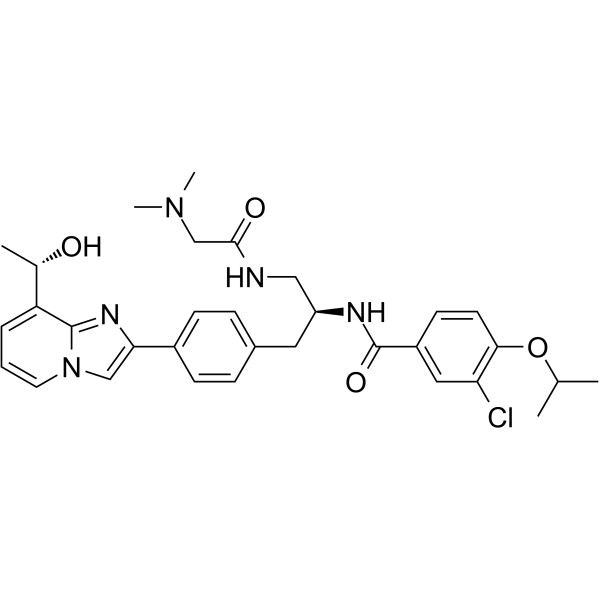
LitronesibKinesin Inhibitor -
HY-10299
GSK-923295CENP-E Inhibitor -
HY-12069
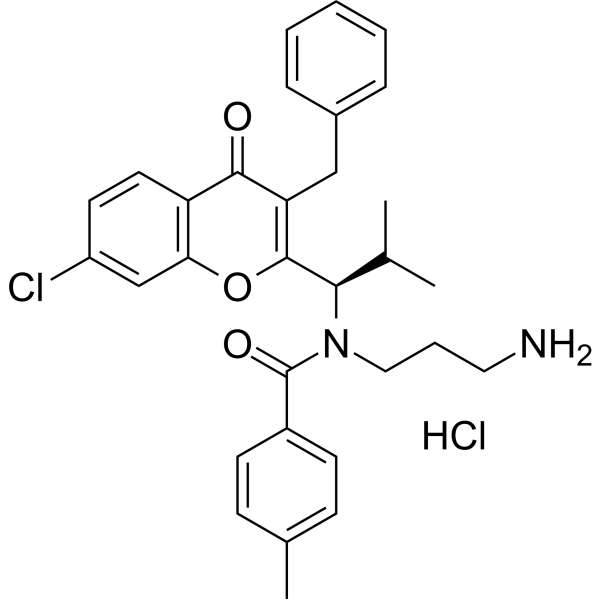
SB-743921 hydrochlorideEg5 Inhibitor -
HY-12241
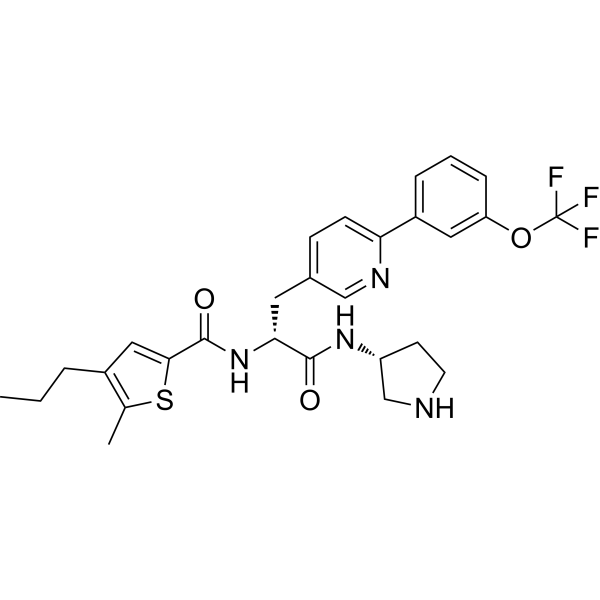
AZ82KIFC1 Inhibitor -
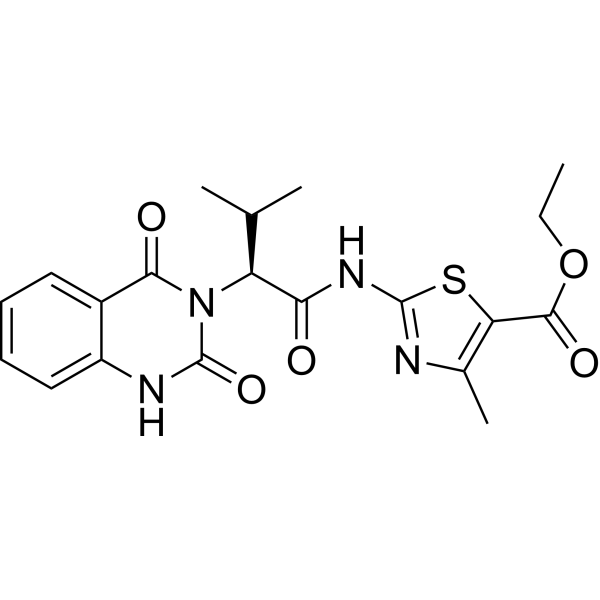
HY-15948
Kif15-IN-1Kinesin Inhibitor -
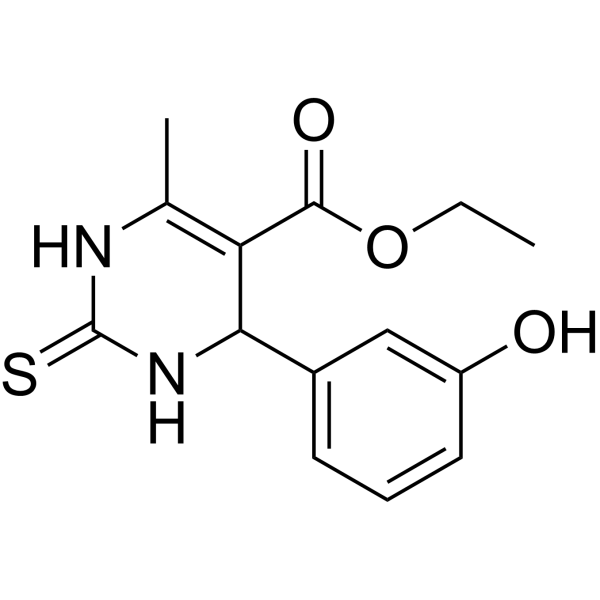
HY-101071A
MonastrolMitotic Kinesin Eg5 Inhibitor -
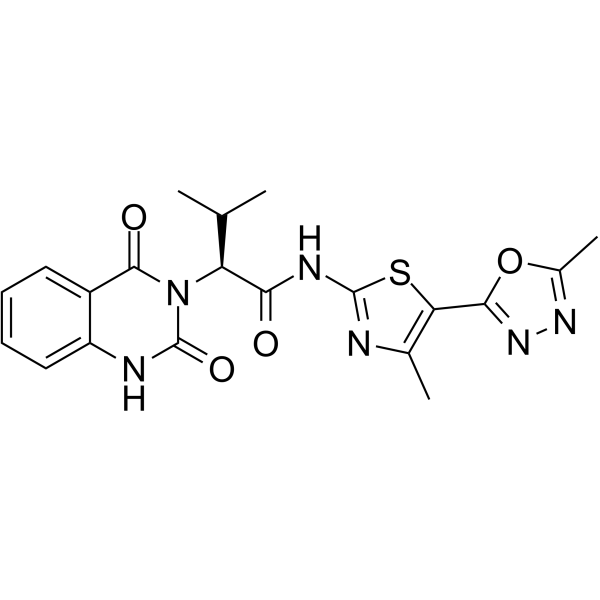
HY-15949
Kif15-IN-2Kinesin Inhibitor -
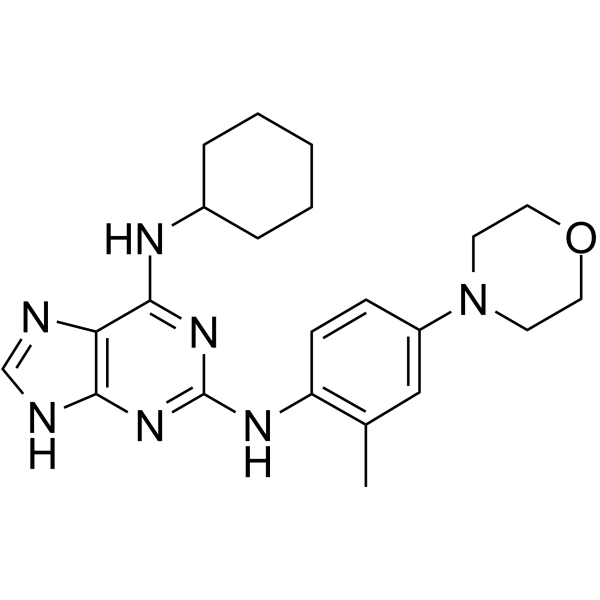
HY-12660
MPI-0479605Mps1 Inhibitor -
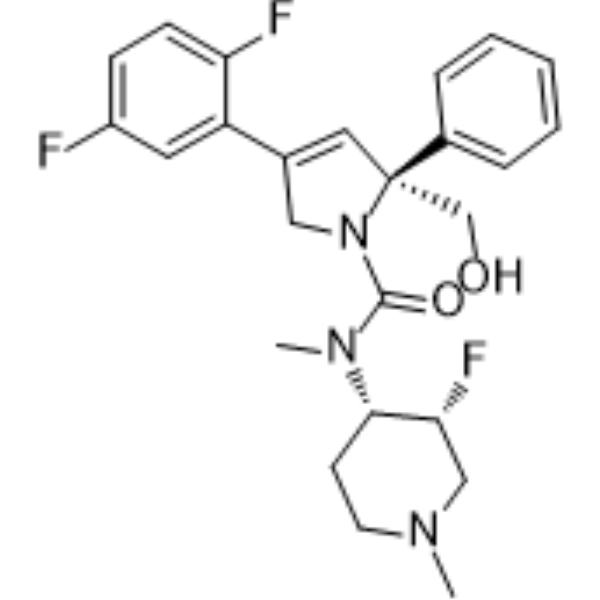
HY-50672
MK-0731KSP Inhibitor
All Kinesin Isoforms
More

Biological Activity
Description
IC50 & Target
[1]|
Eg5 |
In Vitro
Over-expression of Eg5 causes genomic instability and tumor formation in mice; therefore, Eg5 is a potential anti-cancer target[1].
MedChemExpress (MCE) has not independently confirmed the accuracy of these methods. They are for reference only.
Clinical Trial
| NCT Number | Sponsor | Condition | Start Date |
Phase

|
|---|---|---|---|---|
| NCT01329991 | Plexxikon| | 2011-05 | PHASE1 |


Chemical Information
-
CAS No. 1095253-39-6
-
Appearance Solid
-
Molecular Weight 552.43
-
Formula C28H24Cl2FN5O2
-
Color White to off-white
-
SMILES
O=C(N(CCCN)[C@@H](C(N1NC2=CC=CC=C2)=NC3=C(C=CC(Cl)=C3)C1=O)CC#C)C4=CC=CC(Cl)=C4F
-
Shipping
Room temperature in continental US; may vary elsewhere.
-
Storage
-20°C, protect from light
* In solvent : -80°C, 6 months; -20°C, 1 month (protect from light)


Solvent & Solubility
In Vitro:
DMSO : 110 mg/mL (199.12 mM; Need ultrasonic; Hygroscopic DMSO has a significant impact on the solubility of product, please use newly opened DMSO)
Please refer to the solubility information to select the appropriate solvent. Once prepared, please aliquot and store the solution to prevent product inactivation from repeated freeze-thaw cycles.
Storage method and period of stock solution: -80°C, 6 months; -20°C, 1 month (protect from light). When stored at -80°C, please use it within 6 months. When stored at -20°C, please use it within 1 month.
Please refer to the solubility information to select the appropriate solvent. Once prepared, please aliquot and store the solution to prevent product inactivation from repeated freeze-thaw cycles.
Storage method and period of stock solution: -80°C, 6 months; -20°C, 1 month (protect from light). When stored at -80°C, please use it within 6 months. When stored at -20°C, please use it within 1 month.
Concentration (start) × Volume (start) = Concentration (final) × Volume (final)


Purity & Documentation
-
Data Sheet (279 KB)
-
SDS (538 KB)
- English - EN (538 KB)
- Français - FR (538 KB)
- Deutsch - DE (538 KB)
- Norwegian - NO (538 KB)
- Español - ES (538 KB)
- Swedish - SV (538 KB)
- Italian - IT (538 KB)
- Korean - KR (538 KB)
- Portuguese - PT (538 KB)
-
Handling Instructions (2659 KB)
References


Complete Stock Solution Preparation Table
Please refer to the solubility information to select the appropriate solvent. Once prepared, please aliquot and store the solution to prevent product inactivation from repeated freeze-thaw cycles.
Storage method and period of stock solution: -80°C, 6 months; -20°C, 1 month (protect from light). When stored at -80°C, please use it within 6 months. When stored at -20°C, please use it within 1 month.
| Optional Solvent | Concentration Solvent Mass | 1 mg | 5 mg | 10 mg | 25 mg |
|---|---|---|---|---|---|
| DMSO | 1 mM | 1.8102 mL | 9.0509 mL | 18.1018 mL | 45.2546 mL |
| 5 mM | 0.3620 mL | 1.8102 mL | 3.6204 mL | 9.0509 mL | |
| 10 mM | 0.1810 mL | 0.9051 mL | 1.8102 mL | 4.5255 mL | |
| 15 mM | 0.1207 mL | 0.6034 mL | 1.2068 mL | 3.0170 mL | |
| 20 mM | 0.0905 mL | 0.4525 mL | 0.9051 mL | 2.2627 mL | |
| 25 mM | 0.0724 mL | 0.3620 mL | 0.7241 mL | 1.8102 mL | |
| 30 mM | 0.0603 mL | 0.3017 mL | 0.6034 mL | 1.5085 mL | |
| 40 mM | 0.0453 mL | 0.2263 mL | 0.4525 mL | 1.1314 mL | |
| 50 mM | 0.0362 mL | 0.1810 mL | 0.3620 mL | 0.9051 mL | |
| 60 mM | 0.0302 mL | 0.1508 mL | 0.3017 mL | 0.7542 mL | |
| 80 mM | 0.0226 mL | 0.1131 mL | 0.2263 mL | 0.5657 mL | |
| 100 mM | 0.0181 mL | 0.0905 mL | 0.1810 mL | 0.4525 mL |


ARQ 621 Related Classifications
HY-16062 Related Classifications
 Powered by Bioz