



ACSL4 Inhibitor
-
Triacsin C
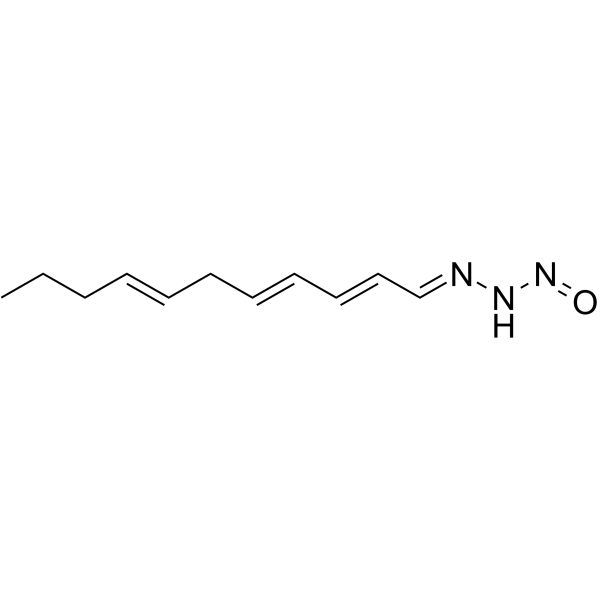 0 ImagesSynonyms: WS 1228A; FR 900190
Triacsin C (WS 1228A), is an orally active and intracellular long-chain acyl-CoA synthetases (ACSL) inhibitor, which can be isolated from Streptomyces aureofaciens. Triacsin C inhibits TAG accumulation into lipid droplets (LD) by suppressing ACSL activity. Triacsin C exhibits highly inhibitory effect against rotavirus replication.
-
LIBX-A401
 0 Images
LIBX-A401 is a selective long-chain acyl-CoA synthetase 4 (ACSL4) inhibitor with a human IC50 values of 0.38 μM and a Kd of 0.72 μM. LIBX-A401 binds to ACSL4 in an ATP-dependent manner, stabilizes the C-terminal domain, alters the fatty acid gate region, and interacts with residues A329 and Q302 within the fatty acid binding site. LIBX-A401 exhibits anti-ferroptosis properties in cells. LIBX-A401 can be used for the researches of cancer and parkinson's disease.
-
Et-29
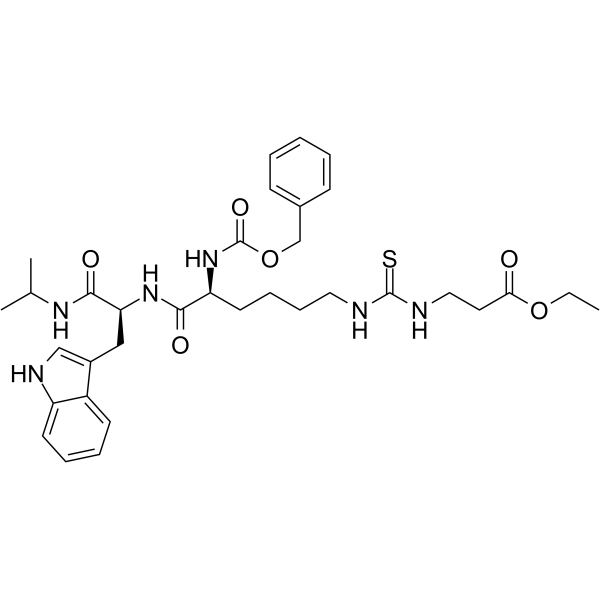 0 ImagesSynonyms: NRD167
Et-29 (NRD167) is a selective SIRT5 inhibitor. Et-29 increases the levels of total protein succinylation and citrate synthase succinylation in cells. Et-29 reduces serum CTX-I levels and blocks Ferroptosis by downregulating the SIRT5/ACSL4/LPCAT3/ALOX15 axis and restoring antioxidant defense. Et-29 decreases bone resorption and improves trabecular bone mass and microarchitecture. Et-29 is applicable for research related to osteoporosis and hepatocellular carcinoma.
-
LIBX-A403
 0 ImagesCat. No.: HY-175328Purity: 99.23%
LIBX-A403 is a potent, selective and reversible ACSL4 inhibitor with a human IC50 of 0.049 μM and a Kd of 0.29 μM. LIBX-A403 binds in the ACSL4 fatty acid pocket in an ATP-dependent manner. LIBX-A403 prevents cell ferroptosis. LIBX-A403 can be used for the researches of cancer and parkinson's disease.
-
Fluorofenidone
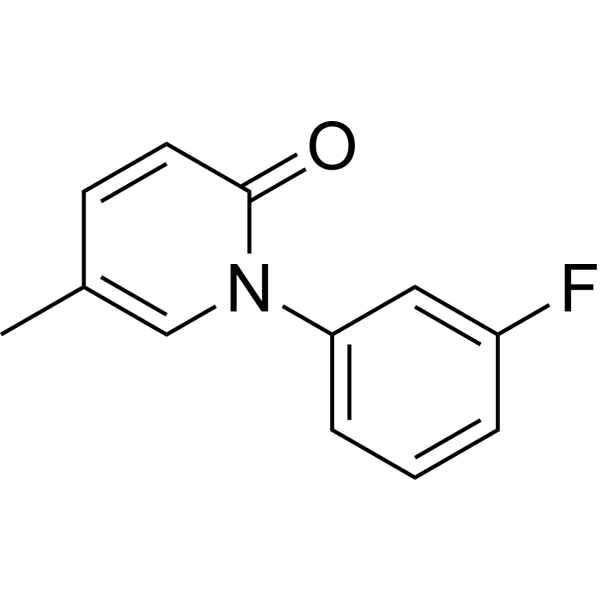 0 ImagesSynonyms: AKF-PD
Fluorofenidone (AKF-PD) is an orally active compound with anti-fibrotic, antioxidant, and anti-inflammatory pharmacological effects. Fluorofenidone downregulates the expression of ACSL4, upregulates GPX4 expression and inhibits the NF-κB signaling pathway to alleviate inflammation and fibrosis. Fluorofenidone ameliorates cholestasis and fibrosis by inhibiting hepatic Erk/-Egr-1 signaling and Tgfβ1/Smad pathway in mice. Fluorofenidone demonstrates protective effects against chronic lung injury in mice. Fluorofenidone can be used for the study of chronic obstructive pulmonary disease (COPD), pulmonary interstitial fibrosis (PIF) and non-small cell lung cancer (NSCLC).
-
DOPE (GMP)
 0 ImagesCat. No.: HY-112005GCAS No.: 4004-05-1Synonyms: Dioleoylphosphatidylethanolamine (GMP); 1,2-Dioleoyl-sn-glycero-3-phosphoethanolamine (GMP)
DOPE GMP is DOPE (HY-112005) produced by using GMP guidelines. GMP small molecules works appropriately as an auxiliary reagent for cell therapy manufacture. DOPE (Dioleoylphosphatidylethanolamine; 1,2-Dioleoyl-sn-glycero-3-phosphoethanolamine) is an orally active inhibitor of ferroptosis with anti-inflammatory and intestinal barrier maintenance activities. DOPE regulates the expression of ACSL4, SLC7A11 and GPX4 to restore the redox system balance, thereby reducing the levels of lipid peroxides, iron ions and intestinal inflammatory factors (IL-1β and IL-6). DOPE promotes the migration and proliferation of intestinal epithelial cells and increases the level of tight junction proteins; it also destabilizes endosomal membranes, mediates the conjugation of RVG peptides with mesenchymal stem cell-derived exosomes to enhance brain targeting. DOPE can be applied to research related to neonatal necrotizing enterocolitis and Alzheimer's disease.
-
LIBX-A402
 0 ImagesCat. No.: HY-175327Purity: 98.71%
LIBX-A402 is a selective, ATP-dependent inhibitor of ACSL4 (hACSL4, IC50=0.33 μM, Kd=3.3 μM) and an inhibitor of ferroptosis. LIBX-A402 targets the fatty acid-binding pocket of ACSL4 and prevents cells from undergoing ferroptosis. LIBX-A402 can be used in the research of cancer and Parkinson's disease.
-
2-Phosphoglyceric acid
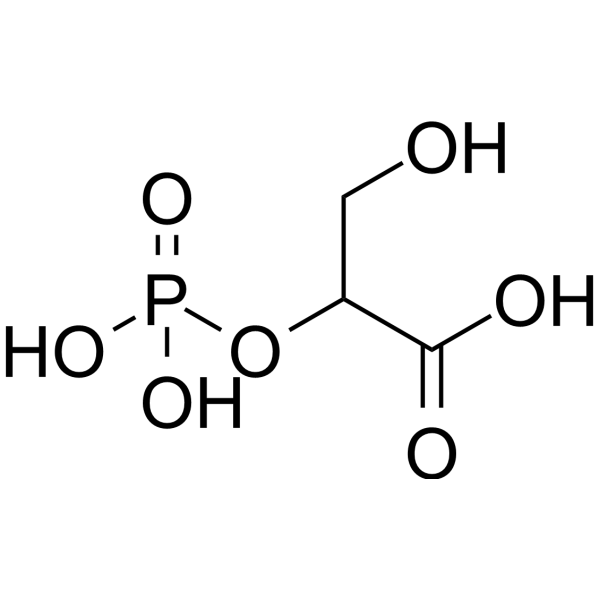 0 Images
2-Phosphoglyceric acid (DL-2-phosphoglyceric acid) is a glycolytic substrate that is catalyzed by enolase to form phosphoenolpyruvate ester (PEP). 2-Phosphoglyceric acid inhibits the ferroptosis pathway by down-regulating ACSL4 and up-regulating GPX4, and has significant neuroprotective effects. 2-Phosphoglyceric acid reflects the overall metabolic state and flux of the cell.
-
Fluorofenidone-d3
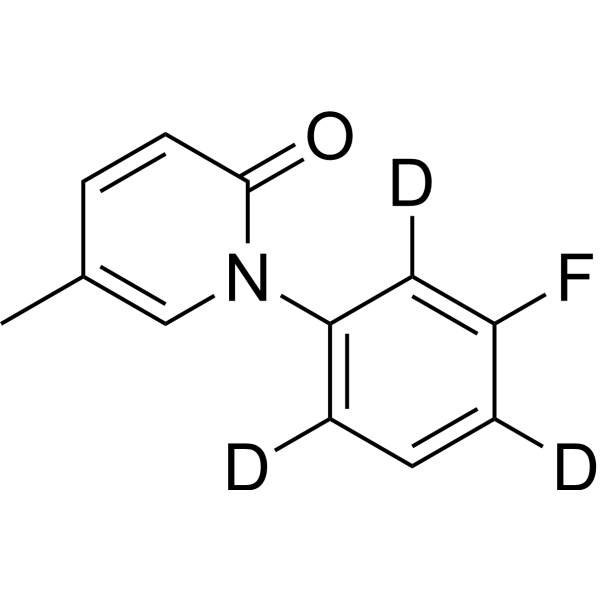 0 ImagesCat. No.: HY-121246SSynonyms: AKF-PD-d3
Fluorofenidone-d3 (AKF-PD-d3) is deuterium labeled Fluorofenidone (AKF-PD) (HY-121246). Fluorofenidone is an orally active compound with anti-fibrotic, antioxidant, and anti-inflammatory pharmacological effects. Fluorofenidone downregulates the expression of ACSL4, upregulates GPX4 expression and inhibits the NF-κB signaling pathway to alleviate inflammation and fibrosis. Fluorofenidone ameliorates cholestasis and fibrosis by inhibiting hepatic Erk/-Egr-1 signaling and Tgfβ1/Smad pathway in mice. Fluorofenidone demonstrates protective effects against chronic lung injury in mice. Fluorofenidone can be used for the study of chronic obstructive pulmonary disease (COPD), pulmonary interstitial fibrosis (PIF) and non-small cell lung cancer (NSCLC).



