



ACSL4
ACSL4 is a long-chain acyl-CoA synthetase that esterifies CoA into polyunsaturated fatty acids, including arachidonic acid and adrenic acid[1]. Mechanistically, ACSL4-catalyzed arachidonoyl-CoA biosynthesis promotes ferroptosis by triggering phospholipid peroxidation[1][2]. In disease models, ACSL4 shapes membrane lipid composition, predicts ferroptosis sensitivity in basal-like breast cancer cells, and its inhibition by thiazolidinediones reduced ferroptotic tissue damage in mice[2]. In adipocyte-specific ACSL4 knockout mice, reduced arachidonic acid incorporation into phospholipids protected against diet-induced obesity, adipocyte death, inflammation, and insulin resistance[3]. Compared with related ACSL isoforms, ACSL4 shows a distinct ferroptosis-linked role because ACSL3 and ACSL4 have distinct functions in ferroptosis and cancers[4]. For experimental applications, rosiglitazone inhibition of ACSL4 improved neurological function and reduced infarct volume after mouse middle cerebral artery occlusion[5].
References:
- [1]. Ding K, et al. Acyl-CoA synthase ACSL4: an essential target in ferroptosis and fatty acid metabolism. Chin Med J (Engl). 2023 Nov 5;136(21):2521-2537. [Content Brief]
- [2]. Doll S, et al. ACSL4 dictates ferroptosis sensitivity by shaping cellular lipid composition. Nat Chem Biol. 2017 Jan;13(1):91-98. [Content Brief]
- [3]. Killion EA, et al. A role for long-chain acyl-CoA synthetase-4 (ACSL4) in diet-induced phospholipid remodeling and obesity-associated adipocyte dysfunction. Mol Metab. 2018 Mar;9:43-56. [Content Brief]
- [4]. Yang Y, et al. ACSL3 and ACSL4, Distinct Roles in Ferroptosis and Cancers. Cancers (Basel). 2022 Nov 29;14(23):5896. [Content Brief]
- [5]. Chen J, et al. Inhibition of Acyl-CoA Synthetase Long-Chain Family Member 4 Facilitates Neurological Recovery After Stroke by Regulation Ferroptosis. Front Cell Neurosci. 2021 Apr 6;15:632354. [Content Brief]
All Product Categories
-
ACSL4 Related Products (17)
Related Products (17)

- 1
-
Triacsin C
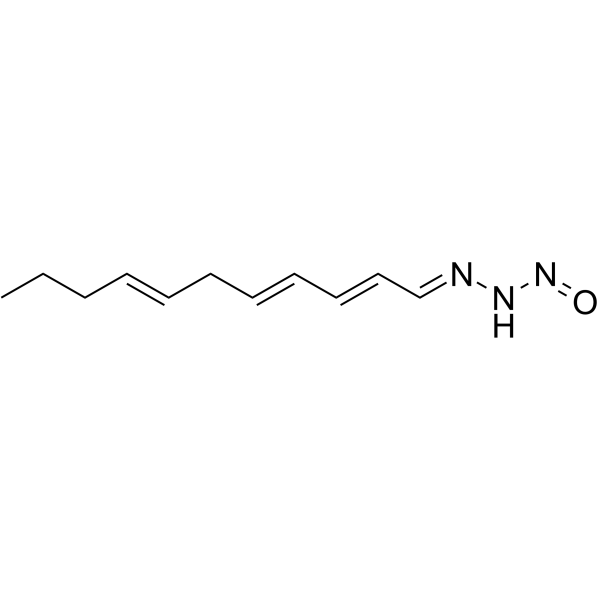 0 ImagesSynonyms: WS 1228A; FR 900190Triacsin C (WS 1228A), is an orally active and intracellular long-chain acyl-CoA synthetases (ACSL) inhibitor, which can be isolated from Streptomyces aureofaciens. Triacsin C inhibits TAG accumulation into lipid droplets (LD) by suppressing ACSL activity. Triacsin C exhibits highly inhibitory effect against rotavirus replication.
-
LIBX-A401
 0 ImagesLIBX-A401 is a selective long-chain acyl-CoA synthetase 4 (ACSL4) inhibitor with a human IC50 values of 0.38 μM and a Kd of 0.72 μM. LIBX-A401 binds to ACSL4 in an ATP-dependent manner, stabilizes the C-terminal domain, alters the fatty acid gate region, and interacts with residues A329 and Q302 within the fatty acid binding site. LIBX-A401 exhibits anti-ferroptosis properties in cells. LIBX-A401 can be used for the researches of cancer and parkinson's disease.
-
Et-29
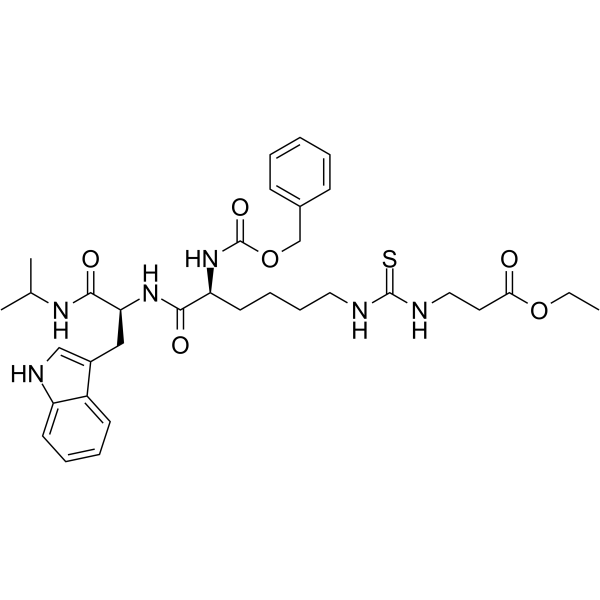 0 ImagesSynonyms: NRD167Et-29 (NRD167) is a selective SIRT5 inhibitor. Et-29 increases the levels of total protein succinylation and citrate synthase succinylation in cells. Et-29 reduces serum CTX-I levels and blocks Ferroptosis by downregulating the SIRT5/ACSL4/LPCAT3/ALOX15 axis and restoring antioxidant defense. Et-29 decreases bone resorption and improves trabecular bone mass and microarchitecture. Et-29 is applicable for research related to osteoporosis and hepatocellular carcinoma.
-
LIBX-A403
 0 ImagesCat. No.: HY-175328Purity: 99.23%LIBX-A403 is a potent, selective and reversible ACSL4 inhibitor with a human IC50 of 0.049 μM and a Kd of 0.29 μM. LIBX-A403 binds in the ACSL4 fatty acid pocket in an ATP-dependent manner. LIBX-A403 prevents cell ferroptosis. LIBX-A403 can be used for the researches of cancer and parkinson's disease.
-
Fluorofenidone
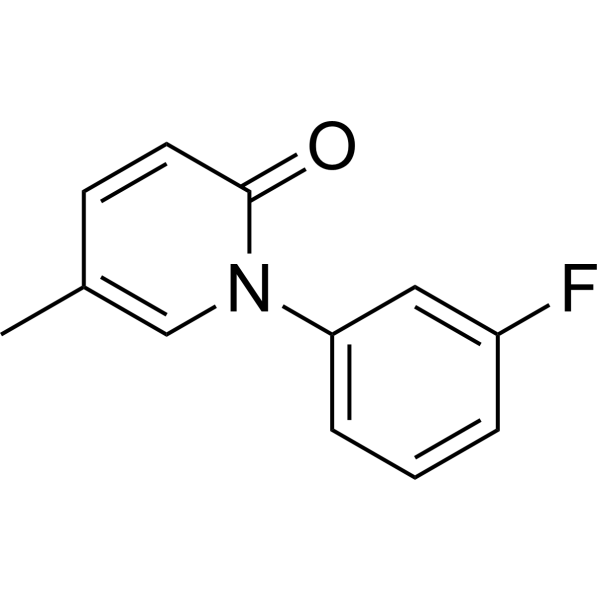 0 ImagesSynonyms: AKF-PDFluorofenidone (AKF-PD) is an orally active compound with anti-fibrotic, antioxidant, and anti-inflammatory pharmacological effects. Fluorofenidone downregulates the expression of ACSL4, upregulates GPX4 expression and inhibits the NF-κB signaling pathway to alleviate inflammation and fibrosis. Fluorofenidone ameliorates cholestasis and fibrosis by inhibiting hepatic Erk/-Egr-1 signaling and Tgfβ1/Smad pathway in mice. Fluorofenidone demonstrates protective effects against chronic lung injury in mice. Fluorofenidone can be used for the study of chronic obstructive pulmonary disease (COPD), pulmonary interstitial fibrosis (PIF) and non-small cell lung cancer (NSCLC).
-
DOPE (GMP)
 0 ImagesCat. No.: HY-112005GCAS No.: 4004-05-1Synonyms: Dioleoylphosphatidylethanolamine (GMP); 1,2-Dioleoyl-sn-glycero-3-phosphoethanolamine (GMP)DOPE GMP is DOPE (HY-112005) produced by using GMP guidelines. GMP small molecules works appropriately as an auxiliary reagent for cell therapy manufacture. DOPE (Dioleoylphosphatidylethanolamine; 1,2-Dioleoyl-sn-glycero-3-phosphoethanolamine) is an orally active inhibitor of ferroptosis with anti-inflammatory and intestinal barrier maintenance activities. DOPE regulates the expression of ACSL4, SLC7A11 and GPX4 to restore the redox system balance, thereby reducing the levels of lipid peroxides, iron ions and intestinal inflammatory factors (IL-1β and IL-6). DOPE promotes the migration and proliferation of intestinal epithelial cells and increases the level of tight junction proteins; it also destabilizes endosomal membranes, mediates the conjugation of RVG peptides with mesenchymal stem cell-derived exosomes to enhance brain targeting. DOPE can be applied to research related to neonatal necrotizing enterocolitis and Alzheimer's disease.
-
Ferroptosis/apoptosis inducer-5
 0 ImagesCat. No.: HY-183791ACAS No.: 2243423-32-5Ferroptosis/apoptosis inducer-5 is an orally active inducer of Ferroptosis and Apoptosis. Ferroptosis/apoptosis inducer-5 downregulates GPX4, upregulates ACSL4, promotes ROS production, activates the Caspase cascade, induces Mitochondrial dysfunction, and alters the Bcl-2/Bax balance. Ferroptosis/apoptosis inducer-5 significantly inhibits tumor growth in a pancreatic cancer xenograft mouse model. Ferroptosis/apoptosis inducer-5 can be used for the research of pancreatic cancer.
-
LIBX-A402
 0 ImagesCat. No.: HY-175327Purity: 98.71%LIBX-A402 is a selective, ATP-dependent inhibitor of ACSL4 (hACSL4, IC50=0.33 μM, Kd=3.3 μM) and an inhibitor of ferroptosis. LIBX-A402 targets the fatty acid-binding pocket of ACSL4 and prevents cells from undergoing ferroptosis. LIBX-A402 can be used in the research of cancer and Parkinson's disease.
-
2-Phosphoglyceric acid
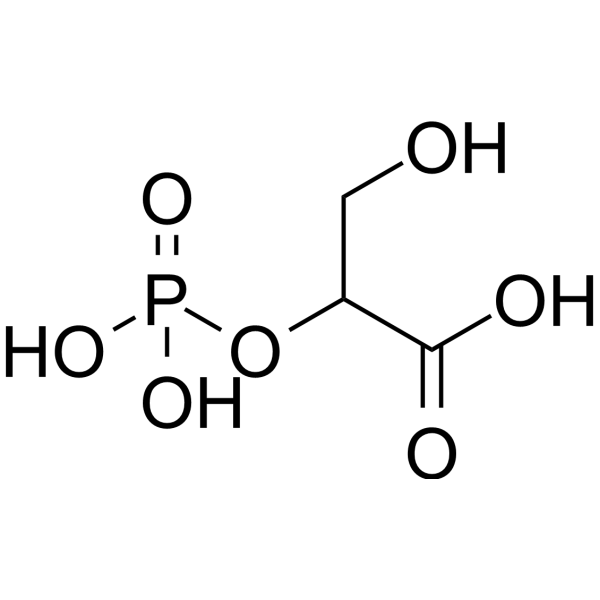 0 Images2-Phosphoglyceric acid (DL-2-phosphoglyceric acid) is a glycolytic substrate that is catalyzed by enolase to form phosphoenolpyruvate ester (PEP). 2-Phosphoglyceric acid inhibits the ferroptosis pathway by down-regulating ACSL4 and up-regulating GPX4, and has significant neuroprotective effects. 2-Phosphoglyceric acid reflects the overall metabolic state and flux of the cell.
-
Ferroptosis inducer-9
 0 ImagesCat. No.: HY-175698Ferroptosis inducer-9 is a ferroptosis inducer and colchicine site tubulin polymerization inhibitor. Ferroptosis inducer-9 inhibits MCF-7 cell growth with an IC50 of 14 nM and inhibits [3H]colchicine binding. Ferroptosis inducer-9 reduces expression of GPX4 and FTH, increases COX2 and ACSL4, lowers GSH, NADP+, and NADPH levels, increases LPO, MDA, and Fe(II) levels, and decreases SOD concentrations. Ferroptosis inducer-9 demonstrates significant anti-tumor efficacy in HCT116 CRC xenograft model. Ferroptosis inducer-9 can be used for the study of triple negative breast cancer (TNBC) and colorectal cancer (CRC).
-
Ferroptosis inducer-8
 0 ImagesCat. No.: HY-174345CAS No.: 3097194-74-3Ferroptosis inducer-8 is a ferroptosis inducer with high selectivity for other cell death mechanism. Ferroptosis inducer-8 induces ferroptosis by affecting ACSL4, GPX4, and FTH1, thereby disrupting intracellular iron homeostasis and the GSH/GPX4 antioxidant defense system, ultimately leading to the accumulation of lipid peroxidation. Ferroptosis inducer-8 also induces ROS production. Ferroptosis inducer-8 inhibits tumor growth and can be used for research of triple-negative breast cancer (TNBC).
-
Lepadin E
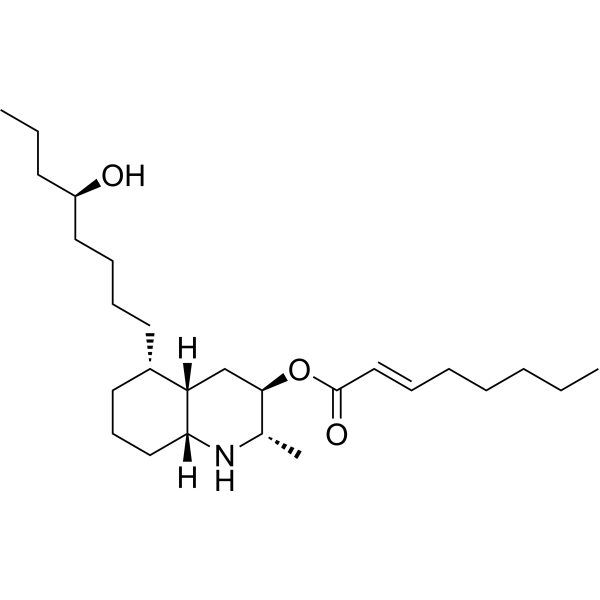 0 ImagesCat. No.: HY-155851CAS No.: 444914-19-6Lepadin E is a significantly cytotoxic ferroptosis inducer that induces iron death through the classical p53-SLC7A11-GPX4 pathway. Lepadin E promoted p53 expression, decreases SLC7A11 and GPX4 levels, and leads to increased ROS and lipid peroxide production, and upregulated ACSL4 expression, thus causes cell death. Lepadin E has significant antitumor effect.
-
Antitumor agent-122
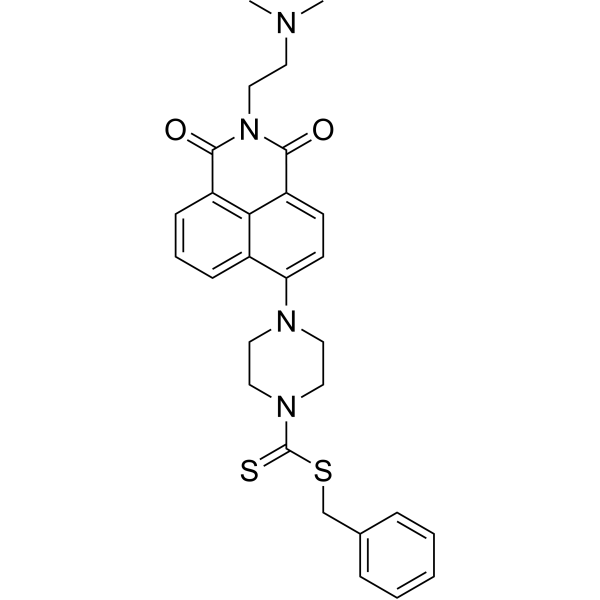 0 ImagesCat. No.: HY-149717CAS No.: 2378641-43-9Antitumor agent-122 is a potent multi-target antitumor agent that exerts its effects through the induction of ferroptosis, autophagy, apoptosis, and cell cycle arrest. In the ferroptosis pathway, Antitumor agent-122 inhibits GPX4 expression and upregulates FACL4 expression, increasing intracellular lipid peroxidation and ferrous ion levels. In the autophagy pathway, Antitumor agent-122 induces autophagy by inhibiting the AKT/mTOR signaling pathway. In the apoptosis and cell cycle pathways, Antitumor agent-122 arrests cells at the G1/S phase and subsequently promots mitochondrial pathway-mediated apoptosis. Antitumor agent-122 can be used in the research of solid tumors including gastric, liver, ovarian, and bladder cancers.
-
Lepadin H
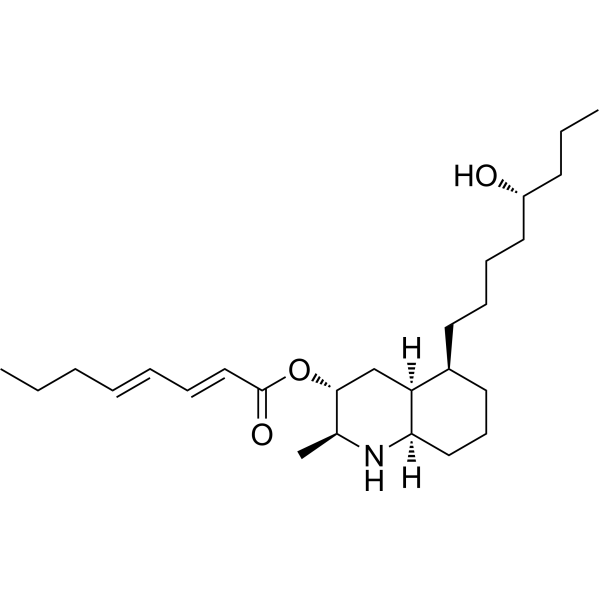 0 ImagesCat. No.: HY-155852CAS No.: 412328-25-7Lepadin H is a ferroptosis inducer and apoptosis inducer with in vitro cytotoxicity and in vivo antitumor efficacy against cancer cells. Lepadin H reduces GPX4 and SLC7A11 levels, increases p53 and ACSL4 expression, drives lipid hydroperoxide production, elevates reactive oxygen species (ROS) levels, reduces cellular glutathione (GSH) levels, induces lipid peroxidation and G2/M phase cell cycle arrest, and suppresses clonogenic growth and migration of cancer cells.Lepadin H can be used for the research of melanoma.
-
PROTAC FSP1 degrader 1
 0 ImagesCat. No.: HY-179384CAS No.: 3096510-51-6PROTAC FSP1 degrader 1 is a highly efficient and selective PROTAC degrader targeting FSP1. PROTAC FSP1 degrader 1 significantly induces the accumulation of intracellular lipid peroxides. PROTAC FSP1 degrader 1 exhibits synergistic induction of ferroptosis with GPX4 inhibitors. PROTAC FSP1 degrader 1 can induce ROS production. PROTAC FSP1 degrader 1 upregulates the mRNA expression of ferroptosis-related proteins (GPX4, FTH1, ACSL4, TfR1, FSP1). PROTAC FSP1 degrader 1 can be used for the study of triple-negative breast cancer.
-
Fluorofenidone (Standard)
 0 ImagesFluorofenidone (Standard) is the analytical standard of Fluorofenidone (AKF-PD) (HY-121246). This product is intended for research and analytical applications. Fluorofenidone is an orally active compound with anti-fibrotic, antioxidant, and anti-inflammatory pharmacological effects. Fluorofenidone downregulates the expression of ACSL4, upregulates GPX4 expression and inhibits the NF-κB signaling pathway to alleviate inflammation and fibrosis. Fluorofenidone ameliorates cholestasis and fibrosis by inhibiting hepatic Erk/-Egr-1 signaling and Tgfβ1/Smad pathway in mice. Fluorofenidone demonstrates protective effects against chronic lung injury in mice. Fluorofenidone can be used for the study of chronic obstructive pulmonary disease (COPD), pulmonary interstitial fibrosis (PIF) and non-small cell lung cancer (NSCLC).
-
Fluorofenidone-d3
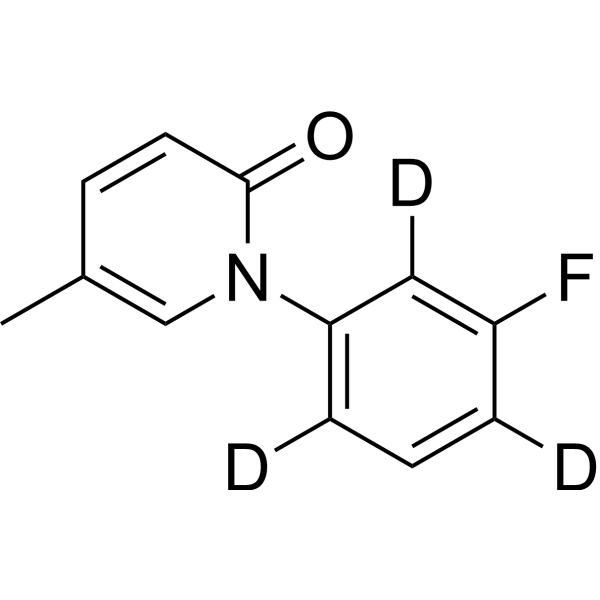 0 ImagesCat. No.: HY-121246SSynonyms: AKF-PD-d3Fluorofenidone-d3 (AKF-PD-d3) is deuterium labeled Fluorofenidone (AKF-PD) (HY-121246). Fluorofenidone is an orally active compound with anti-fibrotic, antioxidant, and anti-inflammatory pharmacological effects. Fluorofenidone downregulates the expression of ACSL4, upregulates GPX4 expression and inhibits the NF-κB signaling pathway to alleviate inflammation and fibrosis. Fluorofenidone ameliorates cholestasis and fibrosis by inhibiting hepatic Erk/-Egr-1 signaling and Tgfβ1/Smad pathway in mice. Fluorofenidone demonstrates protective effects against chronic lung injury in mice. Fluorofenidone can be used for the study of chronic obstructive pulmonary disease (COPD), pulmonary interstitial fibrosis (PIF) and non-small cell lung cancer (NSCLC).
- 1



