



Amino Acid Decarboxylase Inhibitor
-
(Z)-Aconitic acid
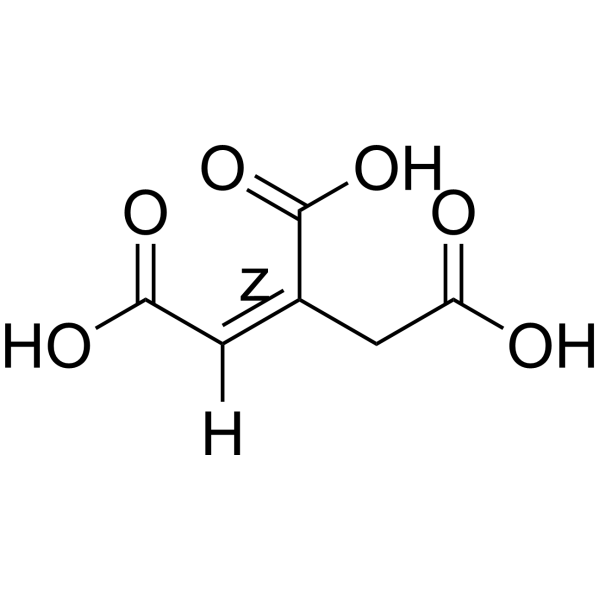 0 ImagesSynonyms: cis-Aconitic acid
-
L-Allylglycine
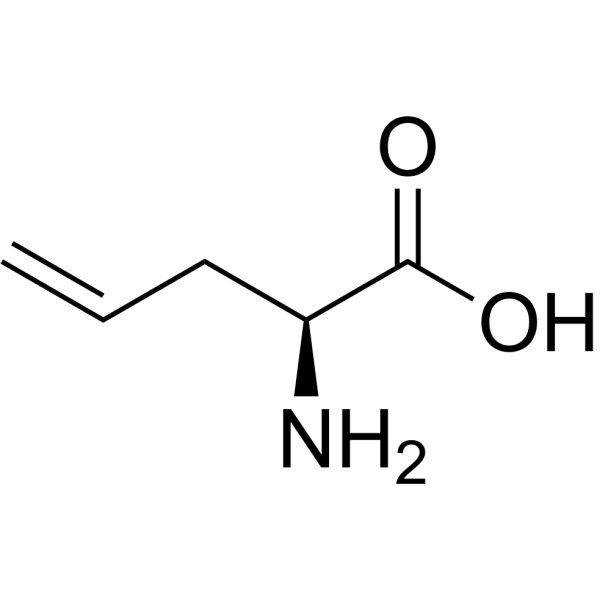 0 ImagesSynonyms: L-2-Allylglycine
L-Allylglycine (L-2-Allylglycine) is an amino acid derivative. L-Allylglycine is an inhibitor for glutamate decarboxylase (GAD) that reduces the GABA biosynthesis in the brain. L-Allylglycine exhibits convulsant activity.
-
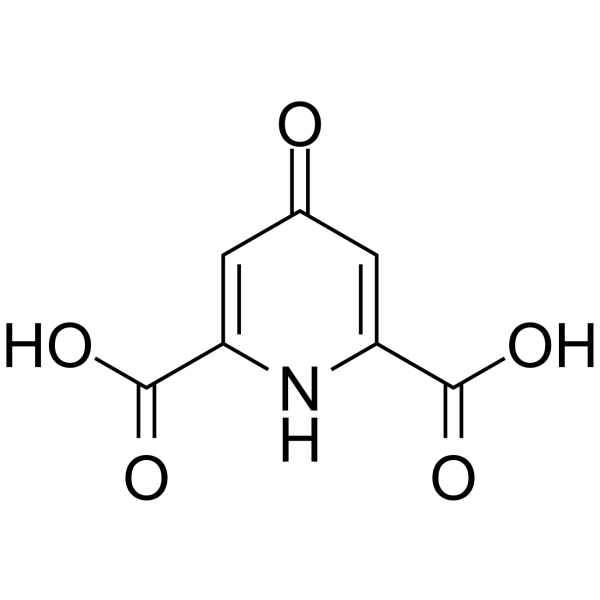
Chelidamic acid
 0 Images
Chelidamic acid is a heterocyclic organic acid with a pyran skeleton. Chelidamic acid has good coordination ability with noble metal ions. Chelidamic acid is also one of the most potent inhibitors of glutamate decarboxylase, with a Ki of 33 μM.
-
L-Allylglycine hydrochloride
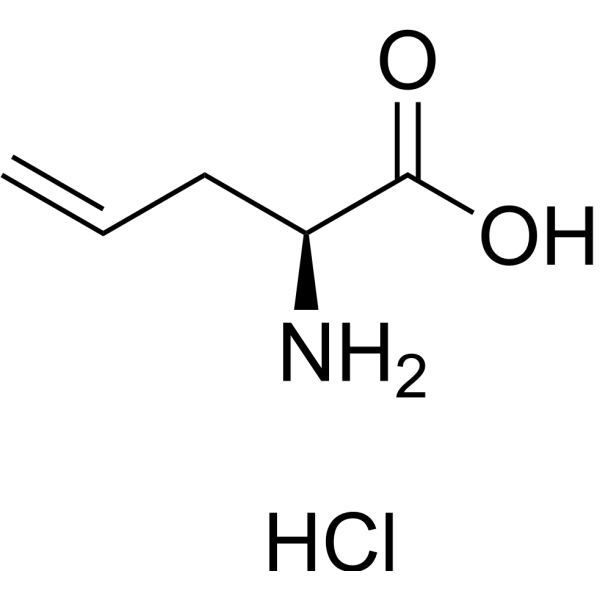 0 ImagesSynonyms: L-2-Allylglycine hydrochloride
L-Allylglycine (L-2-Allylglycine) hydrochloride is an amino acid derivative. L-Allylglycine hydrochloride is an inhibitor for glutamate decarboxylase (GAD) that reduces the GABA biosynthesis in the brain. L-Allylglycine hydrochloride exhibits convulsant activity.
-
α-Fluoromethylhistidine dihydrochloride
 0 Images
α-Fluoromethylhistidine dihydrochloride is an orally active histidine decarboxylase inhibitor. α-Fluoromethylhistidine dihydrochloride depletes histamine in enterochromaffin-like (ECL) cells, reduces the number and volume density of secretory vesicles in ECL cells, and does not affect histamine storage in mast cells. α-Fluoromethylhistidine dihydrochloride abolishes Omeprazole (HY-B0113)-induced vacuolization of ECL cells and decreases gastrin-induced histamine efflux from ECL cells. α-Fluoromethylhistidine dihydrochloride does not alter the granular characteristics of ECL cells, omeprazole-induced hypertrophy of ECL cells, gastrin-induced pancreastatin-like immunoreactivity efflux, nor does it affect gastric acid secretion induced by histamine or vagal stimulation. α-Fluoromethylhistidine dihydrochloride inhibits basal and gastrin-stimulated gastric acid secretion, reduces acid output induced by gastrin+IBMX (HY-12318), but does not directly affect acid generation in isolated parietal cells.
-
Qc1
 0 Images
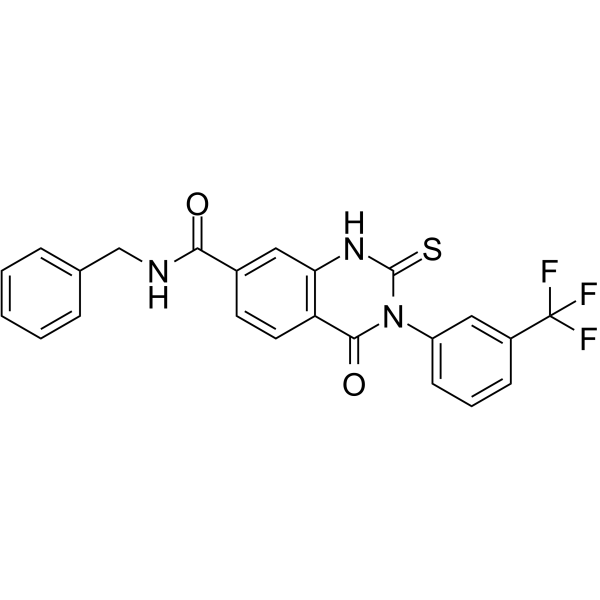
Qc1 is a reversible and noncompetitive threonine dehydrogenase (TDH) inhibitor. Qc1 can be used for the research of Metabolic disease.
-
α-FMH
 0 ImagesCat. No.: HY-W1015419CAS No.: 73804-75-8Synonyms: α-Fluoromethylhistidine
α-FMH (α-Fluoromethylhistidine) is an orally active histidine decarboxylase inhibitor. α-FMH depletes histamine in enterochromaffin-like (ECL) cells, reduces the number and volume density of secretory vesicles in ECL cells, and does not affect histamine storage in mast cells. α-FMH abolishes Omeprazole (HY-B0113)-induced vacuolization of ECL cells and decreases gastrin-induced histamine efflux from ECL cells. α-FMH does not alter the granular characteristics of ECL cells, omeprazole-induced hypertrophy of ECL cells, gastrin-induced pancreastatin-like immunoreactivity efflux, nor does it affect gastric acid secretion induced by histamine or vagal stimulation. α-FMH inhibits basal and gastrin-stimulated gastric acid secretion, reduces acid output induced by gastrin+IBMX (HY-12318), but does not directly affect acid generation in isolated parietal cells.
-
Tritoqualine
 0 ImagesCat. No.: HY-U00065CAS No.: 14504-73-5Synonyms: Inhibostamin; Hypostamine
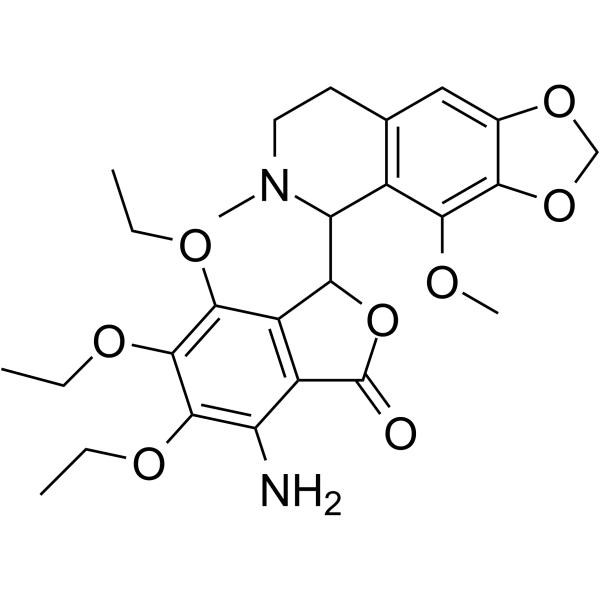
Tritoqualine is a histidine decarboxylase inhibitor, that inhibits the release of histidine.
-
NSD 1034
 0 Images
NSD 1034 is a potent inhibitor of aromatic L-amino acid decarboxylase (AADC) and tyrosine aminotransferase (TAT), with IC50 values of 0.32 μM and 80 μM, respectively. NSD 1034 increases dopamine synthesis and release by inhibiting AADC and TAT, and stimulating tyrosine hydroxylase in dopaminergic neurons via calcium influx in a classical dopamine receptor-independent manner. NSD 1034 is used in studies of Parkinson's disease and sleep disorders.
-
Qc1 (Standard)
 0 ImagesCat. No.: HY-103391RCAS No.: 403718-45-6



