



Drug Intermediate
Drug Iintermediate
Drug intermediates are used as raw materials for the production of bulk drugs, or they can refer to a material produced during synthesis of an API that must undergo further molecular change or processing before it becomes an API. Drug intermediates are hygienically formulated using high grade raw materials and they are used in the pharmaceutical and cosmetic industry[1][2].
References:
- [1]. Ma HC, et al. Homochiral Covalent Organic Framework for Catalytic Asymmetric Synthesis of a Drug Intermediate. J Am Chem Soc. 2020 Jul 22;142(29):12574-12578. [Content Brief]
- [2]. Ramachary D B, et al. Development of pharmaceutical drugs, drug intermediates and ingredients by using direct organo‐click reactions[J]. 2008.
All Product Categories
-
Drug Intermediate Related Products (4612)
Related Products (4612)

-
3-Hydroxypicolinic acid, matrix substance for MALDI-MS
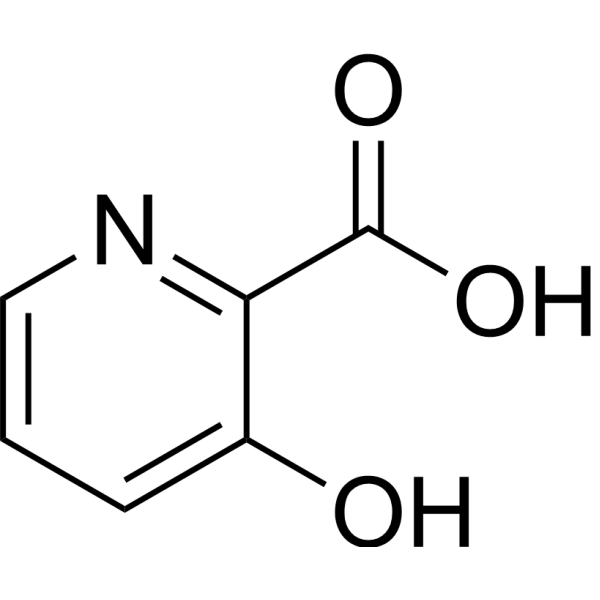 0 Images3-Hydroxypicolinic acid, matrix substance for MALDI-MS is a matrix. 3-Hydroxypicolinic acid, matrix substance for MALDI-MS coordinates with metal ions such as copper to form complexes with cytotoxic and antimycobacterial activity. 3-Hydroxypicolinic acid, matrix substance for MALDI-MS is used for the analysis of oligodeoxynucleotides in matrix-assisted laser desorption ionization time-of-flight mass spectrometry (MALDI-TOF MS). 3-Hydroxypicolinic acid, matrix substance for MALDI-MS is useful for nucleic acid analysis and anti-tuberculosis compound development.
-
Fmoc-Ser(O-α-D-GalNAc(OAc)3)-OH
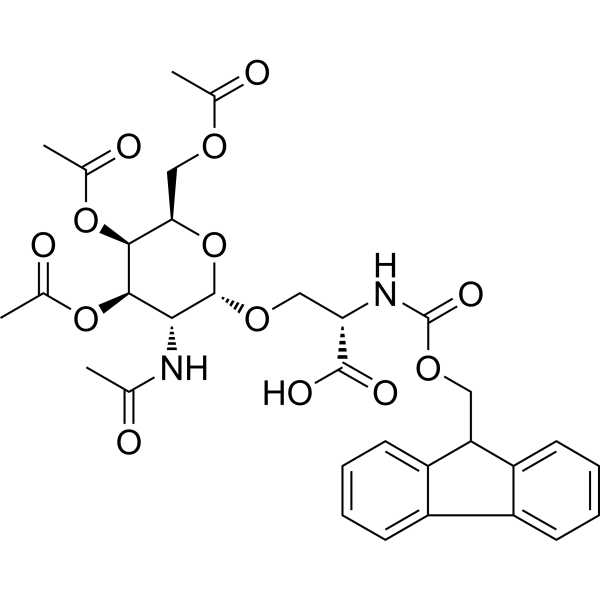 0 ImagesSynonyms: Fmoc-Ser-(GalNAc(Ac)3-alpha-D)-OH; Fmoc-Ser[GalNAc(Ac)3-α-D]-OH; Fmoc-Ser(Ac3AcNH-α-Gal)-OHFmoc-Ser (O-α-D-GalNAc (OAc) 3)-OH (Fmoc-Ser-(GalNAc(Ac)3-alpha-D)-OH) is a protected glycosylated amino acid and Tn antigen. Fmoc-Ser (O-α-D-GalNAc (OAc) 3)-OH serves as a building block in the solid-phase synthesis of Tn-based cancer vaccine constructs. Fmoc-Ser (O-α-D-GalNAc (OAc) 3)-OH supports solid-phase peptide synthesis.
-
1-Cyclohexeneboronic acid pinacol ester
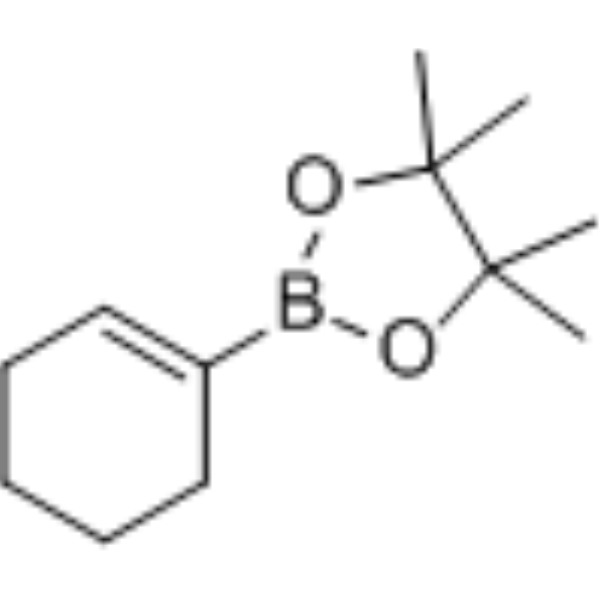 0 Images1-Cyclohexeneboronic acid pinacol ester (Compound 4) is an organoboron ester that can be used in the synthesis of PET tracers.
-
3,4,5-Trimethoxybenzoic acid
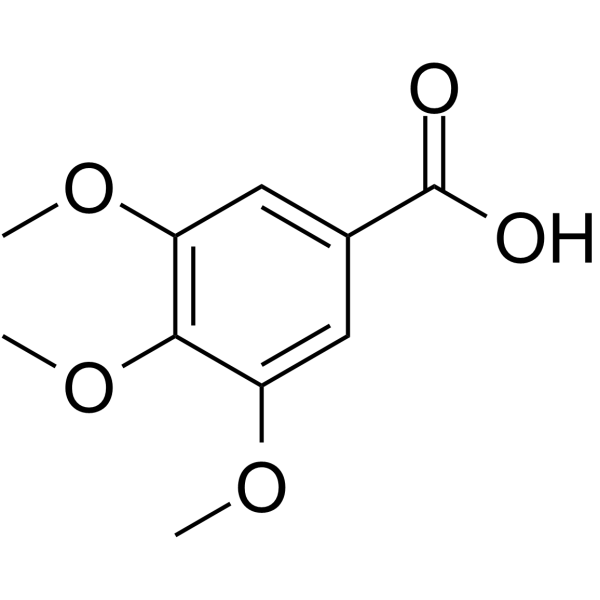 0 Images3,4,5-Trimethoxybenzoic acid (Eudesmic acid;Trimethylgallic Acid) is a benzoic acid derivative. A building block in medicine and organic synthesis. 3,4,5-Trimethoxybenzoic acid exhibits antibacterial activity against S. aureus with MIC of 0.97 μg/mL.
-
1,3,6,8-Tetrahydroxynaphthalene
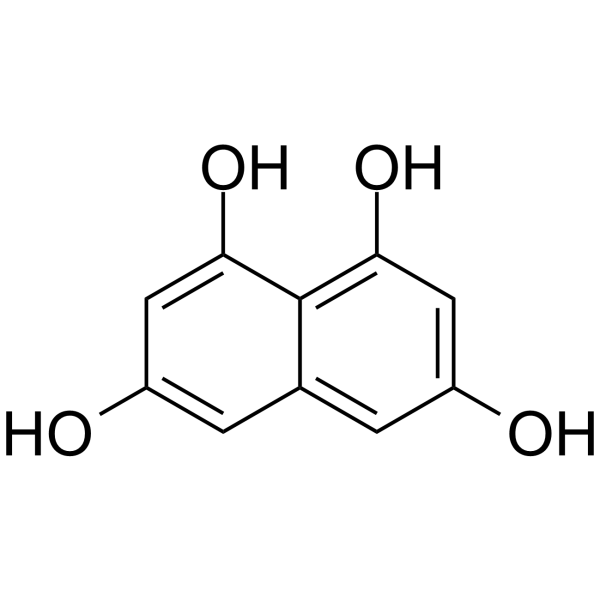 0 ImagesSynonyms: 1,3,6,8-THN; T4HN1,3,6,8-Tetrahydroxynaphthalene (T4HN) is an indispensable precursor to DHN (1,8-Dihydroxynaphthalene) melanin and is an unique symmetrical compound of polyketide origin.
-
4-Propionamidophenol
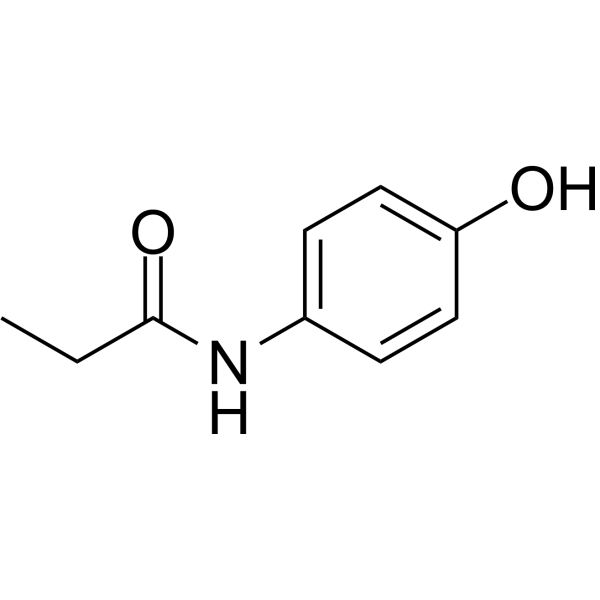 0 Images4-Propionamidophenol is a compound intermediate. 4-Propionamidophenol can be used for the synthesis of alkanolamine derivatives with β-adrenergic blocking activity. 4-Propionamidophenol is applicable to research on diseases such as heart disease and hypertension.
-
(R)-(-)-2-Butanol
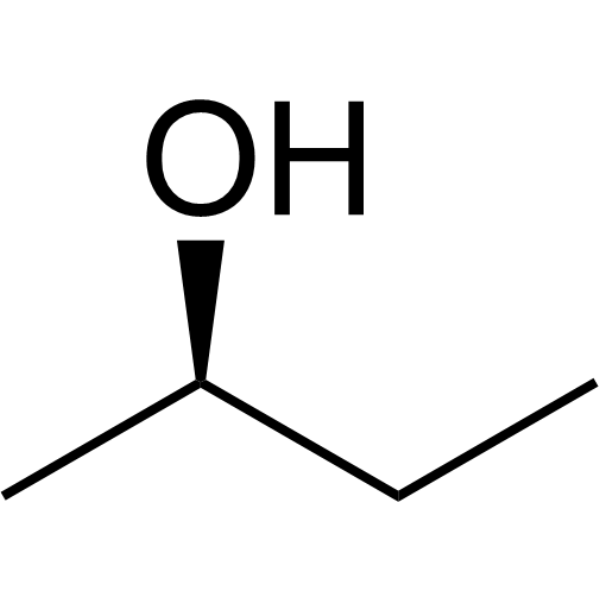 0 Images(R)-(-)-2-Butanol is the isomer of 2-Butanol, which is found in the females of the white grub beetle, Dasylepida ishigakiensis, to attract males. (R)-(-)-2-Butanol is an intermediate of pharmaceutical synthesis by coupling.
-
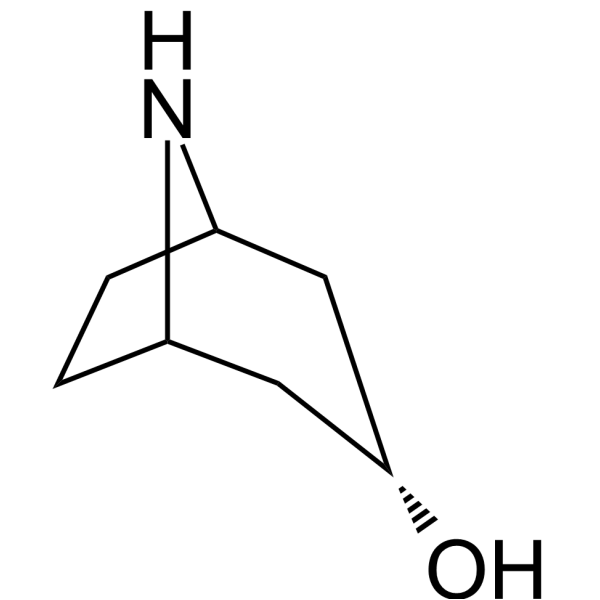
6-Bromonicotinic acid
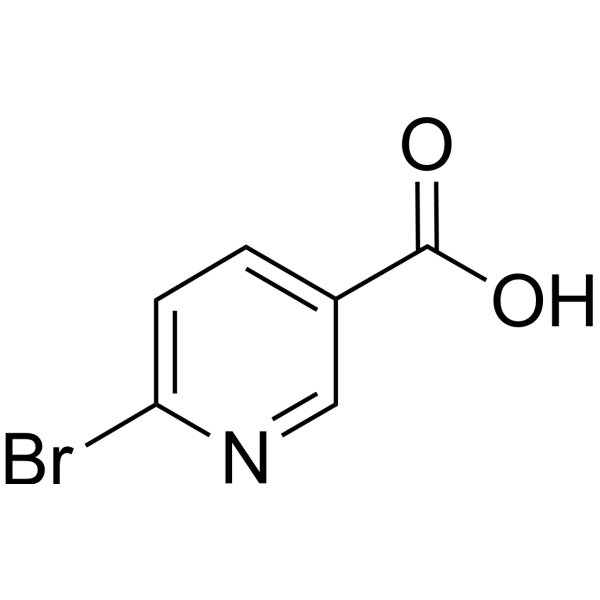 0 Images6-Bromonicotinic acid is a brominated derivative of Niacin (HY-B0143), can be used as a drug intermediate for the synthesis of Anabaseine (HY-115766) derivatives.

-
(2S,3AS,7aS)-Octahydroindole-2-carboxylic acid
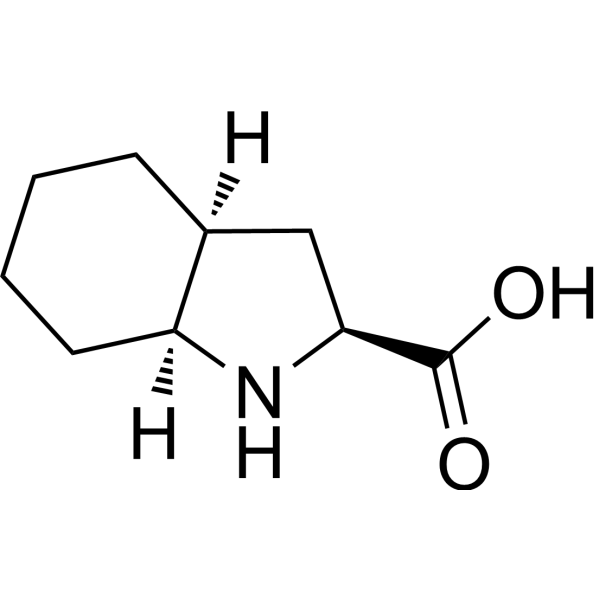 0 Images(2S,3aS,7aS)-Octahydroindole-2-carboxylic acid is a bicyclic hydrophobic proline analog that acts as a polyproline-II helix stabilizer. (2S,3aS,7aS)-Octahydroindole-2-carboxylic acid serves as a structural component of Perindopril (HY-B0130). (2S,3aS,7aS)-Octahydroindole-2-carboxylic acid can be used in studies related to organic synthesis.
-
Elunetirom
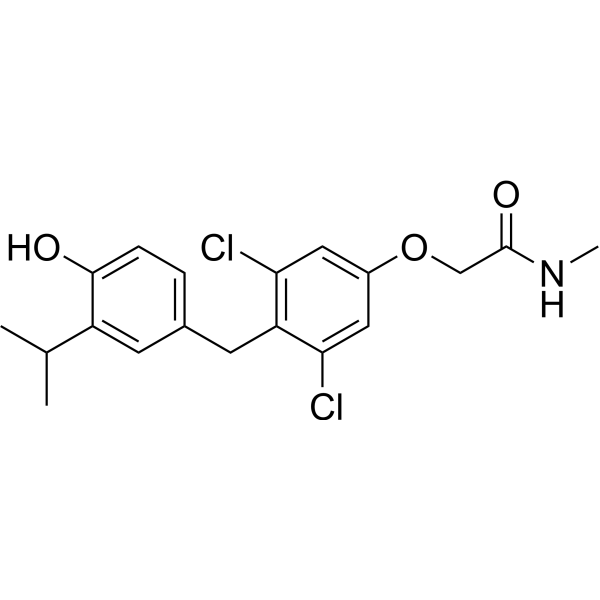 0 ImagesSynonyms: MA-JD21; ABX-002Elunetirom (MA-JD21) is an orally active, blood-brain barrier-permeable prodrug of LL-340001. Elunetirom employs fatty acid amide hydrolase (FAAH)-dependent prodrug technology to enhance the brain delivery of LL-340001, a potent thyroid hormone receptor agonist with 15-fold higher selectivity for TRβ over TRα. Elunetirom induces T3-regulated gene expression, including that of ABCD2. Elunetirom drives neuroplasticity and bioenergetic changes, and induces neurogenesis, neuritogenesis, and synaptogenesis. Elunetirom is applicable to research related to major depressive disorder and X-linked adrenoleukodystrophy.
-
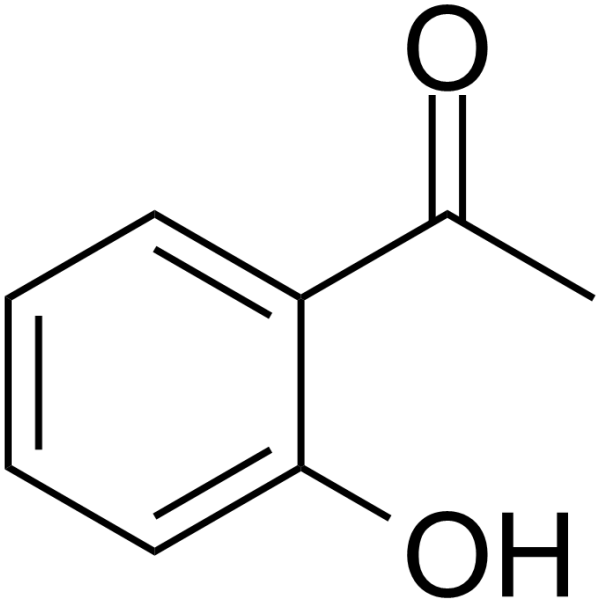
1,3-Dimethoxybenzene
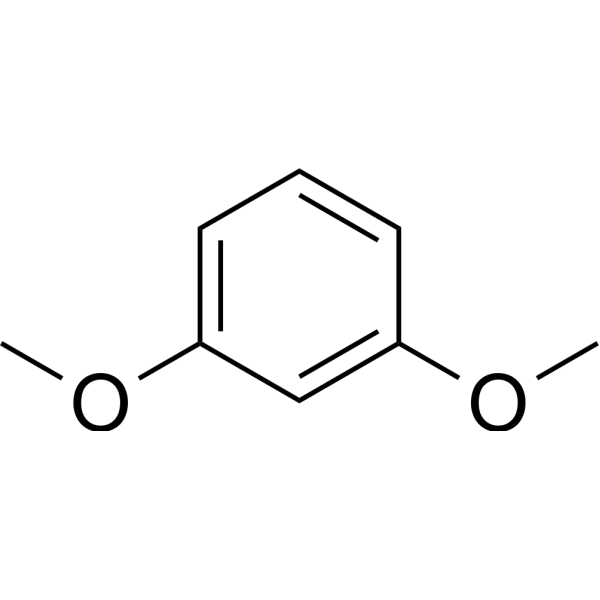 0 Images1,3-Dimethoxybenzene (Resorcinol dimethyl ether) is a volatile compound with a sweet medicinal odour carrying hazelnut, resinous, and woody notes. 1,3-Dimethoxybenzene is identified as a new volatile component of Douro region grape musts and port wines.

-
Acenaphthylene
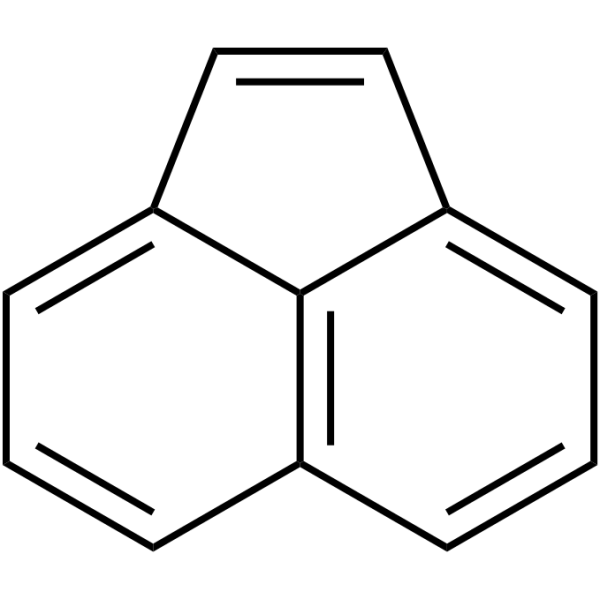 0 ImagesAcenaphthylene is a polycyclic aromatic hydrocarbon (PAH). PAHs are derived naturally from coal and tar deposits, and produced by incomplete combustion of organic matter.
-
2-Carboxy-4-chlorobenzoate,80%(4,5-DCPA≤20%) Sodium
 0 ImagesSynonyms: 4-chlorophthalate Sodium2-Carboxy-4-chlorobenzoate,80%(4,5-DCPA≤20%) (4-chlorophthalate) Sodium is a drug intermediate for synthesis of various active compounds.
-
(2-Butyl-5-nitrobenzofuran-3-yl)(4-hydroxyphenyl)methanone
 0 Images(2-Butyl-5-nitrobenzofuran-3-yl)(4-hydroxyphenyl)methanone is a drug intermediate for synthesis of various active compounds.
-
3-(1-Aminoethyl)phenol
 0 ImagesCat. No.: HY-70031CAS No.: 63720-38-73-(1-Aminoethyl)phenol is a drug intermediate for synthesis of various active compounds.
-
4-Chloro-2,5-difluorophenylboronic acid pinacol ester
 0 ImagesCat. No.: HY-W046561CAS No.: 1126320-24-84-Chloro-2,5-difluorophenylboronic acid pinacol ester is a drug intermediate for synthesis of various active compounds.



