



Drug Intermediate
Drug Iintermediate
Drug intermediates are used as raw materials for the production of bulk drugs, or they can refer to a material produced during synthesis of an API that must undergo further molecular change or processing before it becomes an API. Drug intermediates are hygienically formulated using high grade raw materials and they are used in the pharmaceutical and cosmetic industry[1][2].
References:
- [1]. Ma HC, et al. Homochiral Covalent Organic Framework for Catalytic Asymmetric Synthesis of a Drug Intermediate. J Am Chem Soc. 2020 Jul 22;142(29):12574-12578. [Content Brief]
- [2]. Ramachary D B, et al. Development of pharmaceutical drugs, drug intermediates and ingredients by using direct organo‐click reactions[J]. 2008.
All Product Categories
-
Drug Intermediate Related Products (4608)
Related Products (4608)

-
4-Chlorophenyl-2-pyridinylmethanol
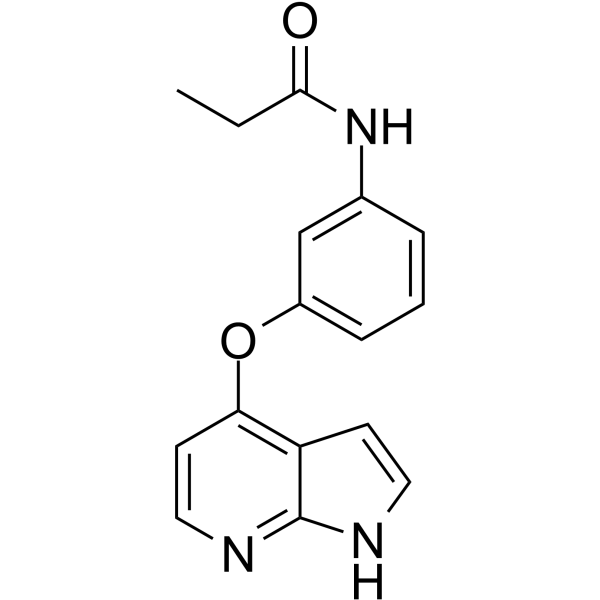
 0 ImagesSynonyms: α-(4-chlorophenyl)pyridine-2-methanol4-Chlorophenyl-2-pyridinylmethanol (α-(4-chlorophenyl)pyridine-2-methanol) is a synthetic intermediate useful for pharmaceutical synthesis.
-
AND-017
 0 ImagesCat. No.: HY-W419140CAS No.: 159325-45-8AND-017 is an important intermediate for Rocuronium Bromide (HY-17440).
-
Anastrozole impurity 1
 0 ImagesCat. No.: HY-Z4460CAS No.: 120511-84-4
-
Budesonide impurity 90
 0 ImagesCat. No.: HY-Z3809CAS No.: 137174-25-5Budesonide impurity 90 is an impurity of Budesonide0.
-
Rebamipide impurity 13
 0 ImagesCat. No.: HY-W250995CAS No.: 4876-17-9
-
voriconazole impurity 1
 0 ImagesCat. No.: HY-76200ACAS No.: 137330-52-0
-
Nintedanib impurity 10
 0 ImagesCat. No.: HY-Z0021CAS No.: 90924-46-2
-
Mivacurium chloride impurity 6
 0 ImagesCat. No.: HY-W096115CAS No.: 1026602-92-5Mivacurium chloride impurity 6 is an impurity of Mivacurium chloride (HY-B1700A).
-
Contezolid phosphoramidic acid
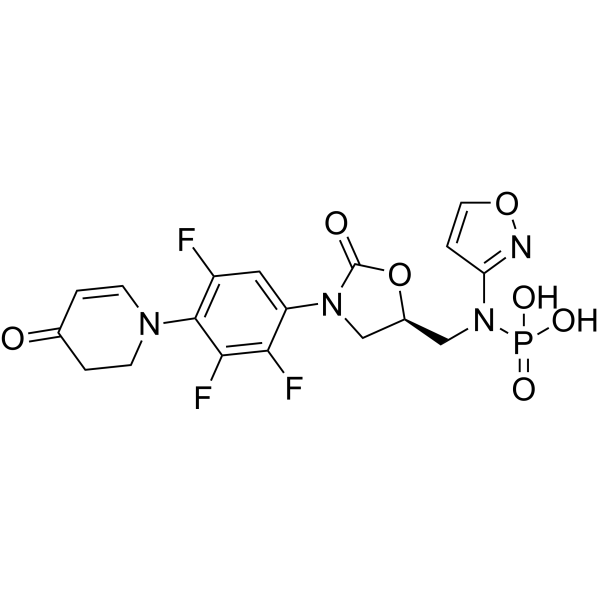 0 ImagesCat. No.: HY-138181CAS No.: 1807365-43-0Synonyms: MRX-I phosphoramidic acidContezolid phosphoramidic acid is an intermediate in the synthesis of proagents of antibacterial oxazolidinone agent MRX-I. Contezolid phosphoramidic acid is extracted from patent WO2015127316A1, Intermediate 3, Method I.
-
hDDAH-1-IN-2
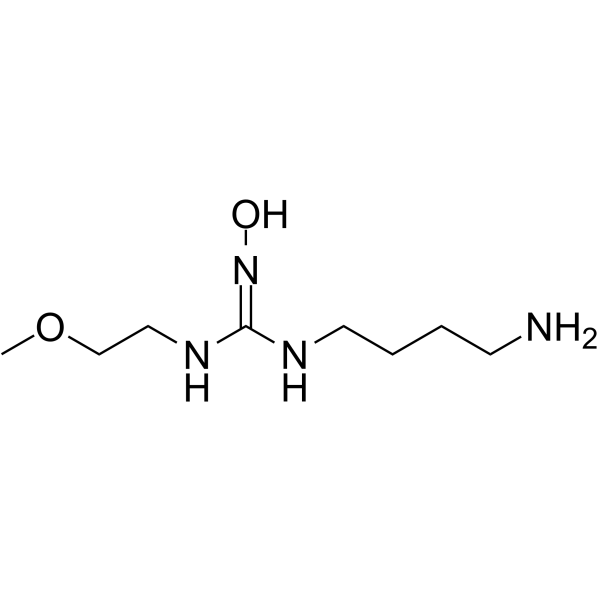 0 ImagesCat. No.: HY-133145CAS No.: 2408834-77-3hDDAH-1-IN-2 is a selective, orally active human dimethylarginine dimethylaminohydrolase-1 (hDDAH-1) inhibitor. hDDAH-1-IN-2 reveals an excellent profile regarding cell toxicity/viability.
-
5,6-Dimethyl-1H-benzo[d]imidazole (Standard)
![5,6-Dimethyl-1H-benzo[d]imidazole (Standard)](https://file.medchemexpress.com/product_pic/hy-w017511r.gif "Click to View 5,6-Dimethyl-1H-benzo[d]imidazole (Standard) Product Detail") 0 Images5,6-Dimethyl-1H-benzo[d]imidazole (Standard) is the analytical standard of 5,6-Dimethyl-1H-benzo[d]imidazole (HY-W017511). This product is intended for research and analytical applications. 5,6-Dimethyl-1H-benzo[d]imidazole is an endogenous metabolite. 5,6-Dimethyl-1H-benzo[d]imidazole is also a benzimidazole derivative and can be used in the synthesis of other active compounds.
0 Images5,6-Dimethyl-1H-benzo[d]imidazole (Standard) is the analytical standard of 5,6-Dimethyl-1H-benzo[d]imidazole (HY-W017511). This product is intended for research and analytical applications. 5,6-Dimethyl-1H-benzo[d]imidazole is an endogenous metabolite. 5,6-Dimethyl-1H-benzo[d]imidazole is also a benzimidazole derivative and can be used in the synthesis of other active compounds.
-
Avizafone-d5 dihydrobromide
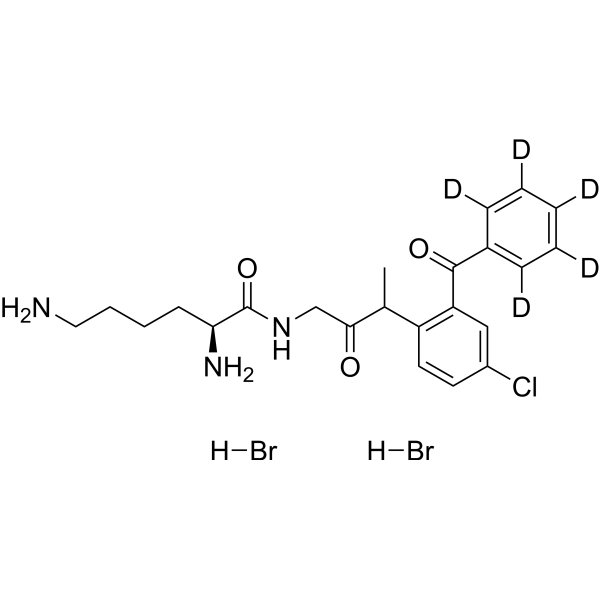 0 ImagesCat. No.: HY-123193SSynonyms: Pro-diazepam-d5 dihydrobromideAvizafone-d5 dihydrobromide is the deuterium labeled Avizafone dihydrobromide. Avizafone (Pro-diazepam) dihydrobromide, a pro-drug of Diazepam, is an anticonvulsant agent. Avizafone dihydrobromide can be used as an antidote of nerve agent poisoning. In vivo, Avizafone is rapidly hydrolyzed by aminopeptidase to produce lysine and diazepam. Avizafone dihydrobromide has research areas including neurological disease, such as epilepsy.
-
4-Tolyl-sulfonamide-d4
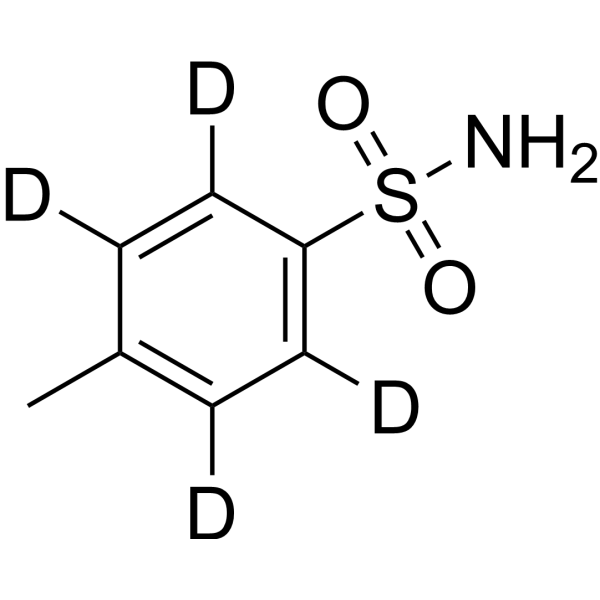 0 ImagesCat. No.: HY-79602SCAS No.: 1219795-34-2Synonyms: p-Tosylamide-d44-Tolyl-d4-sulfonamide (p-Tosylamide-d4) is the d4-labeled p-Toluenesulfonamide (HY-79602). p-Toluenesulfonamide is a small-molecule anticancer agent and plasticizer. p-Toluenesulfonamide exerts antitumor activity by inducing lysosomal membrane permeabilization, cathepsin B release and lysosome-mediated cell death. p-Toluenesulfonamide modulates cholesterol distribution in lipid rafts of tumor cell membranes and the Akt/mTOR/p70S6K pathway. p-Toluenesulfonamide shows activity against various cancers including hepatocellular carcinoma, non-small cell lung cancer and tongue squamous cell carcinoma; intrapleural injection effectively reduces malignant pleural effusion without causing pleural adhesion. p-Toluenesulfonamide is also the main degradation product of the disinfectant Chloramine-T (HY-B0959) in water. p-Toluenesulfonamide facilitates the localization of fluorescent probes to the endoplasmic reticulum. p-Toluenesulfonamide can be used in cancer-related research.
-
Doxepin-d3
 0 ImagesCat. No.: HY-139521SCAS No.: 138387-16-3Doxepin-d3 is the deuterated-labeled Doxepin (HY-B0725A). Doxepin is an orally active, blood-brain barrier penetrant tricyclic antidepressant with multiple activities including hypnosis, sedation, analgesia and vasodilation. Doxepin enhances the expression of PSD-95 and synapsin 1 via the PI3K/AKT/mTOR signaling pathway, and is metabolized to Desmethyldoxepin in vivo. Doxepin can be used in research related to various diseases such as depression, anxiety, obesity and atopic dermatitis.


-
5-Ethoxy-4-methyloxazole
 0 ImagesCat. No.: HY-W006448CAS No.: 5006-20-25-Ethoxy-4-methyloxazole
-
3,3-Dimethylcyclohexanol
 0 ImagesCat. No.: HY-W559929CAS No.: 767-12-43,3-Dimethylcyclohexanol is a major odor-active compound. 3,3-Dimethylcyclohexanol can be isolated from the volatile extracts of Mayapan and Jaguar.
-
NRMA-6
 0 ImagesCat. No.: HY-164508CAS No.: 2375659-13-3NRMA-6, an amide prodrug, is a nuclear receptor modulator.



