



Fluorescent Dye
Fluorescence is a phenomenon of photoluminescence in luminescence. When an atom is irradiated by light, some electrons around the nucleus jump from their original orbitals to higher energy orbitals under the influence of light energy, i.e., from the ground state to the first or second excited single-line state, etc. Due to the instability of the first or second excited singlet state, the electron returns from the excited singlet state to the ground state accompanied by released energy, resulting in fluorescence.
Fluorescent dyes can be covalently bound or physically adsorbed in the structure of the substance. The fluorescence properties allow for the characterization, localization and quantitative analysis of the labeled object. Fluorescent dyes have shown great potential for the detection of proteins, nucleic acids, cells, and immunoassays, attributed to the advantages in non-radioactive contamination, simple experimental operation and easy observation.
Fluorescent dyes have penetrated many fields such as pharmacology, physiology, environmental science, and information science, as well as functional studies of proteins and drug screening.
All Product Categories
-
Fluorescent Dye Related Products (4888)
Related Products (4888)

-
Antibodies (4)

-
PRO-F
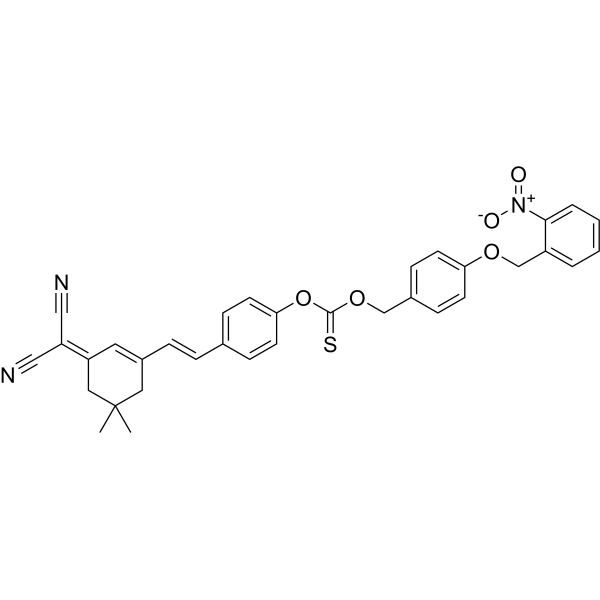 0 ImagesCat. No.: HY-149837PRO-F is a photoactivable H2S donor with ROS scavenging ability. PRO-F can be activated by light to produce fluorescent signal, for real-time tracking of released H2S. PRO-F activation doesn’t consume endogenous substances. deliver H2S in an intracellular environment to protect cells from excessive reactive oxygen species (ROS) induced damage. PRO-F shows enhancement on chronic wound healing, researched in diabetic models as well.
-
AF 430 alkyne
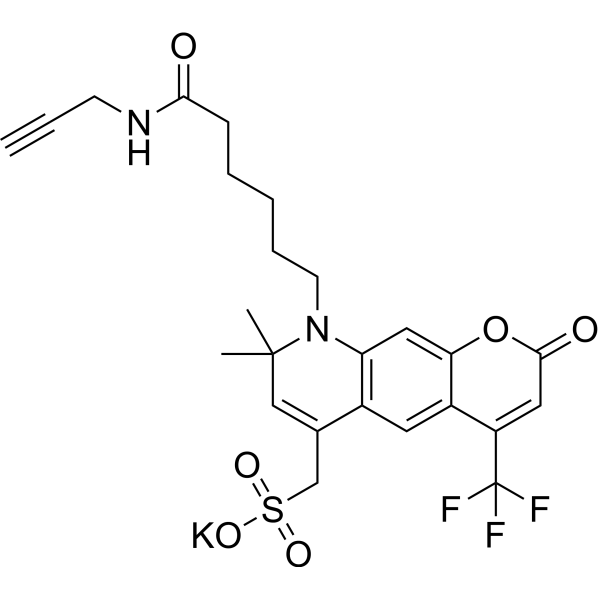 0 ImagesCat. No.: HY-D2164AF 430 alkyne is a derivative of the yellow fluorescent dye AF 430. AF430 has an excitation wavelength of 425 nm and an emission wavelength of 542 nm. AF 430 alkyne can undergo copper-catalyzed azide-alkyne cycloaddition (CuAAc) via Alkyne groups and molecules containing Azide groups. To achieve specific coupling of dye labels and biomolecules.
-
Sulfo-Cyanine5.5 carboxylic acid
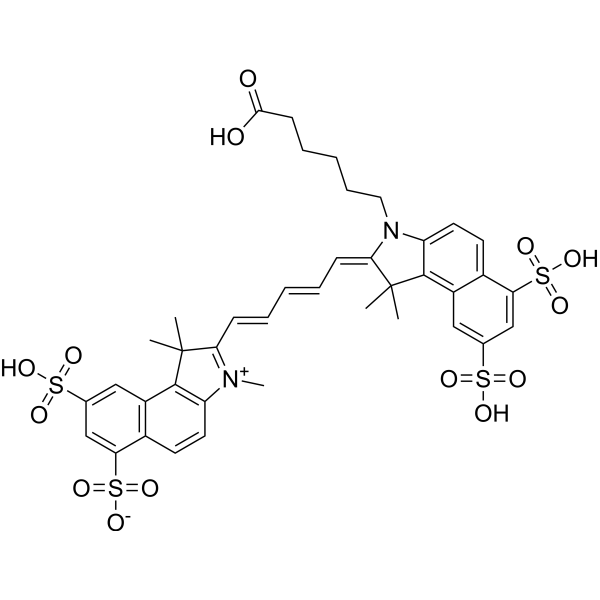 0 ImagesCat. No.: HY-D1366CAS No.: 2183440-68-6Sulfo-Cyanine5.5 carboxylic acid is a Fluorescent dye. Sulfo-Cyanine5.5 carboxylic acid emits red fluorescence, with a peak absorption wavelength of 673 nm. Sulfo-Cyanine5.5 carboxylic acid can be used to visualize aqueous sub-compartments and phase separation in synthetic multi-compartment microstructures. Sulfo-Cyanine5.5 carboxylic acid can serve as an intravenous contrast agent for in vivo cerebral perfusion imaging, mapping hemodynamics and perfusion regions.
-
Cy3 labled Lufepirsen sodium
 0 ImagesCat. No.: HY-177644DCy3 labled Lufepirsen sodium is a Cy3 labled Lufepirsen sodium.
-
SNAP-Peroxy-Green-1
 0 ImagesCat. No.: HY-D2965CAS No.: 1219603-04-9Synonyms: SPG1SNAP-Peroxy-Green-1 (SPG1) a SNAP tag fluorescent probe. SNAP-Peroxy-Green-1 can be used for detecting H2O2 in the extracellular space or on the surface of the cell membrane.
-
Phalloidin-f-HM-SiR
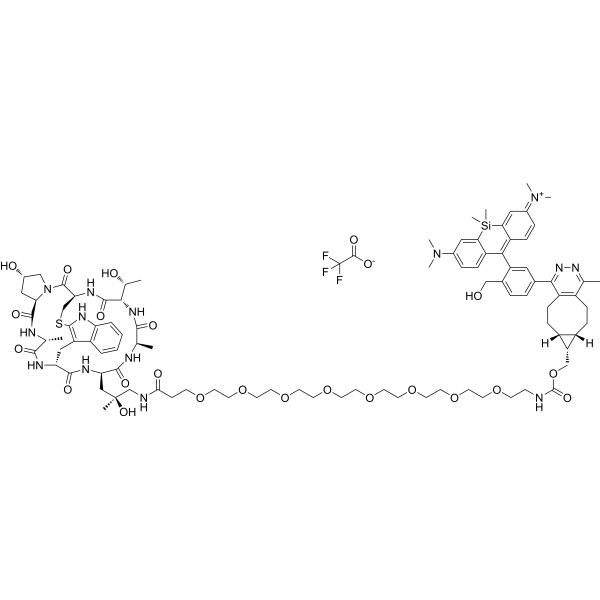 0 ImagesCat. No.: HY-D1679Phalloidin-f-HM-SiR is a multifunctional dye. Dyes are important tools in biological experiments. They can help researchers observe and analyze cell structures, track biomolecules, evaluate cell functions, distinguish cell types, detect biomolecules, study tissue pathology and monitor microorganisms. Their applications range from basic scientific research to clinical A wide range of diagnostics. Dyes are also widely used in traditional fields such as textile dyeing, as well as in emerging fields such as functional textile processing, food pigments and dye-sensitized solar cells.
-
Biotin-olefin
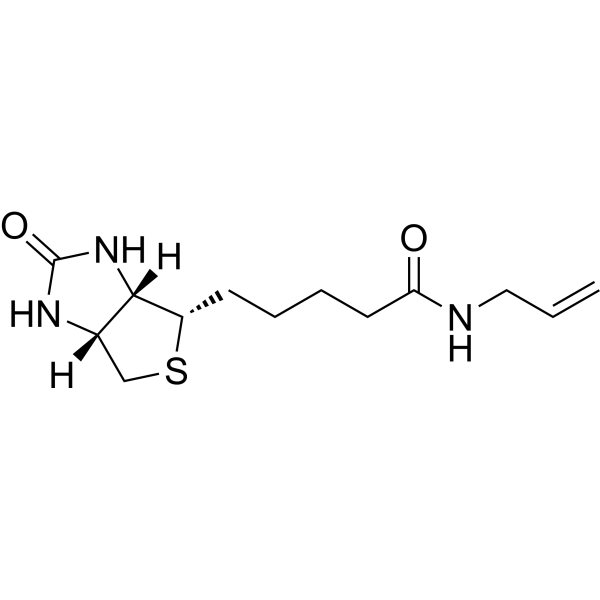 0 ImagesCat. No.: HY-114776CAS No.: 92924-45-3Biotin-olefin (Compound 1) is a biotin probe. Biotin-olefin can used for photoimmobilization on thiol-functionalized surfaces.

-
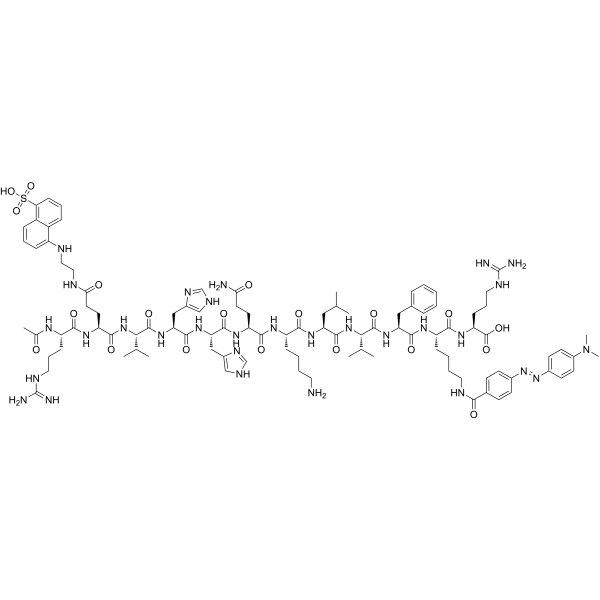
TPEP-6-NH-MA
 0 ImagesCat. No.: HY-D3095CAS No.: 2244914-41-6TPEP-6-NH-MA is a Fluorescent probe that selectively detects cysteine (Cys) and homocysteine (Hcy) without interference from glutathione (GSH) and other amino acids, and can also be used for bioimaging of biothiols in living cells. Its detection mechanism relies on terminating the photoinduced electron transfer (PET) effect via a Michael addition reaction between the maleimide recognition moiety and the thiol group of Cys or Hcy. The excitation wavelength of TPEP-6-NH-MA is Ex = 361 nm.
-
4-(1-Methylhydrazino)-7-nitrobenzofurazan
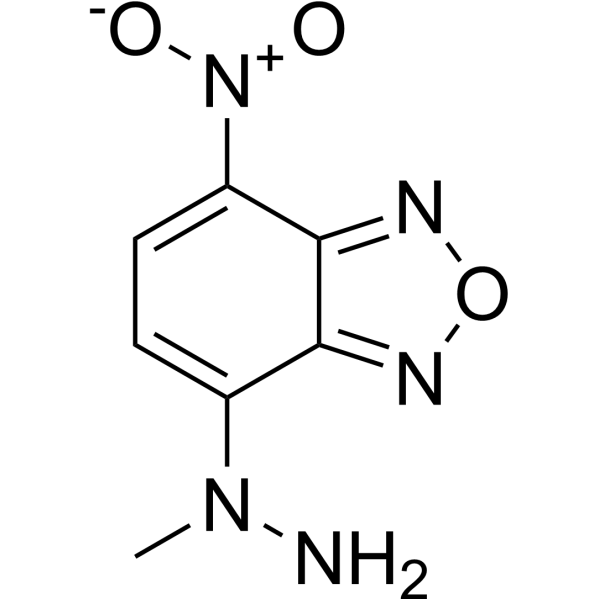 0 ImagesCat. No.: HY-D0125CAS No.: 214147-22-54-(1-Methylhydrazino)-7-nitrobenzofurazan is a multifunctional dye. Dyes are important tools in biological experiments. They can help researchers observe and analyze cell structures, track biomolecules, evaluate cell functions, distinguish cell types, detect biomolecules, study tissue pathology and monitor microorganisms. Their applications range from basic scientific research to clinical A wide range of diagnostics. Dyes are also widely used in traditional fields such as textile dyeing, as well as in emerging fields such as functional textile processing, food pigments and dye-sensitized solar cells.
-
Dabsyl-Leu-Gly-Gly-Gly-Ala-Edans
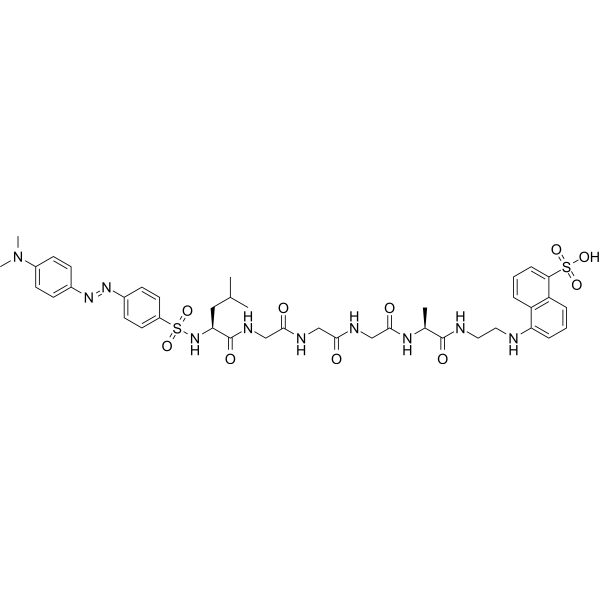 0 ImagesCat. No.: HY-P5296CAS No.: 949898-96-8Dabsyl-Leu-Gly-Gly-Gly-Ala-Edans is a fluorophore Dabsyl-labeled peptide. Dabsyl-Leu-Gly-Gly-Gly-Ala-Edans can be used to test the peptidase activity of the LasA protease of Pseudomonas aeruginosa. Dabsyl-Leu-Gly-Gly-Gly-Ala-Edans has enzyme specificity and has application value.
-
Coumarin-PEG2-endoBCN
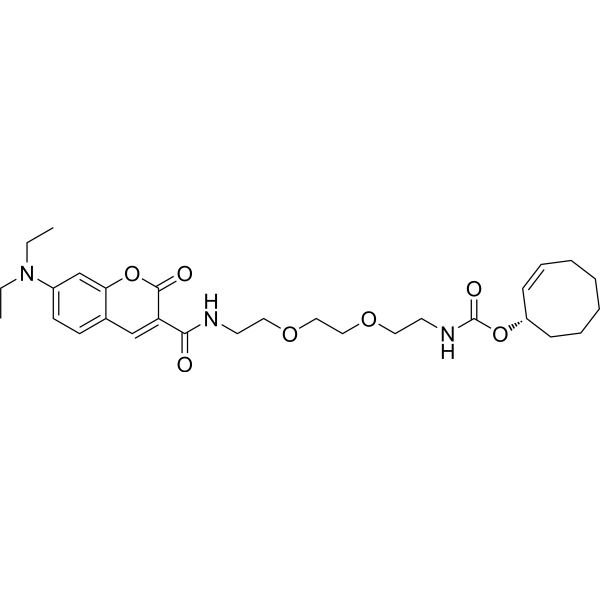
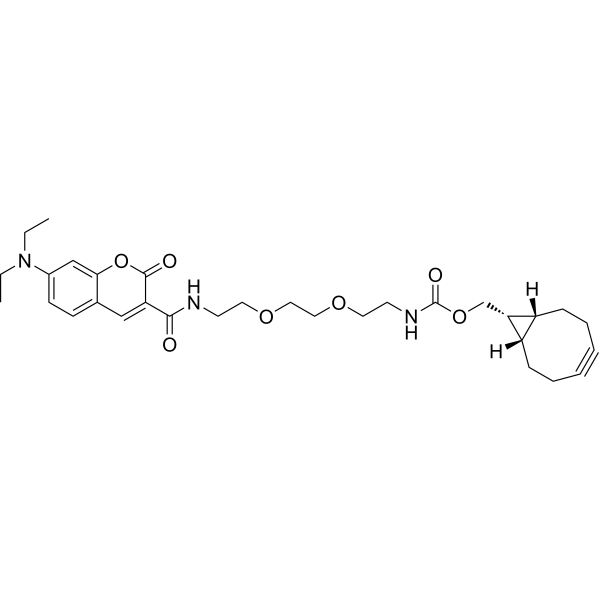 0 ImagesCat. No.: HY-156302CAS No.: 2488174-18-9Coumarin-PEG2-endoBCN is a fluorescent dye containing a coumarin fluorophore and can be used as a click chemistry reagent.
-
FAM labled AZD8701 sodium
 0 ImagesCat. No.: HY-159692DFAM labled AZD8701 sodiumis a FAM labled AZD8701 sodium.
-
18:0 PEG2000 PE CF ammonium
 0 ImagesCat. No.: HY-N15908CAS No.: 1092697-61-418:0 PEG2000 PE CF ammonium is a fluorescent PEG lipid.




