



Fluorescent Dye
Fluorescence is a phenomenon of photoluminescence in luminescence. When an atom is irradiated by light, some electrons around the nucleus jump from their original orbitals to higher energy orbitals under the influence of light energy, i.e., from the ground state to the first or second excited single-line state, etc. Due to the instability of the first or second excited singlet state, the electron returns from the excited singlet state to the ground state accompanied by released energy, resulting in fluorescence.
Fluorescent dyes can be covalently bound or physically adsorbed in the structure of the substance. The fluorescence properties allow for the characterization, localization and quantitative analysis of the labeled object. Fluorescent dyes have shown great potential for the detection of proteins, nucleic acids, cells, and immunoassays, attributed to the advantages in non-radioactive contamination, simple experimental operation and easy observation.
Fluorescent dyes have penetrated many fields such as pharmacology, physiology, environmental science, and information science, as well as functional studies of proteins and drug screening.
All Product Categories
-
Fluorescent Dye Related Products (4914)
Related Products (4914)

-
Antibodies (4)
-
Coumarin-PEG2-SCO
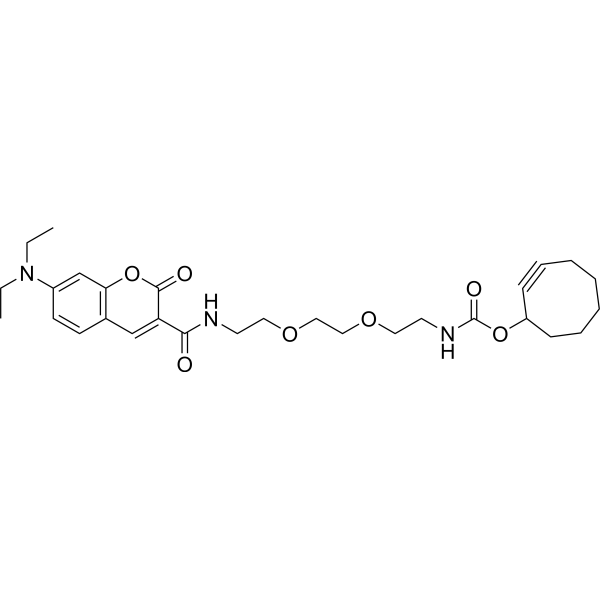 0 ImagesCat. No.: HY-D2099CAS No.: 2488239-94-5Coumarin-PEG2-SCO, a Coumarin (HY-N0709) deravitive, is a fluorescent dye, and can be used for labeling of small molecules and biomolecules.
-
Monochlorobimane (solution)
 0 ImagesCat. No.: HY-DY1052CAS No.: 76421-73-3Monochlorobimane (Chlorobimane) (solution) is a fluorescent dye (λex=380 nm, λem=470 nm) to measure glutathione (GSH) in cellular assays.
Solvent and concentration: DMSO: 10 mM
-
Biotin-PEG20000-OH
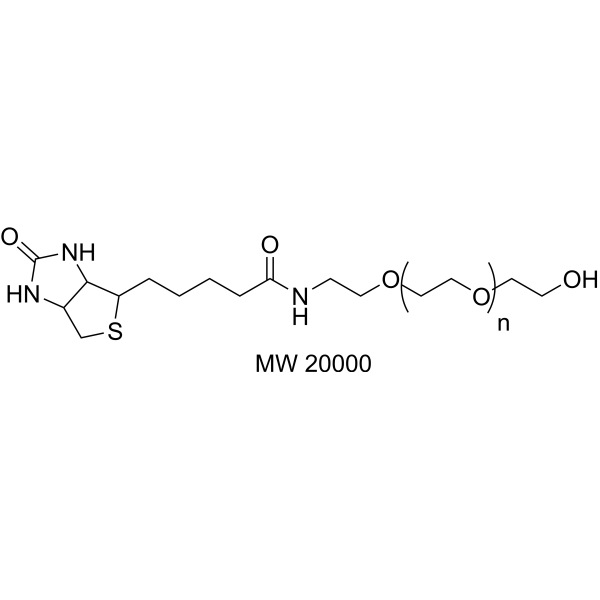 0 ImagesCat. No.: HY-147205E
-
Zinquin AM ester
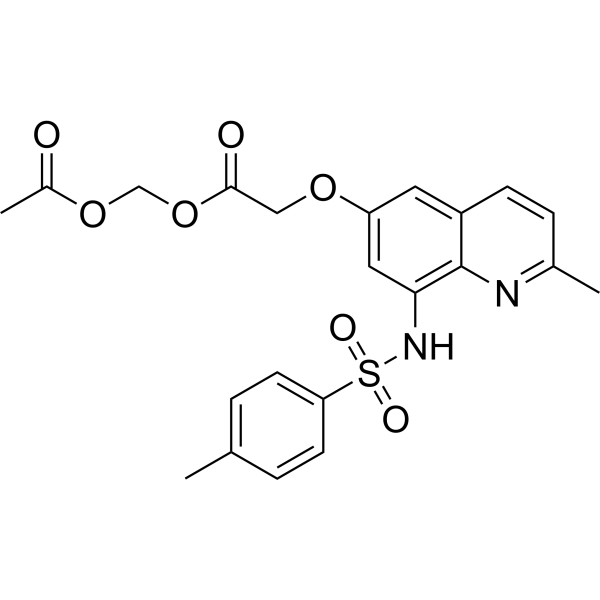 0 ImagesCat. No.: HY-D1441CAS No.: 181530-16-5Zinquin AM ester is the AM ester form of Zinquin (HY-D0982). Zinquin is a fluorescent dye and a commonly used probe for cellular Zn2+ (zinc ion) status.
-
DiD perchlorate (solution)
 0 ImagesCat. No.: HY-DY1084CAS No.: 127274-91-3DiD perchlorate (solution)is a long-chain carbocyanine dye. Carbocyanine dyes are widely used as Di to label cells, organelles, liposomes, viruses and lipoproteins.
Solvent and concentration: DMSO: 5 mM
-
4-arm-PEG10000-FITC
 0 ImagesCat. No.: HY-D2845B4-Arm-PEG10000-FITC is a fluorescent dye composed of polyethylene glycol (PEG) and 4 FITC (HY-66019) groups. 4-Arm-PEG10000-FITC can be used for fluorescent labeling and imaging.
-
LysoAIE2
 0 ImagesCat. No.: HY-D3120CAS No.: 2246946-53-0LysoAIE2 is a Fluorescent probe for lysosomal viscosity detection and live-cell imaging. Its detection mechanism relies on the aggregation-induced emission effect: it exhibits only weak fluorescence in non-viscous media; in viscous environments, restricted intramolecular motion inhibits non-radiative energy dissipation pathways, thereby significantly enhancing fluorescence intensity. It achieves specific targeting of lysosomes through the proton acceptor property of its indole ring structure, while its hydroxyl group endows it with excellent water solubility. This probe is basically unaffected by microenvironmental polarity and pH within the range of pH 4.0 to pH 8.0, which avoids interference from these factors in viscosity measurement. LysoAIE2 has an emission wavelength of 570 nm. It can be used to monitor lysosomal viscosity changes during processes such as Dexamethasone (HY-14648)-induced lysosomal migration and starvation-induced mitophagy in live cells; at concentrations up to 40 μM, cell viability remains above 80%, demonstrating excellent biocompatibility.
-
DNA intercalator 3
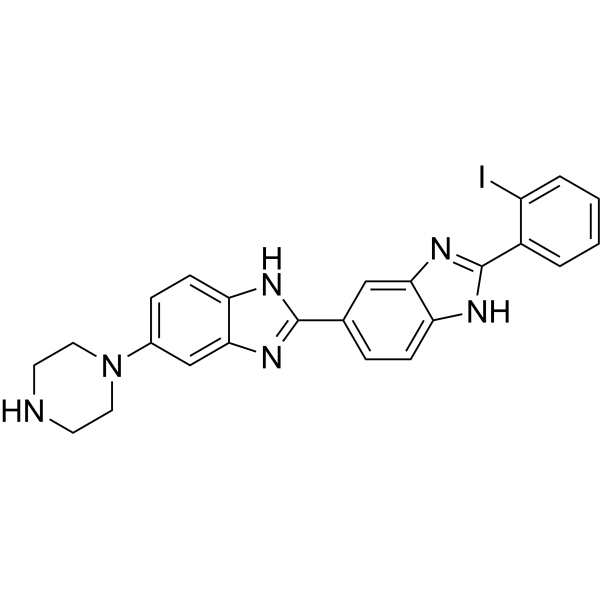 0 ImagesCat. No.: HY-D1102CAS No.: 864281-70-9DNA intercalator 3 is a DNA intercalating agent that can be used for DNA staining.
-
N-(NBD-Aminolauroyl)safingol
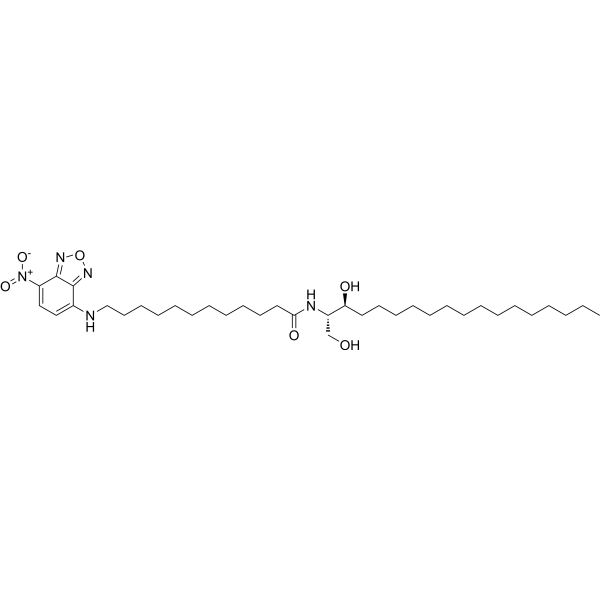 0 ImagesCat. No.: HY-D1521CAS No.: 474943-07-2N-(NBD-Aminolauroyl)safingol is a fluorescent group.
-
2-Naphthylamine-6,8-disulfonic acid potassium
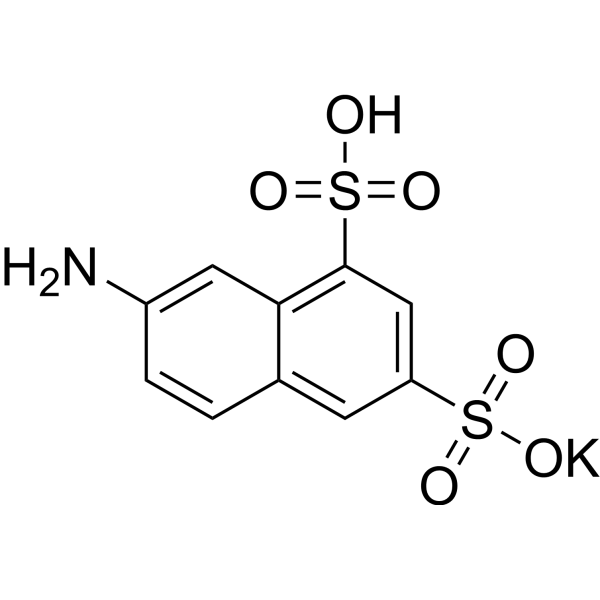 0 ImagesCat. No.: HY-W345148CAS No.: 842-15-92-Naphthylamine-6,8-disulfonic acid potassium is chemical that can be used for preparing dyestuff, medicine, agricultural chemicals etc.
-
CDr17
 0 ImagesCat. No.: HY-D3410CAS No.: 2991899-29-5CDr17 is a GLUT1 substrate and selective fluorescent dye staining M1 microphages. CDr17 utilizes the Gating-Oriented Live-cell Distinction (GOLD) mechanism to enter M1 macrophages (Ex/Em = 646/662 nm).
-
Cy5.5 TEA
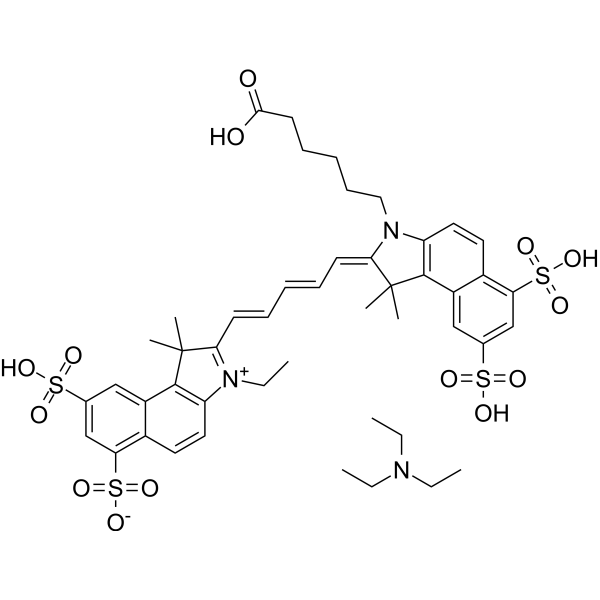 0 ImagesCat. No.: HY-D0924BSynonyms: Sulfo-Cyanine5.5 TEACy5.5 TEA is a CY dye. CY, short for Cyanine, is a compound consisting of two nitrogen atoms connected by an odd number of methyl units. Cyanine compounds have the characteristics of long wavelength, adjustable absorption and emission, high extinction coefficient, good water solubility and relatively simple synthesis. CY dyes are of en used for the labeling of proteins, antibodies and small molecular compounds. For the labeling of protein antibodies, the combination can be completed through a simple mixing reaction. Below, we introduce the labeling method of protein antibody labeling, which has certain reference significance.
-
BGAF
 0 ImagesCat. No.: HY-D2941Synonyms: SNAP-AFBGAF (SNAP-AF) is a fluorescent diacetyl fluorescein-labeled SNAP tag fluorescent probe, specifically designed for the covalent labeling of SNAP-tag fusion proteins in living cells. BGAF utilizes the specific reaction of the human DNA repair protein hAGT to achieve specific fluorescent labeling of the target protein in the living cell environment.
-
AF680 NHS Ester
 0 ImagesCat. No.: HY-D3259AF 680 NHS ester is a fluorescent dye AF 680 derivative exhibits high fluorescence quantum yield and high photostability. AF 680 NHS ester can form an ester bond with ammonia via the NHS group, and can be used to label proteins, amine-modified oligonucleotides, and other primary amines (R-NH2) containing amine molecules (Ex/Em = 684/707 nm).
-
DCM-gal-CF
 0 ImagesCat. No.: HY-D3165CAS No.: 2135433-60-0DCM-gal-CF is a fluorescent probe containing a DCM fluorophore scaffold and a D-galactose recognition moiety. DCM-gal-CF itself shows weak fluorescence, and its fluorescence is enhanced after cleavage by β-galactosidase. DCM-gal-CF can be used to detect β-galactosidase activity.
-
A 53693
 0 ImagesCat. No.: HY-116222CAS No.: 115103-48-5A 53693 is a rigid catecholamine with selective adrenergic agonist activity. A 53693 has affinity for certain rat alpha-2 receptor subtypes. A 53693 shows high selectivity for alpha-2 receptors and, in contrast, has low affinity for alpha-1 receptors. A 53693 is used as a probe in biological studies to explore the molecular interactions of alpha agonist compounds.




