



Fluorescent Dye
Fluorescence is a phenomenon of photoluminescence in luminescence. When an atom is irradiated by light, some electrons around the nucleus jump from their original orbitals to higher energy orbitals under the influence of light energy, i.e., from the ground state to the first or second excited single-line state, etc. Due to the instability of the first or second excited singlet state, the electron returns from the excited singlet state to the ground state accompanied by released energy, resulting in fluorescence.
Fluorescent dyes can be covalently bound or physically adsorbed in the structure of the substance. The fluorescence properties allow for the characterization, localization and quantitative analysis of the labeled object. Fluorescent dyes have shown great potential for the detection of proteins, nucleic acids, cells, and immunoassays, attributed to the advantages in non-radioactive contamination, simple experimental operation and easy observation.
Fluorescent dyes have penetrated many fields such as pharmacology, physiology, environmental science, and information science, as well as functional studies of proteins and drug screening.
All Product Categories
-
Fluorescent Dye Related Products (4914)
Related Products (4914)

-
Antibodies (4)
-
CCF1
 0 ImagesCat. No.: HY-D3282CAS No.: 2158208-42-3CCF1 is a carbon-rhodol-based turn-on fluorescent copper sensor with high selectivity for Cu+ over other biologically relevant metal ions. CCF1 detects changes in labile copper pools in living cells upon copper supplementation and/or depletion. CCF1 identifies elevations in labile copper pools in Atp7a-/- fibroblast cell models. CCF1 can be used for the research of Menkes disease.
-
Cy3-PEG3-endo-BCN
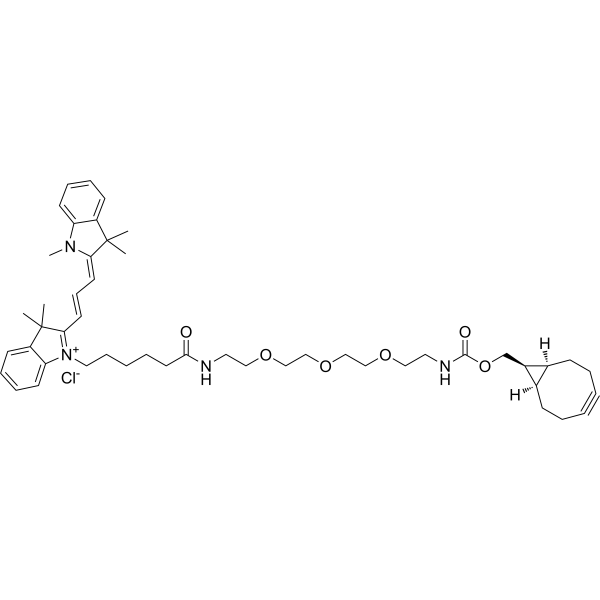 0 ImagesCat. No.: HY-D2120Cy3-PEG3-endo-BCN is a dye derivative of Cyanine 3 (Cy3) (HY-D0822) containing 3 PEG units. Cy3-PEG3-endo-BCN contains the lyophilic bidentate macrocyclic ligand BCN, which can further synthesize macrocyclic complexes. In click chemistry, endo-BCN can react with molecules containing azide groups to form stable triazoles in the absence of catalysts.
-
MAO Probe 1
 0 ImagesCat. No.: HY-D3221CAS No.: 1386860-79-2MAO Probe 1 is a reactive two-photon fluorescent probe capable of crossing the blood-brain barrier, which is used to detect the activity of monoamine oxidases (MAO-A/MAO-B), with Km values of 70 μM (MAO-A) and 75 μM (MAO-B), respectively. IBC 2 (benzo[g]imino-coumarin 2), the enzymatic product of MAO Probe 1, can further specifically bind to and image Aβ plaques, enabling in vivo two-photon co-monitoring of MAO activity and Aβ plaques. MAO Probe 1 can be used in Alzheimer's disease research (IBC 2: Ex/Em = 850 nm/570-620 nm).
-
Fluorescent red 610
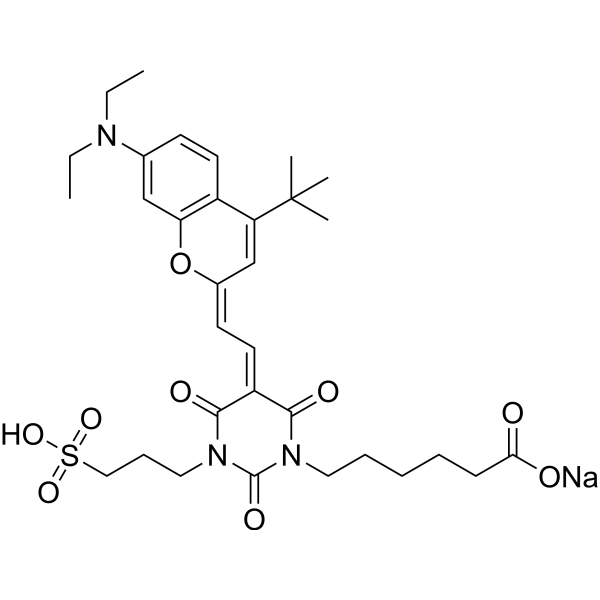 0 ImagesCat. No.: HY-D1499CAS No.: 482379-37-3Fluorescent red 610 is a fluorescent dye with an excitation peak at 590 nm and an emission peak at 610 nm.
-
ATTO 425 azide
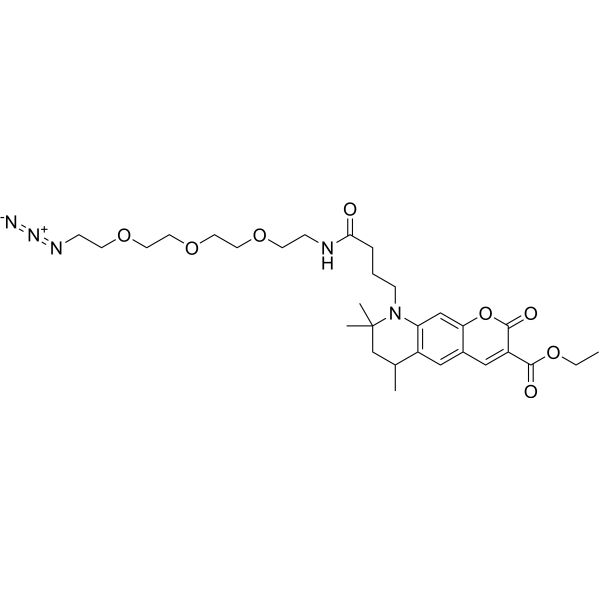 0 ImagesCat. No.: HY-D1930CAS No.: 1609584-73-7ATTO 425 Azide is an azide derivative of ATTO 425, the maximum excitation and emission wavelength: 439/489 nm. ATTO 425 azide is a click chemistry reagent, it contains an Azide group and can undergo copper-catalyzed azide-alkyne cycloaddition reaction (CuAAc) with molecules containing Alkyne groups. It can also undergo strain-promoted alkyne-azide cycloaddition (SPAAC) reactions with molecules containing DBCO or BCN groups.
-
Azide cyanine dye 728
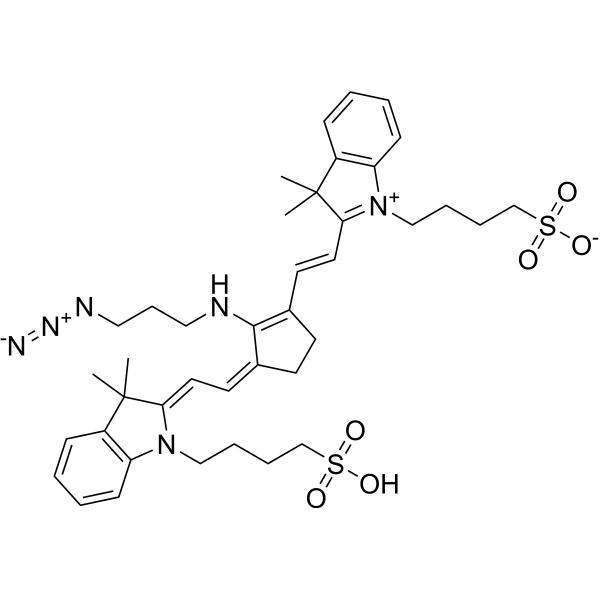 0 ImagesCat. No.: HY-D1355CAS No.: 1188332-22-0Azide cyanine dye 728 is a multifunctional dye. Dyes are important tools in biological experiments. They can help researchers observe and analyze cell structures, track biomolecules, evaluate cell functions, distinguish cell types, detect biomolecules, study tissue pathology and monitor microorganisms. Their applications range from basic scientific research to clinical A wide range of diagnostics. Dyes are also widely used in traditional fields such as textile dyeing, as well as in emerging fields such as functional textile processing, food pigments and dye-sensitized solar cells.

-
TAMRA hydrazide (6-isomer)
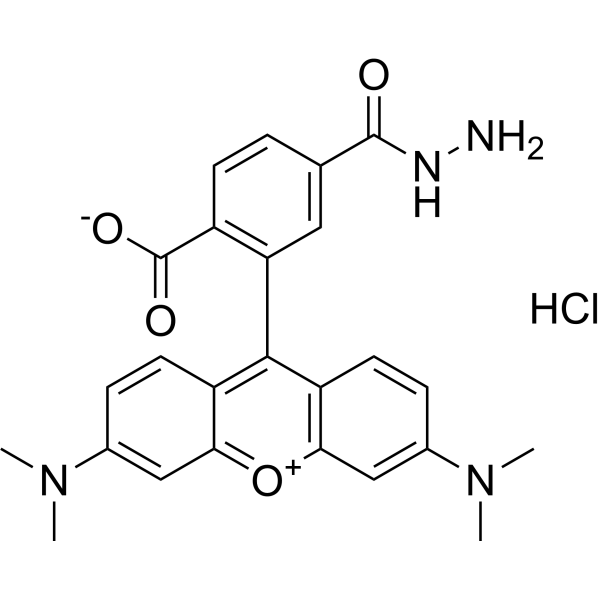 0 ImagesCat. No.: HY-151774CAS No.: 2183440-67-5TAMRA hydrazide (6-isomer) is a click chemistry reagent that can be coupled to carbonyl compounds. The dye hydrazide in TAMRA hydrazide (6-isomer) labels carbonyl compounds such as aldehydes and ketones. TAMRA in TAMRA hydrazide (6-isomer) is a xanthene red fluorophore that reacts with terminal alkynes.
-
PE-CF594
 0 ImagesCat. No.: HY-D3334PE-CF594 is a labeled monoclonal antibody conjugate that specifically binds to HLA-DR on the surface of monocytes and B cells, while acting as a signal attenuator. Through steric hindrance and a possible fluorescence resonance energy transfer mechanism, PE-CF594 specifically reduces the fluorescence intensity of PE-CD124 staining, but does not interfere with the staining of other PE-labeled antibodies such as CD40, CD4 or CD14. PE-CF594 can also be used to detect the emission signal of mt-Keima after excitation with a 561-nm laser, thereby effectively evaluating mitophagy activity.
-
Lycopersicon esculentum (Tomato) Lectin-AF568
 0 ImagesCat. No.: HY-NP071DSynonyms: LEL-AF568Lycopersicon esculentum (Tomato) Lectin-AF568 (LEL-AF568) is Lycopersicon esculentum lectin (LEL) labeled with the AF568 fluorescent dye. Lycopersicon esculentum (Tomato) lectin specifically recognizes and binds to glycan structures, primarily targeting N-acetyl-β-D-glucosamine residues. Lycopersicon esculentum (Tomato) Lectin-AF568 can be used to study glycosylation and localize glycan structures on cell surfaces and in tissue sections (Ex/Em = 579/603 nm).
-
BG dimer
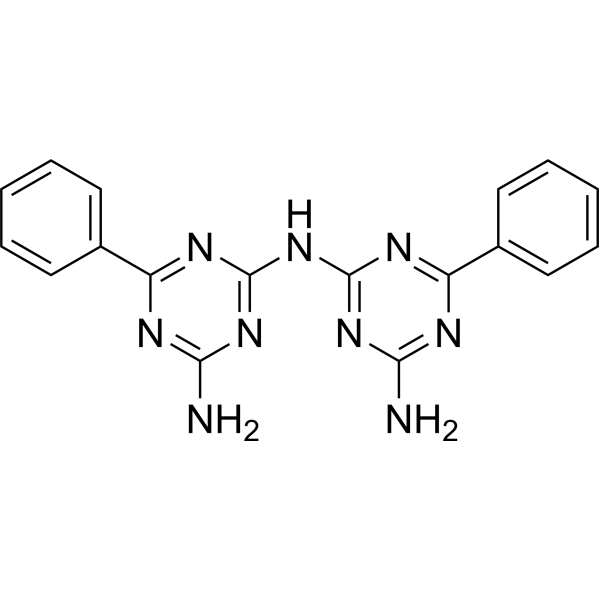 0 ImagesCat. No.: HY-139673CAS No.: 2700187-91-1BG dimer is a molecular dimer organic luminogen with aggregation-induced emission.
-
Ulex Europaeus Agglutinin I-Cy7
 0 ImagesCat. No.: HY-NP090MSynonyms: UEA I-Cy7Ulex Europaeus Agglutinin I-Cy7 (UEA I-Cy7) is a Cy7-labeled glehnia littoralis lectin I (UEA-I). Ulex Europaeus Agglutinin I exhibits specificity for cell surface glycoconjugates containing α-L-fucosylate. Ulex Europaeus Agglutinin I-Cy7 can be used for vascular endothelial labeling, glycan imaging, and tissue staining studies (Ex/Em = 740/770 nm).
-
AF594 Picolyl Azide
 0 ImagesCat. No.: HY-D3581AF594 Picolyl Azide is a composite fluorescent probe formed by covalent linkage of the Alexa Fluor 594 fluorophore and the Picolyl Azide functional group via chemical bonds. AF594 Picolyl Azide contains a copper chelation domain, and through the copper-catalyzed azide-alkyne cycloaddition click chemistry reaction, it can covalently label alkyne-bearing target molecules and generate fluorescent detection signals. AF594 Picolyl Azide can be used for the detection of alkyne-modified sialylated glycoconjugates, and can also label nascent bacterial polypeptides to determine bacterial protein synthesis rates.
-
N-4-(5,6-Dimethoxy-N-phthalimidinyl)phenylmaleimide
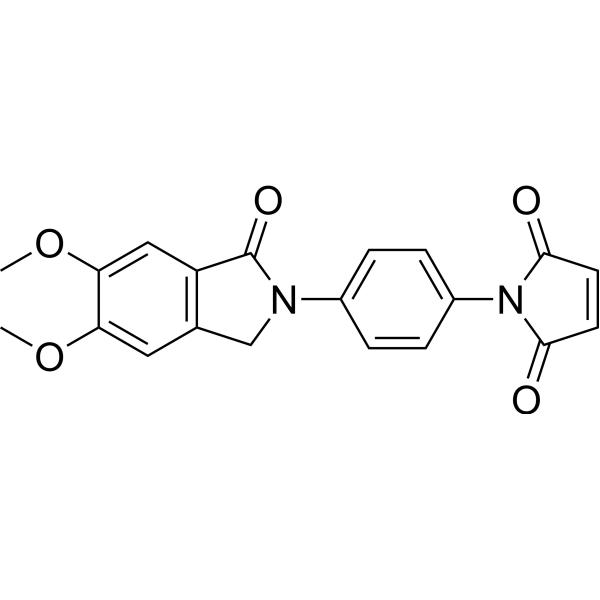 0 ImagesCat. No.: HY-D0071CAS No.: 143503-03-1N-4-(5,6-Dimethoxy-N-phthalimidinyl)phenylmaleimide is a fluorescence reagent for labeling thiol.
-
Cy3 labled ISIS 449884 sodium
 0 ImagesCat. No.: HY-159696DCy3 labled ISIS 449884 sodium is a Cy3 labled ISIS 449884 sodium.
-
Cy3 labled Cavrotolimod sodium
 0 ImagesCat. No.: HY-139785ECy3 labled Cavrotolimod sodium is a Cy3 labled Cavrotolimod sodium.
-
BODIPY−DOX
 0 ImagesCat. No.: HY-D3190CAS No.: 2173116-67-9BODIPY-DOX is a conjugate composed of BODIPY and Doxorubicin (HY-15142A), as well as a pH-activated fluorescent probe for M1 macrophages and an apoptosis inducer. BODIPY-DOX undergoes pH-induced hydrazone bond cleavage in acidic M1 macrophage phagosomes, thereby releasing cytotoxic Doxorubicin (Dox) and inhibiting the function of pro-inflammatory M1 macrophages. BODIPY-DOX highly selectively inhibits the production of relevant pro-inflammatory cytokines by mouse and human monocyte-derived M1 macrophages, while exerting minimal effects on M2 or unactivated macrophages. Therefore, BODIPY-DOX enables simultaneous fluorescent tracing, differentiation and elimination of specific macrophage subsets, and exhibits the potential to regulate tissue regeneration in zebrafish models.
-
DBHA
 0 ImagesCat. No.: HY-D3111CAS No.: 1240465-12-6DBHA is a long-wavelength polarity-sensitive fluorescent probe based on Nile Red. Under the catalysis of Pd (OAc)2/TPPTS, DBHA site-selectively labels protein tyrosine residues via a π-allyl palladium complex intermediate. Utilizing the property that its maximum emission wavelength blue-shifts with decreasing local polarity (650 nm in aqueous solution → 584-608 nm in hydrophobic domains), it detects changes in local polarity and conformation of protein tyrosine domains under acid/thermal denaturation conditions. DBHA can be used in studies related to SOD1-associated oxidative stress neurodegenerative diseases.




