



Fluorescent Dye
Fluorescence is a phenomenon of photoluminescence in luminescence. When an atom is irradiated by light, some electrons around the nucleus jump from their original orbitals to higher energy orbitals under the influence of light energy, i.e., from the ground state to the first or second excited single-line state, etc. Due to the instability of the first or second excited singlet state, the electron returns from the excited singlet state to the ground state accompanied by released energy, resulting in fluorescence.
Fluorescent dyes can be covalently bound or physically adsorbed in the structure of the substance. The fluorescence properties allow for the characterization, localization and quantitative analysis of the labeled object. Fluorescent dyes have shown great potential for the detection of proteins, nucleic acids, cells, and immunoassays, attributed to the advantages in non-radioactive contamination, simple experimental operation and easy observation.
Fluorescent dyes have penetrated many fields such as pharmacology, physiology, environmental science, and information science, as well as functional studies of proteins and drug screening.
All Product Categories
-
Fluorescent Dye Related Products (4914)
Related Products (4914)

-
Antibodies (4)
-
Sulfo SMCC R-phycoerythrin
 0 ImagesCat. No.: HY-D2396Synonyms: Sulfo SMCC R-PESulfo SMCC R-phycoerythrin is a conjugate composed of the protein crosslinker SMCC (HY-42360) and R-PE (R-Phycoerythrin) (HY-D0988) that can be used to label proteins to make them carry red fluorescence. Among them, SMCC is able to engage antigen-coupled spleen cells to induce antigen-specific immune responses.
-
Z-Val-Lys-Met-AMC TFA
 0 ImagesCat. No.: HY-P4428APurity: 99.85%Z-Val-Lys-Met-AMC TFA is a fluorescent substrate that can be used to detect the β-secretase activity of cathepsin B.
-
MitoBADY
 0 ImagesMitoBADY is a mitochondria-selective Raman probe that successfully visualizes mitochondria in live HeLa cells at a concentration of 200-400 nM for 10 minutes. MitoBADY can be utilized for the study of mitochondrial dynamics.
-
8-(4-Iodophenyl)-1,3,5,7-tetramethyl BODIPY
 0 ImagesCat. No.: HY-W248119CAS No.: 250734-47-58-(4-Iodophenyl)-1,3,5,7-tetramethyl BODIPY is a BODIPY derivative that can be used as a fluorescent probe for GFP-labeled muscarinic M1 receptor.
-
Tetrasodium,4-(1,10-phenanthrolin-4-yl)benzenesulfonate,ruthenium((II))
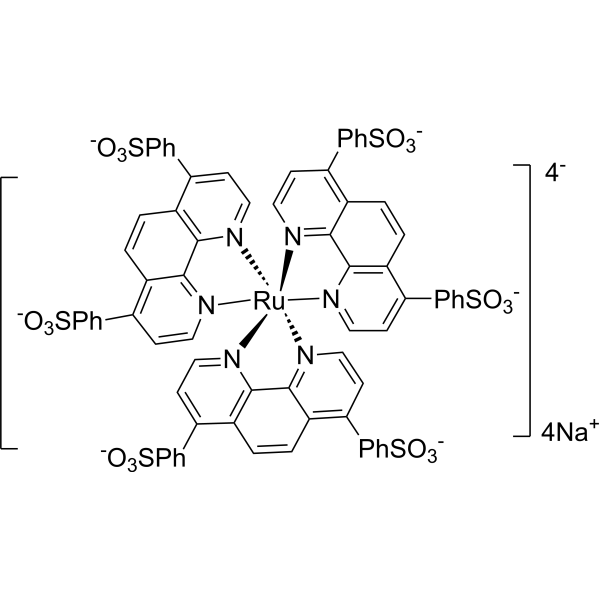 0 ImagesCat. No.: HY-W140535CAS No.: 301206-84-8Tetrasodium, 4-(1,10-phenanthrolin-4-yl)benzenesulfonate,ruthenium((II)) is a luminescent ruthenium complex. Tetrasodium, 4-(1,10-phenanthrolin-4-yl)benzenesulfonate,ruthenium((II)) is used in biological and chemical fields as a fluorescent indicator dye and an electrochemiluminescent probe.
-
C.I. Pigment red 123
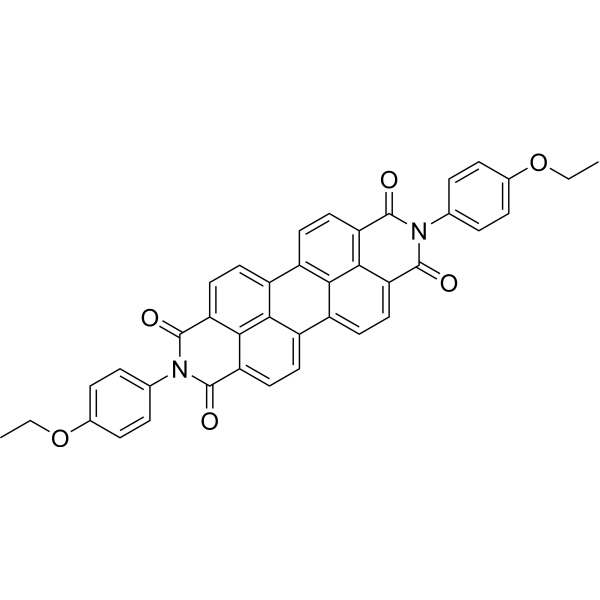 0 ImagesC.I. Pigment red 123 is the most important colorant used to add color or change the color of something and is chemically essentially unaffected by the carrier or medium into which it is incorporated. It can be widely used in textile, medicine, food, cosmetics, plastics, paint, ink, photography and paper industries.
-
Marina blue
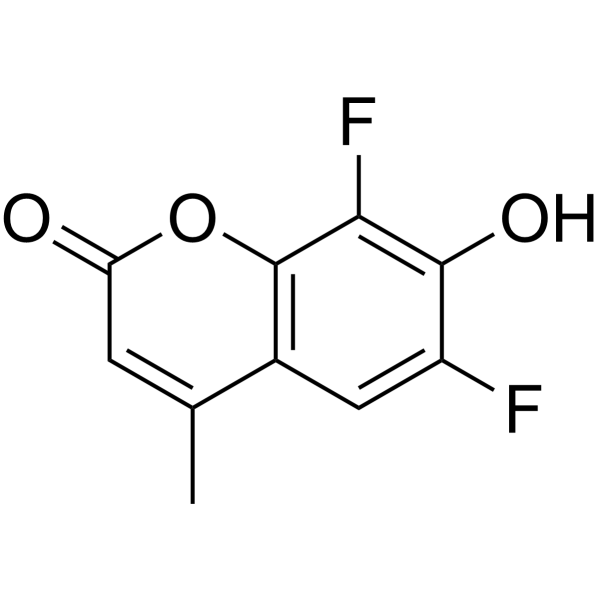 0 ImagesMarina blue is a multifunctional dye. Dyes are important tools in biological experiments. They can help researchers observe and analyze cell structures, track biomolecules, evaluate cell functions, distinguish cell types, detect biomolecules, study tissue pathology and monitor microorganisms. Their applications range from basic scientific research to clinical A wide range of diagnostics. Dyes are also widely used in traditional fields such as textile dyeing, as well as in emerging fields such as functional textile processing, food pigments and dye-sensitized solar cells.
-
Sulfo-Cy7.5 DBCO
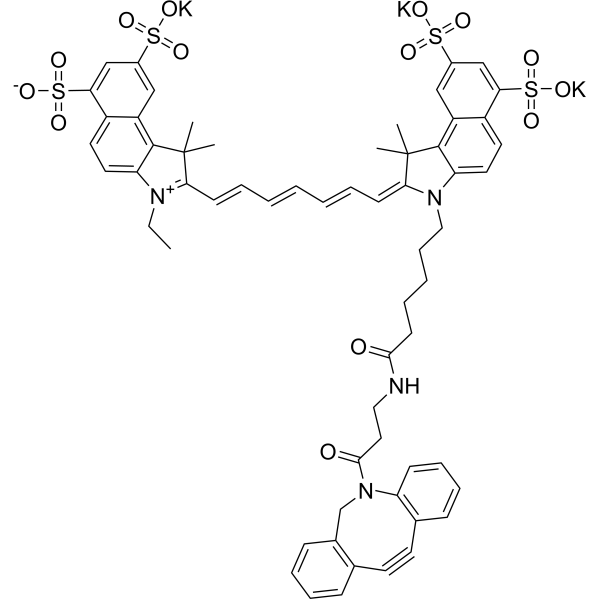 0 ImagesCat. No.: HY-D2242Purity: 99.83%Sulfo-Cy7.5 DBCO is a dye derivative of Cyanine 7.5 (Cy7.5) (HY-D0926) bearing a DBCO group. The sulfonate ion increases the water solubility of the compound, making it suitable for use in aqueous solutions. Sulfo-Cy7.5 DBCO can bind to biomolecules such as proteins and antibodies to track their location and dynamic changes in biological samples.
-
Cy5 dimethyl
 0 ImagesCy5 dimethyl is a free non-activated dye. This dye has limited water solubility, but can be dissolved in mixtures of water with organic phase (DMF, DMSO, alcohols) to obtain useful concentrations of the material in solution. This molecule can be considered non-reactive dye for the use in control samples, and for instrument calibration.
-
Cy7.5-COOH bromide
 0 ImagesCat. No.: HY-D1883BCAS No.: 2978106-25-9Cy7.5-COOH bromide, a cyanine dye, is a highly fluorescent compound (Abs/Em = 781/808 nm). Cy7.5-COOH bromide can be used as a fluorescent probe in a wide-range of applications such as DNA sequencing, flow cytometry and in vivo imaging.
-
APN-Azide
 0 ImagesSynonyms: 3-(4-Azidophenyl)propiolonitrileAPN-Azide (3-(4-Azidophenyl)propiolonitrile) is a codon-active compound that can achieve specific labeling of target molecules in biological systems through its unique chemical structure. APN-Azide can be used for bioimaging and the development of molecular probes to study biological processes within cells.
-
HB-230
 0 ImagesCat. No.: HY-165426CAS No.: 3031522-14-9HB-230 is a Transglutaminase-2 (TG2) (human IC50 = 4.9 μM) inhibitor and a selective fluorescent imaging probe for active TG2 localization. HB-230 modifies TG2 Cys277 to sustain the enzyme open conformation. HB-230 forms a ternary complex with TG2 and α2-macroglobulin, undergoes receptor-mediated endocytosis, and trafficks directly to lysosomes without early/late endosome fusion. HB-230 exhibits TG2 activity-dependent and α2-macroglobulin-dependent uptake. HB-230 can be used for the research of celiac disease, (Ex/Em = 649/665 nm).
-
HOE 33187
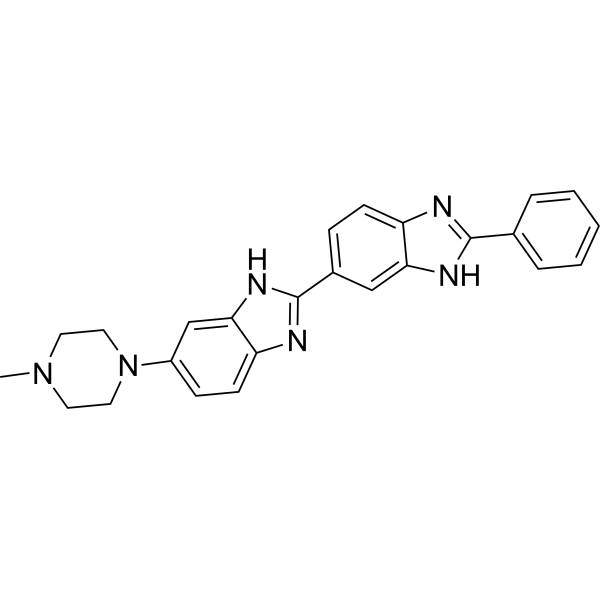 0 ImagesHOE 33187 is a marker dye in Hoechst series. Hoechst is A live nuclear marker dye. Hoechst binds to the grooves in the DNA double strand, which tends to be A/ T-rich DNA strand. Although it binds to all nucleic acids, the A/ T-rich double strand DNA significantly enhances fluorescence intensity Therefore,Hoechst dye can be used for living cell labeling. The fluorescence intensity of Hoechst dye increases with the increase of pH of solution.
-
TAT-PEG-Cy3
 0 ImagesCat. No.: HY-D2441TAT-PEG-Cy3 is a fluorescent labeling reagent that combines Cy3 fluorescent dye, Cell membrane penetrating peptide (TAT) and polyethylene glycol (PEG). The Cy3 fluorophore is commonly used in applications such as immunolabeling, nucleic acid labeling, fluorescence microscopy, and flow cytometry. Cy3 has an emission maximum around 562-570 nm. TAT-PEG-Cy3 can be used for cell targeted delivery and biological imaging.
-
10-Methyl-9-(phenoxycarbonyl) acridinium trifluoromethanesulfonate
 0 Images10-Methyl-9-(phenoxycarbonyl) acridinium trifluoromethanesulfonate is an acridinium ester that produces fluorescent 10-methyl-9-acridone upon oxidation with hydrogen peroxide, persulfate, and other oxidants under alkaline conditions. 10-Methyl-9-(phenoxycarbonyl) acridinium trifluoromethanesulfonate can be used in chemiluminescent assays, enzyme, antigen, antibody, and hormone immunoassays, and for the detection of oxidants in environmental, biological, and pharmaceutical samples.
-
C.I. Pigment red 5
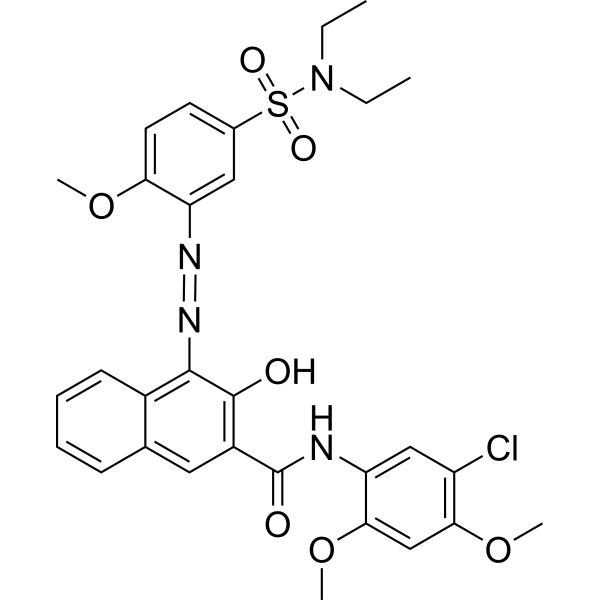 0 ImagesC.I. Pigment red 5 is the most important colorant used to add color or change the color of something and is chemically essentially unaffected by the carrier or medium into which it is incorporated. It can be widely used in textile, medicine, food, cosmetics, plastics, paint, ink, photography and paper industries.
-
ortho-iodoHoechst 33258
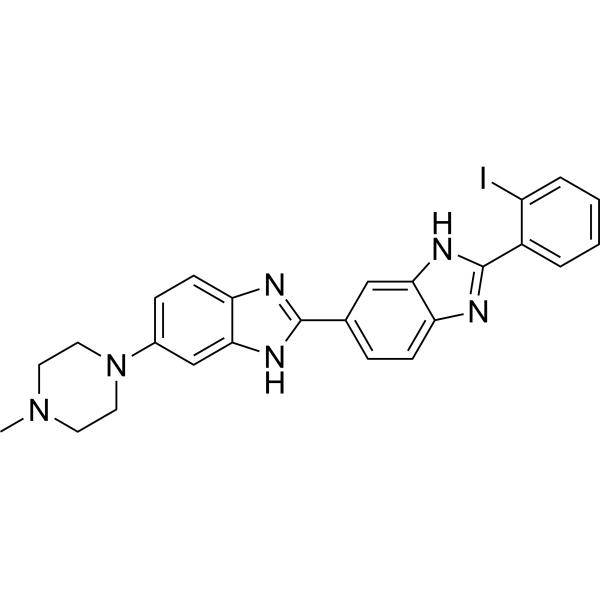 0 Imagesortho-iodoHoechst 33258 is a marker dye in Hoechst series. Hoechst is A live nuclear marker dye. Hoechst binds to the grooves in the DNA double strand, which tends to be A/ T-rich DNA strand. Although it binds to all nucleic acids, the A/ T-rich double strand DNA significantly enhances fluorescence intensity Therefore,Hoechst dye can be used for living cell labeling. The fluorescence intensity of Hoechst dye increases with the increase of pH of solution.
-
Dnp-RPLALWRS TFA
 0 ImagesCat. No.: HY-P3123APurity: 99.04%Dnp-RPLALWRS TFA is a fluorescent peptide substrate designed for human matrilysin (MMP-7). After enzymatic cleavage of Dnp-RPLALWRS TFA at the alanine-leucine bond, the release of the Dnp group alleviates fluorescence quenching, thereby enabling real-time quantitative analysis of MMP-7 activity by increasing tryptophan emission. Dnp-RPLALWRS TFA provides a sensitive and efficient detection method for kinetic studies and inhibitor screenin.
-
FITC-lysine-dextran (MW 70kDa)
 0 ImagesCat. No.: HY-172164B




