



Formyl Peptide Receptor (FPR) Antagonist
-
T0080
 0 Images
T0080 is a central nervous system-penetrant FPR1 inhibitor. By functionally blocking the FPR1 signaling pathway, T0080 effectively reduces neutrophil infiltration into ischemic brain tissue and maintains the integrity of the blood-brain barrier. T0080 alleviates tPA-associated hemorrhagic transformation, inhibits demyelination responses and the expression of NOX2. T0080 also possesses anti-apoptotic (apoptosis) and anti-inflammatory properties, thereby protecting myelin and reducing neurological deficits. T0080 is widely used in studies related to ischemic stroke complicated by hemorrhagic transformation after tPA thrombolysis, as well as multiple sclerosis.
-
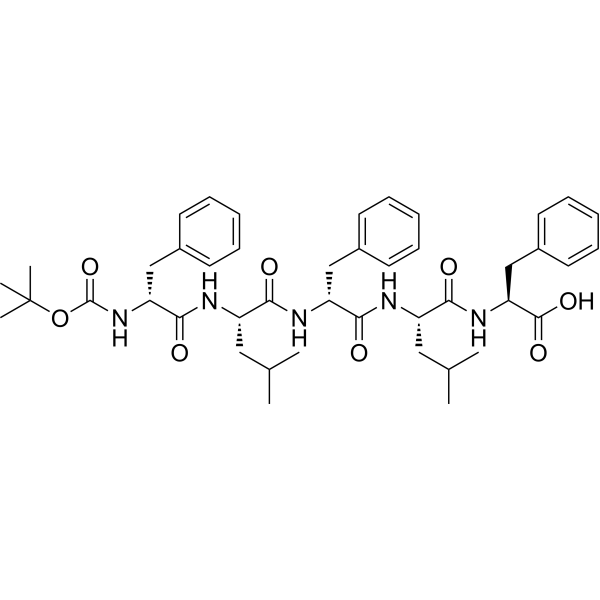
Boc-dPhe-Leu-dPhe-Leu-Phe
 0 Images
Boc-dPhe-Leu-dPhe-Leu-Phe (Boc-fLfLF) is a selective N-formyl peptide receptor1 (FPR1) antagonist. Boc-dPhe-Leu-dPhe-Leu-Phe inhibits fMIFL(HY-P0224)-induced NADPH oxidase activity. Boc-dPhe-Leu-dPhe-Leu-Phe can be used for the study of inflammation.
-
BOC-FlFlF
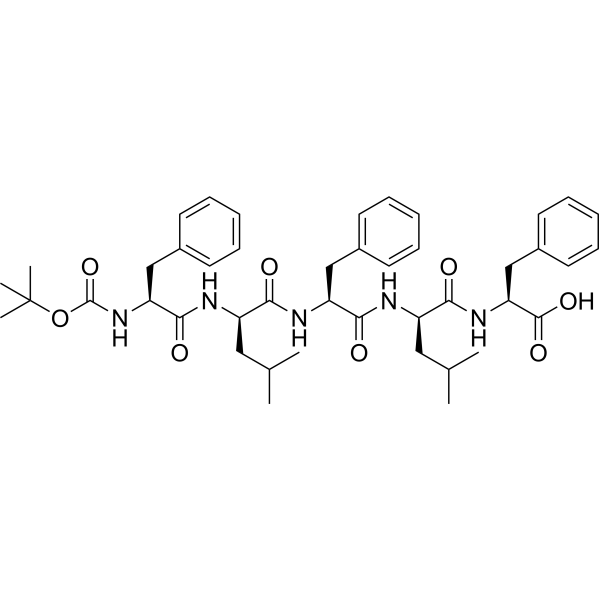 0 ImagesSynonyms: BOC2; Boc-Phe-dLeu-Phe-dLeu-Phe
BOC-FlFlF (Boc-Phe-dLeu-Phe-dLeu-Phe) is a selective FPR1 antagonist. Boc-FlFlF has an apparent dissociation constant (KD) of 230 nM as determined by the intracellular calcium mobilization assay. Boc-FlFlF can be used for the study of inflammation.
-
Boc-MLF
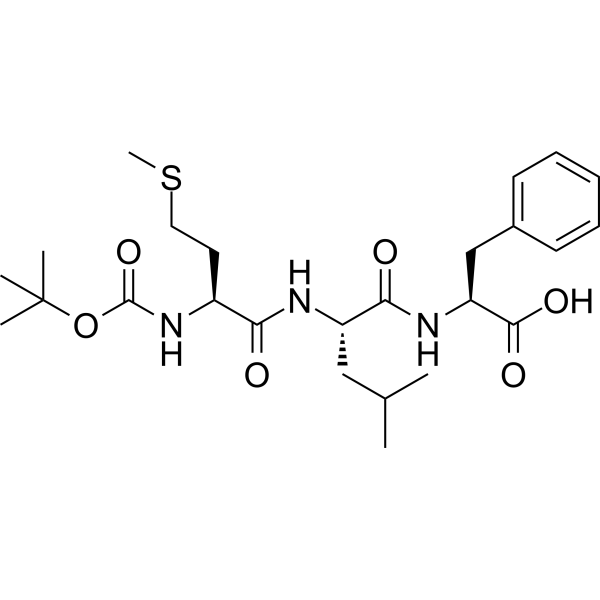 0 ImagesSynonyms: Boc-Met-Leu-Phe-OH
Boc-MLF is a formyl peptide receptor (FPR) antagonist, and reduces superoxide production induced by fMLF with an IC50 of 0.63 μM.
-
FPR1 antagonist 1
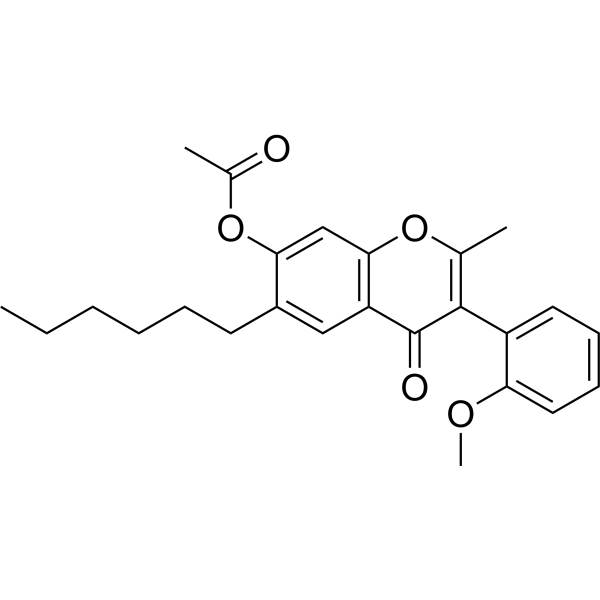 0 ImagesCat. No.: HY-156293CAS No.: 3053980-28-9
FPR1 antagonist 1 (compound 24a) is a formyl peptide receptor 1 (FPR1) antagonist with an IC50 of 25 nM. FPR1 antagonist 1 inhibits cell growth through a combined effect on cell proliferation and apoptosis and reduces cell migration, while inducing an increase in angiogenesis.
-
Quin-C7
 0 Images
Quin-C7 is an orally active FPR2/ALX antagonist. Quin-C7 binds to the orthosteric ligand-binding pocket of FPR2/ALX, modulates receptor activation, and inhibits pro-inflammatory ERK signaling mediated by serum amyloid A (SAA). Quin-C7 reduces pro-inflammatory mediators TNF-α levels, increases anti-inflammatory IL-10, decreases inflammatory neutrophils and pro-inflammatory M1 macrophages, downregulates ERK1/2 phosphorylation, and upregulates JNK1/2/3 phosphorylation. Quin-C7 blocks FPR2/mFpr2 signaling, reduces brain lesion volume. Quin-C7 can be used for the research of inflammatory bowel disease and neuromyelitis optica spectrum disorder.

-
FPR1 antagonist 2
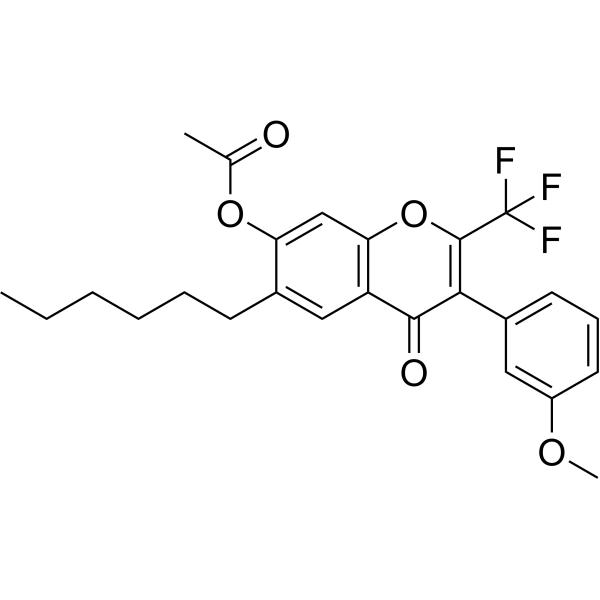 0 ImagesCat. No.: HY-156294
FPR1 antagonist 2 (compound 25b) is a formyl peptide receptor 1 (FPR1) antagonist with an IC50 of 70 nM. FPR1 antagonist 2 inhibits cell growth through a combined effect on cell proliferation and apoptosis and reduces cell migration, while inducing an increase in angiogenesis.
-
N-19004
 0 ImagesCat. No.: HY-178919CAS No.: 2996841-28-0
N-19004 is a FPR1 antagonist. N-19004 shows broad-spectrum antibacterial effects against a variety of pathogens. N-19004 exhibits significant retinal protective effects in the rd10 mouse model of retinitis pigmentosa (RP). N-19004 can attenuate retinal dysfunction, mitigate rod and cone degeneration, and reduce immune cell activation, gliosis, inflammation, oxidative stress, and apoptosis. N-19004 can reduce the size of laser-induced choroidal lesions and promote edema absorption through dual anti-inflammatory and anti-angiogenic effects. N-19004 can be used for the research of retinal degenerative diseases such as retinitis pigmentosa.
-
BOC-FlFlF TFA
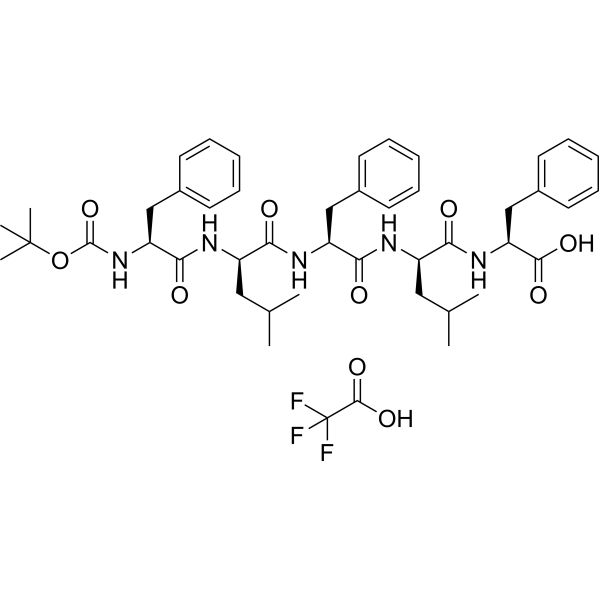 0 ImagesCat. No.: HY-P2355ASynonyms: BOC2 TFA; Boc-Phe-dLeu-Phe-dLeu-Phe TFA
BOC-FlFlF (TFA) (Boc-Phe-dLeu-Phe-dLeu-Phe (TFA)) is a selective FPR1 antagonist. BOC-FlFlF has an apparent dissociation constant (KD) of 230 nM as determined by the intracellular calcium mobilization assay. BOC-FlFlF can be used for the study of inflammation.



