



Isotope-Labeled Compounds
Isotope-labeled compounds are chemical substances in which some atoms in their molecules are replaced by isotope atoms. The range of stable isotope products can cover from gases to complex molecules. Isotope-labeled compounds could provide a site-specific investigation of structures, making molecules easily detectable by mass spectrometry and NMR, and maintaining the physico-chemical properties of the target molecule at the same time.
MCE isotope-labeled compounds are all stable isotope-labeled compounds and are non-radioactive labeled substances. MCE isotope-labeled compounds are unique tools for identifying and understanding biological and chemical processes. Stable isotope-labeled products are now getting more and more popular among scientists. The scope of application is gradually penetrating into various scientific fields, such as life sciences, food and medicine, agriculture, environment, geology, etc. Stable isotope-labeled compounds have a wide range of applications in the Life Science areas, such as Metabolomics, Proteomics, Clinical studies, Deuterium drugs, etc.
All Product Categories
-
Isotope-Labeled Compounds Related Products (11128)
Related Products (11128)

-
O-tert-Butyl-dimethylsilyl curcumin-d6
 0 ImagesCat. No.: HY-W749302CAS No.: 2734308-81-5O-tert-Butyl-dimethylsilyl curcumin-d6 is the deuterium labeled O-tert-Butyl-dimethylsilyl curcumin.
-
Trimebutine-d3 hydrochloride
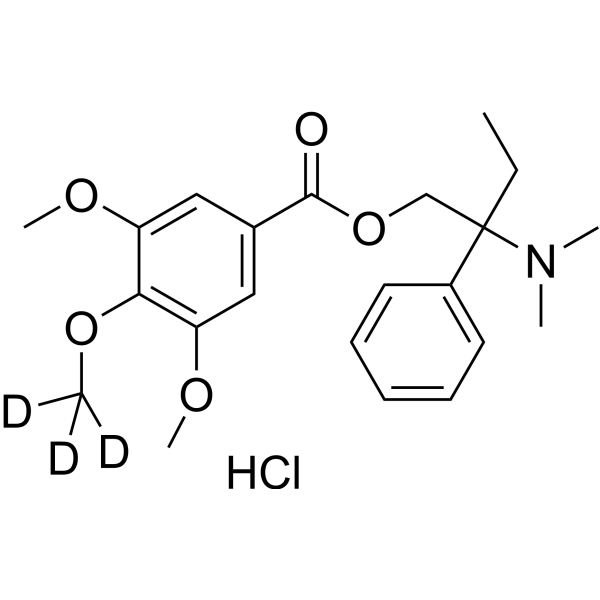 0 ImagesCat. No.: HY-B0380S2Trimebutine-d3 hydrochloride is deuterium labeled Trimebutine hydrochloride. Trimebutine hydrochloride is a multi-target inhibitor and opioid receptor agonist with antimuscarinic activity. Trimebutine hydrochloride inhibits L-type Ca2+ channels and large-conductance calcium-activated potassium channels (BKCa channels), thereby inhibiting extracellular calcium influx and potassium ion efflux. Trimebutine hydrochloride also targets Toll-like receptors, inhibits Toll-like receptor 2/4/7/8/9 signals, and inhibits LPS-induced IRAK1 activation, as well as ERK1/2, JNK and NF-κB activation, thereby exerting anti-inflammatory effects. Trimebutine hydrochloride also induces tumor cell apoptosis by inhibiting the AKT/ERK pathway. Trimebutine hydrochloride also inhibits excessive contraction of smooth muscle and can be used in the study of gastrointestinal disorders such as irritable bowel syndrome (IBS).
-
Morpholine-4-carbonyl-d8 chloride
 0 ImagesCat. No.: HY-W723905CAS No.: 1219804-24-6Morpholine-4-carbonyl-d8 chloride is the deuterium labeled Morpholine-4-carbonyl chloride.
-
Prostaglandin D1-d4
 0 ImagesCat. No.: HY-113096SSynonyms: PGD1-d4Prostaglandin D1-d4 (PGD1-d4) is the d4-labeled Prostaglandin D1 (HY-113096). Prostaglandin D1 (PGD1) is a CatSper activator that triggers Ca2+ influx through sperm-specific Ca2+ channels via the prostaglandin binding site and competes with other prostaglandins.
-
N-heptadecane-d36
 0 ImagesCat. No.: HY-W131351SCAS No.: 39756-35-9N-heptadecane-d36 is the deuterium labeled N-heptadecane.
-
Sodium 2-oxobutanoate-d5
 0 ImagesCat. No.: HY-W005355S12Sodium 2-oxobutanoate-d5 is the deuterium labeled Sodium 2-oxobutanoate (HY-W005355). Sodium 2-oxobutanoate is an organic compound commonly used as a food additive and industrial raw material. It can be used as an acidity regulator, leavening agent and preservative, and is often used in the fields of bread, baked goods and canning. In addition, the compound is used in the production of certain industrial products, such as in plastics, textiles and dyes.
-
Clopidogrel-d3 (hydrochloride)
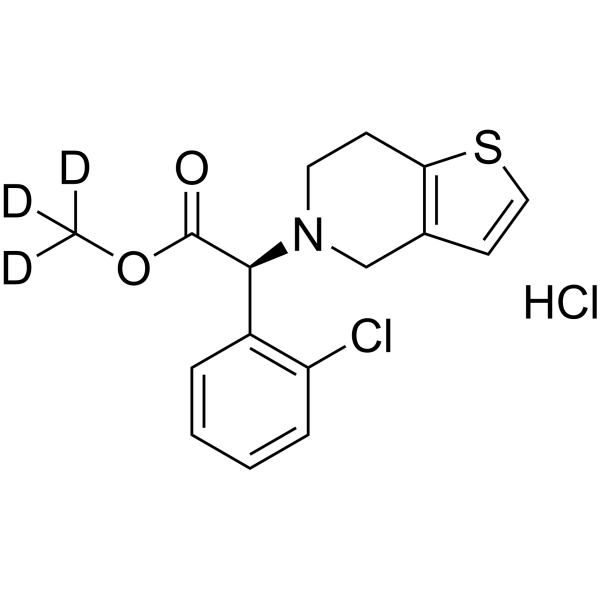 0 ImagesCat. No.: HY-143817SCAS No.: 2140305-74-2Synonyms: Clopidogrelum-d3 hydrochlorideClopidogrel-d3 (hydrochloride) is the deuterium labeled Clopidogrel hydrochloride.
-
N-Desmethyl Olopatadine-d3 (hydrochloride)
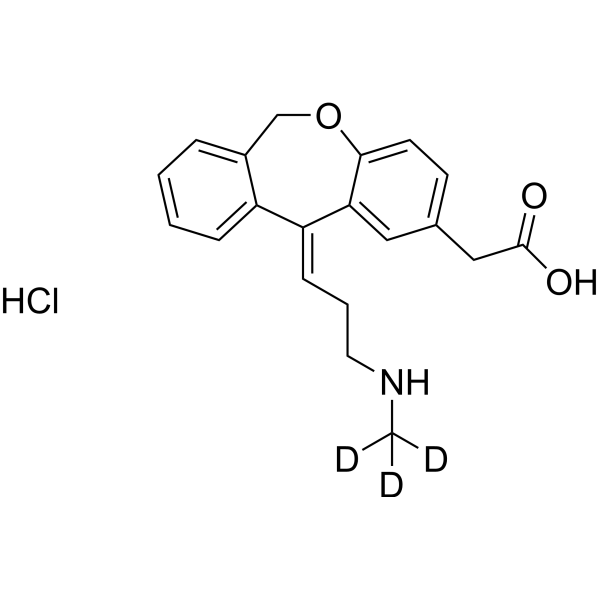 0 ImagesCat. No.: HY-144143SCAS No.: 2768767-39-9N-Desmethyl Olopatadine-d3 (hydrochloride) is the deuterium labeled N-Desmethyl Olopatadine hydrochloride.
-
DL-Phenylalanine-d5 hydrochloride
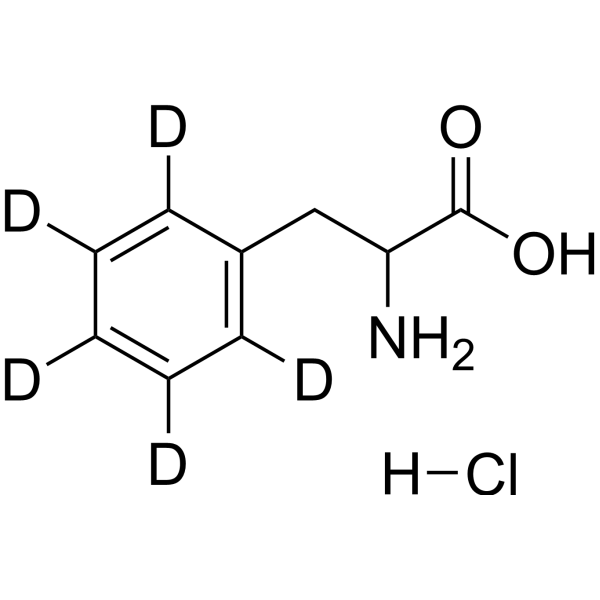 0 ImagesCat. No.: HY-N0215S6Synonyms: 2-Amino-3-phenylpropionic acid-d5 hydrochlorideDL-Phenylalanine-d5 (hydrochloride) is the deuterium labeled DL-Phenylalanine hydrochloride. L-Phenylalanine hydrochloride is an essential amino acid isolated from Escherichia coli. L-Phenylalanine hydrochloride is a α2δ subunit of voltage-dependent Ca+ channels antagonist with a Ki of 980 nM. L-phenylalanine hydrochloride is a competitive antagonist for the glycine- and glutamate-binding sites of N-methyl-D-aspartate receptors (NMDARs) (KB of 573 μM ) and non-NMDARs, respectively. L-Phenylalanine hydrochloride is widely used in the production of food flavors and pharmaceuticals.
-
Orphenadrine-d3 citrate
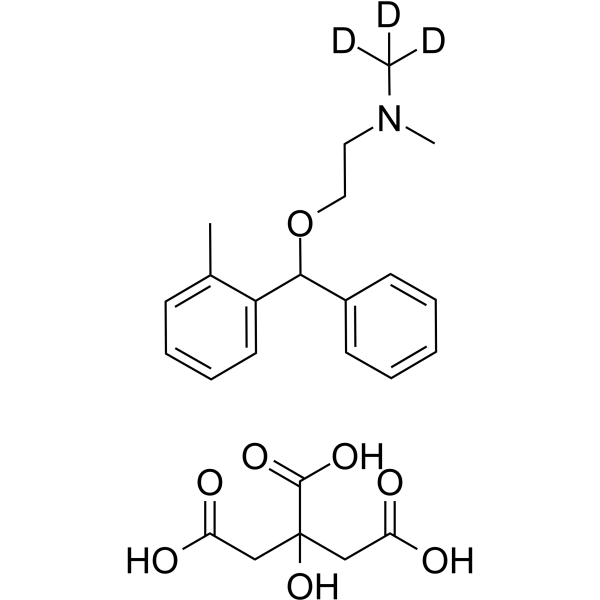 0 ImagesCat. No.: HY-B0369ASOrphenadrine-d3 (citrate) is the deuterium labeled Orphenadrine citrate. Orphenadrine citrate is a NMDA receptor antagonist with Ki of 6.0 +/- 0.7 μM, HERG potassium channel blocker.
-
1-Heptadecanoyl-2-docosatetraenoyl-sn-glycero-3-phospho- L-serine-d5 sodium
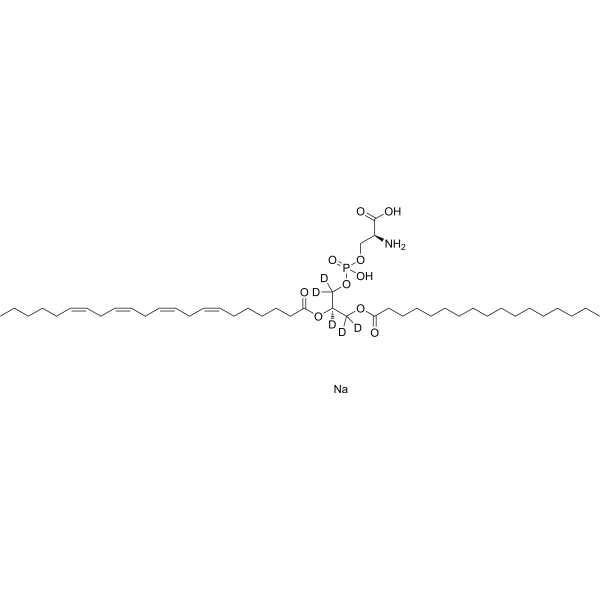 0 ImagesCat. No.: HY-146866SCAS No.: 2342575-48-61-Heptadecanoyl-2-docosatetraenoyl-sn-glycero-3-phospho- L-serine-d5 (sodium) is deuterium labeled 1-Heptadecanoyl-2-docosatetraenoyl-sn-glycero-3-phospho- L-serine (sodium).
-
Picropodophyllin-d6
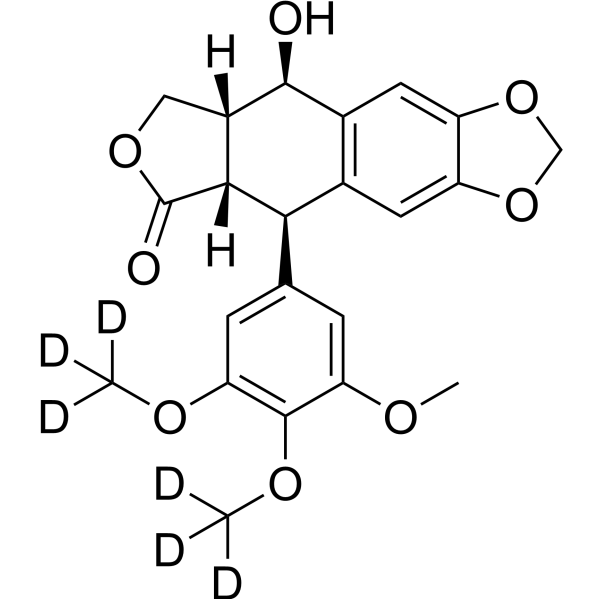 0 ImagesCat. No.: HY-15494S1Synonyms: AXL1717-d6; Picropodophyllotoxin-d6; PPP-d6Picropodophyllin-d6 (AXL1717-d6) is deuterium labeled Picropodophyllin. Picropodophyllin (AXL1717) is a selective insulin-like growth factor-1 receptor (IGF-1R) inhibitor with an IC50 of 1 nM.
-
Ethane-1,2-diyl-d4 dibenzoate
 0 ImagesCat. No.: HY-W707400CAS No.: 2489671-01-2Ethane-1,2-diyl-d4 dibenzoate is the deuterium labeled Ethylene Glycol Dibenzoate (HY-W103900).
-
4-Methylsyringol-d6
 0 ImagesCat. No.: HY-W726231CAS No.: 3028870-30-34-Methylsyringol-d6 is the deuterium labeled 4-Methylsyringol (HY-W100715). 4-Methylsyringol is a natural product that can be isolated from hardwood.
-
Docetaxel-d5 trihydrate
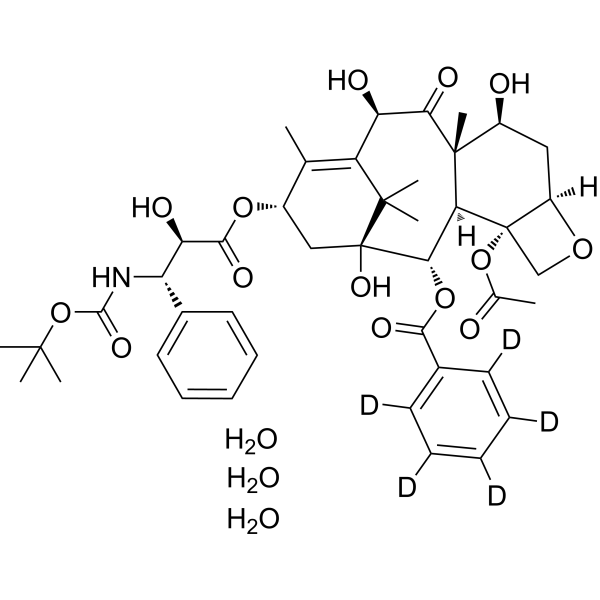 0 ImagesCat. No.: HY-B0011ASSynonyms: RP-56976-d5 trihydrateDocetaxel-d5 (trihydrate) is the deuterium labeled Docetaxel (Trihydrate). Docetaxel Trihydrate (RP-56976 Trihydrate) is an antineoplastic agent and inhibits microtubule?depolymerization with an IC50 value of 0.2 μM. Docetaxel Trihydrate is a semisynthetic analog of taxol and attenuates the effects of?bcl-2?and?bcl-xL?gene expression. Docetaxel Trihydrate arrests the cell cycle at G2/M and leads to cell apoptosis.
-
N-Acetyl-S-(N-methyl-carbamoyl)-L-cysteine-d3 dicyclohexylamine
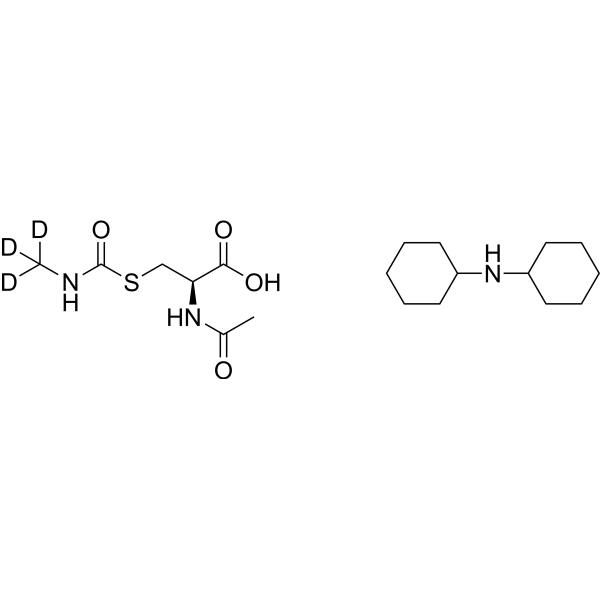 0 ImagesCat. No.: HY-146716SN-Acetyl-S-(N-methyl-carbamoyl)-L-cysteine-d3 (dicyclohexylamine) is the deuterium labeled N-Acetyl-S-(N-methyl-carbamoyl)-L-cysteine.
-
Uric acid-13C
 0 ImagesCat. No.: HY-W780166CAS No.: 139290-36-1Uric acid-13C is the 13C-labeled Uric acid (HY-B2130). Uric acid is an orally active oxygen free radical scavenger that helps maintain stable blood pressure and combat oxidative stress. Uric acid can scavenge ROS, such as singlet oxygen and peroxynitrite, and inhibit lipid peroxidation. Uric acid can be used as a modeling agent in research on hyperuricemia-induced hypertension models.
-
Clopidogrelat-13C,d4
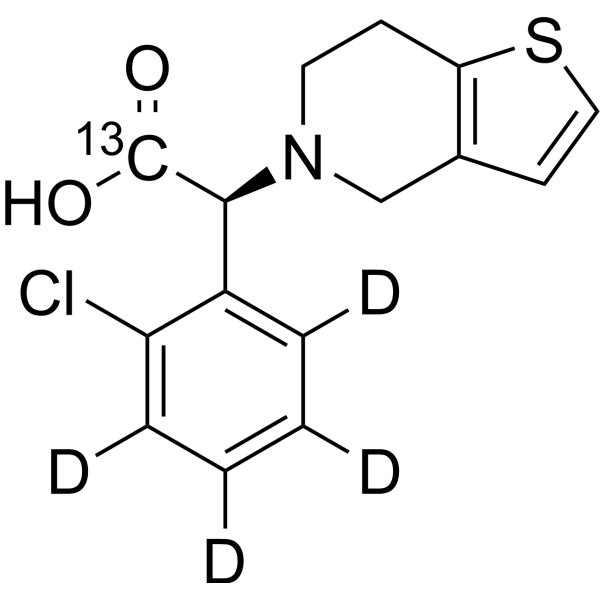 0 ImagesCat. No.: HY-154771SClopidogrelat-13C,d4 is 13C and deuterated labeled Clopidogrelat.
-
N-Desethyl Sunitinib-d5 hydrochloride
 0 ImagesCat. No.: HY-10873S2CAS No.: 1261432-14-7Synonyms: SU-12662-d5 hydrochlorideN-Desethyl Sunitinib-d5 (hydrochloride) is a deuterated labeled N-Desethyl Sunitinib. N-Desethyl Sunitinib (SU-12662) is a metabolite of sunitinib. Sunitinib is a potent, ATP-competitive VEGFR, PDGFRβ and KIT inhibitor with Ki values of 2, 9, 17, 8 and 4 nM for VEGFR -1, -2, -3, PDGFRβ and KIT, respectively.
-
(2S)-2-(Acetylamino)-N,4-dimethylpentanamide-d16
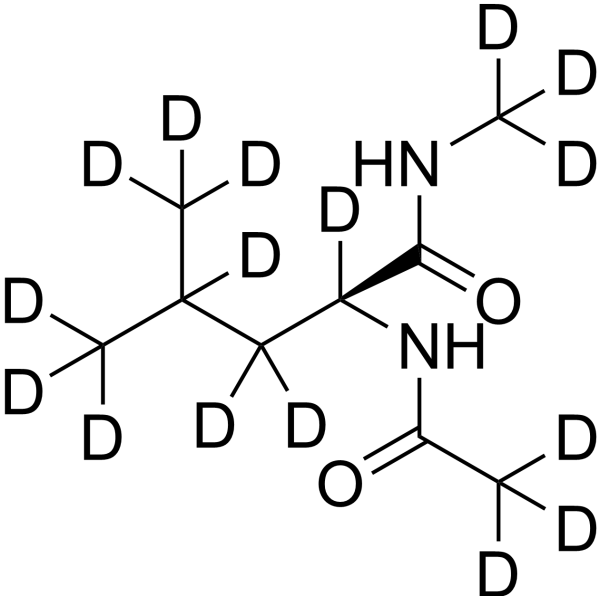 0 ImagesCat. No.: HY-W156412SCAS No.: 1276197-56-8(2S)-2-(Acetylamino)-N,4-dimethylpentanamide-d16 is the deuterium labeled (2S)-2-(Acetylamino)-N,4-dimethylpentanamide.



