



GlyT2
Glycine transporter 2 (GlyT2), encoded by SLC6A5, is a presynaptic sodium- and chloride-dependent transporter that recaptures glycine into glycinergic nerve terminals and maintains the intracellular glycine pool required for efficient inhibitory neurotransmission[1][2]. Mechanistically, GlyT2 preserves vesicular glycine content by supplying substrate for vesicle refilling, thereby sustaining quantal glycinergic signaling in the spinal cord, brainstem, retina, and other glycinergic circuits[1][3]. GlyT2-mediated transport is characterized by high-affinity glycine uptake coupled to Na+ and Cl− gradients, a process that is essential for maintaining presynaptic glycine availability and synaptic inhibitory strength[2]. Regulation of GlyT2 expression also links glycinergic transmission to broader signaling networks, including Hedgehog pathway activity, which can modulate GlyT2 abundance, transport activity, and glycine homeostasis through ubiquitination-dependent mechanisms[3]. In disease contexts, loss-of-function mutations in SLC6A5 cause hyperekplexia, and GlyT2-deficient animal models develop severe motor abnormalities, impaired inhibitory transmission, and early postnatal lethality, highlighting the transporter’s critical physiological role[1][2][3]. Compared with the related isoform GlyT1, which is predominantly associated with glial glycine clearance around synapses, GlyT2 is localized to glycinergic presynaptic terminals and is required for maintaining transmitter stores rather than primarily shaping extracellular glycine levels[2][4]. For experimental applications, selective GlyT2 inhibitors such as ALX-1393 and ORG25543 are widely used to investigate glycinergic signaling, transporter selectivity, and glycine-dependent modulation of neuronal circuits[4].
References:
- [1]. Zafra F, et al. Glycinergic transmission: glycine transporter GlyT2 in neuronal pathologies. Neuronal Signal. 2016 Dec 22;1(1):NS20160009. [Content Brief]
- [2]. Sciencedirect.topics.
- [3]. de la Rocha-Muñoz A, et al. The presynaptic glycine transporter GlyT2 is regulated by the Hedgehog pathway in vitro and in vivo. Commun Biol. 2021 Oct 18;4(1):1197. [Content Brief]
- [4]. Łątka K, et al. Analysis of Binding Determinants for Different Classes of Competitive and Noncompetitive Inhibitors of Glycine Transporters. Int J Mol Sci. 2022 Jul 21;23(14):8050. [Content Brief]
All Product Categories
-
GlyT2 관련 제품 (9)
관련 제품 (9)

-
N-Arachidonylglycine
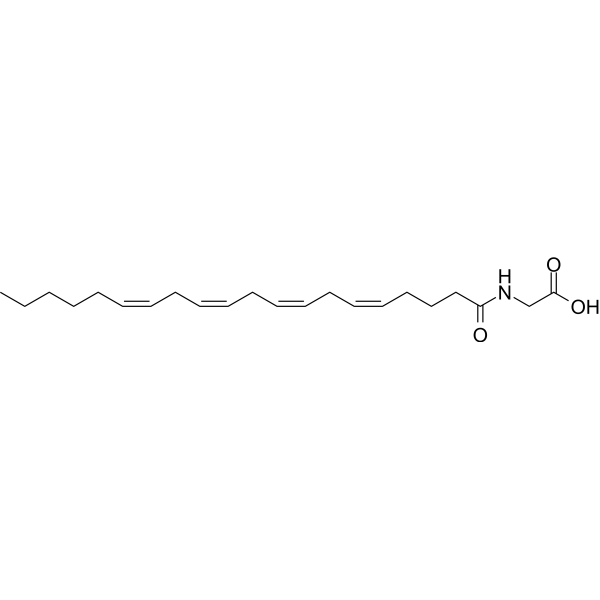 0 ImagesSynonyms: NA-GlyN-Arachidonylglycine (NA-Gly), a carboxylic analog of the endocannabinoid anandamide (AEA), is a GPR18 agonist (EC50 = 44.5 nM). Unlike AEA, N-Arachidonylglycine has no activity at either CB1 or CB2 receptors. N-Arachidonylglycine inhibits GLYT2 (IC50 = 5.1 μM). N-Arachidonylglycine also is an effective activator of endometrial cell migration.
-
Opiranserin hydrochloride
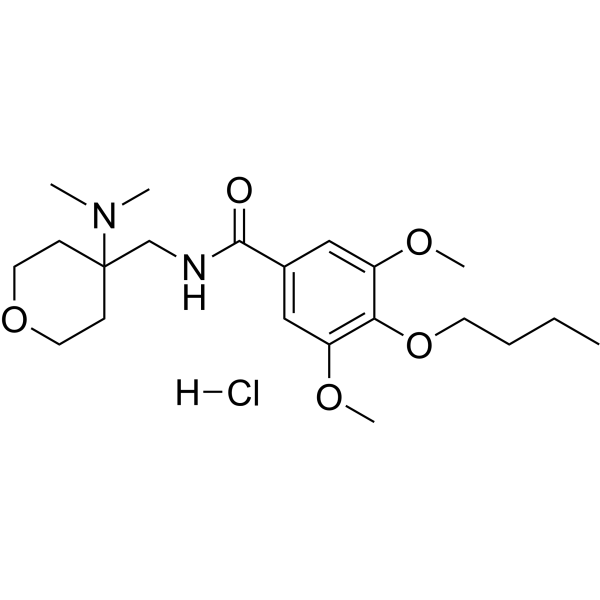 0 ImagesSynonyms: VVZ-149 hydrochlorideOpiranserin (VVZ-149) hydrochloride, a non-opioid and non-NSAID analgesic candidate, is a dual antagonist of glycine transporter type 2 (GlyT2) and serotonin receptor 2A (5HT2A), with IC50s of 0.86 and 1.3 μM, respectively. Opiranserin hydrochloride shows antagonistic activity on rP2X3 (IC50=0.87 μM). Opiranserin hydrochloride is development as an injectable agent for the treatment of postoperative pain.
-
Stearoyl-L-carnitine-d3 chloride
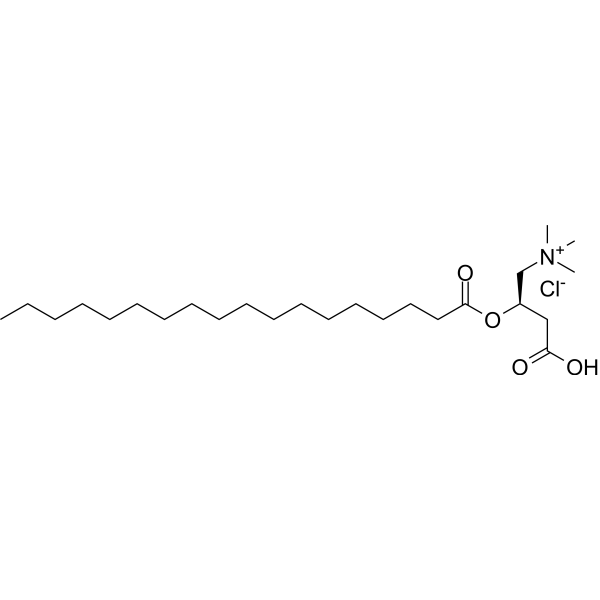
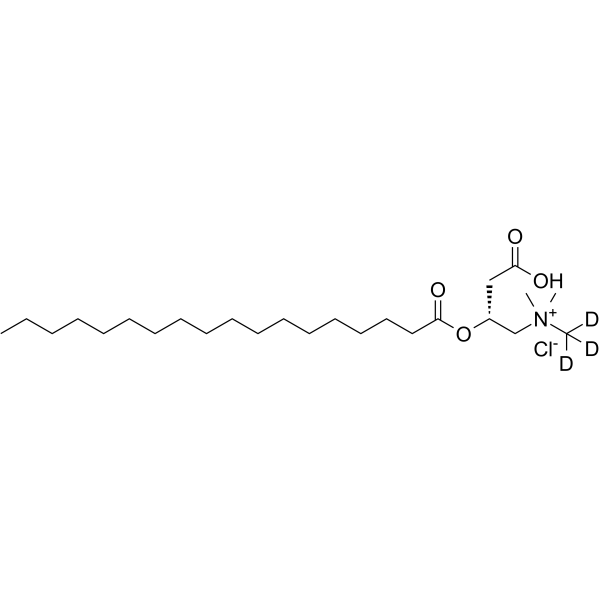 0 ImagesStearoyl-L-carnitine-d3 (chloride) is the deuterium labeled Stearoyl-L-carnitine chloride. Stearoyl-L-carnitine chloride is an endogenous long-chain acylcarnitine. Stearoyl-L-carnitine chloride is a less potent inhibitor of GlyT2. Stearoyl-L-carnitine chloride inhibits glycine responses by 16.8% at concentrations up 3 μM.
-
ALX-1393
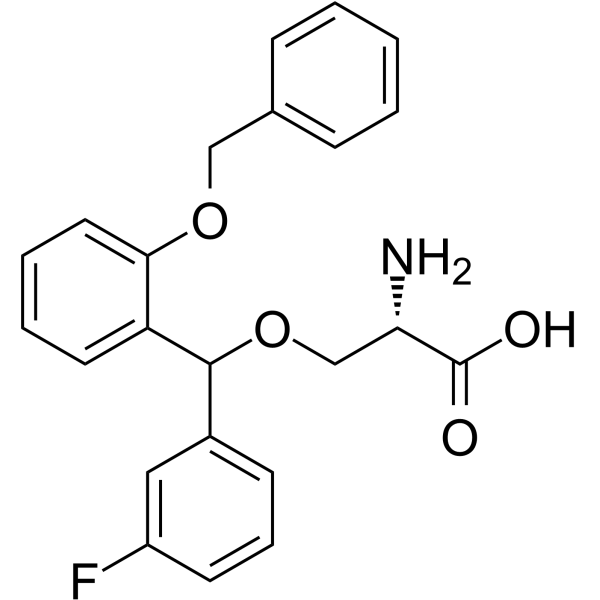 0 ImagesCat. No.: HY-111029CAS No.: 949164-09-4ALX-1393, a selective GlyT2 inhibitor, has an antinociceptive effect on thermal, mechanical, and chemical stimulations in a rat acute pain model.
-
GLyT2-IN-3
 0 ImagesCat. No.: HY-184901CAS No.: 2789716-24-9GLyT2-IN-3 is a potent GlyT2 inhibitor with a KD of 23.7 nM. GLyT2-IN-3 inhibits GlyT2-mediated glycine uptake with an IC50 of 19.4 nM. GLyT2-IN-3 shows broad-spectrum antinociceptive effects in three pain models, does not induce sedative effects or motor coordination impairment in mice, and exhibits favorable pharmacokinetic properties in rats with an oral bioavailability of 88.57%, GLyT2-IN-3 can be used for the study of neuropathic pain.
-
RPI-GLYT2-82
 0 ImagesCat. No.: HY-181977Purity: 99.12%RPI-GLYT2-82 is a reversible, blood-brain barrier-permeable allosteric inhibitor of GlyT2 with an IC50 value of 554 nM. RPI-GLYT2-82 also exhibits inhibitory activity against 5-HT2AR and SERT, with IC50 values of 1.9 μM and 4.7 μM, respectively. RPI-GLYT2-82 inhibits pain signals and alleviates allodynia, shows no target-related side effects at the maximum analgesic dose, and has no addictive potential. RPI-GLYT2-82 can be used for the research of neuropathic pain.
-
Opiranserin
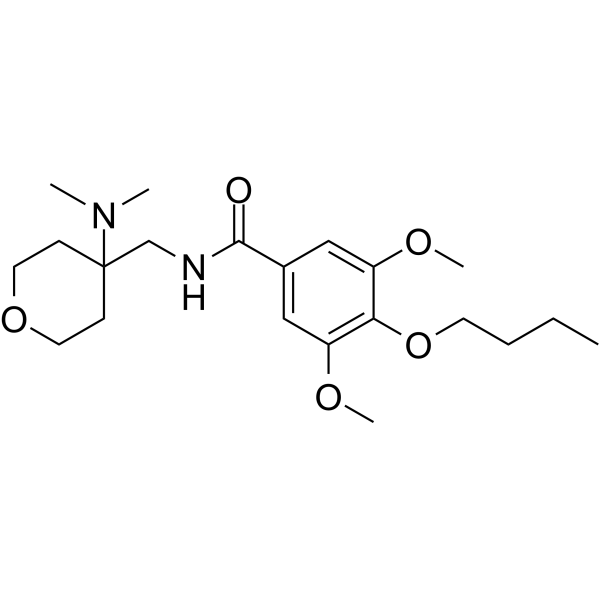 0 ImagesCat. No.: HY-109067CAS No.: 1441000-45-8Synonyms: VVZ-149Opiranserin (VVZ-149), a non-opioid and non-NSAID analgesic candidate, is a dual antagonist of glycine transporter type 2 (GlyT2) and serotonin receptor 2A (5HT2A), with IC50s of 0.86 and 1.3 μM, respectively. Opiranserin shows antagonistic activity on rP2X3 (IC50=0.87 μM). Opiranserin is development as an injectable agent for the treatment of postoperative pain.
-
VVZ-068
 0 ImagesCat. No.: HY-186238CAS No.: 1440797-80-7VVZ-068 is a benzamide derivative and also a GlyT2/5HT2A antagonist. VVZ-068 alleviates neuropathic mechanical hyperalgesia in a rat model of mechanical allodynia. VVZ-068 is applicable for pain-related research.



