



N-Arachidonylglycine
Based on 1 publication(s) in Google Scholar
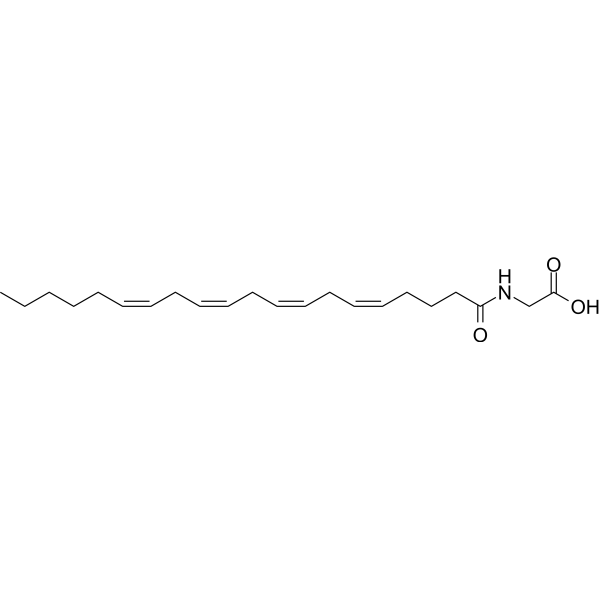
N-Arachidonylglycine (NA-Gly), a carboxylic analog of the endocannabinoid anandamide (AEA), is a GPR18 agonist (EC50 = 44.5 nM). Unlike AEA, N-Arachidonylglycine has no activity at either CB1 or CB2 receptors. N-Arachidonylglycine inhibits GLYT2 (IC50 = 5.1 μM). N-Arachidonylglycine also is an effective activator of endometrial cell migration.
For research use only. We do not sell to patients.
- Purity : 99.45%
- CAS No.: 179113-91-8
- Formula: C22H35NO3
- Molecular Weight:361.52
-
Storage:
Solution, -20°C, 2 years

To place orders, for customer services and technical support, please contact: MedChemExpress USA
Tel: 609-228-6898 E-mail: [email protected] [email protected]


-
 Biological Activity
-
Chemical Information
- Purity & Documentation
- References
-
 Help & FAQs


-

HY-103335
O1918 -
HY-B2167
Docosahexaenoic acid -
HY-N2327
Oleamide -
HY-W013049
Docosanoic acid -
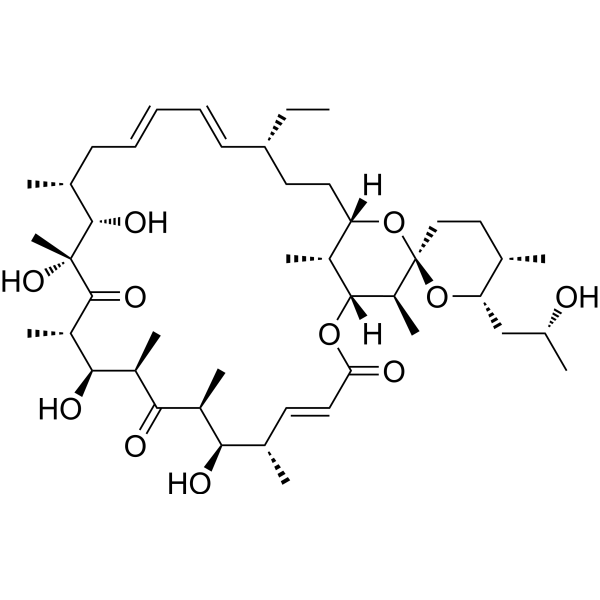
HY-16589
Oligomycin A -
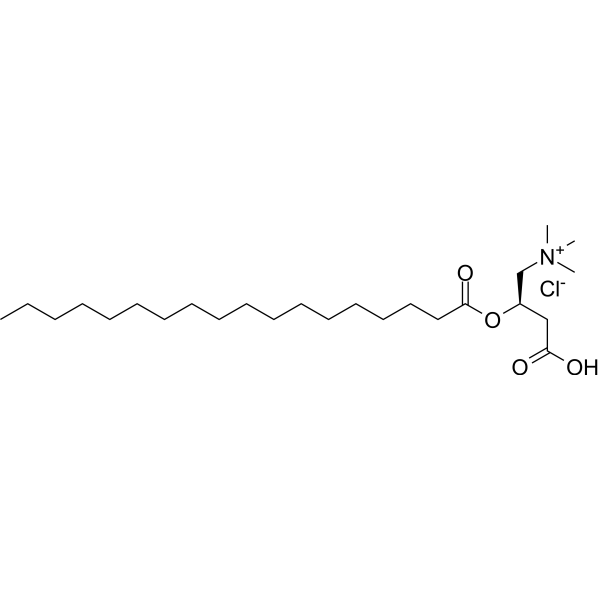
HY-130466
Stearoyl-L-carnitine chloride -
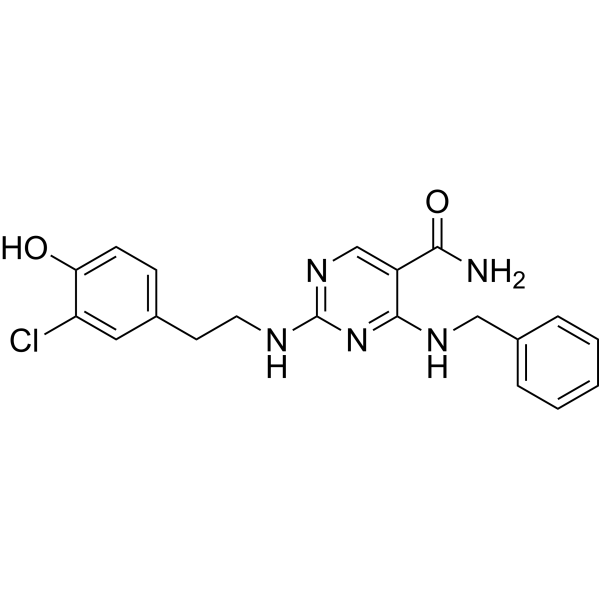
HY-100614
AS1517499 -
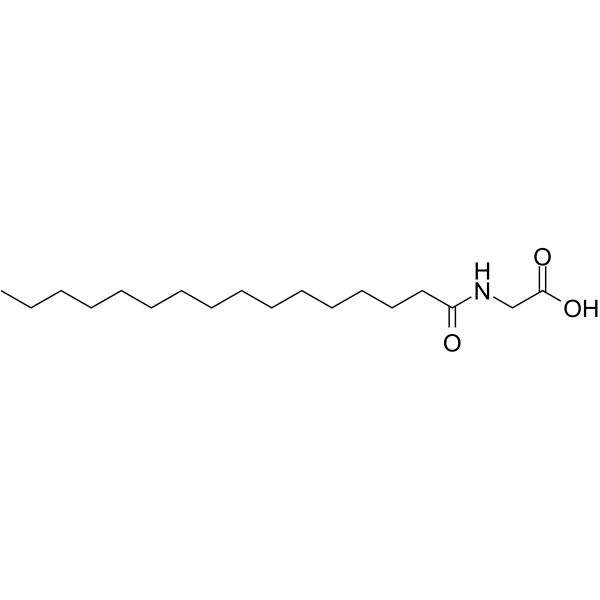
HY-W074890
Palmitoylglycine -
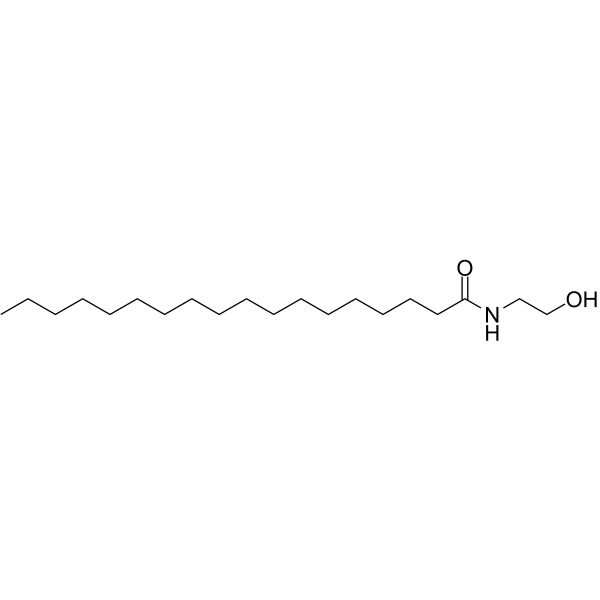
HY-113015
Stearoylethanolamide -

HY-134545
N-Arachidonoyl-L-alanine -
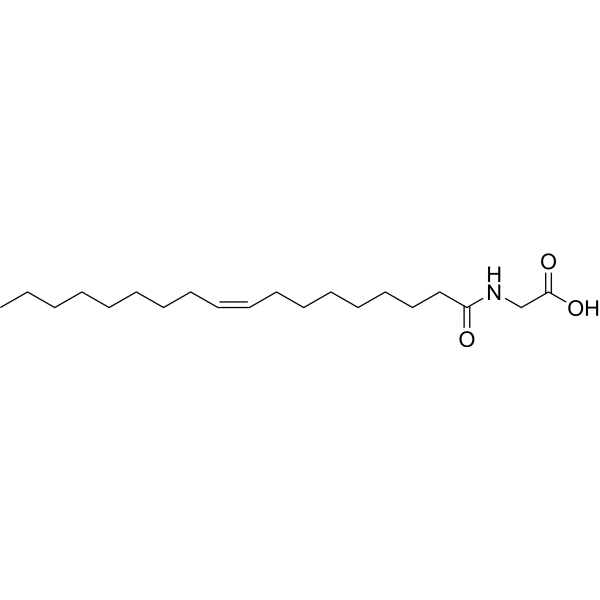
HY-113204
N-Oleoyl glycine -
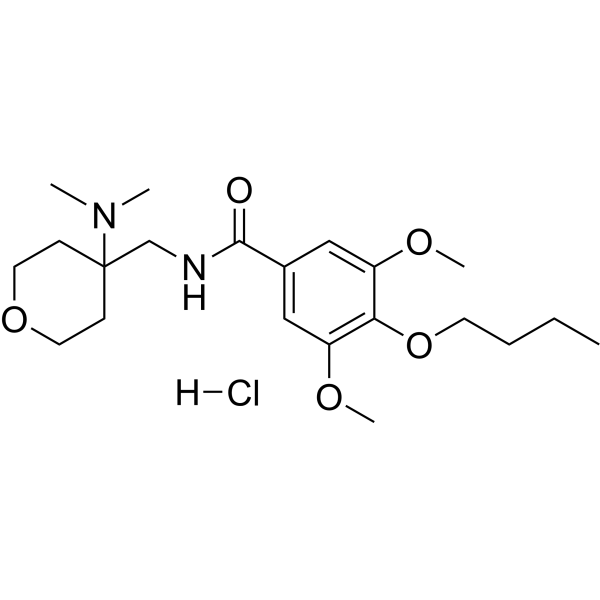
HY-109067A
Opiranserin hydrochloride
Publications Citing Use of MedChemExpress (MCE) N-Arachidonylglycine
MoreAll Endogenous Metabolite Isoforms
More

Biological Activity
Description
IC50 & Target
|
GlyT2 5.1 μM (IC50) |
Cellular Effect
|
Cell Line

|
Type | Value | Description | References |
|---|---|---|---|---|
| CHO | IC50 |
>10 μM
Compound: 8, NAGly
|
Antagonist activity against human GPR18 expressed in CHO cells assessed as reduction in delta9-THC-induced beta-arrestin recruitment by beta-galactosidase enzyme fragment complementation method
Antagonist activity against human GPR18 expressed in CHO cells assessed as reduction in delta9-THC-induced beta-arrestin recruitment by beta-galactosidase enzyme fragment complementation method
|
10.1039/C3MD00394A |
| CHO | IC50 |
>10 μM
Compound: 8, NAGly
|
Antagonist activity against human GPR55 expressed in CHO cells assessed as reduction in LPI-induced beta-arrestin recruitment by beta-galactosidase enzyme fragment complementation method
Antagonist activity against human GPR55 expressed in CHO cells assessed as reduction in LPI-induced beta-arrestin recruitment by beta-galactosidase enzyme fragment complementation method
|
10.1039/C3MD00394A |
In Vitro
N-Arachidonylglycine (0.1 nM-100 μM; 5 min) drives MAPK activation in GPR18-transfected HEK293 cells[1].
N-Arachidonylglycine shows no activity at GLYT1 or GAT1 at concentrations up to 100 μm[2].
MedChemExpress (MCE) has not independently confirmed the accuracy of these methods. They are for reference only.
-
Cell Line:HEK293-GPR18 cells
-
Concentration:0.1 nM-100 µM
-
Incubation Time:5 min
-
Result:Drove MAPK activation.
In Vivo
N-Arachidonylglycine (1.2 mg/kg; oral; once) results in a significant 70% reduction of peritoneal cells[3].
MedChemExpress (MCE) has not independently confirmed the accuracy of these methods. They are for reference only.
-
Animal Model:Rats[3]
-
Dosage:10 mg/kg
-
Administration:Oral
-
Result:Inhibition of FAAH, causing a reduction in the hydrolytic cleavage of anandamid.
-
Animal Model:Mouse (peritonitis model)[3]
-
Dosage:1.2 mg/kg
-
Administration:Oral; once
-
Result:Resulted in a significant 70% reduction of peritoneal cells.


Chemical Information
-
CAS No. 179113-91-8
-
Appearance Liquid
-
Molecular Weight 361.52
-
Formula C22H35NO3
-
Color Colorless to light yellow
-
SMILES
O=C(O)CNC(CCC/C=C\C/C=C\C/C=C\C/C=C\CCCCC)=O
-
Synonyms
NA-Gly
-
Structure Classification
-
Initial Source
-
Shipping
Room temperature in continental US; may vary elsewhere.
-
Storage
Solution, -20°C, 2 years


Publications (1)
-
Journal Impact Factor
-
Most Recent
-
Cell Oncol (Dordr)
Disrupting YAP1-mediated glutamine metabolism induces synthetic lethality alongside ODC1 inhibition in osteosarcoma. [Abstract]2024 Oct;47(5):1845-1861. PMID: 39115605


Purity & Documentation
-
Data Sheet (267 KB)
-
SDS (557 KB)
- English - EN (557 KB)
- Français - FR (557 KB)
- Deutsch - DE (557 KB)
- Norwegian - NO (557 KB)
- Español - ES (557 KB)
- Swedish - SV (557 KB)
- Italian - IT (557 KB)
- Korean - KR (557 KB)
- Portuguese - PT (557 KB)
-
Handling Instructions (2659 KB)
References
[1]. McHugh D, et al. Δ(9) -Tetrahydrocannabinol and N-arachidonyl glycine are full agonists at GPR18 receptors and induce migration in human endometrial HEC-1B cells. Br J Pharmacol. 2012;165(8):2414-2424. [Content Brief]
[2]. Edington AR, et al. Extracellular loops 2 and 4 of GLYT2 are required for N-arachidonylglycine inhibition of glycine transport. J Biol Chem. 2009;284(52):36424-36430. [Content Brief]
[3]. Burstein SH. N-Acyl Amino Acids (Elmiric Acids): Endogenous Signaling Molecules with Therapeutic Potential. Mol Pharmacol. 2018;93(3):228-238. [Content Brief]

Calculators
Concentration (start) × Volume (start) = Concentration (final) × Volume (final)


N-Arachidonylglycine Related Classifications
HY-103332 Related Classifications
 Powered by Bioz