



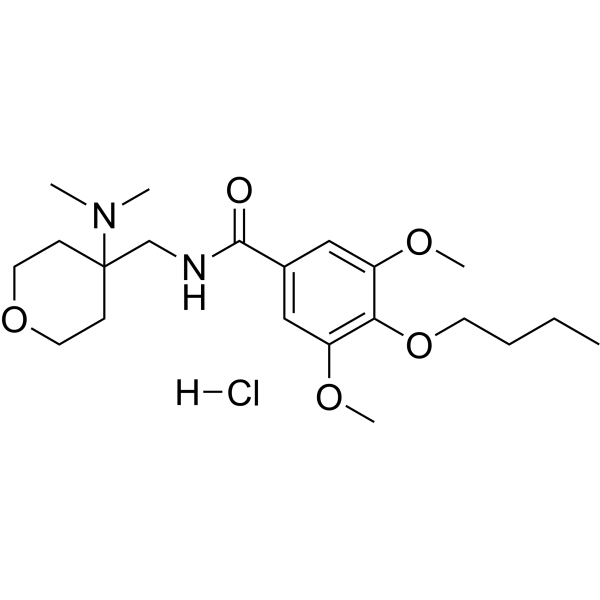
Opiranserin hydrochloride

Based on 1 Customer Validation
Opiranserin (VVZ-149) hydrochloride, a non-opioid and non-NSAID analgesic candidate, is a dual antagonist of glycine transporter type 2 (GlyT2) and serotonin receptor 2A (5HT2A), with IC50s of 0.86 and 1.3 μM, respectively. Opiranserin hydrochloride shows antagonistic activity on rP2X3 (IC50=0.87 μM). Opiranserin hydrochloride is development as an injectable agent for the treatment of postoperative pain.
For research use only. We do not sell to patients.
- Purity : 99.62%
- CAS No.: 1440796-75-7
- Formula: C21H35ClN2O5
- Molecular Weight:430.97
-
Storage:
4°C, sealed storage, away from moisture
* In solvent : -80°C, 6 months; -20°C, 1 month (sealed storage, away from moisture)

To place orders, for customer services and technical support, please contact: MedChemExpress USA
Tel: 609-228-6898 E-mail: [email protected] [email protected]


-
 Biological Activity
-
Chemical Information
-
Solvent & Solubility
- Purity & Documentation
- References
-
 Help & FAQs


-
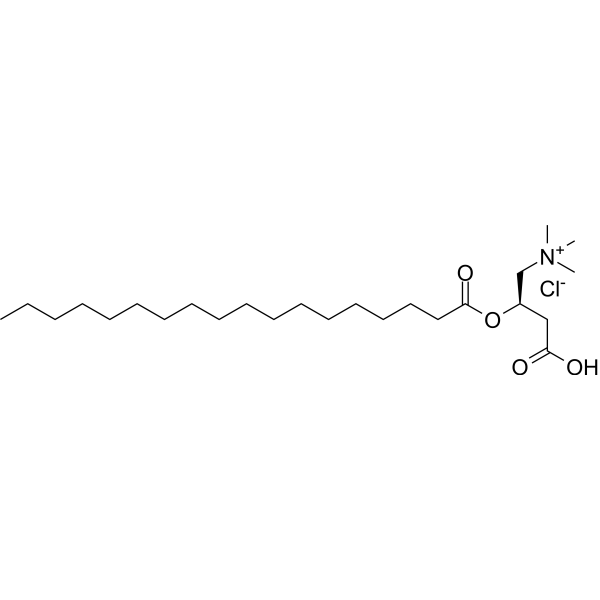
HY-130466
Stearoyl-L-carnitine chloride -
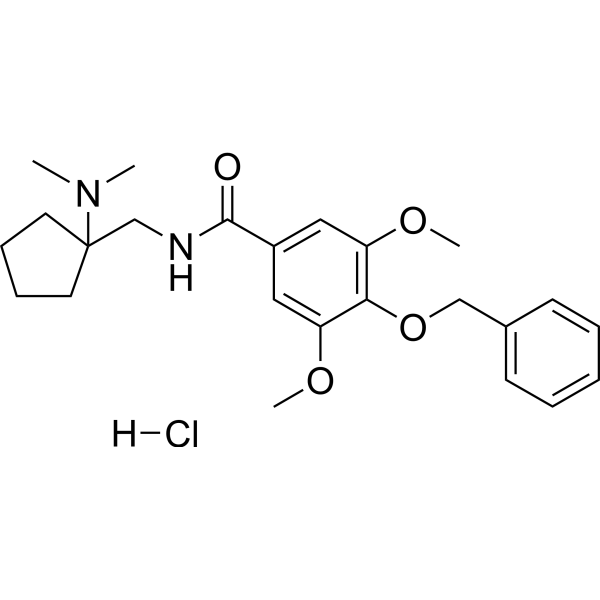
HY-107527
Org 25543 hydrochloride -
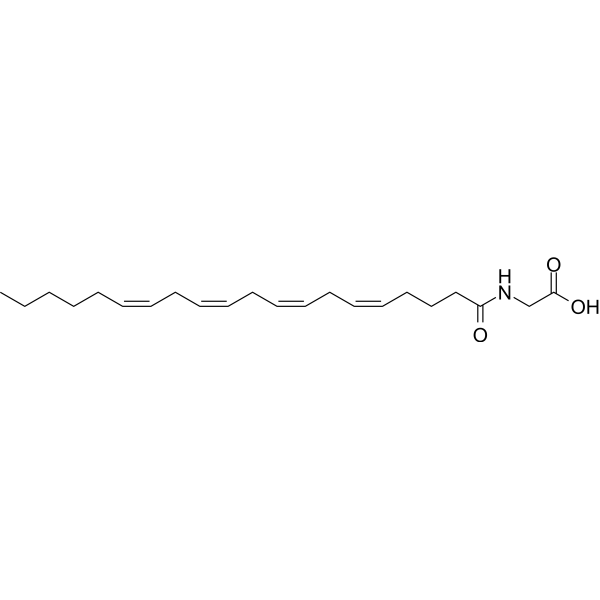
HY-103332
N-Arachidonylglycine -
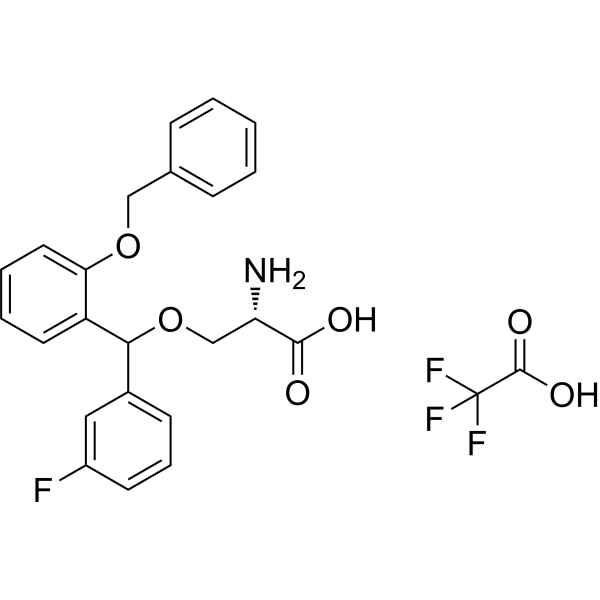
HY-111029A
ALX-1393 TFA -
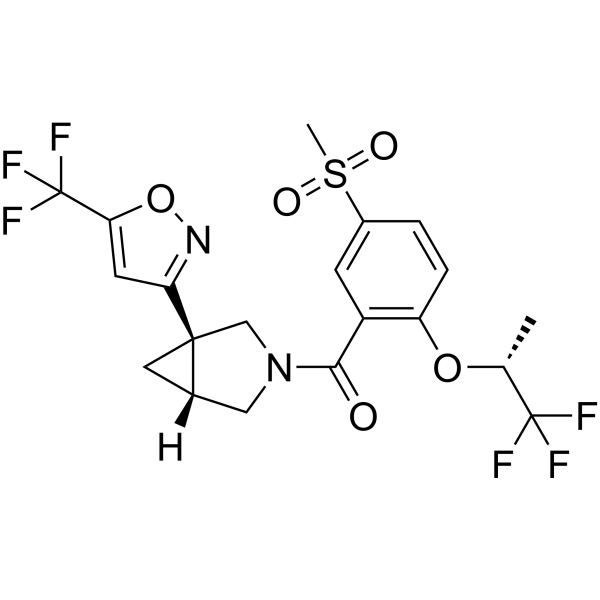
HY-138935
Iclepertin -

HY-109067AR
Opiranserin hydrochloride (Standard) -
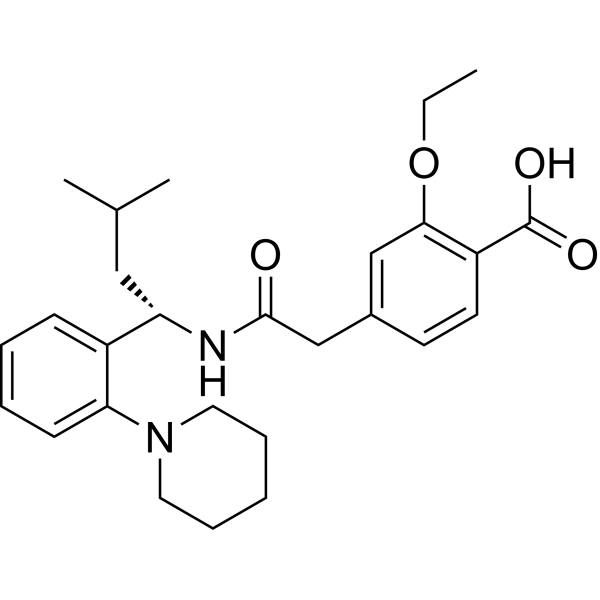
HY-15209
Repaglinide -
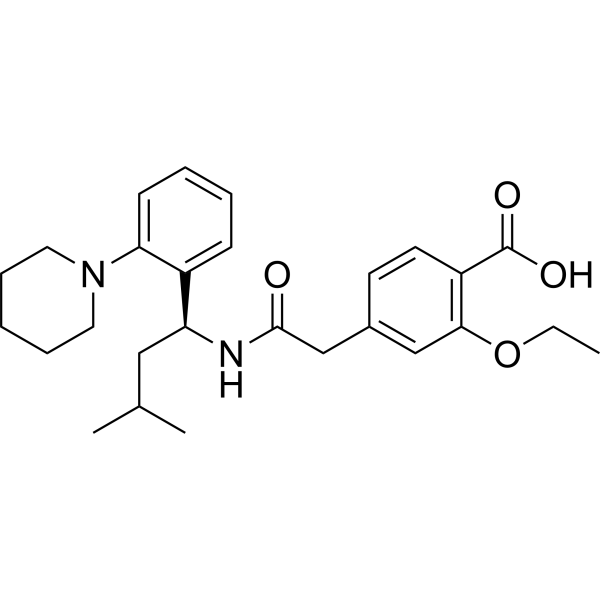
HY-15209R
Repaglinide (Standard) -
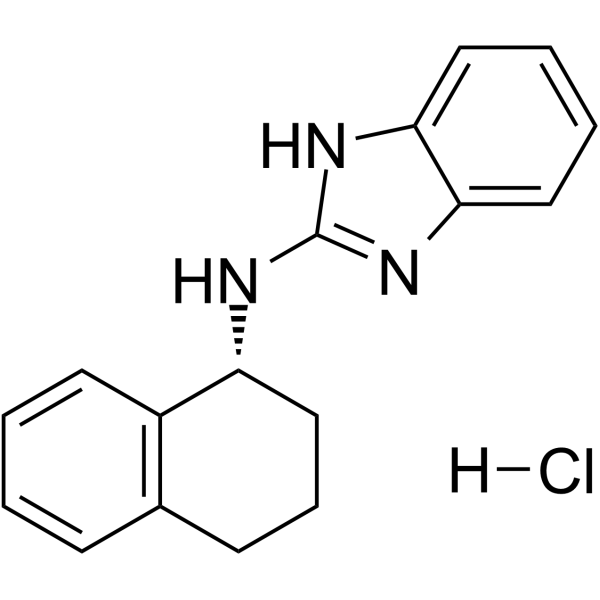
HY-110105
NS8593 hydrochloride -
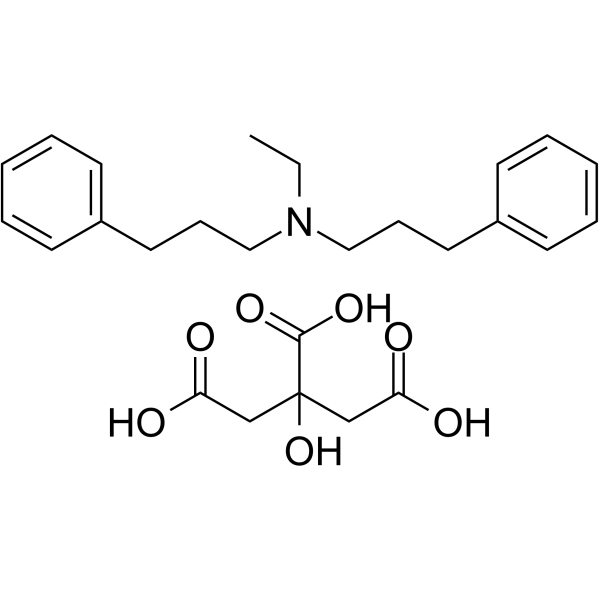
HY-B0500
Alverine citrate -
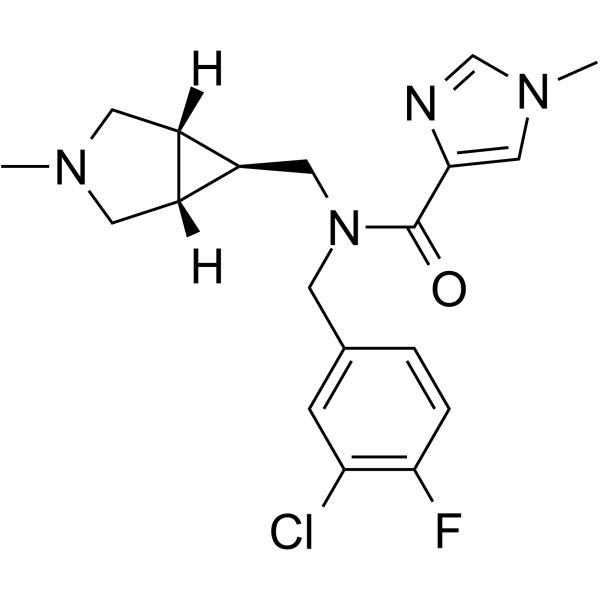
HY-10716A
PF-03463275 -

HY-126486
AVE1231


Biological Activity
Description
IC50 & Target
[2]|
P2X3 Receptor |
5-HT2A Receptor |
GlyT2 0.86 μM (IC50) |
rP2X3 0.87 μM (IC50) |
5-HT2A Receptor 1.3 μM (IC50) |
In Vivo
Opiranserin hydrochloride (80 mg/kg, p.o.) reduced mechanical allodynia in a rat spinal nerve ligation model[4].
MedChemExpress (MCE) has not independently confirmed the accuracy of these methods. They are for reference only.


Chemical Information
-
CAS No. 1440796-75-7
-
Appearance Solid
-
Molecular Weight 430.97
-
Formula C21H35ClN2O5
-
Color White to off-white
-
SMILES
O=C(C1=CC(OC)=C(OCCCC)C(OC)=C1)NCC2(CCOCC2)N(C)C.[H]Cl
-
Synonyms
VVZ-149 hydrochloride
-
Shipping
Room temperature in continental US; may vary elsewhere.
-
Storage
4°C, sealed storage, away from moisture
* In solvent : -80°C, 6 months; -20°C, 1 month (sealed storage, away from moisture)


Solvent & Solubility
In Vitro:
DMSO : 50 mg/mL (116.02 mM; Need ultrasonic; Hygroscopic DMSO has a significant impact on the solubility of product, please use newly opened DMSO)
Please refer to the solubility information to select the appropriate solvent. Once prepared, please aliquot and store the solution to prevent product inactivation from repeated freeze-thaw cycles.
Storage method and period of stock solution: -80°C, 6 months; -20°C, 1 month (sealed storage, away from moisture). When stored at -80°C, please use it within 6 months. When stored at -20°C, please use it within 1 month.
Please refer to the solubility information to select the appropriate solvent. Once prepared, please aliquot and store the solution to prevent product inactivation from repeated freeze-thaw cycles.
Storage method and period of stock solution: -80°C, 6 months; -20°C, 1 month (sealed storage, away from moisture). When stored at -80°C, please use it within 6 months. When stored at -20°C, please use it within 1 month.
Concentration (start) × Volume (start) = Concentration (final) × Volume (final)
In Vivo:
Select the appropriate dissolution method based on your experimental animal and administration route.
- For the following dissolution methods, please ensure to first prepare a clear stock solution using an In Vitro approach and then sequentially add co-solvents:
- To ensure reliable experimental results, the clarified stock solution can be appropriately stored based on storage conditions. As for the working solution for In Vivo experiments, it is recommended to prepare freshly and use it on the same day.
- The percentages shown for the solvents indicate their volumetric ratio in the final prepared solution. If precipitation or phase separation occurs during preparation, heat and/or sonication can be used to aid dissolution.
Add each solvent one by one: 10% DMSO 40% PEG300 5% Tween-80 45% Saline
Solubility: ≥ 2.5 mg/mL (5.80 mM); Clear solution
This protocol yields a clear solution of ≥ 2.5 mg/mL (saturation unknown).
Taking 1 mL working solution as an example, add 100 μL DMSO stock solution (25.0 mg/mL) to 400 μL PEG300, and mix evenly; then add 50 μL Tween-80 and mix evenly; then add 450 μL Saline to adjust the volume to 1 mL.
Preparation of Saline: Dissolve 0.9 g sodium chloride in ddH₂O and dilute to 100 mL to obtain a clear Saline solution.
Add each solvent one by one: 10% DMSO 90% (20% SBE-β-CD in Saline)
Solubility: ≥ 2.5 mg/mL (5.80 mM); Clear solution
This protocol yields a clear solution of ≥ 2.5 mg/mL (saturation unknown).
Taking 1 mL working solution as an example, add 100 μL DMSO stock solution (25.0 mg/mL) to 900 μL 20% SBE-β-CD in Saline, and mix evenly.
Preparation of 20% SBE-β-CD in Saline (4°C, storage for one week): 2 g SBE-β-CD powder is dissolved in 10 mL Saline, completely dissolve until clear.
In Vivo Dissolution Calculator
Please enter the basic information of animal experiments:
-
-
-
-
Recommended: Prepare an additional quantity of animals to account for potential losses during experiments.
Please enter your animal formula composition:
-
%DMSO +
Recommended: Keep the proportion of DMSO in working solution below 2% if your animal is weak.
-
%+
-
+%Tween-80 + +
-
%Saline +
The co-solvents required include: DMSO, . All of co-solvents are available by MedChemExpress (MCE). , Tween 80. All of co-solvents are available by MedChemExpress (MCE).
Working solution concentration: 0.22 mg/mL
Method for preparing stock solution: mg drug dissolved in μL DMSO. Stock solution concentration: mg/mL. * In solvent : -80°C, 6 months; -20°C, 1 month (sealed storage, away from moisture)
1. Take μL DMSO stock solution;
2. Add μL .
μL , mix evenly;
3. Then add μL Tween 80, mix evenly;
4. Then add μL
Please ensure that the stock solution in the first step is dissolved to a clear state, and add co-solvents in sequence. You can use ultrasonic heating (ultrasonic cleaner, recommended frequency 20-40 kHz), vortexing, etc. to assist dissolution.


Purity & Documentation
-
Data Sheet (273 KB)
-
SDS (252 KB)
- English - EN (252 KB)
- Français - FR (252 KB)
- Deutsch - DE (252 KB)
- Norwegian - NO (252 KB)
- Español - ES (252 KB)
- Swedish - SV (252 KB)
- Italian - IT (252 KB)
- Korean - KR (252 KB)
- Portuguese - PT (252 KB)
-
Handling Instructions (2659 KB)
References
[1]. Oh J, et al. Safety, Tolerability, and Pharmacokinetic Characteristics of a Novel Nonopioid Analgesic, VVZ-149 Injections in Healthy Volunteers: A First-in-Class, First-in-Human Study. J Clin Pharmacol. 2018 Jan;58(1):64-73. [Content Brief]
[2]. Nedeljkovic SS, et al. Randomised, double-blind, parallel group, placebo-controlled study to evaluate the analgesic efficacy and safety of VVZ-149 injections for postoperative pain following laparoscopic colorectal surgery. BMJ Open. 2017 Feb 17;7(2):e011035. [Content Brief]
[3]. Pang MH, et al. A series of case studies: practical methodology for identifying antinociceptive multi-target drugs. Drug Discov Today. 2012 May;17(9-10):425-34. [Content Brief]
[4]. Christopher L Cioffi. Inhibition of Glycine Re-Uptake: A Potential Approach for Treating Pain by Augmenting Glycine-Mediated Spinal Neurotransmission and Blunting Central Nociceptive Signaling. Biomolecules. 2021 Jun 10;11(6):864. [Content Brief]


Complete Stock Solution Preparation Table
Please refer to the solubility information to select the appropriate solvent. Once prepared, please aliquot and store the solution to prevent product inactivation from repeated freeze-thaw cycles.
Storage method and period of stock solution: -80°C, 6 months; -20°C, 1 month (sealed storage, away from moisture). When stored at -80°C, please use it within 6 months. When stored at -20°C, please use it within 1 month.
| Optional Solvent | Concentration Solvent Mass | 1 mg | 5 mg | 10 mg | 25 mg |
|---|---|---|---|---|---|
| DMSO | 1 mM | 2.3203 mL | 11.6017 mL | 23.2035 mL | 58.0087 mL |
| 5 mM | 0.4641 mL | 2.3203 mL | 4.6407 mL | 11.6017 mL | |
| 10 mM | 0.2320 mL | 1.1602 mL | 2.3203 mL | 5.8009 mL | |
| 15 mM | 0.1547 mL | 0.7734 mL | 1.5469 mL | 3.8672 mL | |
| 20 mM | 0.1160 mL | 0.5801 mL | 1.1602 mL | 2.9004 mL | |
| 25 mM | 0.0928 mL | 0.4641 mL | 0.9281 mL | 2.3203 mL | |
| 30 mM | 0.0773 mL | 0.3867 mL | 0.7734 mL | 1.9336 mL | |
| 40 mM | 0.0580 mL | 0.2900 mL | 0.5801 mL | 1.4502 mL | |
| 50 mM | 0.0464 mL | 0.2320 mL | 0.4641 mL | 1.1602 mL | |
| 60 mM | 0.0387 mL | 0.1934 mL | 0.3867 mL | 0.9668 mL | |
| 80 mM | 0.0290 mL | 0.1450 mL | 0.2900 mL | 0.7251 mL | |
| 100 mM | 0.0232 mL | 0.1160 mL | 0.2320 mL | 0.5801 mL |


Opiranserin hydrochloride Related Classifications
HY-109067A Related Classifications
 Powered by Bioz