



Isotope-Labeled Compounds
Isotope-labeled compounds are chemical substances in which some atoms in their molecules are replaced by isotope atoms. The range of stable isotope products can cover from gases to complex molecules. Isotope-labeled compounds could provide a site-specific investigation of structures, making molecules easily detectable by mass spectrometry and NMR, and maintaining the physico-chemical properties of the target molecule at the same time.
MCE isotope-labeled compounds are all stable isotope-labeled compounds and are non-radioactive labeled substances. MCE isotope-labeled compounds are unique tools for identifying and understanding biological and chemical processes. Stable isotope-labeled products are now getting more and more popular among scientists. The scope of application is gradually penetrating into various scientific fields, such as life sciences, food and medicine, agriculture, environment, geology, etc. Stable isotope-labeled compounds have a wide range of applications in the Life Science areas, such as Metabolomics, Proteomics, Clinical studies, Deuterium drugs, etc.
All Product Categories
-
Isotope-Labeled Compounds Related Products (11051)
Related Products (11051)

-
16:0-18:1 PA-d31 sodium
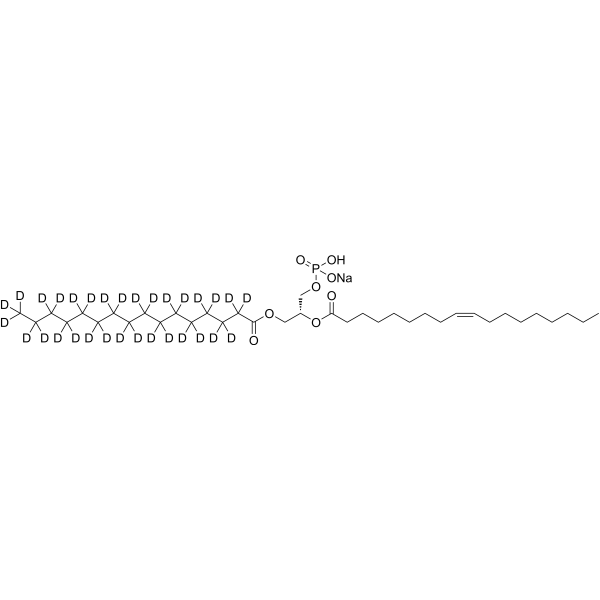 0 Images16:0-18:1 PA-d31 (sodium) is deuterium labeled 16:0-18:1 PA (sodium).
-
Mono-(2-ethylhexyl) phthalate-d4
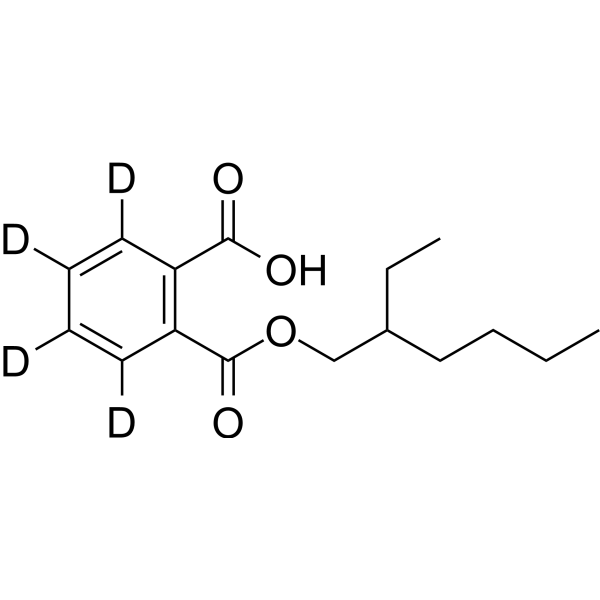 0 ImagesSynonyms: MEHP-d4; Phthalic acid mono-2-ethylhexyl ester-d4Mono-(2-ethylhexyl) phthalate-d4 is a deuterium labeled Mono-(2-ethylhexyl) phthalate (HY-W018392). Mono-(2-ethylhexyl) phthalate (MEHP) is a major bioactive metabolite of diethylhexyl phthalate (DEHP). Mono-(2-ethylhexyl) phthalate can promote fatty acid synthesis in hepatocytes by regulating the expression of relevant genes and proteins, contributing to non-alcoholic fatty liver disease (NAFLD).
-
Tetrahydrodeoxycorticosterone-d3
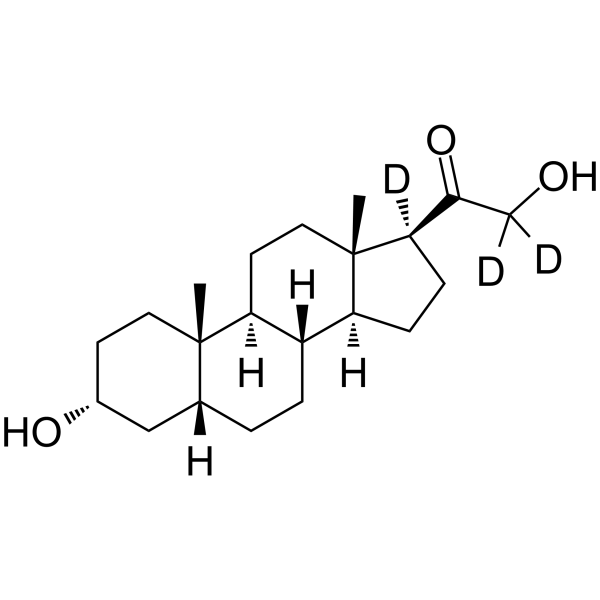 0 ImagesSynonyms: Tetrahydro-11-deoxycorticosterone-d3Tetrahydrodeoxycorticosterone-d3 is the deuterium labeled Tetrahydrodeoxycorticosterone. Tetrahydrodeoxycorticosterone, an neurosteroid, is a potent positive allosteric modulator (PAM) of GABAA receptor. Tetrahydrodeoxycorticosterone has potent neuroinhibitory properties.
-
N-Palmitoyl-D-sphingomyelin-d9
 0 ImagesSynonyms: Sphingomyelin 16:0-d9N-Palmitoyl-D-sphingomyelin-d9 (Sphingomyelin 16:0-d9) is deuterium labeled N-Palmitoyl-D-sphingomyelin. N-Palmitoyl-D-sphingomyelin (Sphingomyelin 16:0) (Compound SM-03) can be used for the synthesis of lipid nanoparticles.
-
Saccharin-d4
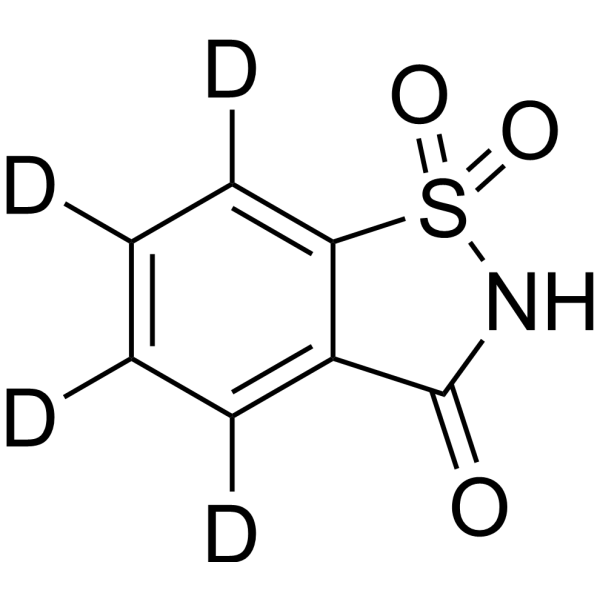 0 ImagesSaccharin-d4 is the deuterium labeled Saccharin. Saccharin is an orally active, non-caloric artificial sweeteners (NAS). Saccharin has bacteriostatic and microbiome-modulating properties.
-
1-Stearoyl-2-arachidonoyl-sn-glycero-3-PE-d11
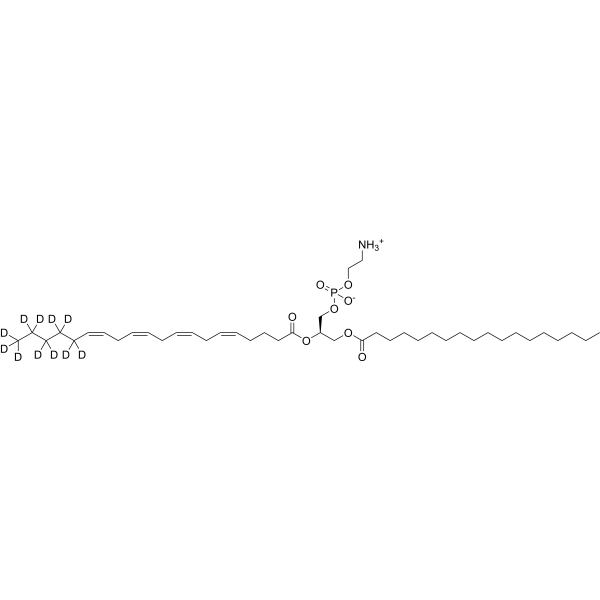 0 ImagesSynonyms: SAPE-d111-Stearoyl-2-arachidonoyl-sn-glycero-3-PE-d11 is the deuterium labeled 1-Stearoyl-2-arachidonoyl-sn-glycero-3-PE.
-
Mavacamten-d7
 0 ImagesCat. No.: HY-109037S4Purity: 99.68%Synonyms: MYK461-d7; SAR439152-d7Mavacamten-d7 (MYK461-d7) is deuterium labeled Mavacamten. Mavacamten (MYK461) is an orally active modulator of cardiac myosin, with IC50s of 490, 711 nM for bovine cardiac and human cardiac, respectively.
-
2-Hydroxy-4-(methylsulfinyl)butanoic acid-d5
 0 ImagesCat. No.: HY-W967508SPurity: 98.12%2-Hydroxy-4-(methylsulfinyl)butanoic acid-d5 is a deuterium labeled 2-Hydroxy-4-(methylsulfinyl)butanoic acid.
-
[Pyr1]-Apelin-13, Pro(13C5,15N) TFA
![[Pyr1]-Apelin-13, Pro(13C5,15N) TFA](https://file.medchemexpress.com/product_pic/hy-p1033s1.gif "Click to View [Pyr1]-Apelin-13, Pro(13C5,15N) TFA Product Detail") 0 ImagesCat. No.: HY-P1033S1Purity: 99.85%[Pyr1]-Apelin-13, Pro(13C5,15N) (TFA) is the 13C and 15N labeled isotope of [Pyr1]-Apelin-13(HY-P1033).[Pyr1]-Apelin-13 is a potent and selective endogenous apelin receptor agonist.
0 ImagesCat. No.: HY-P1033S1Purity: 99.85%[Pyr1]-Apelin-13, Pro(13C5,15N) (TFA) is the 13C and 15N labeled isotope of [Pyr1]-Apelin-13(HY-P1033).[Pyr1]-Apelin-13 is a potent and selective endogenous apelin receptor agonist.
-
Docosanoic acid-d43
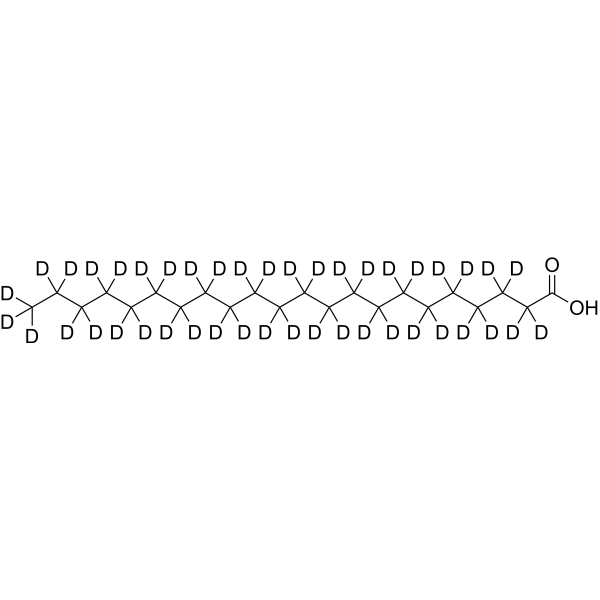 0 ImagesSynonyms: Behenic acid-d43Docosanoic acid-d43 (Behenic acid-d43) is the deuterium labeled Docosanoic acid (HY-W013049). Docosanoic acid (Behenic acid) is a long-chain saturated fatty acid. Docosanoic acid inhibits the double-stranded DNA (dsDNA) binding activity of p53 DNA binding domain, with a Kd of 12 nM. Docosanoic acid has low bioavailability and can increase cholesterol in humans.
-
Glucosylsphingosine-d5
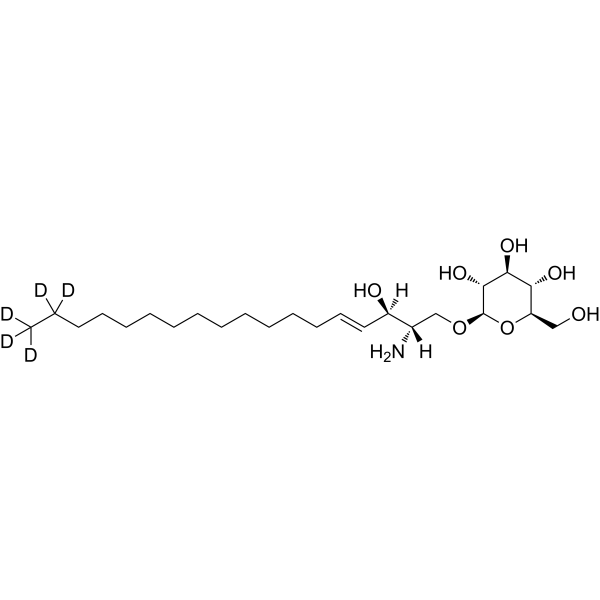 0 ImagesCat. No.: HY-N7745S1Purity: 99.0%Synonyms: Glucopsychosine-d5; Lyso-Gb1-d5; Lyso-GL1-d5Glucosylsphingosine-d5 is the deuterium labeled Glucosylsphingosine.
-
Bentazone-d7
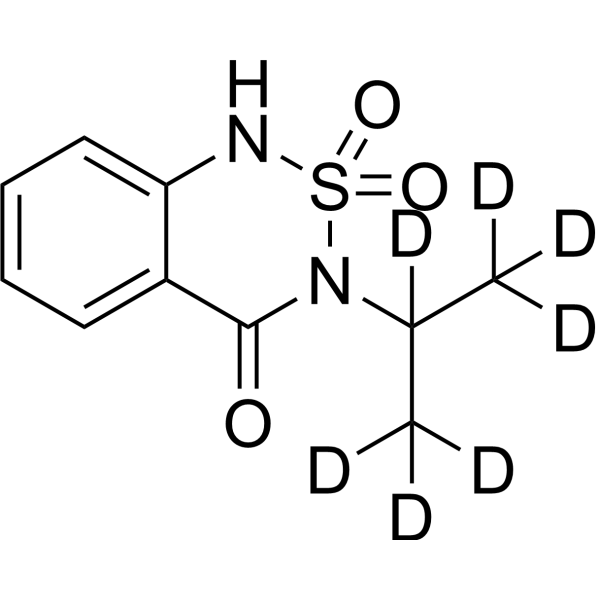 0 ImagesBentazone-d7 is the deuterated-labeled Bentazone (HY-B2039). Bentazone is a selective post-emergence herbicide and a Photosystem II inhibitor targeting the quinone B binding site, with activity against broadleaf weeds. Bentazone interferes with photosynthetic electron transport, blocks sunlight-dependent energy production, and acts as a phytotoxin to induce leaf damage, growth inhibition, lipid peroxidation, and reduced chlorophyll content.
-
5α-Androstenone-d4
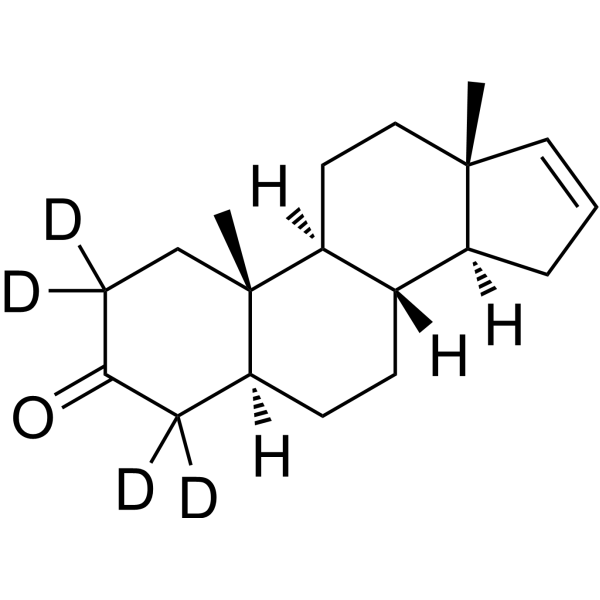 0 ImagesCat. No.: HY-118566SPurity: 99.98%5α-Androstenone-d4 is the deuterium labeled 5α-Androstenone.
-
Citric acid-d4-1
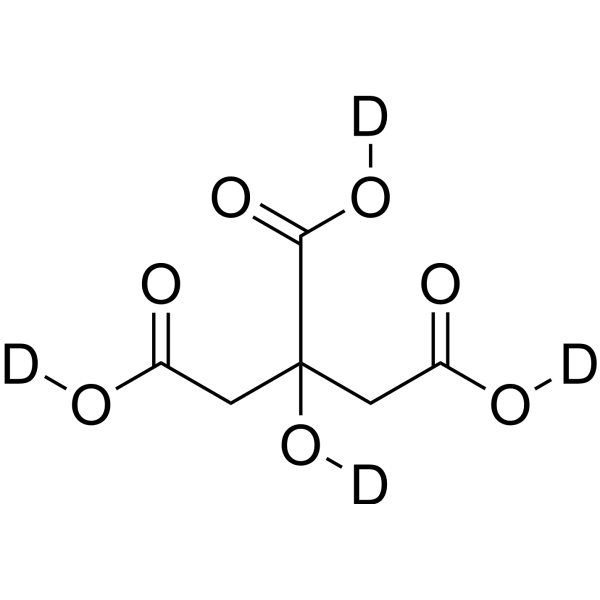 0 ImagesCat. No.: HY-N1428S6Citric acid-d4-1 is deuterated labeled Citric acid (HY-N1428). Citric acid is a natural preservative and food tartness enhancer. Citric acid induces apoptosis and cell cycle arrest at G2/M phase and S phase in HaCaT cells. Citric acid cause oxidative damage of the liver by means of the decrease of antioxidative enzyme activities. Citric acid is also an acidulant, emulsifier, sequestrant and buffering agent widely used across many industries.
-
Brexpiprazole-d8-1
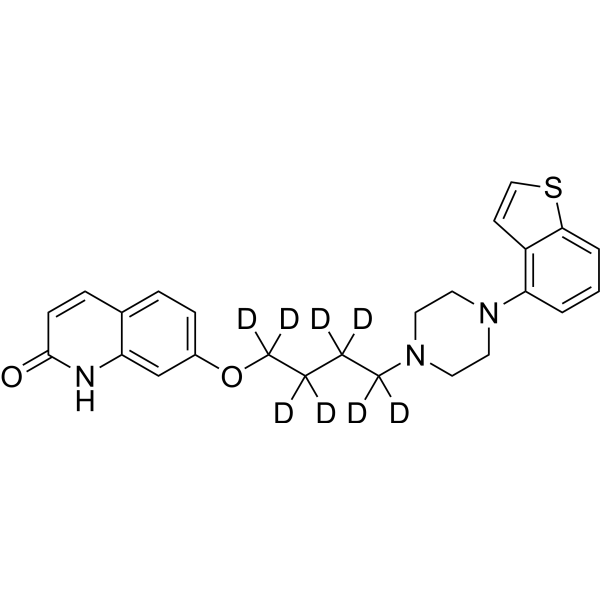 0 ImagesCat. No.: HY-15780S1CAS No.: 1427049-19-1Synonyms: OPC-34712-d8-1Brexpiprazole-d8-1 (OPC-34712-d8-1) is the deuterium labeled Brexpiprazole (HY-15780). Brexpiprazole (OPC-34712), an atypical orally active antipsychotic agent, is a partial agonist of human 5-HT1A and dopamine D2L receptor with Kis of 0.12 nM and 0.3 nM, respectively. Brexpiprazole is also a 5-HT2A receptor antagonist with a Ki of 0.47 nM. Brexpiprazole also shows potent antagonist activity at human noradrenergic α1B (Ki=0.17 nM) and α2C receptors (Ki=0.59 nM).
-
Methyl carbamate-d3
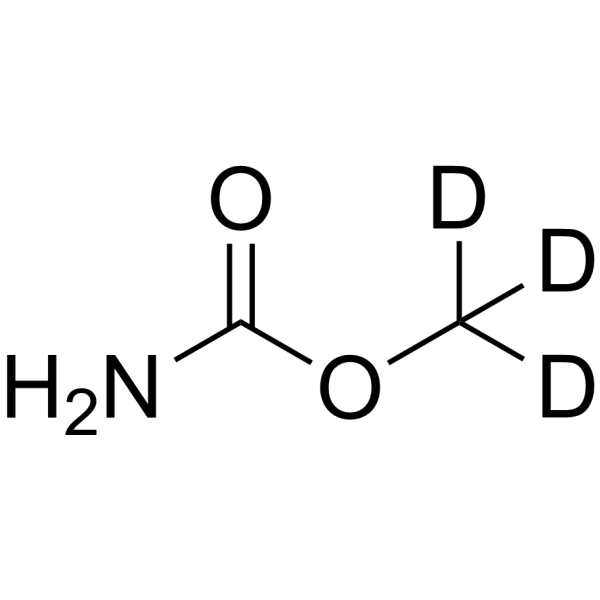 0 ImagesMethyl carbamate-d3 is the deuterium labeled Methyl carbamate.
-
DL-Tryptophan-d3
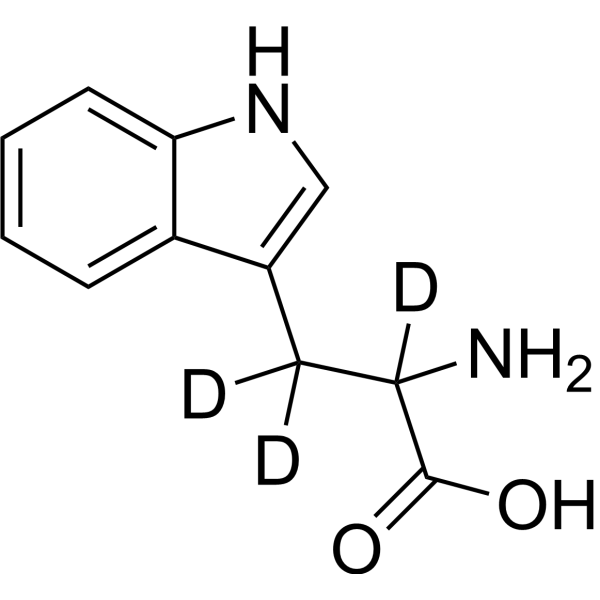 0 ImagesSynonyms: (±)-Tryptophan-d3DL-Tryptophan-d3 is the deuterium labeled DL-Tryptophan. DL-Tryptophan ((±)-Tryptophan) is an orally effective aryl hydrocarbon receptor (AhR) agonist. DL-Tryptophan reduces the expression of pro-inflammatory cytokines IL-6, TNF-α, IL-1β, as well as liver injury markers aspartate aminotransferase and alanine aminotransferase, and alleviates hepatocyte apoptosis (apoptosis) in sepsis induced by cecal ligation and puncture. DL-Tryptophan can be used in the research of sepsis-related acute liver injury.
-
Isoeugenol-d3
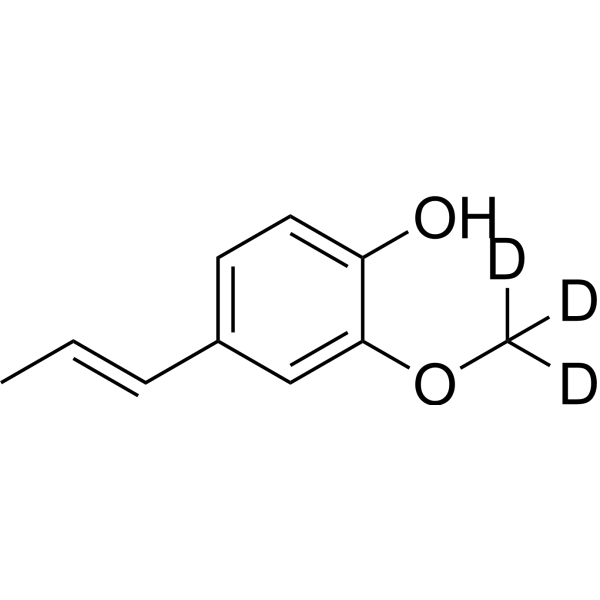 0 ImagesCat. No.: HY-N1952SSynonyms: iso-Eugenol-d3Isoeugenol-d3 is deuterated labeled Isoeugenol (HY-N1952). Isoeugenol is an essential oil constituent of nutmeg, clove, and cinnamon. Isoeugenol inhibits growth of Escherichia coli and Listeria innocua with MICs of 0.6 mg/mL and 1 mg/mL, respectively.
-
Fluoxetine-d5 hydrochloride
 0 ImagesSynonyms: LY 110140-d5Fluoxetine-d5 (hydrochloride) is the deuterium labeled Fluoxetine hydrochloride (LY 110140).
-
Bisphenol A-13C12
 0 ImagesCat. No.: HY-18260S2CAS No.: 263261-65-0Bisphenol A-13C12 is the 13C-labeled Bisphenol A (HY-18260). Bisphenol A is a phenolic, organic synthetic compound widely used in the production of polycarbonate plastics and epoxy resins. Bisphenol A is a reproductive, developmental, and systemic toxicant, often classified as an endocrine-disrupting compound (EDC). Bisphenol A is associated with many diseases, including cancers, cardiovascular diseases, respiratory diseases, diabetes, kidney diseases, obesity, and reproductivedisorders.



