



Isotope-Labeled Compounds
Isotope-labeled compounds are chemical substances in which some atoms in their molecules are replaced by isotope atoms. The range of stable isotope products can cover from gases to complex molecules. Isotope-labeled compounds could provide a site-specific investigation of structures, making molecules easily detectable by mass spectrometry and NMR, and maintaining the physico-chemical properties of the target molecule at the same time.
MCE isotope-labeled compounds are all stable isotope-labeled compounds and are non-radioactive labeled substances. MCE isotope-labeled compounds are unique tools for identifying and understanding biological and chemical processes. Stable isotope-labeled products are now getting more and more popular among scientists. The scope of application is gradually penetrating into various scientific fields, such as life sciences, food and medicine, agriculture, environment, geology, etc. Stable isotope-labeled compounds have a wide range of applications in the Life Science areas, such as Metabolomics, Proteomics, Clinical studies, Deuterium drugs, etc.
All Product Categories
-
Isotope-Labeled Compounds Related Products (11100)
Related Products (11100)

-
1-Methyl-5-mercapto-1,2,3,4-tetrazole-d3
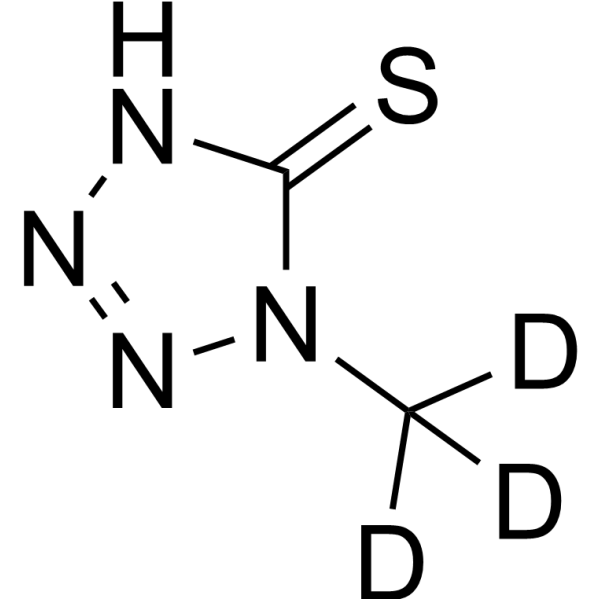 0 Images1-Methyl-5-mercapto-1,2,3,4-tetrazole-d3 is the deuterium labeled 1-Methyl-1H-tetrazole-5-thiol.
-
Nordoxepin-d3 hydrochloride
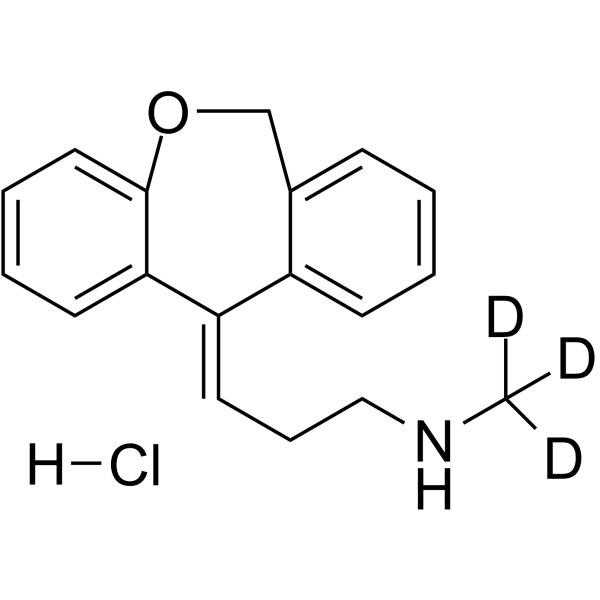 0 ImagesSynonyms: Desmethyldoxepin-d3 hydrochlorideNordoxepin-d3 hydrochloride (Desmethyldoxepin-d3 hydrochloride) is the deuterated-labeled Nordoxepin hydrochloride (HY-100046). Nordoxepin hydrochloride (Desmethyldoxepin hydrochloride) is an active metabolite of the tricyclic antidepressant Doxepin (HY-B0725A). Nordoxepin hydrochloride can be used in research on depression-related disorders.
-
N-Arachidonylglycine-d8
 0 ImagesSynonyms: NA-Gly-d8N-Arachidonylglycine-d8 is a deuterated labeled N-Arachidonylglycine. N-Arachidonylglycine (NA-Gly), a carboxylic analog of the endocannabinoid anandamide (AEA), is a GPR18 agonist (EC50 = 44.5 nM). Unlike AEA, N-Arachidonylglycine has no activity at either CB1 or CB2 receptors. N-Arachidonylglycine inhibits GLYT2 (IC50 = 5.1 μM). N-Arachidonylglycine also is an effective activator of endometrial cell migration.
-
D-Mannitol-d8
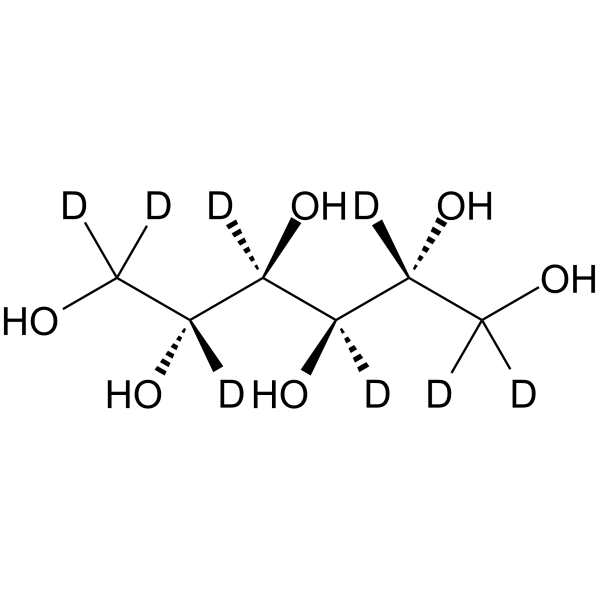 0 ImagesCat. No.: HY-N0378SPurity: 99.86%Synonyms: Mannitol-d8; Mannite-d8D-Mannitol-d8 is the deuterium labeled D-Mannitol (HY-N0378). D-Mannitol (Mannitol) is an oral, resistant sugar widely used in the food and pharmaceutical industries to promote the absorption and retention of calcium and magnesium through cecal fermentation, while acting as a osmotic diuretic to reduce tissue edema. D-Mannitol can enhance brown fat formation, improve insulin effect, reduce blood sugar levels, And through the start the β3-adrenergic receptor (β3-AR), PGC1α and PKA induced by means of white fat cells into brown fat cells. D-Mannitol is commonly used to maintain osmotic pressure between the plant cytoplasm and the culture medium and protect cells when the cell wall is weakened or even removed.
-
Metalaxyl-d6)
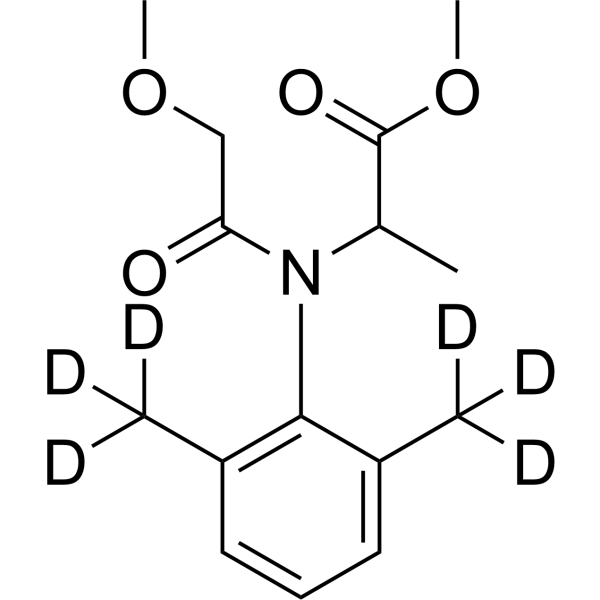 0 ImagesCat. No.: HY-B0843S1Purity: 99.04%Metalaxyl-d6 is the deuterium labeled Metalaxyl. Metalaxyl is a fungicide that inhibits protein synthesis in fungi. Metalaxyl inhibits the growth of potato blight (P. infestans) fungal isolates from Serbian potato fields (EC50s=0.3-3.9 μg/mL).
-
Triphenyl phosphate-d15
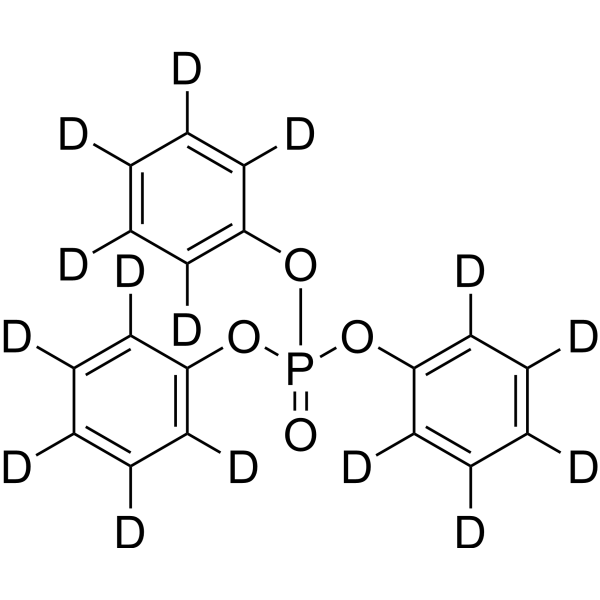 0 ImagesSynonyms: Celluflex TPP-d15; DHPF 005-d15; Disflamol TP-d15; Disflamoll TP-d15; NSC 57868-d15; Phenyl phosphate ((PhO)3PO)-d15; Phoscon FR 903N-d15Triphenyl phosphate-d15 is the deuterium labeled Triphenyl phosphate. Triphenyl phosphate is an orally active, blood-brain barrier-permeable aryl organophosphate flame retardant and endocrine disruptor. Triphenyl phosphate disrupts mitochondrial dynamic balance through oxidative stress, induces excessive mitophagy and apoptosis, and ultimately leads to myocardial fibrosis. In the brain, Triphenyl phosphate activates the NF-κB inflammatory pathway by disrupting the gut microbiota, alters tryptophan metabolism and elevates neurotoxins, thereby inducing anxiety- and depression-like behaviors. In the skeletal and reproductive systems, Triphenyl phosphate inhibits osteoblast differentiation and induces germ cell apoptosis by suppressing the MAPK/ERK pathway and activating the JNK signal, respectively. In adipose and placental tissues, Triphenyl phosphate promotes lipid accumulation by activating the PI3K/AKT-PPARγ axis, and disrupts placental metabolism via the MAOA/ROS/NF-κB cascade, impairing neurodevelopment of offspring.
-
Procymidox-d5
 0 ImagesCat. No.: HY-142813SPurity: 98.83%Procymidox-d5 () is the deuterium labeled Procymidox.
-
D-Glucose-6-13C
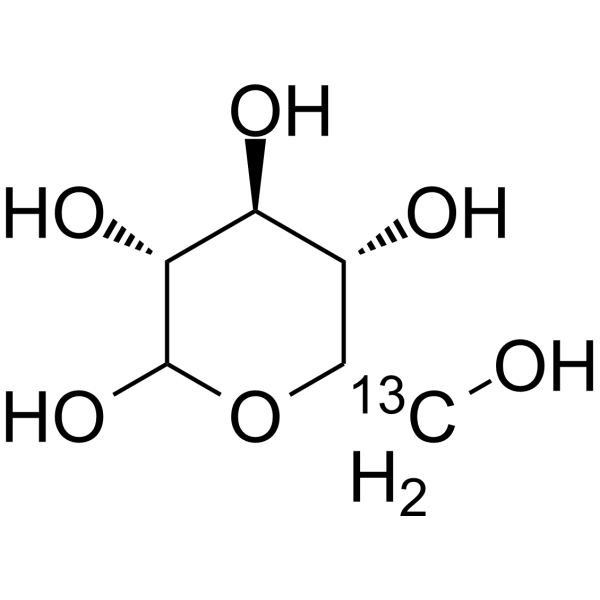 0 ImagesSynonyms: Glucose-6-13C; D-(+)-Glucose-6-13C; Dextrose-6-13CD-Glucose-6-13C is the 13C labeled D-Glucose. D-Glucose (Glucose), a monosaccharide, is an important carbohydrate in biology. D-Glucose is a carbohydrate sweetener and critical components of the general metabolism, and serve as critical signaling molecules in relation to both cellular metabolic status and biotic and abiotic stress response.
-
Acetate-d7 ammonium
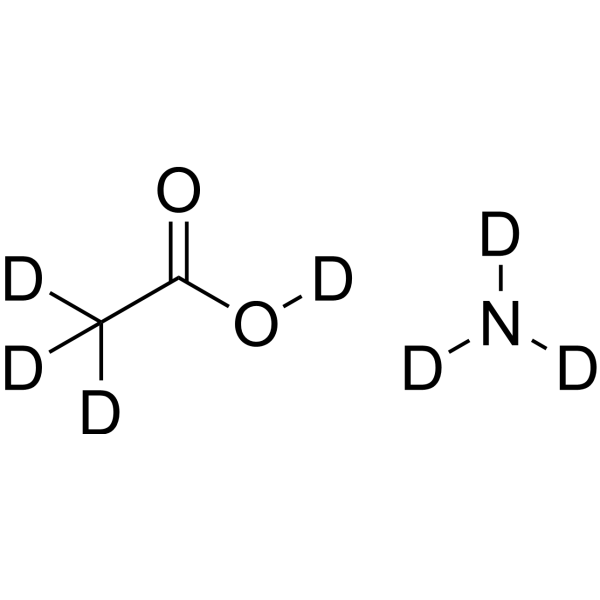 0 ImagesAcetate-d7 (ammonium) is the deuterium labeled Ammonium acetate.
-
Danicamtiv-d3-1
 0 ImagesCat. No.: HY-109128S2Purity: 98.76%Synonyms: MYK-491-d3-1Danicamtiv-d3-1 (MYK-491-d3-1) is a deuterated labeled Danicamtiv (HY-109128). Danicamtiv (MYK-491), an inotropic agent, is a selective allosteric activator of cardiac myosin. Danicamtiv increases cardiac systolic function and preserves mechanical efficiency.
-
Isopentenyl pyrophosphate-13C2 ammonium
 0 ImagesCat. No.: HY-W654241Purity: 99.90%Isopentenyl pyrophosphate-13C2 is a deuterated labeled Isopentenyl pyrophosphate.
-
Biotin-d2-1
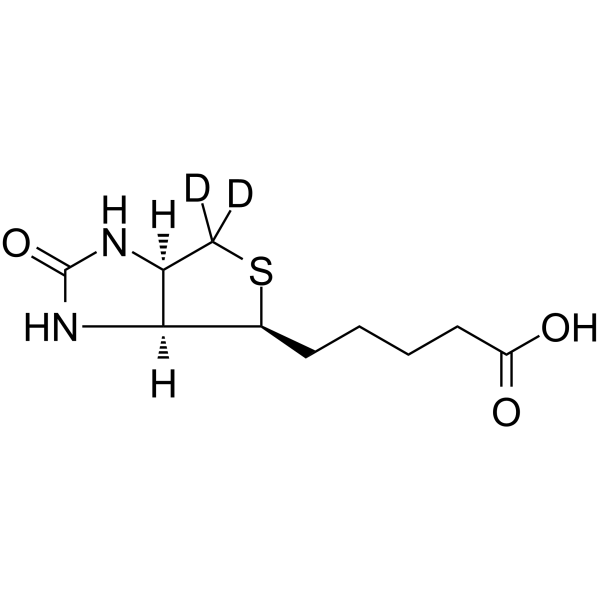 0 ImagesSynonyms: Vitamin B7 d2-1; Vitamin H d2-1; D-Biotin d2-1Biotin-d2-1 is the deuterium labeled Biotin. Biotin is an enzyme co-factor present in minute amounts in every living cell.
-
Sodium dimethyl phosphate-d6
 0 ImagesSodium dimethyl phosphate-d6 is the deuterium labeled Sodium dimethyl phosphate (HY-W793531).
-
Indole-3-carboxylic acid-d4
 0 ImagesCat. No.: HY-40161SCAS No.: 1258955-93-9Indole-3-carboxylic acid-d4 is deuterium labeled Indole-3-carboxylic acid. Indole-3-carboxylic acid is a normal urinary indolic tryptophan metabolite and has been found elevated in patients with liver diseases.
-
1-Bromo-2,3-dichlorobenzene-d3
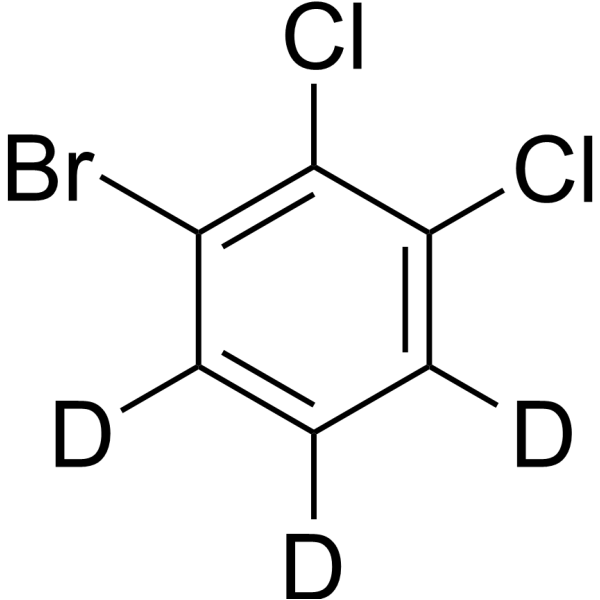 0 ImagesCat. No.: HY-W009719SCAS No.: 1219805-59-0Synonyms: 2,3-DICHLOROBROMOBENZENE-d31-Bromo-2,3-dichlorobenzene-d3 is the deuterium labeled 1-Bromo-2,3-dichlorobenzene.
-
Pentamidine-d4 dihydrochloride
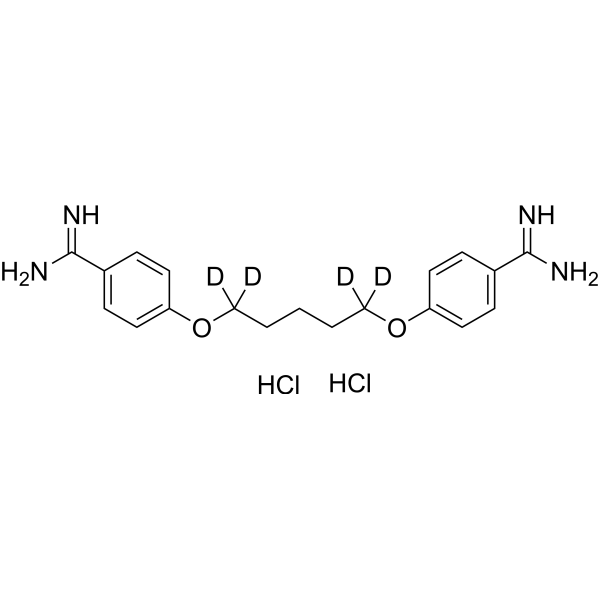 0 ImagesSynonyms: MP-601205-d4 dihydrochloridePentamidine-d4 (dihydrochloride) is the deuterium labeled Pentamidine dihydrochloride. Pentamidine dihydrochloride (MP-601205 dihydrochloride) is an antimicrobial agent and interferes with DNA biosynthetics. Pentamidine dihydrochloride inhibits parasite Leishmania infantum with an IC50 of 2.5 μM. Pentamidine dihydrochloride is a potent and selective protein tyrosine phosphatases (PTPases) and phosphatase of regenerating liver (PRL) inhibitor. Pentamidine dihydrochloride has the potential for Gambian trypanosomiasis, antimony-resistant leishmaniasis, and Pneumocystis carinii pneumonia treatment. Antitumor and antibacterial activities.
-
3-Epiglycyrrhetinic acid-d3
 0 ImagesCat. No.: HY-158995S1Purity: 98.17%Synonyms: 3α-Glycyrrhetic acid-d33-Epiglycyrrhetinic acid-d3 (3α-Glycyrrhetic acid-d3) is the deuterium-labeled 3-Epiglycyrrhetinic acid. 3-Epiglycyrrhetinic acid is a derivative of glycyrrhetic acid. Glycyrrhetic acid and its derivative are considered to have anti-inflammatory, anti-ulcer, and antiviral activities.
-
Adamantane-carboxylic Acid-d15
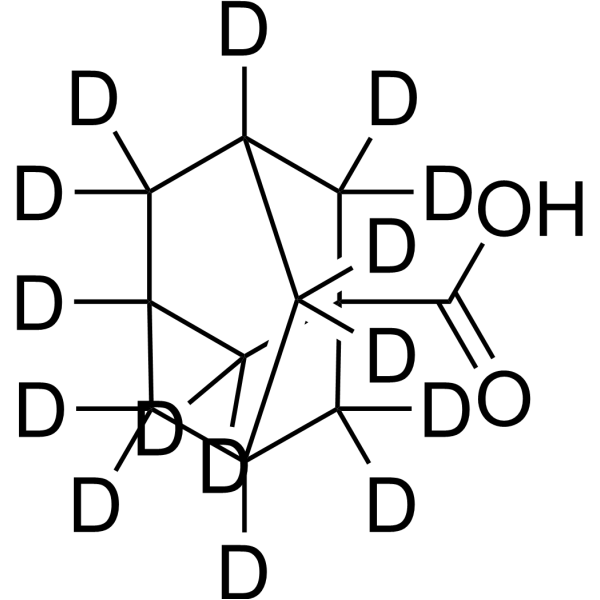 0 ImagesAdamantane-carboxylic Acid-d15 is the deuterium labeled Adamantane-1-carboxylic acid.
-
1-(2-Chloroethyl)-3-((1R,4R)-4-hydroxycyclohexyl)-1-nitrosourea-d4
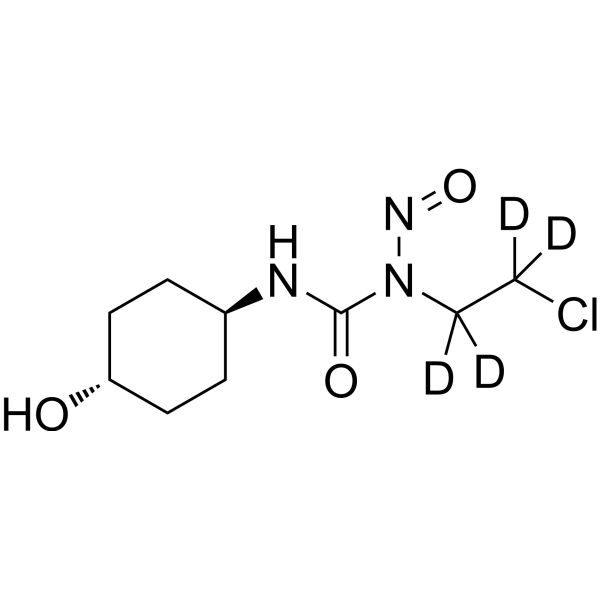 0 ImagesCat. No.: HY-143979SPurity: 99.0%trans-4’-Hydroxy CCNU Lomustine-d4 is the deuterium labeled trans-4’-Hydroxy CCNU Lomustine.
-
L-2-Aminobutyric acid-d6
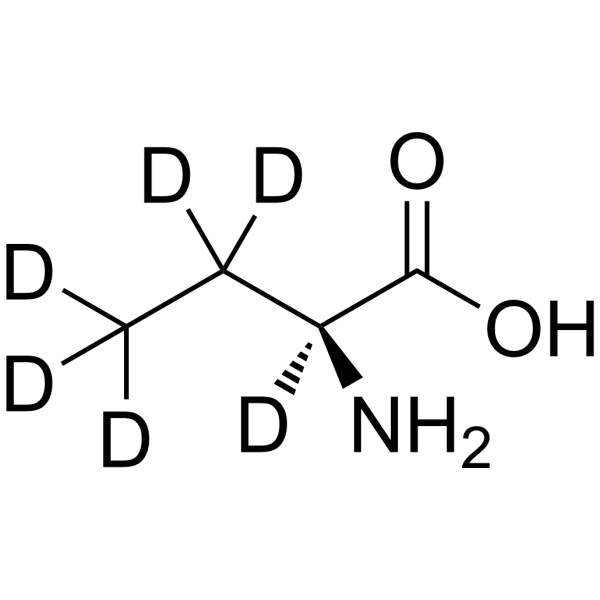 0 ImagesSynonyms: H-Abu-OH-d6L-2-Aminobutyric acid-d6 is the deuterium labeled L-2-Aminobutyric acid. L-2-Aminobutyric acid is a non-proteinogenic amino acid that exists in human tissues and body fluids. L-2-Aminobutyric acid is formed by the transamination of oxobutyric acid. L-2-Aminobutyric acid can serve as a precursor for anticonvulsant and anti-tuberculosis agents and is a key intermediate in the chemical and pharmaceutical industries.



