



Platelet-activating Factor Receptor (PAFR)
The platelet-activating factor receptor (PAFR) is a G-protein-coupled receptor involved in both normal physiological and numerous pathophysiological processes. PAFR responds to platelet-activating factor (PAF), a phospholipid mediator of cell-to-cell communication that exhibits diverse physiological effects. Stimulation of the PAFR via binding of platelet-activating factor (PAF) elicits diverse and potent biological activities and plays a profound role in acute inflammation, allergic disorders, endotoxic shock, and anaphylaxis. PAF is a potent and versatile mediator of inflammation that is produced by numerous cell types and tissues, and particularly by leukocytes.
All Product Categories
-
Platelet-activating Factor Receptor (PAFR) Inhibitors
(16)
View all products
-
Platelet-activating Factor Receptor (PAFR) Agonists
(7)
View all products
-
Platelet-activating Factor Receptor (PAFR) Antagonists
(51)
View all products
-
Platelet-activating Factor Receptor (PAFR) Activator
(1)
View all products
-
Platelet-activating Factor Receptor (PAFR) Control
(1)
View all products
-
Platelet-activating Factor Receptor (PAFR) Related Products (108)
Related Products (108)

-
Antibodies (2)
-
Homoeriodictyol 7-O-β-D-glucoside
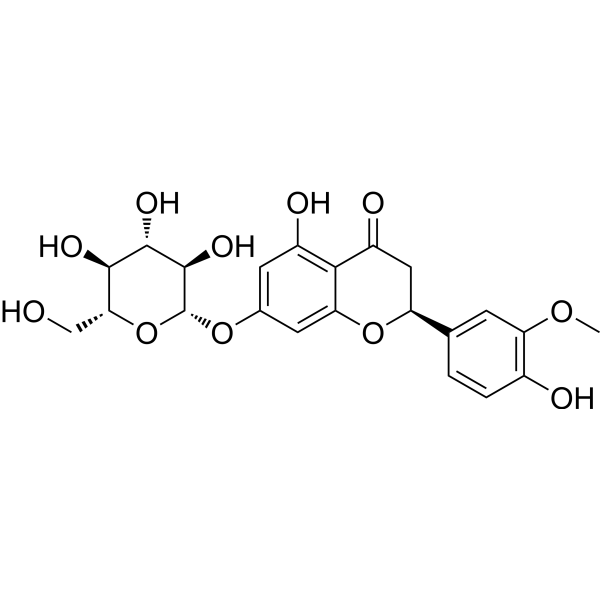 0 ImagesHomoeriodictyol 7-O-β-D-glucoside is a natural platelet-activating factor (PAF) antagonist. Homoeriodictyol 7-O-β-D-glucoside inhibits human and rabbit platelet aggregation induced by PAF, with an IC50 of 0.8 μM.
-
Yangambin
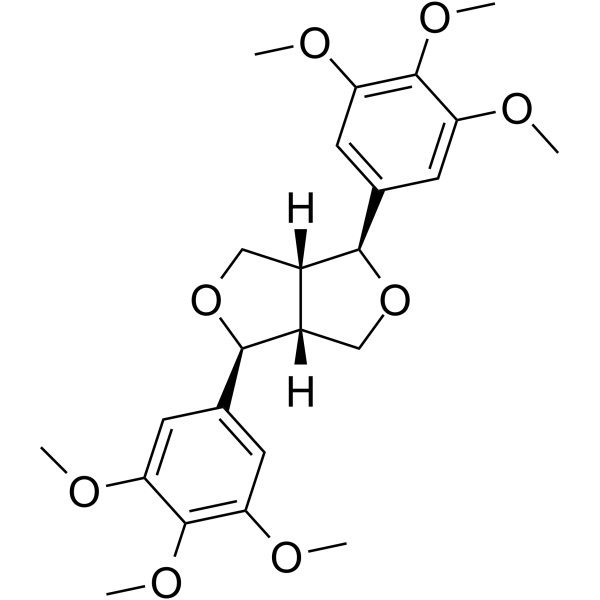 0 ImagesYangambin is a PAF receptor antagonist and UGT1A1/UGT1A3 inhibitor, with an IC50 of 29.7 μM and a Ki of 17.1 μM against human UGT1A1, and an IC50 of 56.5 μM and a Ki of 66.8 μM against human UGT1A3. Yangambin blocks PAF-mediated responses, inhibits LTB4-mediated neutrophil infiltration, and suppresses inflammatory events and anaphylactic contraction. Yangambin acts as a central nervous system inhibitor to reduce spontaneous activity, and also exhibits analgesic, anticonvulsant, antileishmanial, vasodilatory and hypotensive effects. Yangambin blocks voltage-gated Ca2+ channels, reduces the production of NO, TNF-α, IL-6 and PGE2 in cells, increases the production of IL-10, and exerts a protective effect against cardiovascular injury. Yangambin can be used in research related to allergies, cutaneous leishmaniasis, central nervous system diseases and cardiovascular diseases.
-
2-O-Ethyl PAF C-16
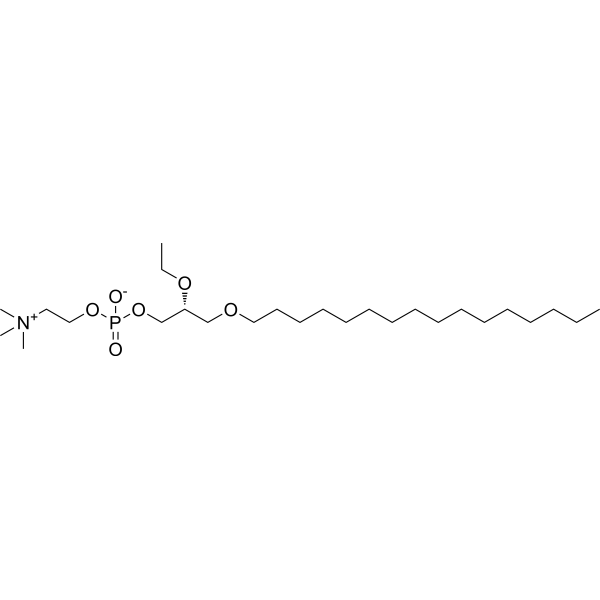 0 Images2-O-Ethyl PAF C-16 is a homolog of PAF and a competitive ligand for PAF receptor (Platelet-activating Factor Receptor (PAFR)). 2-O-Ethyl PAF C-16 inhibits the binding of the PAF antagonist WEB 2086 (HY-108634) to the PAF receptor with an IC50 of 21 nM.
-
Butanoyl PAF
 0 ImagesCat. No.: HY-W040221CAS No.: 85405-03-4Butanoyl PAF, a compound closely related to Azelaoyl PC (HY-134154), maintains over 10% of the agonist potency of platelet-activating factor (PAF). Butanoyl PAF's concentration in oxidized low-density lipoprotein surpasses that of enzymatically generated PAF by more than 100-fold.

-
Modipafant
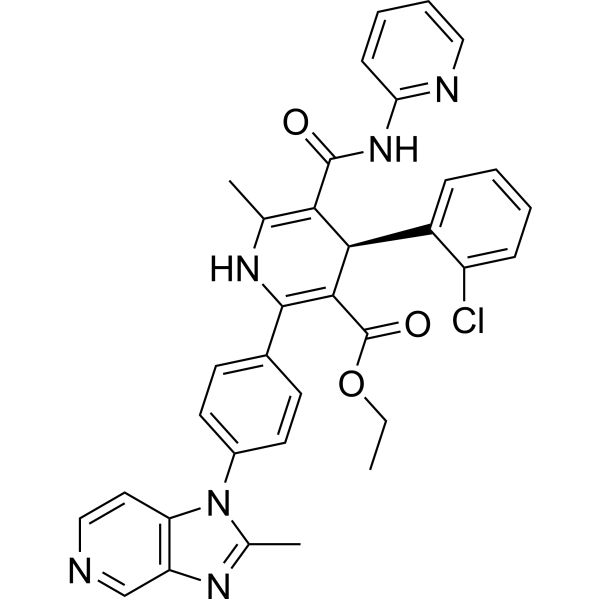 0 ImagesCat. No.: HY-108908ACAS No.: 122957-06-6Synonyms: UK-80067Modipafant (UK-80067), the (+)-enantiomer of UK-74505, is a potent, orally active, and selective platelet-activating factor (PAF) antagonist. Modipafant exhibits approximately double the intrinsic potency of UK-74505.
-
Apafant-d8
 0 ImagesCat. No.: HY-108634SCAS No.: 1185101-22-7Synonyms: WEB 2086-d8Apafant-d8 is the deuterium labeled Apafant. Apafant (WEB 2086) is a potent platelet-activating factor (PAF) antagonist, inhibits PAF binding to human PAF receptors with a Kiof 9.9 nM. Apafant increases the gene expression of PAF-r, α-globin, β-globin, decreases the c-myb gene expression. Apafant shows a protective effect on alkyl-PAF-mediated lethalit.
-
MK 287
 0 ImagesCat. No.: HY-106899CAS No.: 135947-75-0MK 287 is a potent, selective and orally active antagonist of platelet-activating factor receptor (PAFR). MK 287 can inhibit [3H]C18-PAF binding to human platelet, polymorphonuclear leukocyte (PMN) and lung membranes with K1 values of 6.1, 3.2, and 5.49 nM, respectively. MK 287 can inhibit PAF-induced aggregation of platelets in plasma or gel-filtered platelets and elastase release from PMNs with ED50 values of 56, 1.5 and 4.4 nM. MK 287 can be used for the research of cardiovascular disease, such as thrombosis.
-
DF-1111301
 0 ImagesCat. No.: HY-106924CAS No.: 127842-07-3DF 1111301 is a new antiallergic compound endowed of antihistamine-H1 and anti-PAF activities.
-
CL-184005
 0 ImagesCat. No.: HY-19126CAS No.: 140466-18-8CL-184005 is an antagonist for platelet-activating factor (PAF), that inhibits the PAF-induced platelet aggregation with IC50 of 600 nM and 510 nM, in human and rabbit platelet-rich plasma. CL-184005 protects the rats from endotoxin-induced gastrointestinal damage and hypotension. CL-184005 exhibits potential attenuating Gram-negative bacterial sepsis.
-
Clotizolam
 0 ImagesCat. No.: HY-171253CAS No.: 54123-06-7Clotizolam is a thienobenzodiazepine derivative that has antagonistic activity against platelet-activating factor (PAF). Clotizolam possesses sedative, anxiolytic, anticonvulsant,and muscle relaxant effects.
-
Sch-40338
 0 ImagesCat. No.: HY-116435CAS No.: 117796-62-0Sch-40338 is a dual antagonist of platelet-activating factor (PAF) and histamine with an IC50 of 0.59 μM (PAF-induced platelet aggregation) and a Ki of 5.4 μM (Histamine H₁ receptor binding). Sch-40338 can be used for the study of allergic disease.
-
Kadsurin A
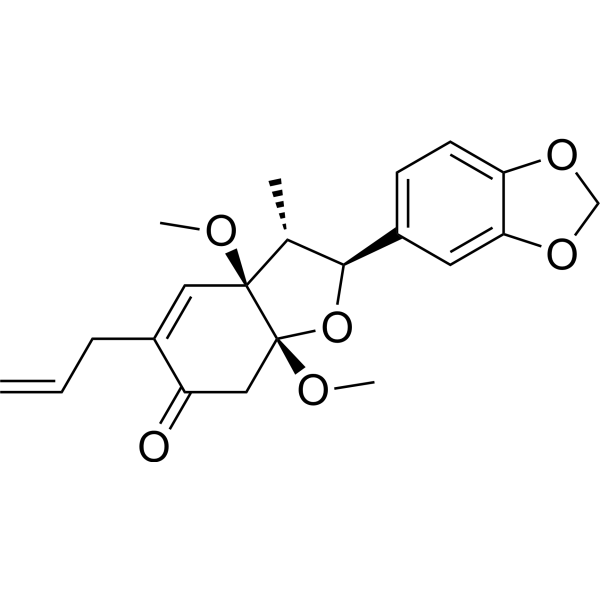 0 ImagesCat. No.: HY-N3436CAS No.: 99340-07-5Kadsurin A is a new lignan can be isolated from Piper futokadsura. Kadsurin A is a platelet activating factor (PAF) receptor antagonist that weakly inhibits the binding of PAF to its receptor.
-
BN52115
 0 ImagesCat. No.: HY-136791CAS No.: 120908-94-3BN 52115, a platelet-activating factor antagonist, has demonstrated the ability to mitigate bronchopulmonary changes in vivo.
-
Selenotifen
 0 ImagesCat. No.: HY-116481CAS No.: 135472-91-2Synonyms: BN 52256Selenotifen (BN 52256) is an antiallergic agent. Selenotifen is a highly potent antagonist to PAF receptors. Selenotifen exhibits a statistically significant antiarrhythmic effect.
-
SDZ-62-434 free base
 0 ImagesCat. No.: HY-106833CAS No.: 115621-81-3SDZ-62-434 free base is a platelet-activating factor (PAF) antagonist. SDZ-62-434 free base has antiproliferative activity in human solid and haematological malignancies.
-
Epiyangambin
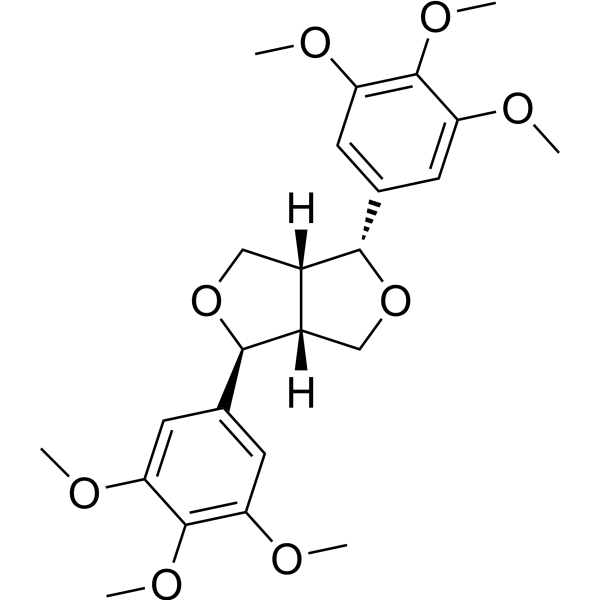 0 ImagesCat. No.: HY-121377CAS No.: 24192-64-1Epiyangambin is a competitive platelet activating factor receptor (PAF) antagonist that dose-dependently inhibits PAF-induced platelet aggregation. Epiyangambin also inhibits the growth of human colon cancer cells (SW480 cells).
-
BN-50726
 0 ImagesCat. No.: HY-19125CAS No.: 127279-06-5BN-50726 is a potent platelet-activating factor (PAF) receptor antagonist. BN-50726 inhibits PAF-induced effects (e.g., [3H]-serotonin release and hypotension) (IC50=5.40 nM). BN-50726 is promising for research of PAF-mediated pathological processes (e.g., inflammation, anaphylaxis, hypotension).
-
UR-11353
 0 ImagesCat. No.: HY-182418CAS No.: 138060-13-6UR-11353 is a selective platelet activating factor (PAF) antagonist with long-lasting activity. UR-11353 inhibits PAF-induced platelet aggregation in rabbit platelet-rich plasma. UR-11353 inhibits PAF-induced hypotension in normotensive rats. UR-11353 protects against PAF-induced mortality in mice.
-
(S)-HTS-3
 0 ImagesCat. No.: HY-158790ACAS No.: 2771208-82-1(S)-HTS-3 is a Lysophosphatidylcholine acyltransferase 3 (LPCAT3/MBOAT5) inhibitor with a human IC50 of 4.1 μM. (S)-HTS-3 inhibits the acyltransferase activity of LPCAT3. (S)-HTS-3 modestly reduces incorporation of deuterated arachidonic acid into C20:4 phosphatidylserine in myeloid leukemia cells.




