



TET2 Antibody (YA4336)
(Synonyms: MDS; KIAA1546)Based on 1 Customer Validation
TET2 Antibody (YA4336) is a Mouse-derived and non-conjugated IgG1 monoclonal antibody, targeting to TET2.
-
Host:
Mouse
-
Isotype:
IgG
-
Application:
WB, IHC-P, ICC/IF, FC, ELISA
-
Reactivity :
Human
-
Formulation:
Supplied in PBS with 0.05% sodium azide
-
Conjugation:
Non-conjugated


To place orders, for customer services and technical support, please contact: MedChemExpress USA
Tel: 609-228-6898 E-mail: [email protected] [email protected]





Applications
| Application |
WB

WB: Western Blot
|
IHC-P
IHC-P: Immunohistochemistry-Paraffin
|
ICC/IF
ICC/IF: Immunocytochemistry/
Immunofluorescence |
FC
FC: Flow Cytometry
|
ELISA
ELISA: Enzyme Linked Immunosorbent Assay
|
|---|---|---|---|---|---|
| Dilution Ratio | 1:500-1:2000 | 1:200-1:1000 | 1:200-1:1000 | 1:200-1:400 | 1:10000 |


Product Details
TET2 Antibody (YA4336) is a Mouse-derived and non-conjugated IgG1 monoclonal antibody, targeting to TET2.
-
Host Mouse

-
Clonality Monoclonal

-
Species ReactivityHuman
-
Observed Molecular WeightObserved band size: 130/250 kDa
Note: Due to possible protein modifications or aggregation, the molecular weight should be confirmed by actual measurement, and the predicted value is for reference only.

-
Calculated Molecular Weight Predicted band size: 224 kDa

Purified recombinant fragment of human TET2 aa 1883-2002.
affinity purified.
Non-conjugated
Unmodified
IgG


Product Properties
-
Appearance
Solution
-
Formulation
Supplied in PBS with 0.05% sodium azide
-
Concentration
Batch-dependent, Please check the COA for the concentration of each lot. Check Lot Concentration
-
Storage & Stability
Stored at -20°C for 1 year. Avoid repeated freeze / thaw cycles.
-
Shipping
Shipping with blue ice.


Verification Images
-
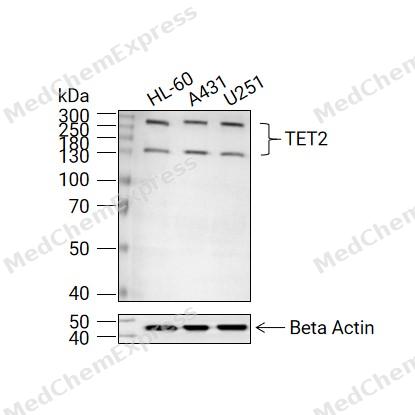 Western blot analysis of extracts from HL-60 (lane 2(20μg), A431 (lane 3(20μg), U251 (lane 4(20μg) using TET2 Antibody (HY-P84639) Mosue mAb. Proteins were transferred to a PVDF membrane and blocked with 5% non-fat milk in TBST for 2 hour at room temperature. The primary antibody (1/1000)and Loading control antibody (Beta Actin, HY-P80993, 1/10000) was used in 5% non-fat milk in TBST at 4°C overnight. Goat Anti-Mosue IgG-HRP Secondary Antibody (1/10000) was used for 1 hour at room temperature.
 -
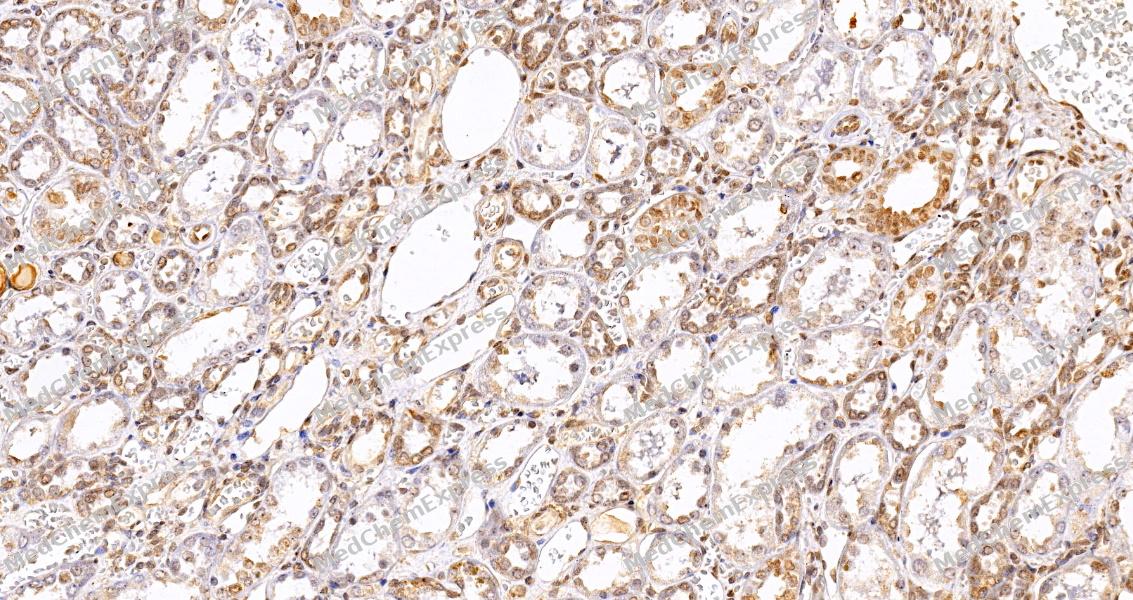 Immunohistochemical analysis of paraffin-embedded human kidney tissue using TET2 Antibody (HY-P84639, 1/500). The section was pretreated using heat mediated antigen retrieval with sodium citrate buffer (pH 6.0) for 8 minutes. The tissues were blocked with quick block buffer for 0.5 hours at room temperature, washed with PBS and PBST, and then incubated with the primary antibody overnight at 4℃. The detection was performed using an HRP conjugated compact polymer system. DAB was used as the chromogen. Tissues were counterstained with hematoxylin and mounted with DPX.
 -
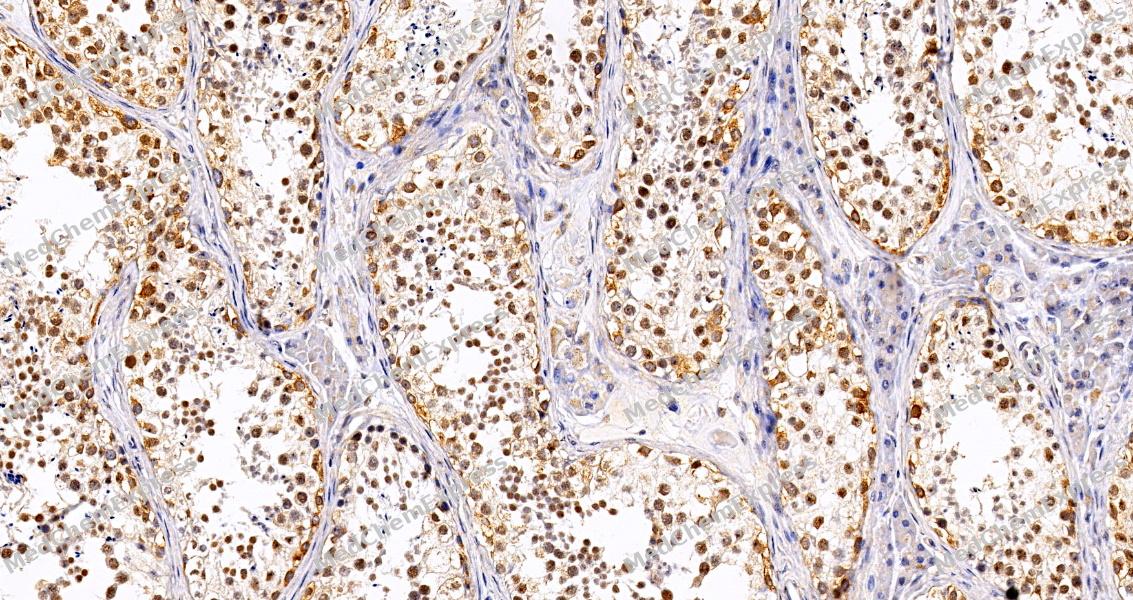 Immunohistochemical analysis of paraffin-embedded human testis tissue using TET2 Antibody (HY-P84639, 1/500). The section was pretreated using heat mediated antigen retrieval with sodium citrate buffer (pH 6.0) for 8 minutes. The tissues were blocked with quick block buffer for 0.5 hours at room temperature, washed with PBS and PBST, and then incubated with the primary antibody overnight at 4℃. The detection was performed using an HRP conjugated compact polymer system. DAB was used as the chromogen. Tissues were counterstained with hematoxylin and mounted with DPX.
 -
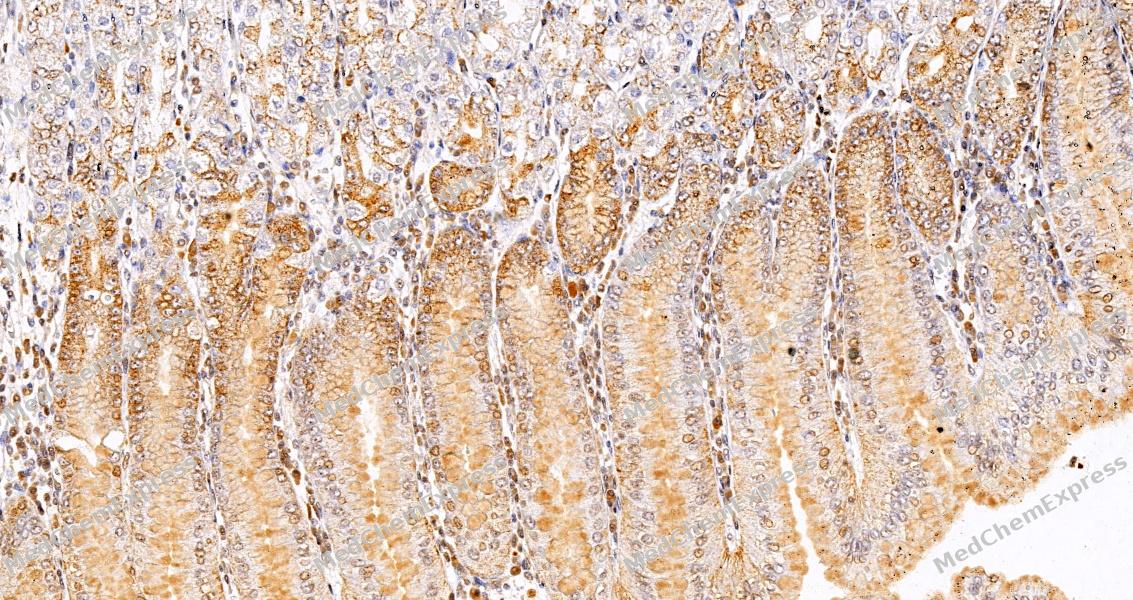 Immunohistochemical analysis of paraffin-embedded human stomach tissue using TET2 Antibody (HY-P84639, 1/500). The section was pretreated using heat mediated antigen retrieval with sodium citrate buffer (pH 6.0) for 8 minutes. The tissues were blocked with quick block buffer for 0.5 hours at room temperature, washed with PBS and PBST, and then incubated with the primary antibody overnight at 4℃. The detection was performed using an HRP conjugated compact polymer system. DAB was used as the chromogen. Tissues were counterstained with hematoxylin and mounted with DPX.
 -
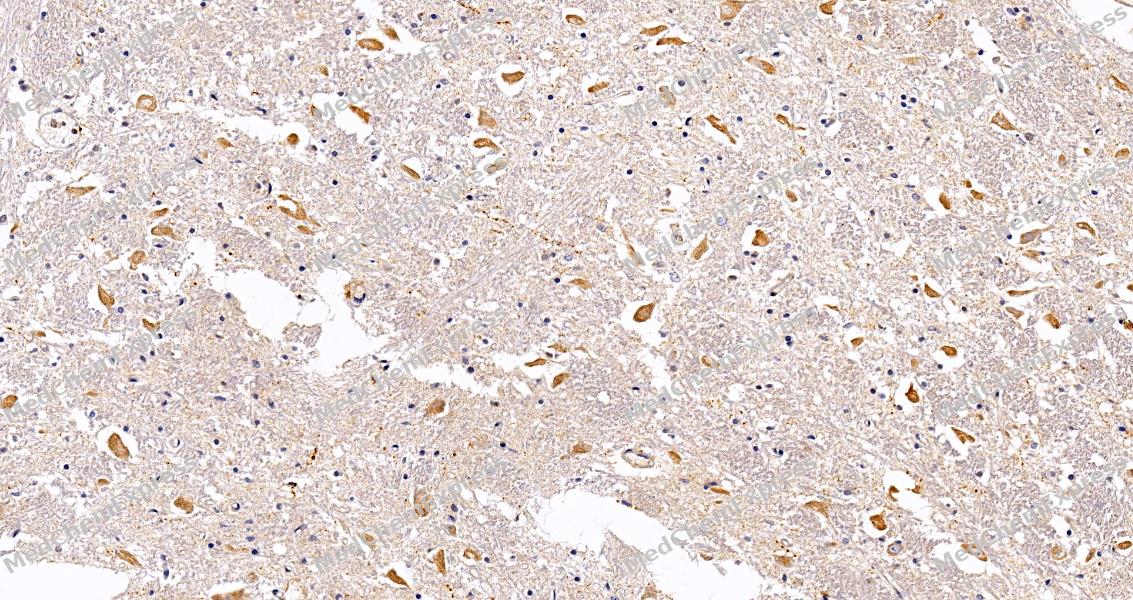 Immunohistochemical analysis of paraffin-embedded human brain tissue using TET2 Antibody (HY-P84639, 1/500). The section was pretreated using heat mediated antigen retrieval with sodium citrate buffer (pH 6.0) for 8 minutes. The tissues were blocked with quick block buffer for 0.5 hours at room temperature, washed with PBS and PBST, and then incubated with the primary antibody overnight at 4℃. The detection was performed using an HRP conjugated compact polymer system. DAB was used as the chromogen. Tissues were counterstained with hematoxylin and mounted with DPX.
 -
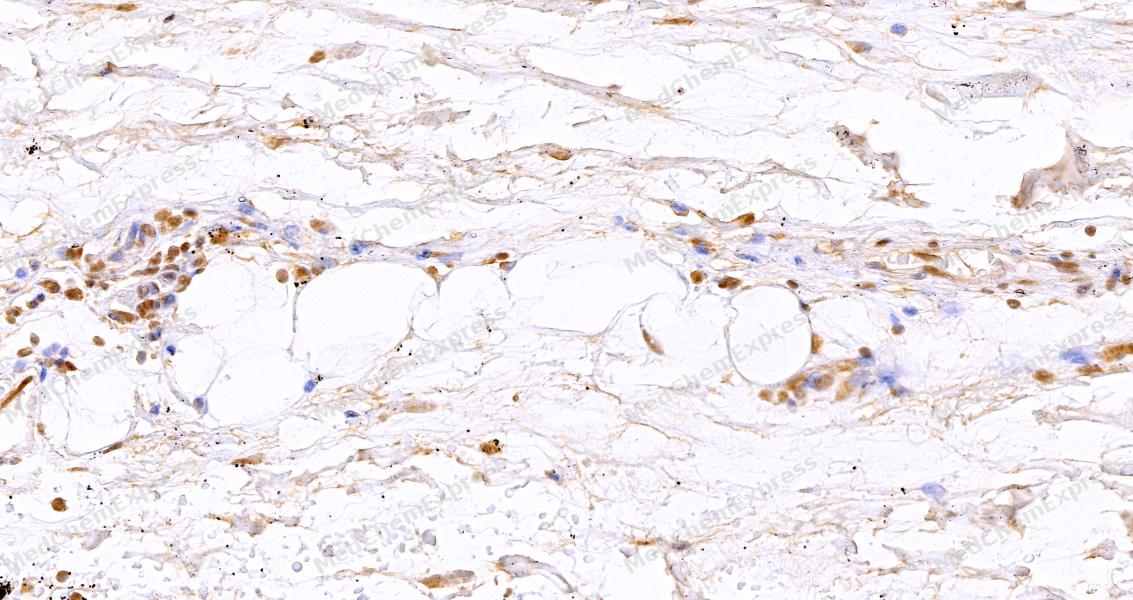 Immunohistochemical analysis of paraffin-embedded human bronchus tissue using TET2 Antibody (HY-P84639, 1/500). The section was pretreated using heat mediated antigen retrieval with sodium citrate buffer (pH 6.0) for 8 minutes. The tissues were blocked with quick block buffer for 0.5 hours at room temperature, washed with PBS and PBST, and then incubated with the primary antibody overnight at 4℃. The detection was performed using an HRP conjugated compact polymer system. DAB was used as the chromogen. Tissues were counterstained with hematoxylin and mounted with DPX.
 -
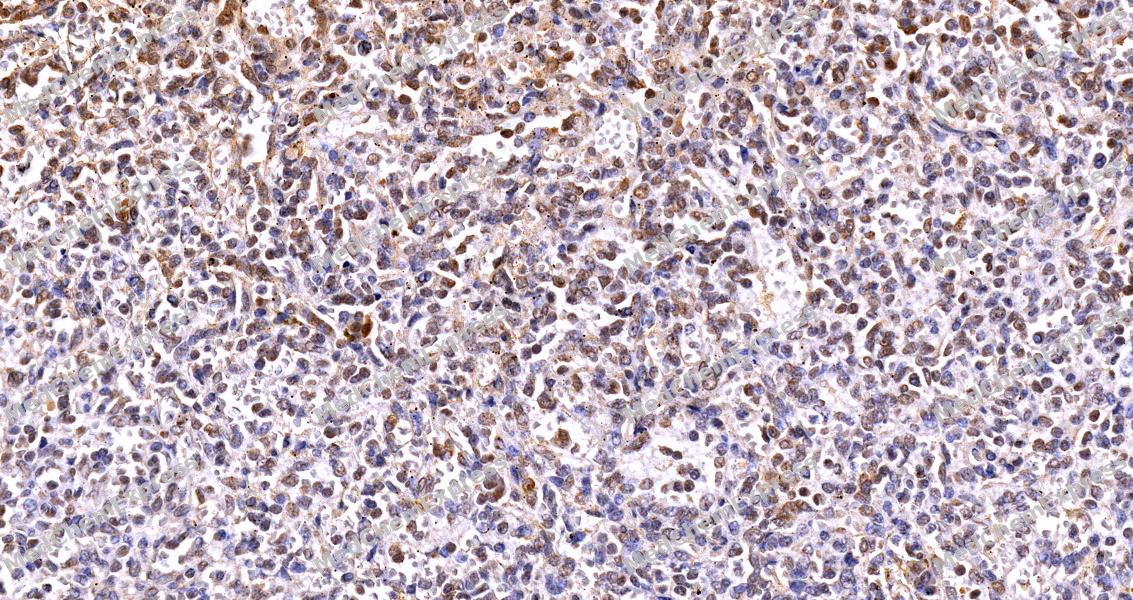 Immunohistochemical analysis of paraffin-embedded human spleen tissue using TET2 Antibody (HY-P84639, 1/500). The section was pretreated using heat mediated antigen retrieval with sodium citrate buffer (pH 6.0) for 8 minutes. The tissues were blocked with quick block buffer for 0.5 hours at room temperature, washed with PBS and PBST, and then incubated with the primary antibody overnight at 4℃. The detection was performed using an HRP conjugated compact polymer system. DAB was used as the chromogen. Tissues were counterstained with hematoxylin and mounted with DPX.
 -
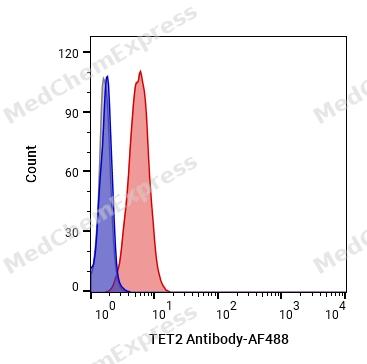 Flow Cytometry analysis of A431 cells labelling TET2 (red) with TET2 Antibody (anti-TET2) (HY-P84639). Cells were fixed with 4% paraformaldehyde and permeabilised with 90% methanol. Then cells were stained with the primary antibody at 1/200 dilution for an hour at 4℃. Goat Anti-Mouse IgG H&L (AF488) (HY-P8005) was used as the secondary antibody at 1/1,000 dilution for 30 minutes at 4℃. Mouse IgG Isotype Control (HY-P807578, blue) was used as the isotype control, cells without incubation with primary antibody were used as the unlabeled control (black).


Background
-
Function
TET2 (ten-eleven translocation 2) encodes a Fe (II) /α-ketoglutarate-dependent dioxygenase that catalyzes the oxidation of 5-methylcytosine (5mC) to 5-hydroxymethylcytosine (5hmC), thereby contributing to active DNA demethylation and epigenetic regulation of gene expression[1][2]. TET2-mediated DNA demethylation is particularly important at promoters and enhancers, where it helps maintain chromatin accessibility and supports lineage-specific transcriptional programs during cellular differentiation[3][4]. Mechanistically, TET2 regulates hematopoietic development by controlling enhancer methylation status and expression of genes required for hematopoietic stem and progenitor cell function[4][3]. Consistent with this role, loss of TET2 disrupts normal hematopoiesis, promotes expansion of hematopoietic stem and progenitor compartments, and is strongly associated with myeloid malignancies including acute myeloid leukemia and related hematologic disorders[1][5][6]. Beyond hematopoiesis, TET2 also contributes to immune-cell regulation through epigenetic control of innate and adaptive immune responses[5][7]. Compared with the related dioxygenases TET1 and TET3, TET2 shows a particularly prominent role in hematopoietic and immune-cell biology, whereas TET1 and TET3 preferentially occupy promoter-associated regions in several developmental contexts[7]. For experimental applications, TET2 serves as a widely used model for studying DNA methylation dynamics, enhancer regulation, clonal hematopoiesis, leukemia pathogenesis, and epigenetic mechanisms underlying immune-cell differentiation and function[4][5][6].
-
Subcellular Localization
Nucleus; Chromosome
-
Expression
Tissue_specificity:Broadly expressed. Highly expressed in hematopoietic cells; highest expression observed in granulocytes. Expression is reduced in granulocytes from peripheral blood of affected by myelodysplastic syndromes -
Isoforms & Post-Translational Modification
Q6N021 has 3 isomers: Q6N021-1: 223811 Da (predicted); Q6N021-2: 130254 Da (predicted); Q6N021-3: 133481 Da (predicted).
May be glycosylated. It is unclear whether interaction with OGT leads to GlcNAcylation. According to a report, it is not GlcNAcylated by OGT (PubMed:23353889). In contrast, another group reports GlcNAcylation by OGT in mouse ortholog;Monoubiquitinated at Lys-1299 by the DCX (DDB1-CUL4-X-box) E3 ubiquitin-protein ligase complex called CRL4(VprBP) or CUL4A-RBX1-DDB1-DCAF1/VPRBP complex; this modification promotes binding to DNA;Acetylated (PubMed:39567688). Deacetylase HDAC6 acts as a valine sensor by binding to valine through its primate-specific SE14 repeat region and deacetylates TET2 following valine deprivation which promotes TET2-dependent DNA demethylation (PubMed:39567688) -
Subunit
Interacts with HCFC1 (PubMed:23353889). Interacts with OGT (PubMed:23222540, PubMed:23353889). Interacts with PROSER1; this interaction mediates TET2 O-GlcNAcylation and stability by promoting the interaction between OGT and TET2 (PubMed:34667079). Directly interacts (via C-terminus) with the DCAF1 component of the CRL4(VprBP) E3 ubiquitin-protein ligase complex (PubMed:24357321, PubMed:25557551)
-
SwissProt ID
-
Synonyms
MDS; KIAA1546


Documentation
-
Data Sheet (262 KB)
-
SDS (251 KB)
- English - EN (251 KB)
- Français - FR (251 KB)
- Deutsch - DE (251 KB)
- Norwegian - NO (251 KB)
- Español - ES (251 KB)
- Swedish - SV (251 KB)
- Italian - IT (251 KB)
- Korean - KR (251 KB)
- Portuguese - PT (251 KB)
-
User Guide for Antibodies (1077 KB)
References
[1]. Pan W, et al. The DNA Methylcytosine Dioxygenase Tet2 Sustains Immunosuppressive Function of Tumor-Infiltrating Myeloid Cells to Promote Melanoma Progression. Immunity. 2017 Aug 15;47(2):284-297.e5. [Content Brief]
[2]. TET2 gene information from NCBI.
[3]. Wu X, et al. Decoding the role of TET family dioxygenases in lineage specification. Epigenetics Chromatin. 2018 Oct 5;11(1):58. [Content Brief]
[5]. Jiang S. Tet2 at the interface between cancer and immunity. Commun Biol. 2020 Nov 12;3(1):667. doi: 10.1038/s42003-020-01391-5. PMID: 33184433; PMCID: PMC7661537. et al. Tet2 at the interface between cancer and immunity. Commun Biol. 2020 Nov 12;3(1):667. [Content Brief]
[6]. Gao Q, et al. TET2 mutation in acute myeloid leukemia: biology, clinical significance, and therapeutic insights. Clin Epigenetics. 2024 Nov 9;16(1):155. [Content Brief]
[7]. Rabezanahary H, et al. Live virus neutralizing antibodies against pre and post Omicron strains in food and retail workers in Québec, Canada. Heliyon. 2024 May 21;10(10):e31026. [Content Brief]

 Powered by Bioz
