



TET2
TET2 (ten-eleven translocation 2) encodes a Fe(II)/α-ketoglutarate-dependent dioxygenase that catalyzes the oxidation of 5-methylcytosine (5mC) to 5-hydroxymethylcytosine (5hmC), thereby contributing to active DNA demethylation and epigenetic regulation of gene expression[1][2]. TET2-mediated DNA demethylation is particularly important at promoters and enhancers, where it helps maintain chromatin accessibility and supports lineage-specific transcriptional programs during cellular differentiation[3][4]. Mechanistically, TET2 regulates hematopoietic development by controlling enhancer methylation status and expression of genes required for hematopoietic stem and progenitor cell function[4][3]. Consistent with this role, loss of TET2 disrupts normal hematopoiesis, promotes expansion of hematopoietic stem and progenitor compartments, and is strongly associated with myeloid malignancies including acute myeloid leukemia and related hematologic disorders[1][5][6]. Beyond hematopoiesis, TET2 also contributes to immune-cell regulation through epigenetic control of innate and adaptive immune responses[5][7]. Compared with the related dioxygenases TET1 and TET3, TET2 shows a particularly prominent role in hematopoietic and immune-cell biology, whereas TET1 and TET3 preferentially occupy promoter-associated regions in several developmental contexts[7]. For experimental applications, TET2 serves as a widely used model for studying DNA methylation dynamics, enhancer regulation, clonal hematopoiesis, leukemia pathogenesis, and epigenetic mechanisms underlying immune-cell differentiation and function[4][5][6].
References:
- [1]. Pan W, et al. The DNA Methylcytosine Dioxygenase Tet2 Sustains Immunosuppressive Function of Tumor-Infiltrating Myeloid Cells to Promote Melanoma Progression. Immunity. 2017 Aug 15;47(2):284-297.e5. [Content Brief]
- [2]. TET2 gene information from NCBI.
- [3]. Wu X, et al. Decoding the role of TET family dioxygenases in lineage specification. Epigenetics Chromatin. 2018 Oct 5;11(1):58. [Content Brief]
- [4]. Huang W. Elucidating the molecular mechanism of TET2 function in hematopoiesis (Doctoral dissertation).
- [5]. Jiang S. Tet2 at the interface between cancer and immunity. Commun Biol. 2020 Nov 12;3(1):667. doi: 10.1038/s42003-020-01391-5. PMID: 33184433; PMCID: PMC7661537. et al. Tet2 at the interface between cancer and immunity. Commun Biol. 2020 Nov 12;3(1):667. [Content Brief]
- [6]. Gao Q, et al. TET2 mutation in acute myeloid leukemia: biology, clinical significance, and therapeutic insights. Clin Epigenetics. 2024 Nov 9;16(1):155. [Content Brief]
- [7]. Rabezanahary H, et al. Live virus neutralizing antibodies against pre and post Omicron strains in food and retail workers in Québec, Canada. Heliyon. 2024 May 21;10(10):e31026. [Content Brief]
All Product Categories
-
TET2 Related Products (3)
Related Products (3)

-
Bobcat339
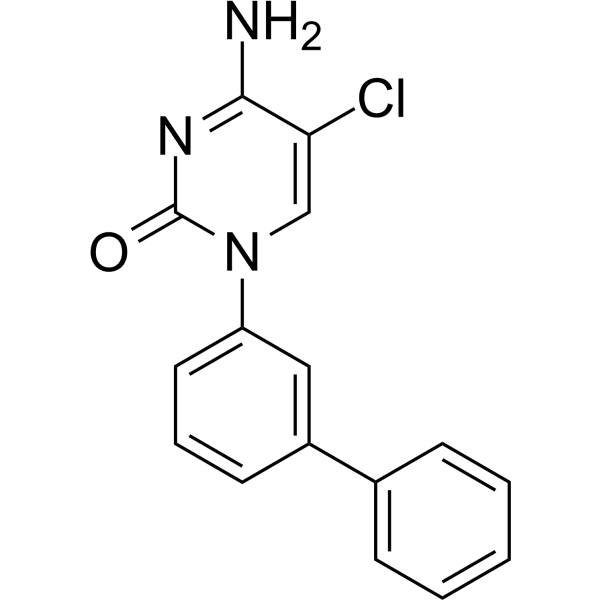 0 ImagesBobcat339 is a potent and selective cytosine-based inhibitor of TET enzyme, with IC50s of 33 μM and 73 μM for TET1 and TET2, respectively. Bobcat339 is useful to the field of epigenetics and serves as a starting point for new therapeutics that target DNA methylation and gene transcription.
-
Bobcat339 hydrochloride
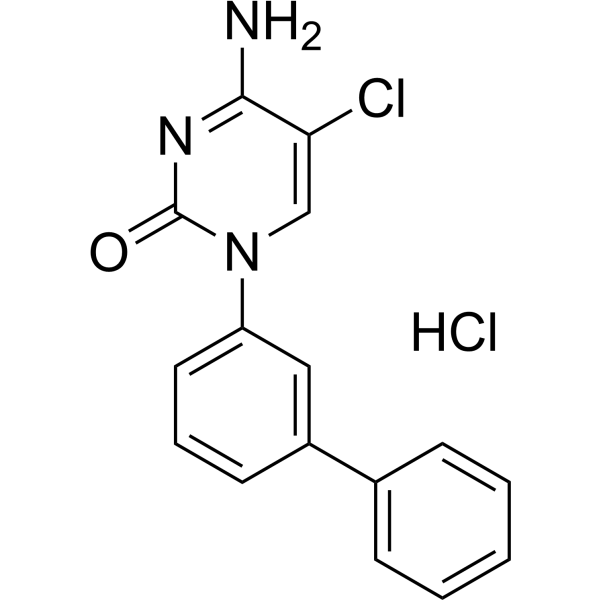 0 ImagesBobcat339 hydrochloride is a potent and selective cytosine-based inhibitor of TET enzyme, with the IC50s of 33 μM and 73 μM for TET1 and TET2, respectively. Bobcat339 hydrochloride is useful to the field of epigenetics and serves as a starting point for new therapeutics that target DNA methylation and gene transcription.
-
TETi76
 0 ImagesCat. No.: HY-402410CAS No.: 1451750-73-4TETi76 is an orally active TET family inhibitor with IC50 values ??of 1.5, 9.4 and 8.8 μM for TET1, TET2 and TET3, respectively. TETi76 competitively binds to the active site of TET enzymes, reduces cytosine hydroxymethylation and restricts clonal growth of TET2 mutants in vitro and in vivo, but does not affect the growth of normal hematopoietic precursor cells. TETi76 can be used for leukemia research.



