



TET1
TET1 (ten-eleven translocation 1) is a member of the TET family of Fe(II)- and α-ketoglutarate-dependent dioxygenases that catalyze the oxidation of 5-methylcytosine (5mC) to 5-hydroxymethylcytosine (5hmC), thereby contributing to active DNA demethylation and epigenetic regulation[1][2]. TET1 preferentially binds CpG-rich promoter regions and regulates gene expression through modulation of local DNA methylation states, linking hydroxymethylation to transcriptional control and cellular identity maintenance[2]. Mechanistically, TET1 functions in both transcriptional activation and repression, as promoter hypomethylation supports expression of transcriptionally active genes, whereas recruitment of repressive complexes to CpG-rich promoters contributes to silencing of developmental regulators in embryonic stem cells[2]. Therefore, TET1 plays an important role in pluripotency, lineage commitment, and stem-cell state transitions through coordinated epigenetic remodeling[2][3]. In disease contexts, aberrant TET1 activity has been associated with multiple human disorders, including hematologic malignancies and solid tumors, where altered DNA demethylation programs affect gene expression networks involved in disease progression[4][5]. Compared with related isoforms TET2 and TET3, TET1 shows a distinctive preference for promoter-associated CpG-rich regions and primarily regulates 5hmC levels around transcription start sites, highlighting a specialized role in promoter-centered epigenetic regulation[3]. For experimental applications, TET1 is widely used as a model enzyme for studying DNA hydroxymethylation, epigenetic reprogramming, and methylation-dependent gene regulation in stem-cell and disease research[1][2].
References:
- [1]. Tahiliani M, et al. Conversion of 5-methylcytosine to 5-hydroxymethylcytosine in mammalian DNA by MLL partner TET1. Science. 2009 May 15;324(5929):930-5. [Content Brief]
- [2]. Wu H, et al. Dual functions of Tet1 in transcriptional regulation in mouse embryonic stem cells. Nature. 2011 May 19;473(7347):389-93. [Content Brief]
- [3]. Huang Y, et al. Distinct roles of the methylcytosine oxidases Tet1 and Tet2 in mouse embryonic stem cells. Proc Natl Acad Sci U S A. 2014 Jan 28;111(4):1361-6. [Content Brief]
- [4]. Cimmino L, et al. TET1 is a tumor suppressor of hematopoietic malignancy. Nat Immunol. 2015 Jun;16(6):653-62. [Content Brief]
All Product Categories
-
TET1 Related Products (7)
Related Products (7)

-
Bobcat339
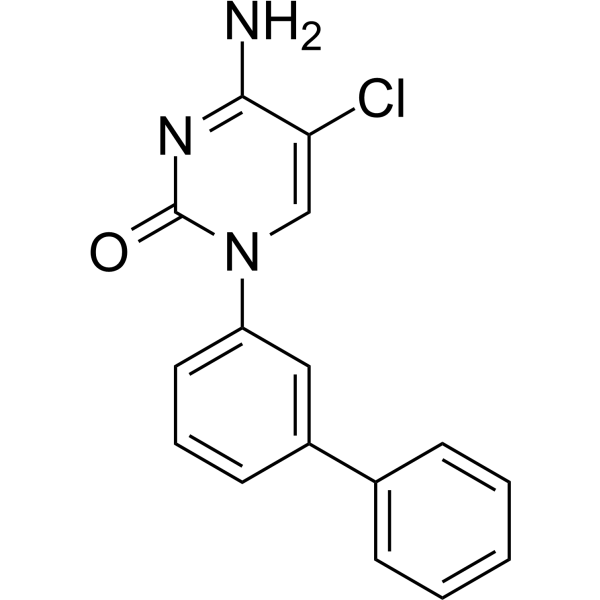 0 ImagesBobcat339 is a potent and selective cytosine-based inhibitor of TET enzyme, with IC50s of 33 μM and 73 μM for TET1 and TET2, respectively. Bobcat339 is useful to the field of epigenetics and serves as a starting point for new therapeutics that target DNA methylation and gene transcription.
-
Bobcat339 hydrochloride
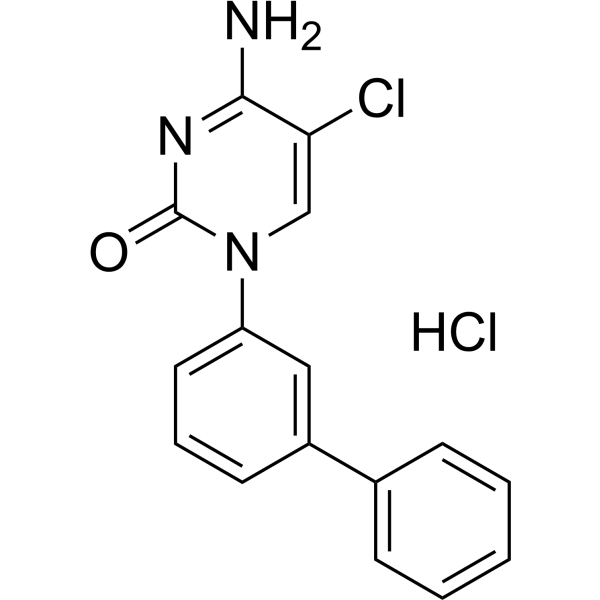 0 ImagesBobcat339 hydrochloride is a potent and selective cytosine-based inhibitor of TET enzyme, with the IC50s of 33 μM and 73 μM for TET1 and TET2, respectively. Bobcat339 hydrochloride is useful to the field of epigenetics and serves as a starting point for new therapeutics that target DNA methylation and gene transcription.
-
TETi76
 0 ImagesCat. No.: HY-402410CAS No.: 1451750-73-4TETi76 is an orally active TET family inhibitor with IC50 values ??of 1.5, 9.4 and 8.8 μM for TET1, TET2 and TET3, respectively. TETi76 competitively binds to the active site of TET enzymes, reduces cytosine hydroxymethylation and restricts clonal growth of TET2 mutants in vitro and in vivo, but does not affect the growth of normal hematopoietic precursor cells. TETi76 can be used for leukemia research.
-
OAC1
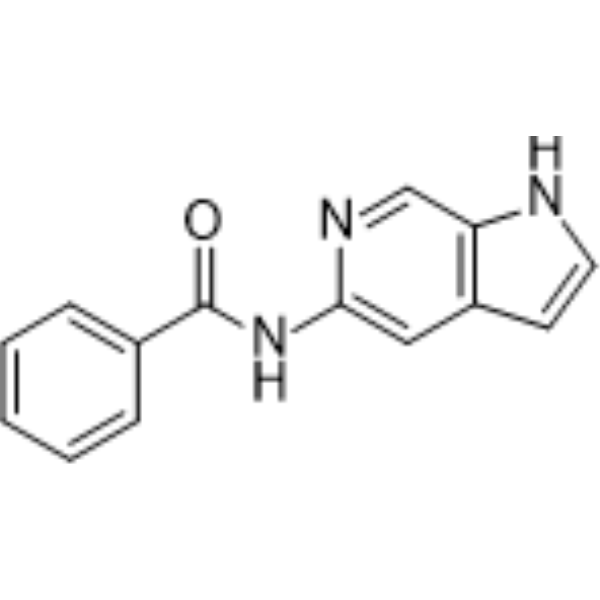 0 ImagesOAC1 is a potent Oct4 activator. OAC1 activates Oct4 and Nanog promoters and enhances induced pluripotent stem cells (iPSC) formation. OAC1 activates OCT4 through upregulation of HOXB4 expression. OAC1 increases transcription of the Oct4-Nanog-Sox2 triad and TET1. OAC1 facilitates the reprogramming of cells by enhancing efficiency and shortening the reprogramming time.
-
UC-514321
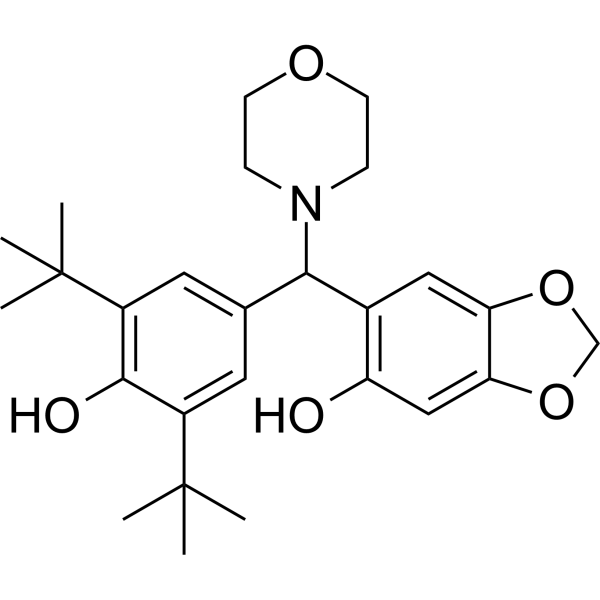 0 ImagesUC-514321, a structural analog of NSC370284 with higher activity, directly targets STAT3/5 and represses TET1 expression, but not TET2 or TET3. UC-514321 has the potential to treat acute myeloid leukemia (AML) both in vitro and in vivo, with low toxicity.
-
Succinic acid sodium
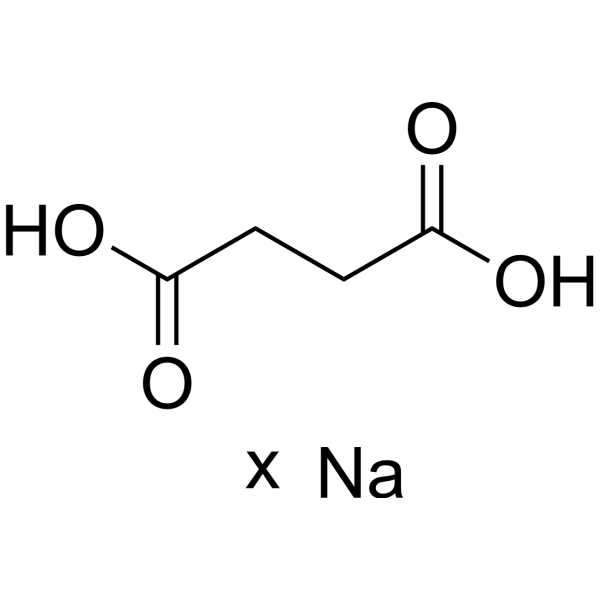 0 ImagesCat. No.: HY-W396714CAS No.: 14047-56-4Synonyms: Wormwood acid sodiumSuccinic acid sodium is a potent and orally active anxiolytic agent. Succinic acid sodium shows inhibitory effects on colonic epithelial cell proliferation in vivo. Succinic acid sodium can down-regulate the expression of KCNMB1 (potassium channel subunit β1) and TET1 (ten?eleven translocation 1). Succinic acid sodium can be used for gestational hypertension research.



