



NB-598
Based on 16 publication(s) in Google Scholar
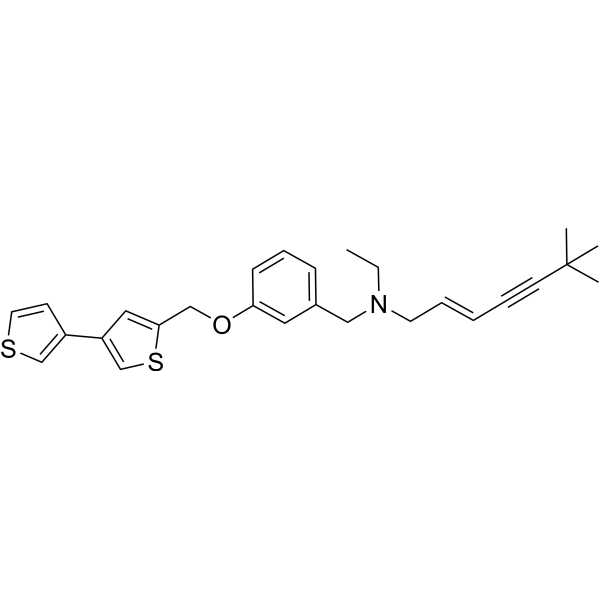
NB-598 is a potent and competitive inhibitor of squalene epoxidase (SE), and suppresses triglyceride biosynthesis through the farnesol pathway. NB-598 is a click chemistry reagent, it contains an Alkyne group and can undergo copper-catalyzed azide-alkyne cycloaddition (CuAAc) with molecules containing Azide groups.
商品は「研究用試薬」です。人や動物の医療用・臨床診断用・食品用の製品ではありません。
研究用途以外に使用した場合、当社は一切の責任を負いかねます。
- 純度 : 98.91%
- CAS 番号: 131060-14-5
- 分子式: C27H31NOS2
- 分子量:449.67
-
保管条件:Powder -20°C, 3 years ; In solvent -80°C, 6 months , -20°C, 1 month

To place orders, for customer services and technical support, please contact: MedChemExpress USA
Tel: 609-228-6898 E-mail: [email protected] [email protected]


-
 生物活性
生物活性
-
化学情報
-
溶剤 & 溶解度
- プロトコル
- 純度とドキュメンテーション
- 参考文献
-
 Help & FAQs


-
HY-17395A
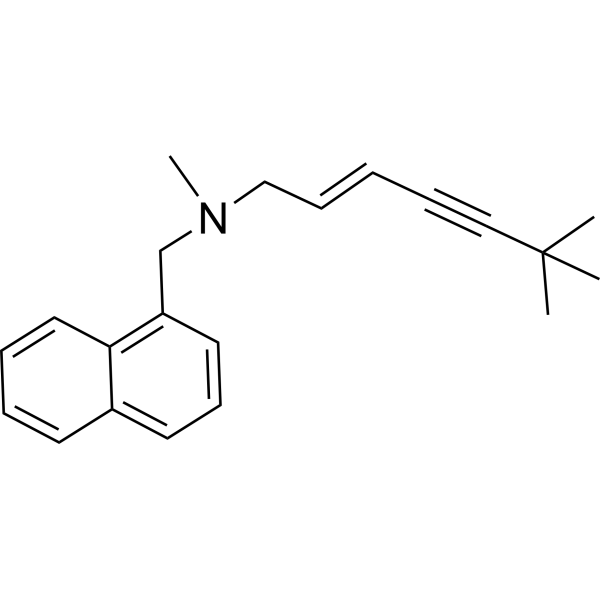
TerbinafineAntimicrobial Agent -
HY-17395
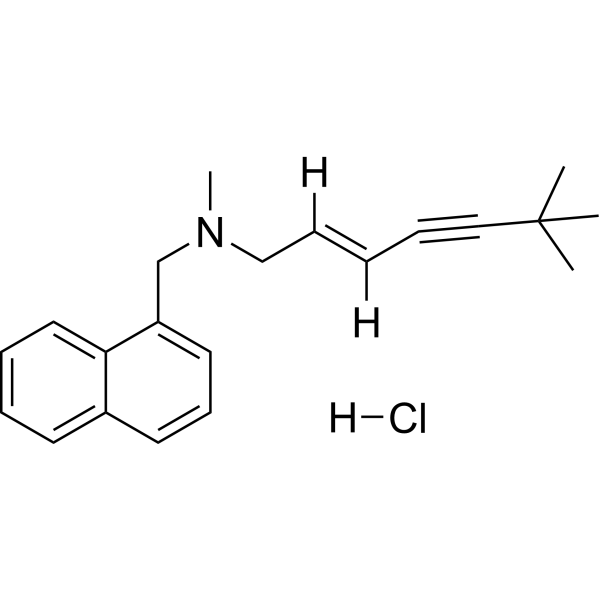
Terbinafine hydrochlorideAntimicrobial Agent -
HY-14452
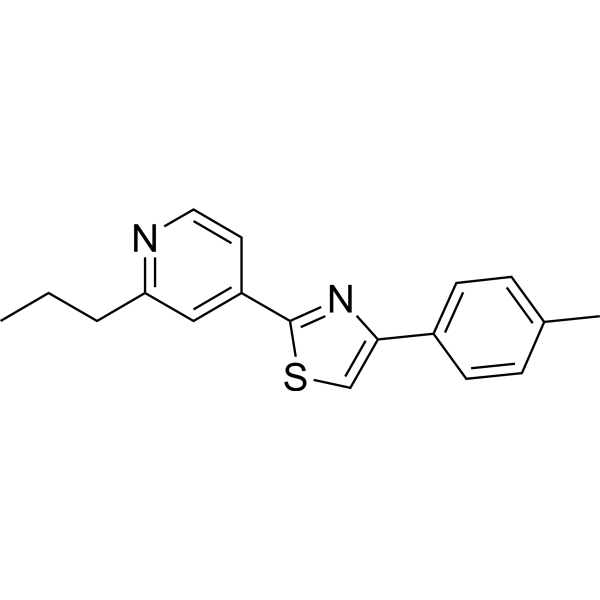
FatostatinSREBP Activation Inhibitor -
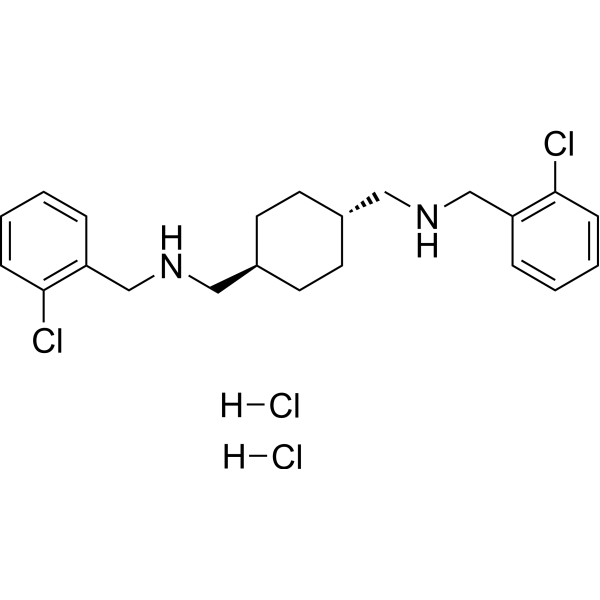
HY-107420
AY 9944DHCR7 Inhibitor -
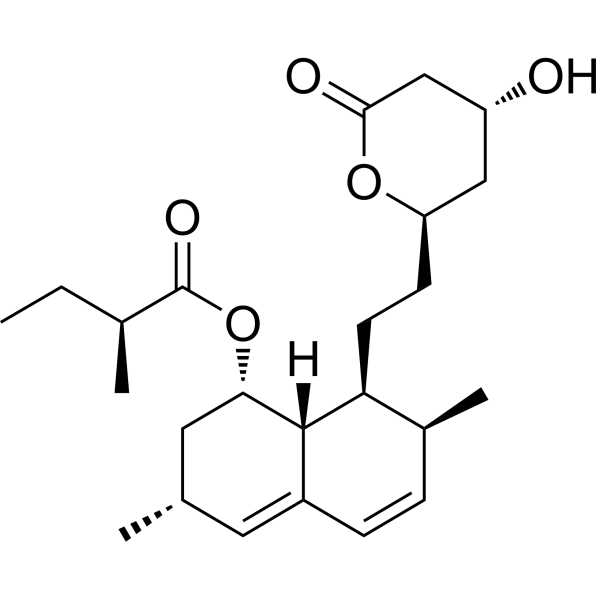
HY-N0504
LovastatinHMG-CoA Inhibitor -
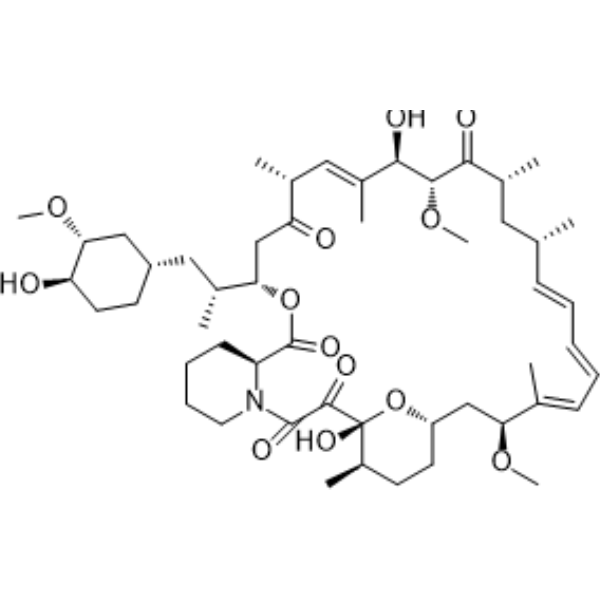
HY-10219
RapamycinmTOR Inhibitor -
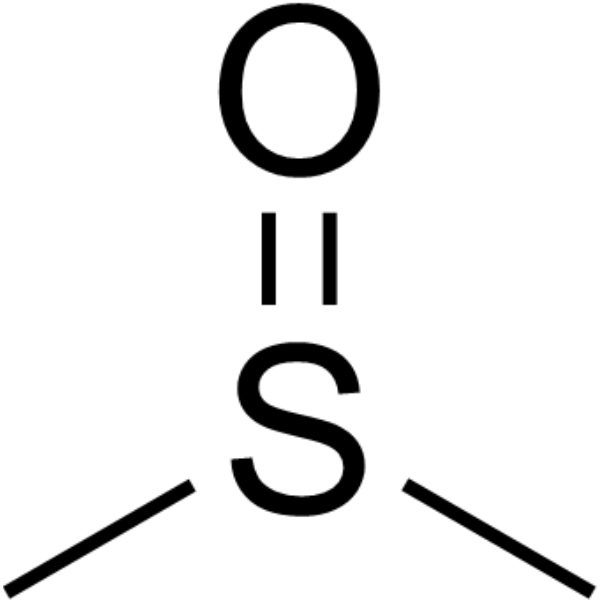
HY-Y0320C
Dimethyl sulfoxideAprotic Solvent -
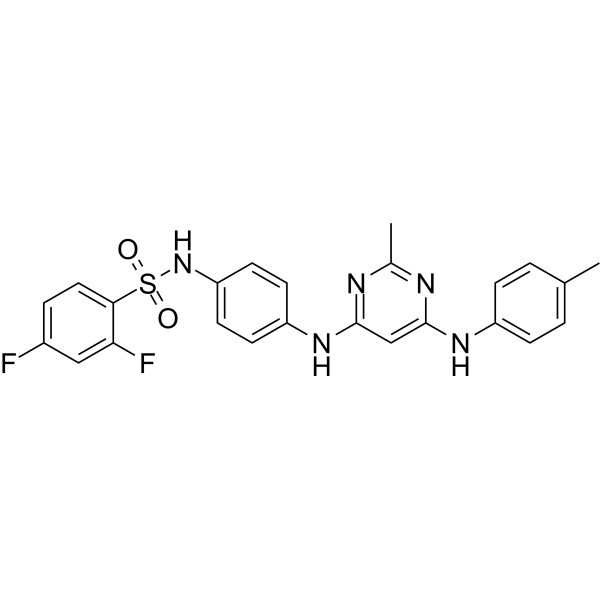
HY-160093
SQLE-IN-1SQLE Inhibitor -
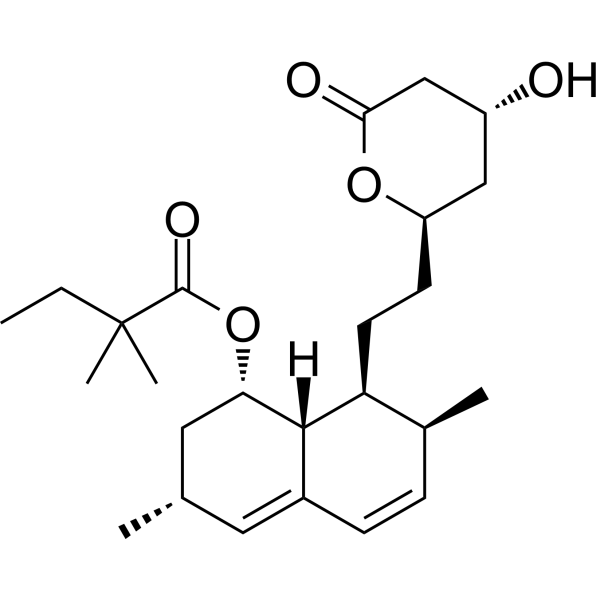
HY-17502
SimvastatinHMGCR Inhibitor -
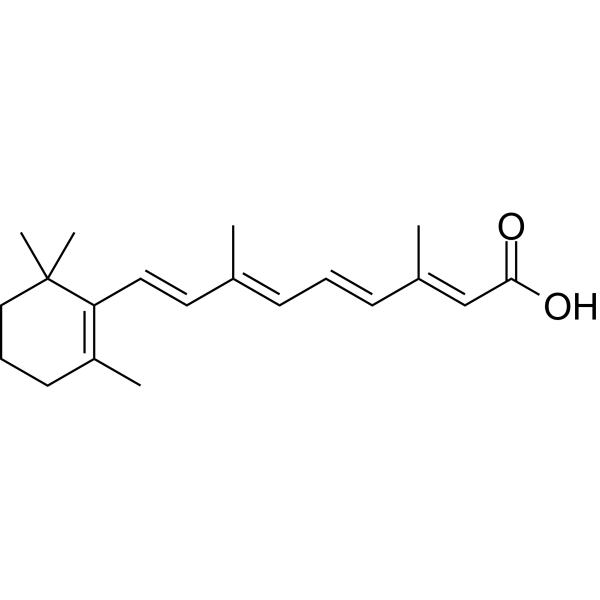
HY-14649
Retinoic acidRAR Agonist -
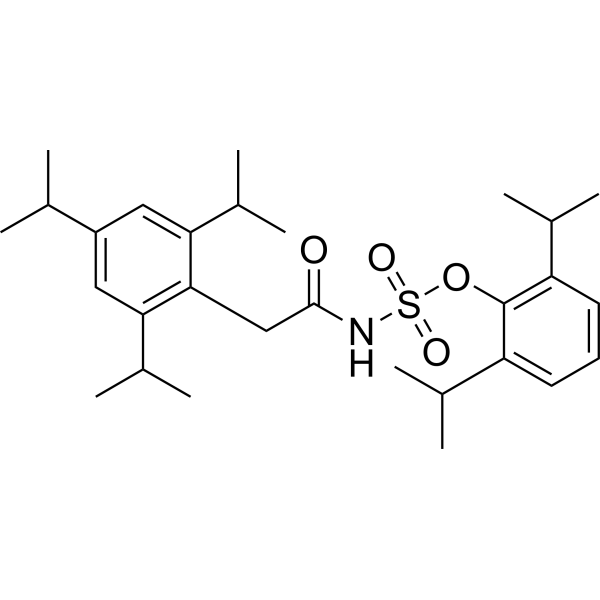
HY-13215
AvasimibeACAT/SOAT Inhibitor -
HY-N1214
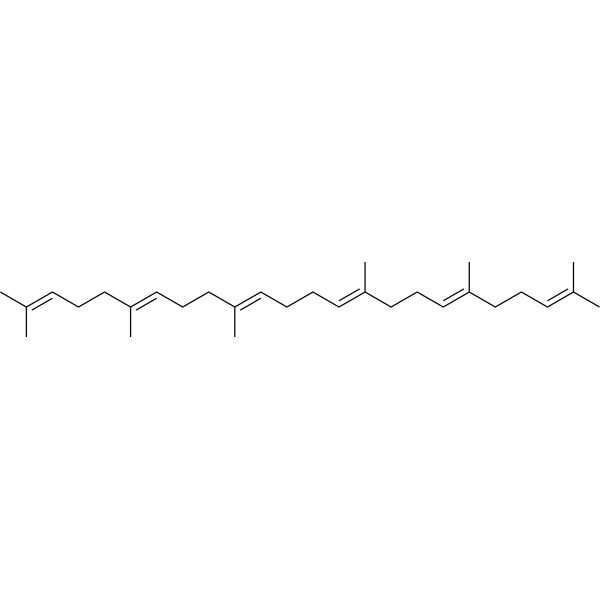
SqualeneHypolipidemic Agent
MedChemExpress(MCE)の使用を引用している文献 NB-598
More- Cell Metab. 2020 Apr 7;31(4):862-877.e14. [Abstract]
- Cancer Res. 2022 Sep 2;82(17):3032-3044. [Abstract]
- Nat Chem Biol. 2016 Jul;12(7):497-503. [Abstract]
- Adv Sci (Weinh). 2023 Sep;10(27):e2206878. [Abstract]
- Cell Death Dis. 2021 May 13;12(5):482. [Abstract]
- Cancer Lett. 2025 Sep 1:627:217810. [Abstract]
- Sci China Life Sci. 2022 Feb;65(2):341-361. [Abstract]
- Genome Biol. 2016 Jun 29;17(1):140. [Abstract]
- Cell Chem Biol. 2021 Jun 17;28(6):866-875.e5. [Abstract]
- Antioxidants (Basel). 2024 Jun 13;13(6):722. [Abstract]
- Cell Rep. 2020 Aug 4;32(5):107944. [Abstract]
- Arch Pharm (Weinheim). 2025 Feb;358(2):e2400807. [Abstract]
- J Steroid Biochem Mol Biol. 2015 Aug:152:34-44. [Abstract]
- bioRxiv. 2026 Jun 18.
- bioRxiv. 2026 Jan 23:2026.01.22.701194. [Abstract]
- University of Toronto. 2022.
 Customer Validation & Images

-
WB

-
WB

-
Bio/Physico-chemical Assay

-
Bio/Physico-chemical Assay

-
Bio/Physico-chemical Assay


生物活性
製品説明
IC50 & Target
squalene epoxidase
Cellular Effect
|
Cell Line

|
Type | Value | Description | References |
|---|---|---|---|---|
| HepG2 | ED50 |
2.5 mg/kg
Compound: 8 (NB 598)
|
Compound was evaluated in vivo for the inhibition of rat mammalian squalene epoxidase in HepG2 cells
Compound was evaluated in vivo for the inhibition of rat mammalian squalene epoxidase in HepG2 cells
|
[PMID: 9871762] |
| HepG2 | IC50 |
0.02 μM
Compound: NB-598
|
In vitro ability to inhibit cholesterol biosynthesis in HepG2 cells in culture from [14C]acetate
In vitro ability to inhibit cholesterol biosynthesis in HepG2 cells in culture from [14C]acetate
|
[PMID: 7650673] |
| HepG2 | IC50 |
0.02 μM
Compound: NB-598
|
In vitro ability to inhibit cholesterol biosynthesis in HepG2 cells in culture from [14C]mevalonate
In vitro ability to inhibit cholesterol biosynthesis in HepG2 cells in culture from [14C]mevalonate
|
[PMID: 7650673] |
体外実験
NB598 (10 μM) causes a 36±7% reduction in total cholesterol level of MIN6 cells. NB598 causes a significant decrease in cholesterol by 49±2%, 46±7%, and 48±2% from PM, ER, and SG, respectively. NB598 dose-dependently inhibits insulin secretion under both basal (1 mM glucose) and glucose-stimulated (16.7 mM glucose) conditions. NB598 at concentrations up to 10 μM does not affect peak outward KV currents or the voltage dependence of activation but increases current inactivation[1]. NB-598 (10 μM) inhibits the synthesis of sterol and sterol ester from [14C]acetate without affecting the synthesis of other lipids such as phospholipids (PL), free fatty acids (FFA) and triacylglycerol (TG). In the absence of exogenous liposomal cholesterol, NB-598 reduces ACAT activity by 31%. NB-598 reduces ACAT activity by 22% even in the presence of a 600 PM concentration of liposomal cholesterol[2]. NB-598 suppresses the secretion of cholesterol and triacylglycerol from HepG2 cells into the medium[3].
MedChemExpress (MCE) has not independently confirmed the accuracy of these methods. They are for reference only.


化学情報
-
CAS 番号 131060-14-5
-
性状 Solid
-
分子量 449.67
-
分子式 C27H31NOS2
-
Color Off-white to light yellow
-
SMILES
CCN(C/C=C/C#CC(C)(C)C)CC1=CC=CC(OCC2=CC(C3=CSC=C3)=CS2)=C1
-
輸送条件
Room temperature in continental US; may vary elsewhere.
-
保管条件
Powder -20°C 3 years In solvent -80°C 6 months -20°C 1 month


Publications (16)
-
Journal Impact Factor
-
Most Recent
-
Cell Metab
Single-Cell RNA Sequencing Maps Endothelial Metabolic Plasticity in Pathological Angiogenesis. [Abstract]2020 Apr 7;31(4):862-877.e14. PMID: 32268117 -
Cancer Res
Squalene Epoxidase Metabolic Dependency Is a Targetable Vulnerability in Castration-Resistant Prostate Cancer. [Abstract]2022 Sep 2;82(17):3032-3044. PMID: 35767703 -
Nat Chem Biol
2016 Jul;12(7):497-503. PMID: 27159577 -
Adv Sci (Weinh)
Targeting Squalene Epoxidase Confers Metabolic Vulnerability and Overcomes Chemoresistance in HNSCC. [Abstract]2023 Sep;10(27):e2206878. PMID: 37490552
NB-598 purchased from MedChemExpress. Usage Cited in: Adv Sci (Weinh). 2023 Sep;10(27):e2206878. [Abstract]
Time-course analysis of p-c-Myc T58, c-Myc, p-GSK-3β S9, GSK-3β, p-Akt S473, and Akt expression in SCC-1cisR and SCC-23cisR cells treated with NB-598 (1 µM).
NB-598 purchased from MedChemExpress. Usage Cited in: Adv Sci (Weinh). 2023 Sep;10(27):e2206878. [Abstract]
Time-course analysis of p-Akt S473 and Akt expression in lipid raft and nonraft components of SCC-1cisR and SCC-23cisR cells treated with DMSO or NB-598 (1 µM). Western blot analyses performed with indicated antibodies. β-actin or Flot2 serves as internal control for determining protein expression in nonraft components or lipid rafts, respectively.
-
Cell Death Dis
Targeting epigenetic modulation of cholesterol synthesis as a therapeutic strategy for head and neck squamous cell carcinoma. [Abstract]2021 May 13;12(5):482. PMID: 33986254 -
Cancer Lett
Fusobacterium nucleatum enhances cholesterol biosynthesis in colorectal cancer via miR-130a-3p-mediated AMPK inhibition, a process counteracted by butyrate. [Abstract]2025 Sep 1:627:217810. PMID: 40414519 -
Sci China Life Sci
2022 Feb;65(2):341-361. PMID: 34047913 -
Genome Biol
Genomic alterations underlie a pan-cancer metabolic shift associated with tumour hypoxia. [Abstract]2016 Jun 29;17(1):140. PMID: 27358048
NB-598 purchased from MedChemExpress. Usage Cited in: Genome Biol. 2016 Jun 29;17(1):140. [Abstract]
SQLE inhibition with NB-598 (1 nM-10 μM) reduces cell viability at a range of concentrations with a GI50 of 6 nM in HCC1806 and GI of 10.9 nM in DLD-1 under hypoxia (1 % O2) but not normoxia.
NB-598 purchased from MedChemExpress. Usage Cited in: Genome Biol. 2016 Jun 29;17(1):140. [Abstract]
Clonogenic analysis of SQLE. Clonogenic analysis of SQLE inhibition by NB-598 (30 nM) under normoxia and hypoxia (1 % O2) in HCC1954.
NB-598 purchased from MedChemExpress. Usage Cited in: Genome Biol. 2016 Jun 29;17(1):140. [Abstract]
Clonogenic analysis of SQLE. Clonogenic analysis of SQLE inhibition by NB-598 (30 nM) under normoxia and hypoxia (1 % O2) in HCC1569, MDA-MB-453.
-
Cell Chem Biol
Modulation of lanosterol synthase drives 24,25-epoxysterol synthesis and oligodendrocyte formation. [Abstract]2021 Jun 17;28(6):866-875.e5. PMID: 33636107 -
Antioxidants (Basel)
Supplementation of Mangiferin to a High-Starch Diet Alleviates Hepatic Injury and Lipid Accumulation Potentially through Modulating Cholesterol Metabolism in Channel Catfish (Ictalurus punctatus). [Abstract]2024 Jun 13;13(6):722. PMID: 38929161 -
Cell Rep
The MARCH6-SQLE Axis Controls Endothelial Cholesterol Homeostasis and Angiogenic Sprouting. [Abstract]2020 Aug 4;32(5):107944. PMID: 32755570 -
Arch Pharm (Weinheim)
Targeting the isoprenoid pathway in choleste biosynthesis: An approach to identify isoprenoid biosynthesis inhibitors. [Abstract]2025 Feb;358(2):e2400807. PMID: 39945543 -
J Steroid Biochem Mol Biol
Androgens induce sebaceous differentiation in sebocyte cells expressing a stable functional androgen receptor. [Abstract]2015 Aug:152:34-44. PMID: 25864624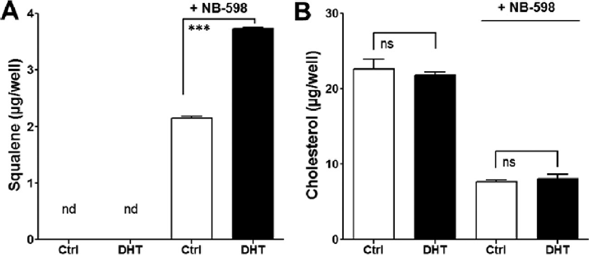
NB-598 purchased from MedChemExpress. Usage Cited in: J Steroid Biochem Mol Biol. 2015 Aug:152:34-44. [Abstract]
GC/MS quantitation of squalene (A) and cholesterol (B) extracted from confluent 6-well plates cell layers from SEBO662 AR+ treated or not (Ctrl) with 10 nM DHT, in the presence or not of the squalene epoxidase inhibitor NB-598 (10 μM). Treatment time is 7 days. Squalene is only detected in NB-598-treated cell layers. DHT significantly increases squalene without significantly modifying cholesterol.
-
-
bioRxiv
SAGA/ATAC complexes sustain aberrant chromatin regulation and promote tumorigenesis in diffuse midline glioma. [Abstract]2026 Jan 23:2026.01.22.701194. PMID: 41648478 -


溶剤 & 溶解度
体外:
DMSO : 50 mg/mL (111.19 mM; Need ultrasonic; Hygroscopic DMSO has a significant impact on the solubility of product, please use newly opened DMSO)
Please refer to the solubility information to select the appropriate solvent. Once prepared, please aliquot and store the solution to prevent product inactivation from repeated freeze-thaw cycles.
Storage method and period of stock solution: -80°C, 6 months; -20°C, 1 month. When stored at -80°C, please use it within 6 months. When stored at -20°C, please use it within 1 month.
Please refer to the solubility information to select the appropriate solvent. Once prepared, please aliquot and store the solution to prevent product inactivation from repeated freeze-thaw cycles.
Storage method and period of stock solution: -80°C, 6 months; -20°C, 1 month. When stored at -80°C, please use it within 6 months. When stored at -20°C, please use it within 1 month.
濃度 (開始) × 体積 (開始) = 濃度 (終了) × 体積 (終了)
体内:
Select the appropriate dissolution method based on your experimental animal and administration route.
- For the following dissolution methods, please ensure to first prepare a clear stock solution using an In Vitro approach and then sequentially add co-solvents:
- To ensure reliable experimental results, the clarified stock solution can be appropriately stored based on storage conditions. As for the working solution for In Vivo experiments, it is recommended to prepare freshly and use it on the same day.
- The percentages shown for the solvents indicate their volumetric ratio in the final prepared solution. If precipitation or phase separation occurs during preparation, heat and/or sonication can be used to aid dissolution.
Add each solvent one by one: 10% DMSO 90% (20% SBE-β-CD in Saline)
Solubility: 2.5 mg/mL (5.56 mM); Suspended solution; Need ultrasonic
This protocol yields a suspended solution of 2.5 mg/mL. Suspended solution can be used for oral and intraperitoneal injection.
Taking 1 mL working solution as an example, add 100 μL DMSO stock solution (25.0 mg/mL) to 900 μL 20% SBE-β-CD in Saline, and mix evenly.
Preparation of 20% SBE-β-CD in Saline (4°C, storage for one week): 2 g SBE-β-CD powder is dissolved in 10 mL Saline, completely dissolve until clear.
In Vivo Dissolution Calculator
Please enter the basic information of animal experiments:
-
-
-
-
Recommended: Prepare an additional quantity of animals to account for potential losses during experiments.
Please enter your animal formula composition:
-
%DMSO +
Recommended: Keep the proportion of DMSO in working solution below 2% if your animal is weak.
-
%+
-
+%Tween-80 + +
-
%Saline +
The co-solvents required include: DMSO, . All of co-solvents are available by MedChemExpress (MCE). , Tween 80. All of co-solvents are available by MedChemExpress (MCE).
Working solution concentration: 0.22 mg/mL
Method for preparing stock solution: mg drug dissolved in μL DMSO. Stock solution concentration: mg/mL.
1. Take μL DMSO stock solution;
2. Add μL .
μL , mix evenly;
3. Then add μL Tween 80, mix evenly;
4. Then add μL
Please ensure that the stock solution in the first step is dissolved to a clear state, and add co-solvents in sequence. You can use ultrasonic heating (ultrasonic cleaner, recommended frequency 20-40 kHz), vortexing, etc. to assist dissolution.


純度とドキュメンテーション
-
データシート (274 KB)
-
SDS (394 KB)
- English - EN (394 KB)
- Français - FR (394 KB)
- Deutsch - DE (394 KB)
- Norwegian - NO (394 KB)
- Español - ES (394 KB)
- Swedish - SV (394 KB)
- Italian - IT (394 KB)
- Korean - KR (394 KB)
- Portuguese - PT (394 KB)
-
取扱説明書 (2659 KB)
参考文献
[1]. Xia F, et al. Inhibition of cholesterol biosynthesis impairs insulin secretion and voltage-gated calcium channel function in pancreatic beta-cells. Endocrinology. 2008 Oct;149(10):5136-45. [Content Brief]
[2]. Horie M, et al. Effects of NB-598, a potent squalene epoxidase inhibitor, on the apical membrane uptake of cholesterol and basolateral membrane secretion of lipids in Caco-2 cells. Biochem Pharmacol. 1993 Jul 20;46(2):297-305. [Content Brief]
[3]. Horie M, et al. An inhibitor of squalene epoxidase, NB-598, suppresses the secretion of cholesterol and triacylglycerol and simultaneously reduces apolipoprotein B in HepG2 cells. Biochim Biophys Acta. 1993 May 20;1168(1):45-51. [Content Brief]


Complete Stock Solution Preparation Table
Please refer to the solubility information to select the appropriate solvent. Once prepared, please aliquot and store the solution to prevent product inactivation from repeated freeze-thaw cycles.
Storage method and period of stock solution: -80°C, 6 months; -20°C, 1 month. When stored at -80°C, please use it within 6 months. When stored at -20°C, please use it within 1 month.
| Optional Solvent | Concentration Solvent Mass | 1 mg | 5 mg | 10 mg | 25 mg |
|---|---|---|---|---|---|
| DMSO | 1 mM | 2.2239 mL | 11.1193 mL | 22.2385 mL | 55.5963 mL |
| 5 mM | 0.4448 mL | 2.2239 mL | 4.4477 mL | 11.1193 mL | |
| 10 mM | 0.2224 mL | 1.1119 mL | 2.2239 mL | 5.5596 mL | |
| 15 mM | 0.1483 mL | 0.7413 mL | 1.4826 mL | 3.7064 mL | |
| 20 mM | 0.1112 mL | 0.5560 mL | 1.1119 mL | 2.7798 mL | |
| 25 mM | 0.0890 mL | 0.4448 mL | 0.8895 mL | 2.2239 mL | |
| 30 mM | 0.0741 mL | 0.3706 mL | 0.7413 mL | 1.8532 mL | |
| 40 mM | 0.0556 mL | 0.2780 mL | 0.5560 mL | 1.3899 mL | |
| 50 mM | 0.0445 mL | 0.2224 mL | 0.4448 mL | 1.1119 mL | |
| 60 mM | 0.0371 mL | 0.1853 mL | 0.3706 mL | 0.9266 mL | |
| 80 mM | 0.0278 mL | 0.1390 mL | 0.2780 mL | 0.6950 mL | |
| 100 mM | 0.0222 mL | 0.1112 mL | 0.2224 mL | 0.5560 mL |


NB-598 関連分類
HY-16343 関連分類
 Powered by Bioz