



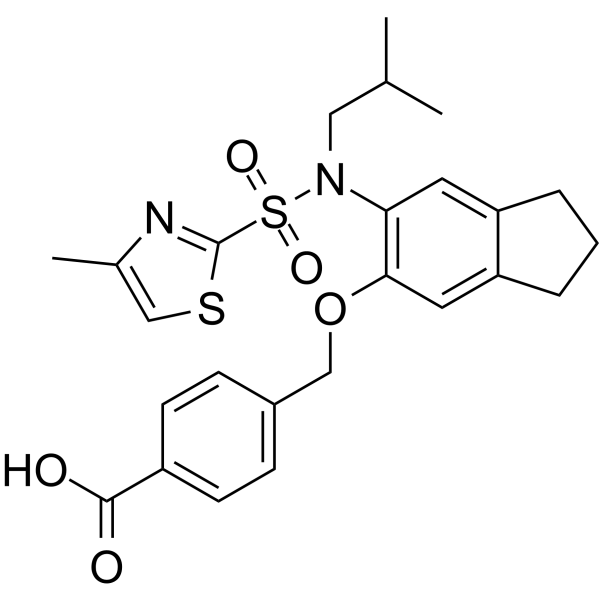
ONO-8130
ONO-8130 is an orally active and selective prostanoid EP1 receptor antagonist. ONO-8130 blocks phosphorylation of ERK in the L6 spinal cord. ONO-8130 relieves bladder pain in mice with cyclophosphamide-induced cystitis. ONO-8130 can be used for interstitial cystitis research.
For research use only. We do not sell to patients.
- CAS No.: 459841-96-4
- Formula: C25H28N2O5S2
- Molecular Weight:500.63
-
Storage:
Please store the product under the recommended conditions in the Certificate of Analysis.

To place orders, for customer services and technical support, please contact: MedChemExpress USA
Tel: 609-228-6898 E-mail: [email protected] [email protected]


-
 Biological Activity
-
Chemical Information
- Protocols
- Purity & Documentation
- References
-
 Help & FAQs


-
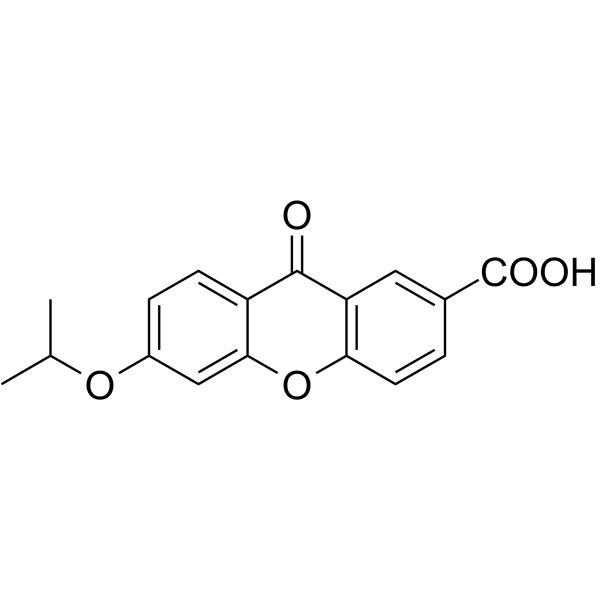
HY-10418
AH 6809EP/DP Antagonist -
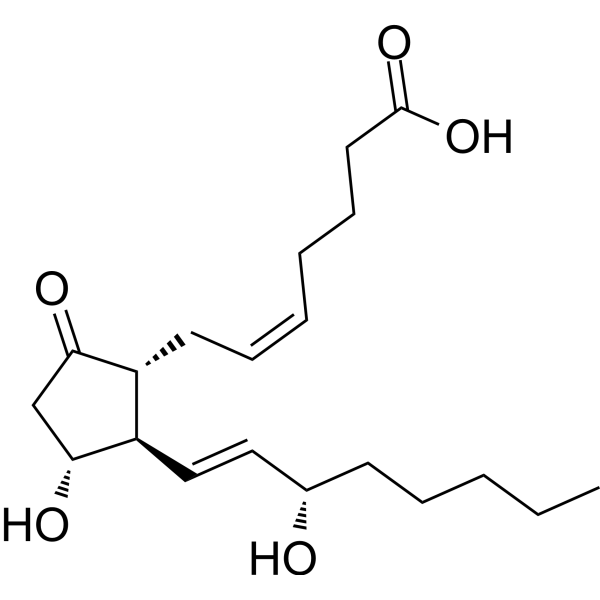
HY-101952
Prostaglandin E2Prostaglandin Receptor Agonist -

HY-10418R
AH 6809 (Standard)EP/DP Antagonist -
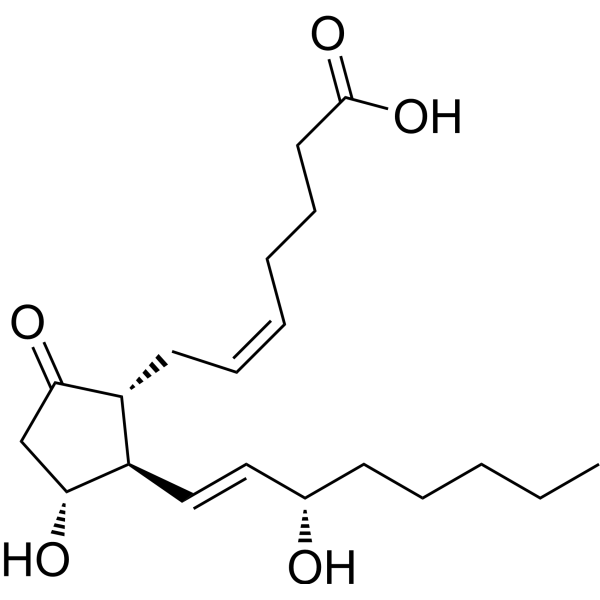
HY-101952R
Prostaglandin E2 (Standard) -
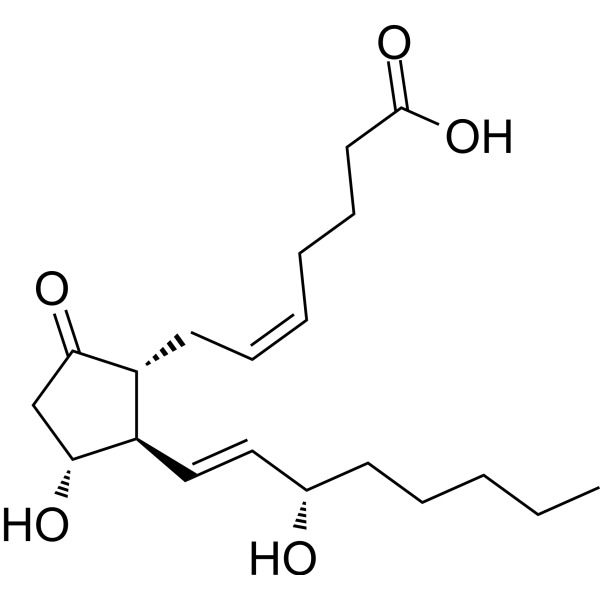
HY-101952G
Prostaglandin E2 (GMP)Inflammatory Mediator (GMP) -
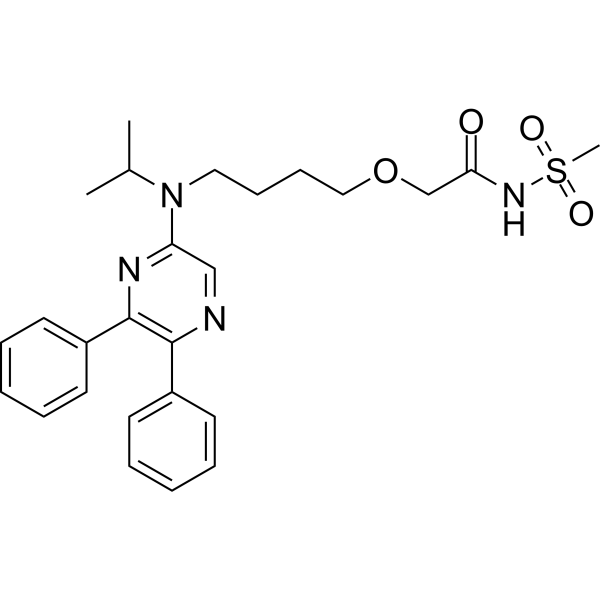
HY-14870
SelexipagProstaglandin Receptor Agonist -
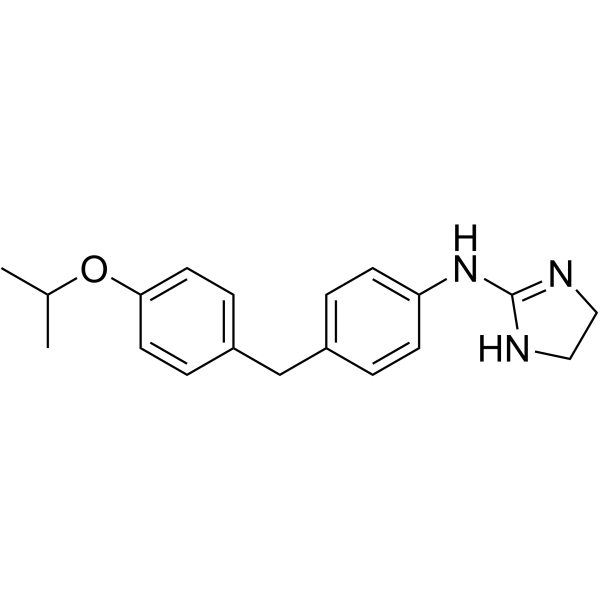
HY-108912
RO1138452Prostaglandin Receptor Antagonist -
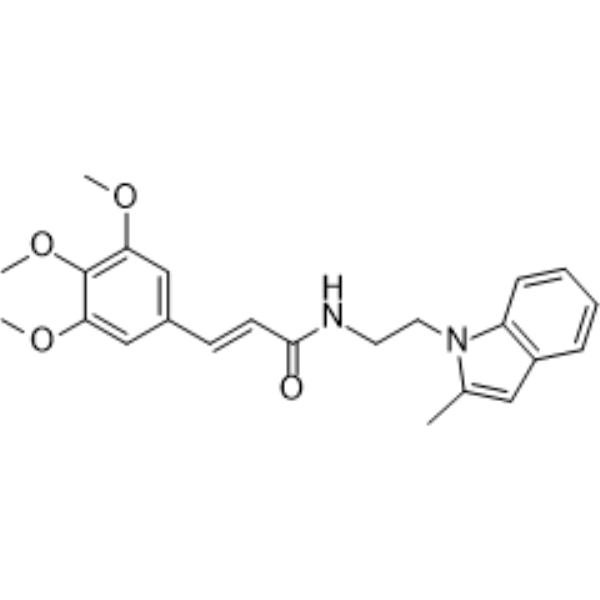
HY-18971
TG4-155EP2 Receptor Antagonist -
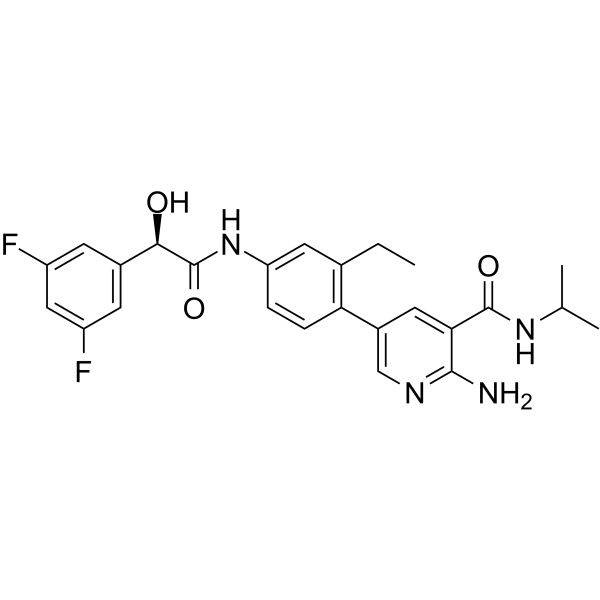
HY-145835
PERK-IN-5PERK Inhibitor -

HY-108912R
RO1138452 (Standard)Prostaglandin Receptor Antagonist -
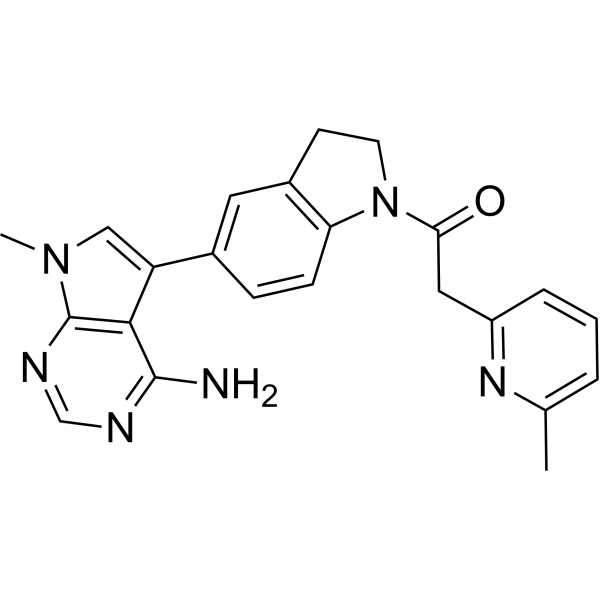
HY-153160
PERK-IN-6PERK Inhibitor -

HY-14870R
Selexipag (Standard)Prostaglandin Receptor Agonist


Biological Activity
Description
In Vivo
ONO-8130 (30 mg/kg; Orally, once) reverses the established cystitis-related bladder pain[1].
ONO-8130 (30 mg/kg; Orally, once) strongly inhibits phosphorylation of ERK in MDH, DCM, and SPN of the L6 spinal cord caused by intravesical administration of PGE2[1].
MedChemExpress (MCE) has not independently confirmed the accuracy of these methods. They are for reference only.
-
Animal Model:Female ddY mice (18-22 g, 4-5 weeks old)[1]
-
Dosage:0.3, 3, 10, and 30 mg/kg
-
Administration:Orally, once
-
Result:Strongly prevented both the bladder pain-like behavior and referred hyperalgesia in a dose-dependent manner, but had slight effect on the increased bladder weight and vascular permeability.
-
Animal Model:Female ddY mice (18-22 g, 4-5 weeks old, established bladder pain caused by IP cyclophosphamide)[1]
-
Dosage:10, 30 mg/kg
-
Administration:Orally, once (administered 2.75 hours after i.p. cyclophosphamide)
-
Result:Markedly attenuated the bladder pain-like nociceptive behavior and referred hyperalgesia in the acute phase (3.5-4 h after cyclophosphamide).
-
Animal Model:Female ddY mice (18-22 g, 4-5 weeks old, established bladder pain caused by IP cyclophosphamide)[1]
-
Dosage:30 mg/kg
-
Administration:Orally, once (administered 4.75 hours after i.p. cyclophosphamide)
-
Result:Significantly suppressed the bladder pain-like nociceptive behavior and tended to reduce the referred hyperalgesia in the persistent phase, 5.5-6 hours after cyclophosphamide.
-
Animal Model:Female ddY mice (18-22 g, 4-5 weeks old, intravesical administration of PGE2 at 5 nmol/mouse)[1]
-
Dosage:30 mg/kg
-
Administration:Orally, once
-
Result:Strongly inhibited phosphorylation of ERK in MDH, DCM, and SPN of the L6 spinal cord caused by intravesical administration of PGE2 at 5 nmol/mouse, exerted complete blockade in DCM, while its inhibitory effects in MDH and SPN were partial.


Chemical Information
-
CAS No. 459841-96-4
-
Molecular Weight 500.63
-
Formula C25H28N2O5S2
-
SMILES
O=[S](N(C(C=C(CCC1)C1=C2)=C2OCC(C=C3)=CC=C3C(O)=O)CC(C)C)(C4=NC(C)=CS4)=O
-
Shipping
Room temperature in continental US; may vary elsewhere.
-
Storage
Please store the product under the recommended conditions in the Certificate of Analysis.

Protocols
-
Kinase activity and phosphorylation assays
Kinase activity assays measure the ability of kinases to transfer phosphate groups from ATP to specific substrates, while phosphorylation assays detect the presence and levels of phosphorylated proteins. Common methods include radiolabeled ATP incorporation (e. g. ,), ADP release detection via bioluminescence (e. g. ,[3]), enzyme-linked immunosorbent assays (ELISA) for phospho-specific epitopes (e. g. ,[6]), and microtiter-based formats for high-throughput screening (e. g. ,[8]). The ADP-Glo assay quantifies kinase activity by measuring ADP produced during phosphorylation using a luciferase-based system. Radiometric assays involve autoradiography or scintillation counting after incorporation of 32P-labeled ATP into substrate proteins. ELISA-based approaches rely on phospho-specific antibodies to detect activated kinases in cell lysates or purified samples.
-
Western Blot
Western blotting (WB) is a commonly used experimental method in molecular biology, biochemistry, and immunogenetics for identifying and quantifying target proteins. It combines gel electrophoresis with immunoassay, enabling researchers to analyze protein expression, post-translational modifications, and molecular weight.
-
Protocol for Kinase activity and phosphorylation assays
Kinase activity assays measure transfer of phosphate from ATP to a protein or peptide substrate, generating phosphorylated substrate, ADP, or incorporated radiolabeled phosphate as the readout; phosphorylation assays measure site-specific phosphorylation in cells or tissues as a proxy for kinase-pathway activation, inhibition, or substrate regulation. Phosphorylation can be detected by phospho-specific Western blot, immunoprecipitation kinase assay, phospho-immunofluorescence, phospho-flow cytometry, luminescent ADP detection, radiolabeled ATP incorporation, or reporter-based pathway assays, and these readouts can be applied to cancer cells, primary neurons, mouse tumors, organoids, inflammatory macrophages, ferroptosis studies, and mitophagy studies when the kinase target is biologically relevant.


Purity & Documentation
References

Calculators
Concentration (start) × Volume (start) = Concentration (final) × Volume (final)


ONO-8130 Related Classifications
HY-110198 Related Classifications
 Powered by Bioz