



PNU-159682
Based on 1 publication(s) in Google Scholar
PNU-159682, a metabolite of the anthracycline Nemorubicin, is a highly potent DNA topoisomerase II inhibitor with excellent cytotoxicity. PNU-159682 acts as a more potent and tolerated ADC cytotoxin than Doxorubicin for ADC synthesis. PNU-159682 can be used in EDV-nanocell technology to overcome agent resistance.
For research use only. We do not sell to patients.
- Purity : 98.50%
- CAS No.: 202350-68-3
- Formula: C32H35NO13
- Molecular Weight:641.62
-
Storage:
-20°C, stored under nitrogen
* In solvent : -80°C, 6 months; -20°C, 1 month (stored under nitrogen)

To place orders, for customer services and technical support, please contact: MedChemExpress USA
Tel: 609-228-6898 E-mail: [email protected] [email protected]


-
 Biological Activity
-
Chemical Information
-
Solvent & Solubility
- Protocols
- Purity & Documentation
- References
-
 Help & FAQs


-
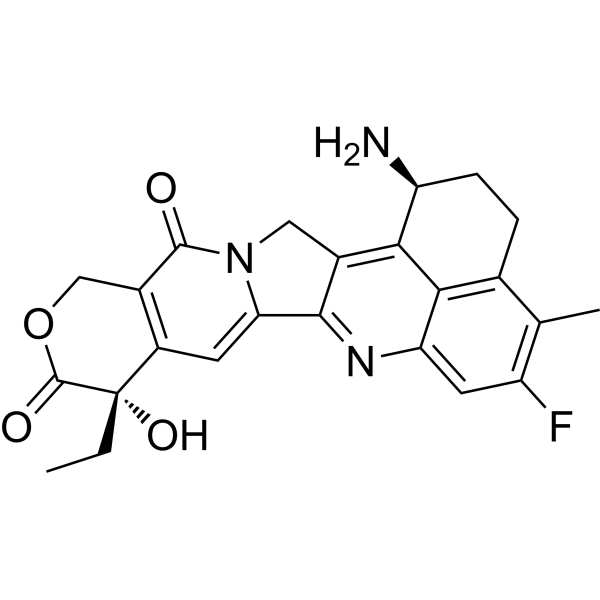
HY-13631
ExatecanTopoisomerase I Inhibitor -
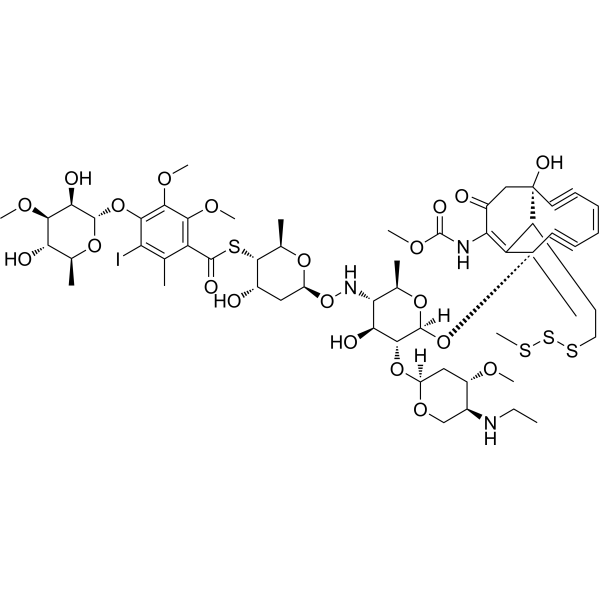
HY-19609
CalicheamicinDNA-binding ADC Cytotoxin -
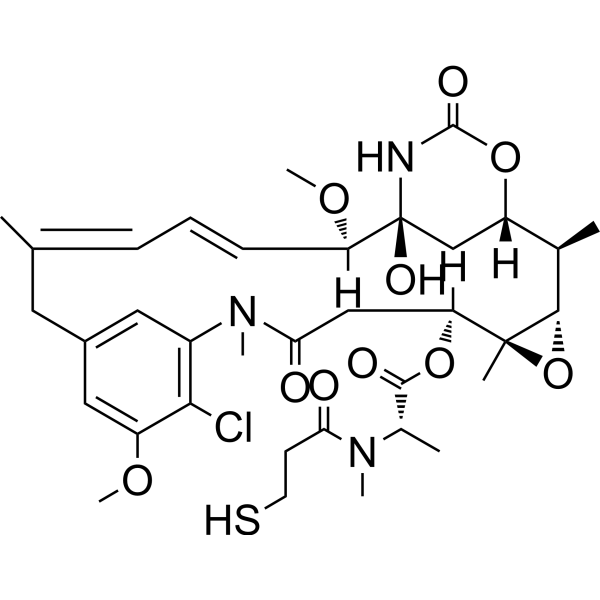
HY-19792
MertansineMicrotubule-Targeted Cytotoxin -
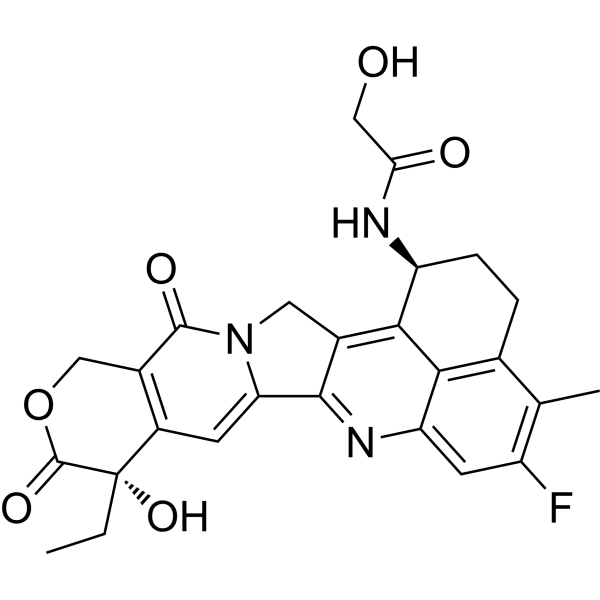
HY-13631D
DXdTopoisomerase I Inhibitor -
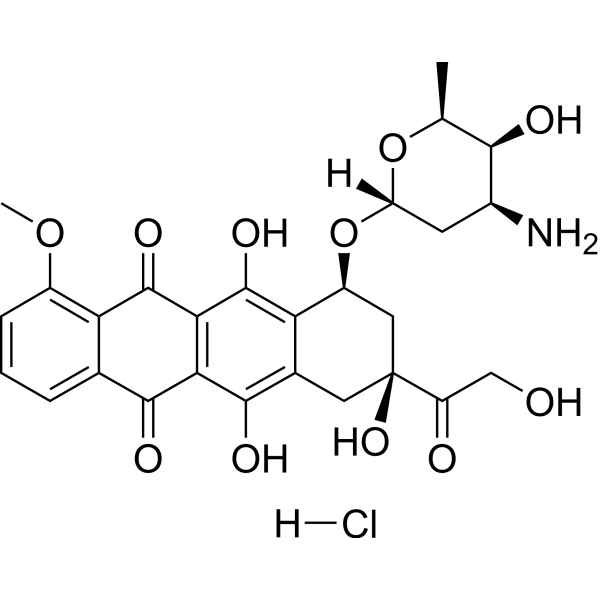
HY-15142
Doxorubicin hydrochlorideTopoisomerase Inhibitor -
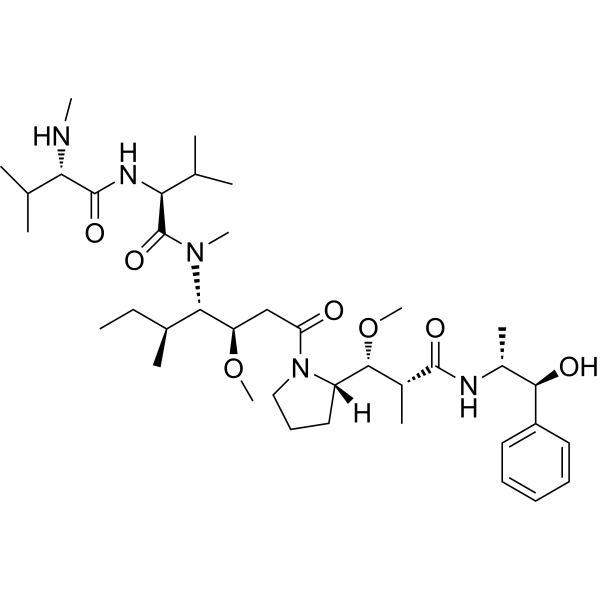
HY-15162
Monomethyl auristatin EAntimitotic Agent -
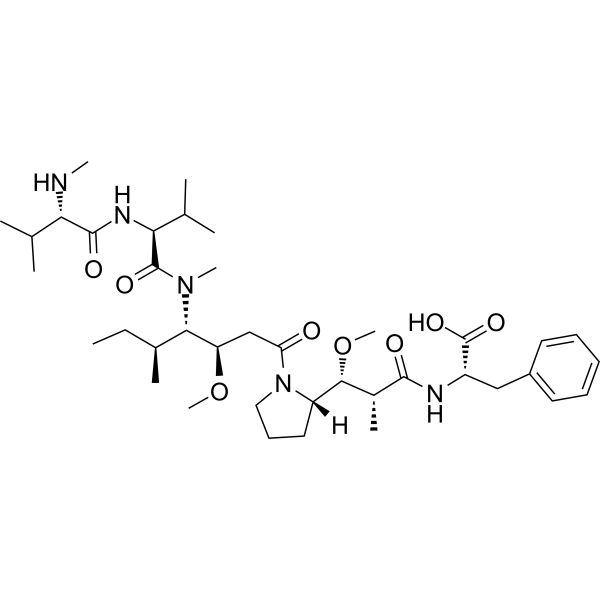
HY-15579
MMAFTubulin Inhibitor -
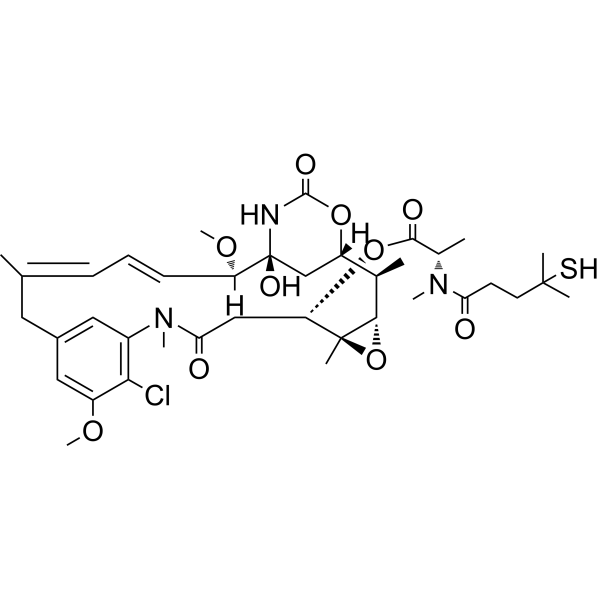
HY-12454
DM4Tubulin Inhibitor -
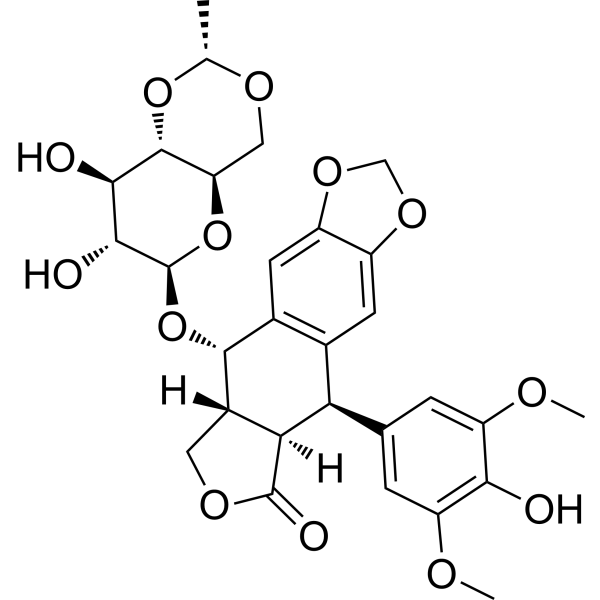
HY-13629
EtoposideTopoisomerase II Inhibitor -
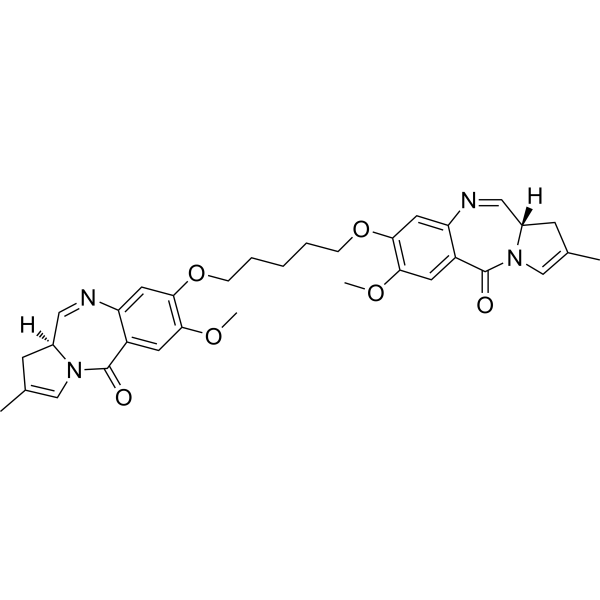
HY-101161
SG3199PBD Dimer -
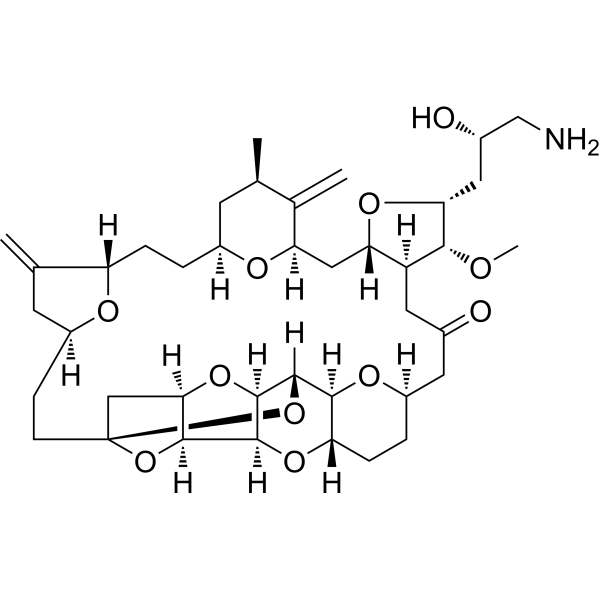
HY-13442
EribulinMicrotubule Inhibitor -
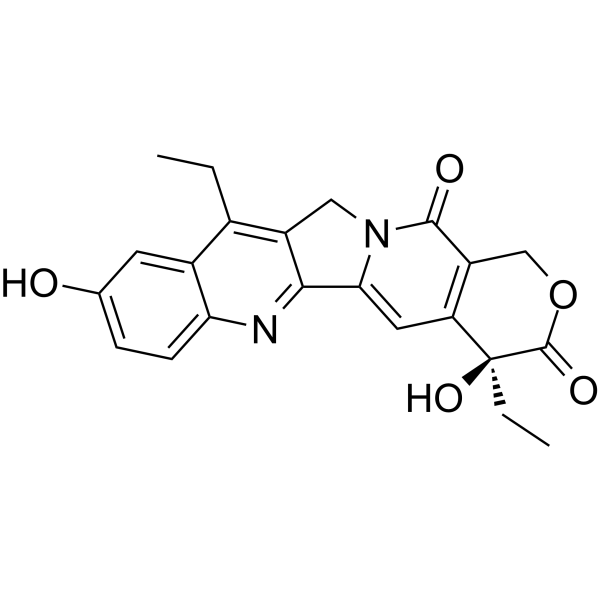
HY-13704
SN-38Topoisomerase I Inhibitor
Publications Citing Use of MedChemExpress (MCE) PNU-159682
MoreAll Topoisomerase Isoforms
More

Biological Activity
Description
|
Daunorubicins/Doxorubicins |
Topoisomerase I |
Cellular Effect
|
Cell Line

|
Type | Value | Description | References |
|---|---|---|---|---|
| HEK-293T | EC50 |
0.37 pM
Compound: 1; PNU-159682
|
Cytotoxicity against HEK293T cells assessed as reduction in cell viability
Cytotoxicity against HEK293T cells assessed as reduction in cell viability
|
[PMID: 33127540] |
| MES-SA | EC50 |
0.2 pM
Compound: 1; PNU-159682
|
Cytotoxicity against human MES-SA cells assessed as reduction in cell viability
Cytotoxicity against human MES-SA cells assessed as reduction in cell viability
|
[PMID: 33127540] |
| MES-SA/Dx5 | EC50 |
0.38 pM
Compound: 1; PNU-159682
|
Cytotoxicity against human MES SA/DX5 cells assessed as reduction in cell viability
Cytotoxicity against human MES SA/DX5 cells assessed as reduction in cell viability
|
[PMID: 33127540] |
In Vitro
PNU-159682 (0-500 nM; exposed to the compounds for 1 hour and then cultured in compound-free medium for 72 hours) has cytotoxic effects on human tumor cell lines in a sulforhodamine B assay. The IC70 values are 0.577 nM, 0.39 nM, 0.128 nM, and 0.081 nM, 0.086 nM and 0.075 nM for HT-29, A2780, DU145, EM-2, Jurkat and CEM cells, respectively[1]. It against human tumor cell lines with IC70 in the ranging 68 nM-578 nM and 181 nM-1717 nM towards MMDX and doxorubicin, respectively[1].? PNU-159682 is more potent than MMAE on NHL cell lines. In a cell viability assay, PNU-159682 is against BJAB.Luc, Granta-519, SuDHL4.Luc, and WSU-DLCL2 with IC50 values of 0.10 nM, 0.020 nM, 0.055 nM, and 0.1 nM, respectively. While MMAE is against BJAB.Luc, Granta-519, SuDHL4.Luc, and WSU-DLCL2 with IC50 values of 0.54 nM, 0.25 nM, 1.19 nM and 0.25 nM, respectively[2].PNU-159682 is thousands of times more cytotoxic than doxorubicin and can be used to develop a new class of ADCs. PNU159682?to?anti-CD22?antibody (anti-CD22-NMS249) exhibits strong anti-tumor effects in vitro. Anti-CD22-NMS249 (PNU159682?to?anti-CD22?antibody) is active in in vitro viability assays of NHL cell lines and is 2 to 20 fold more potent than pinatuzumab vedotin, the ADC anti-CD22-NMS249 is against BJAB.Luc, Granta-519, SuDHL4.Luc, and WSU-DLCL2 with IC50 values of 0.058 nM, 0.030 nM, 0.0221 nM, and 0.01 nM, respectively[3].PNU-159682 (100 μM) weakly inhibits topoisomerase II unknotting activity. PNU-159682 shows cytotoxic effect on CAIX-expressing SKRC-52 cells with IC50 of 25 nM[4].
MedChemExpress (MCE) has not independently confirmed the accuracy of these methods. They are for reference only.
-
Cell Line:HT-29, A2780, DU145, EM-2, Jurkat and CEM cells
-
Concentration:0-500 nM
-
Incubation Time:Exposed to the PNU-159682 for 1 hour and then cultured in compound-free medium for 72 hours
-
Result:Was 2,360- to 790-fold and 6,420- to 2,100-fold more potent than MMDX and doxorubicin, respectively. Exhibited IC70 values of PNU-159682 are in the subnanomolar range (0.07-0.58 nM) and noticeably lower than that recorded for both MMDX and doxorubicin.
In Vivo
MedChemExpress (MCE) has not independently confirmed the accuracy of these methods. They are for reference only.
-
Animal Model:Four- to six-week-old female CD-1 athymic nude mice with MX-1 tumor fragments[1]
-
Dosage:4 μg/kg
-
Administration:Intravenous injection; q7dx3; 40 days
-
Result:Exhibited anti-cancer effects in MX-1 human mammary carcinoma xenografts to PNU-159682.


Chemical Information
-
CAS No. 202350-68-3
-
Appearance Solid
-
Molecular Weight 641.62
-
Formula C32H35NO13
-
Color Red to reddish brown
-
SMILES
COC1=C(C(C(C(O)=C([C@@H](O[C@H]2C[C@H]3[C@H](O[C@H]4N3CCO[C@@H]4OC)[C@H](C)O2)C[C@@](C(CO)=O)(O)C5)C5=C6O)=C6C7=O)=O)C7=CC=C1
-
Shipping
Room temperature in continental US; may vary elsewhere.
-
Storage
-20°C, stored under nitrogen
* In solvent : -80°C, 6 months; -20°C, 1 month (stored under nitrogen)


Publications (1)
-
Journal Impact Factor
-
Most Recent


Solvent & Solubility
In Vitro:
DMSO : 100 mg/mL (155.86 mM; ultrasonic and warming and heat to 60°C; Hygroscopic DMSO has a significant impact on the solubility of product, please use newly opened DMSO)
Please refer to the solubility information to select the appropriate solvent. Once prepared, please aliquot and store the solution to prevent product inactivation from repeated freeze-thaw cycles.
Storage method and period of stock solution: -80°C, 6 months; -20°C, 1 month (stored under nitrogen). When stored at -80°C, please use it within 6 months. When stored at -20°C, please use it within 1 month.
Please refer to the solubility information to select the appropriate solvent. Once prepared, please aliquot and store the solution to prevent product inactivation from repeated freeze-thaw cycles.
Storage method and period of stock solution: -80°C, 6 months; -20°C, 1 month (stored under nitrogen). When stored at -80°C, please use it within 6 months. When stored at -20°C, please use it within 1 month.
Concentration (start) × Volume (start) = Concentration (final) × Volume (final)
In Vivo:
Select the appropriate dissolution method based on your experimental animal and administration route.
- For the following dissolution methods, please ensure to first prepare a clear stock solution using an In Vitro approach and then sequentially add co-solvents:
- To ensure reliable experimental results, the clarified stock solution can be appropriately stored based on storage conditions. As for the working solution for In Vivo experiments, it is recommended to prepare freshly and use it on the same day.
- The percentages shown for the solvents indicate their volumetric ratio in the final prepared solution. If precipitation or phase separation occurs during preparation, heat and/or sonication can be used to aid dissolution.
Add each solvent one by one: 10% DMSO 40% PEG300 5% Tween-80 45% Saline
Solubility: ≥ 2.5 mg/mL (3.90 mM); Clear solution
This protocol yields a clear solution of ≥ 2.5 mg/mL (saturation unknown).
Taking 1 mL working solution as an example, add 100 μL DMSO stock solution (25.0 mg/mL) to 400 μL PEG300, and mix evenly; then add 50 μL Tween-80 and mix evenly; then add 450 μL Saline to adjust the volume to 1 mL.
Preparation of Saline: Dissolve 0.9 g sodium chloride in ddH₂O and dilute to 100 mL to obtain a clear Saline solution.
In Vivo Dissolution Calculator
Please enter the basic information of animal experiments:
-
-
-
-
Recommended: Prepare an additional quantity of animals to account for potential losses during experiments.
Please enter your animal formula composition:
-
%DMSO +
Recommended: Keep the proportion of DMSO in working solution below 2% if your animal is weak.
-
%+
-
+%Tween-80 + +
-
%Saline +
The co-solvents required include: DMSO, . All of co-solvents are available by MedChemExpress (MCE). , Tween 80. All of co-solvents are available by MedChemExpress (MCE).
Working solution concentration: 0.22 mg/mL
Method for preparing stock solution: mg drug dissolved in μL DMSO. Stock solution concentration: mg/mL. * In solvent : -80°C, 6 months; -20°C, 1 month (stored under nitrogen)
1. Take μL DMSO stock solution;
2. Add μL .
μL , mix evenly;
3. Then add μL Tween 80, mix evenly;
4. Then add μL
Please ensure that the stock solution in the first step is dissolved to a clear state, and add co-solvents in sequence. You can use ultrasonic heating (ultrasonic cleaner, recommended frequency 20-40 kHz), vortexing, etc. to assist dissolution.


Purity & Documentation
-
Data Sheet (288 KB)
-
SDS (584 KB)
- English - EN (584 KB)
- Français - FR (584 KB)
- Deutsch - DE (584 KB)
- Norwegian - NO (584 KB)
- Español - ES (584 KB)
- Swedish - SV (584 KB)
- Italian - IT (584 KB)
- Korean - KR (584 KB)
- Portuguese - PT (584 KB)
-
Handling Instructions (2659 KB)
References
[1]. Quintieri L, et al. Formation and antitumor activity of PNU-159682, a major metabolite of nemorubicin in human liver microsomes. Clin Cancer Res. 2005 Feb 15;11(4):1608-17. [Content Brief]
[2]. Cazzamalli S, et al. Acetazolamide Serves as Selective Delivery Vehicle for Dipeptide-Linked Drugs to Renal Cell Carcinoma. Mol Cancer Ther. 2016 Dec;15(12):2926-2935. [Content Brief]
[3]. Pengxuan Zhao, et al. Recent advances of antibody drug conjugates for clinical applications. Acta Pharm Sin B. 2020 Sep;10(9):1589-1600. [Content Brief]


Complete Stock Solution Preparation Table
Please refer to the solubility information to select the appropriate solvent. Once prepared, please aliquot and store the solution to prevent product inactivation from repeated freeze-thaw cycles.
Storage method and period of stock solution: -80°C, 6 months; -20°C, 1 month (stored under nitrogen). When stored at -80°C, please use it within 6 months. When stored at -20°C, please use it within 1 month.
| Optional Solvent | Concentration Solvent Mass | 1 mg | 5 mg | 10 mg | 25 mg |
|---|---|---|---|---|---|
| DMSO | 1 mM | 1.5586 mL | 7.7928 mL | 15.5855 mL | 38.9639 mL |
| 5 mM | 0.3117 mL | 1.5586 mL | 3.1171 mL | 7.7928 mL | |
| 10 mM | 0.1559 mL | 0.7793 mL | 1.5586 mL | 3.8964 mL | |
| 15 mM | 0.1039 mL | 0.5195 mL | 1.0390 mL | 2.5976 mL | |
| 20 mM | 0.0779 mL | 0.3896 mL | 0.7793 mL | 1.9482 mL | |
| 25 mM | 0.0623 mL | 0.3117 mL | 0.6234 mL | 1.5586 mL | |
| 30 mM | 0.0520 mL | 0.2598 mL | 0.5195 mL | 1.2988 mL | |
| 40 mM | 0.0390 mL | 0.1948 mL | 0.3896 mL | 0.9741 mL | |
| 50 mM | 0.0312 mL | 0.1559 mL | 0.3117 mL | 0.7793 mL | |
| 60 mM | 0.0260 mL | 0.1299 mL | 0.2598 mL | 0.6494 mL | |
| 80 mM | 0.0195 mL | 0.0974 mL | 0.1948 mL | 0.4870 mL | |
| 100 mM | 0.0156 mL | 0.0779 mL | 0.1559 mL | 0.3896 mL |


PNU-159682 Related Classifications
HY-16700 Related Classifications
 Powered by Bioz