1. Search Result
Search Result
Results for "

6-Aminocaproic acid

" in MedChemExpress (MCE) Product Catalog:

11

Inhibitors & Agonists

3

Peptides

2

Natural
Products

3

Isotope-Labeled Compounds

Cat. No. Product Name Target Research Areas Chemical Structure
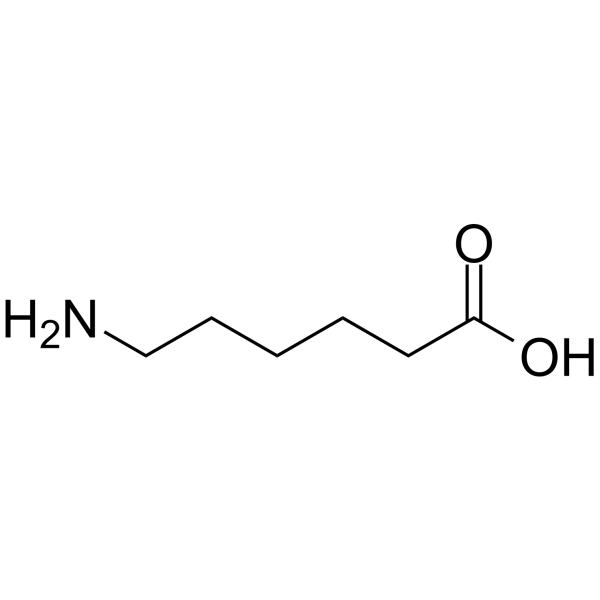
  • HY-B0236
    6-Aminocaproic acid
    4 Publications Verification

    EACA; Epsilon-Amino-n-caproic acid; 6-Aminohexanoic acid

    PAI-1 Plasminogen/Plasmin PROTAC Linkers Metabolic Disease Cancer
    6-Aminocaproic acid (EACA), a monoamino carboxylic acid, is a potent and orally active inhibitor of plasmin and plasminogen. 6-Aminocaproic acid is a potent antifibrinolytic agent. 6-Aminocaproic acid prevents clot lysis through the competitive binding of lysine residues on plasminogen, inhibiting plasmin formation and reducing fibrinolysis. 6-Aminocaproic acid can be used for the research of bleeding disorders .
    6-Aminocaproic acid
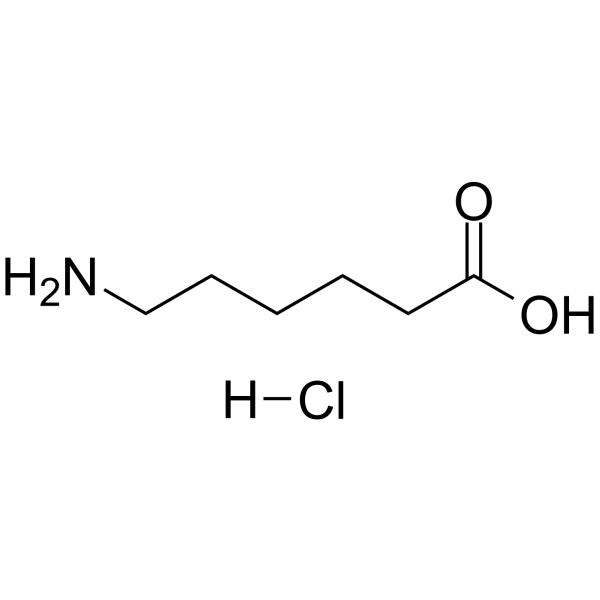
  • HY-B0236A

    EACA hydrochloride; Epsilon-Amino-n-caproic acid hydrochloride; 6-Aminohexanoic acid hydrochloride

    Drug Derivative PAI-1 Metabolic Disease Cancer
    6-Aminocaproic acid hydrochloride, a monoamino carboxylic acid, is a potent and orally active inhibitor of plasmin and plasminogen. 6-Aminocaproic acid is a potent antifibrinolytic agent. 6-Aminocaproic acid prevents clot lysis through the competitive binding of lysine residues on plasminogen, inhibiting plasmin formation and reducing fibrinolysis. 6-Aminocaproic acid can be used for the research of bleeding disorders .
    6-Aminocaproic acid hydrochloride
  • HY-171770

    PROTACs Aurora Kinase AAK1 Cyclin G-associated Kinase (GAK) Mps1 FAK Cancer
    dAurAB5 is a dual Aurora-A (DC50 = 8.8 nM) and Aurora-B (DC50 = 6.1 nM) PROTAC degrader. dAurAB5 induces degradation of Aurora-A and Aurora-B, reduces N-Myc levels, and decreases viability in IMR32 neuroblastoma cells. dAurAB5 downregulates the levels of AAK1, PTK2, GAK, and TTK. dAurAB5 can be used to study cancers such as neuroblastoma. (Pink: TTK ligand 2: HY-168542, Blue: Thalidomide-O-COOH: HY-103597, Black: 6-Aminocaproic acid: HY-B0236) .
    dAurAB5
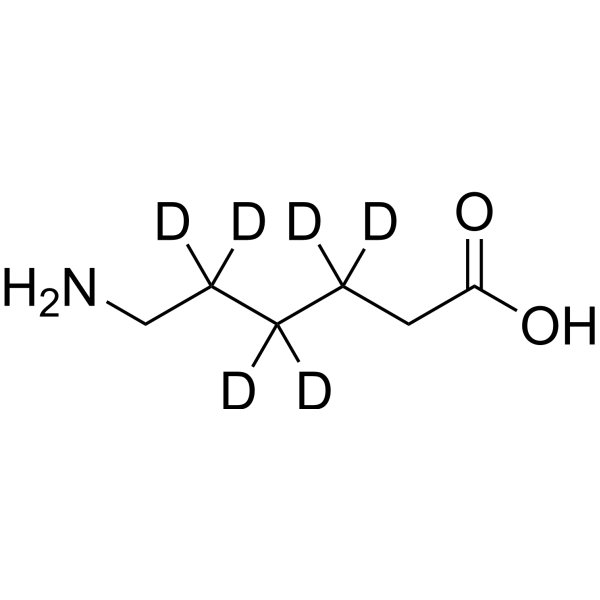
  • HY-B0236S

    EACA-d6; Epsilon-Amino-n-caproic acid-d6; 6-Aminohexanoic acid-d6

    Isotope-Labeled Compounds Metabolic Disease
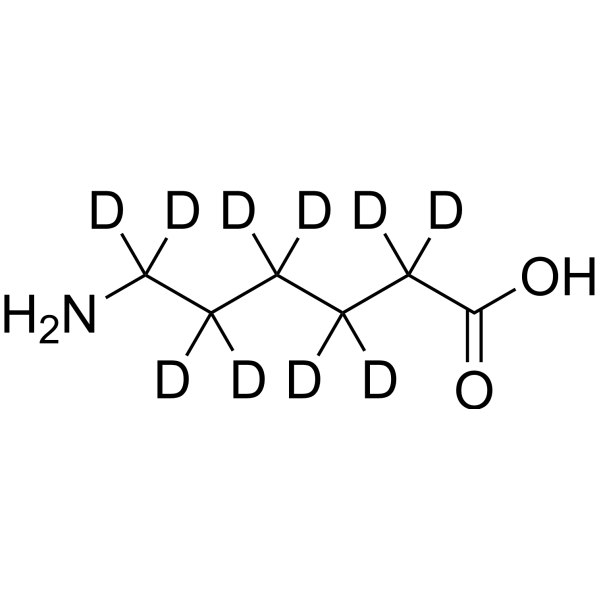
    6-Aminocaproic acid-d6 is deuterium labeled 6-Aminocaproic acid. 6-Aminocaproic acid (EACA), a monoamino carboxylic acid, is a potent and orally active inhibitor of plasmin and plasminogen. 6-Aminocaproic acid is a potent antifibrinolytic agent. 6-Aminocaproic acid prevents clot lysis through the competitive binding of lysine residues on plasminogen, inhibiting plasmin formation and reducing fibrinolysis. 6-Aminocaproic acid can be used for the research of bleeding disorders .
    6-Aminocaproic acid-d6
  • HY-P10341

    GCGR Metabolic Disease
    ZP3022 is a dual agonist of glucagon-like peptide-1 (GLP-1) and gastrin that has the ability to sustainably improve glycemic control. Additionally, ZP3022 can effectively increase β-cell mass, promote β-cell proliferation, and enhance the function of pancreatic islets. ZP3022 can be used in anti-diabetic research .
    ZP3022
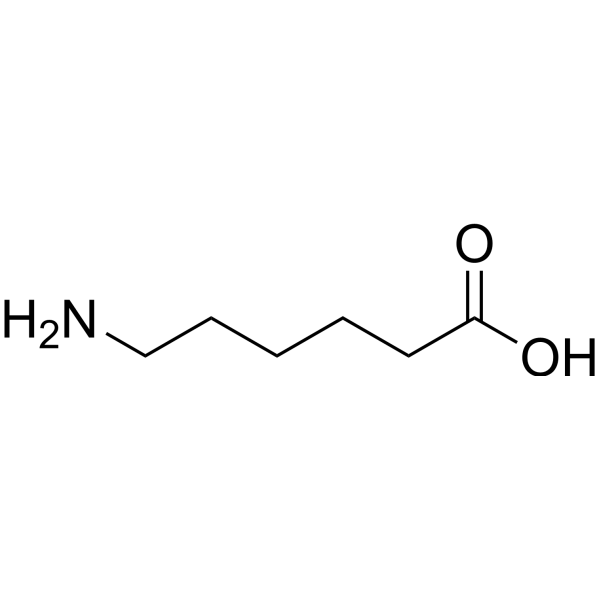
  • HY-B0236R

    EACA(Standard); Epsilon-Amino-n-caproic acid(Standard); 6-Aminohexanoic acid (Standard)

    PAI-1 Reference Standards Others Metabolic Disease Cancer
    6-Aminocaproic acid (Standard) is the analytical standard of 6-Aminocaproic acid. This product is intended for research and analytical applications. 6-Aminocaproic acid (EACA), a monoamino carboxylic acid, is a potent and orally active inhibitor of plasmin and plasminogen. 6-Aminocaproic acid is a potent antifibrinolytic agent. 6-Aminocaproic acid prevents clot lysis through the competitive binding of lysine residues on plasminogen, inhibiting plasmin formation and reducing fibrinolysis. 6-Aminocaproic acid can be used for the research of bleeding disorders .
    6-Aminocaproic acid (Standard)
  • HY-168690

    E3 Ligase Ligand-Linker Conjugates Cancer
    6-Aminocaproic acid-(S,R,S)-AHPC-Me is a ligand and linker for the E3 ubiquitin ligase of PROTAC, which can be used to synthesize PVD-06 (HY-149760) and is used in tumor research .
    6-Aminocaproic acid-(S,R,S)-AHPC-Me
  • HY-W701541

    EACA-d10 hydrochloride; Epsilon-Amino-n-caproic acid-d10 hydrochloride; 6-Aminohexanoic acid-d10 hydrochloride

    Isotope-Labeled Compounds PAI-1 Drug Derivative Cancer
    6-Aminocaproic acid-d10 hydrochloride (EACA-d10 hydrochloride; Epsilon-Amino-n-caproic Acid-d10 hydrochloride; 6-Aminohexanoic acid-d10 hydrochloride) is the deuterium labeled 6-Aminocaproic acid hydrochloride (HY-B0236A). 6-Aminocaproic acid hydrochloride, a monoamino carboxylic acid, is a potent and orally active inhibitor of plasmin and plasminogen. 6-Aminocaproic acid is a potent antifibrinolytic agent. 6-Aminocaproic acid prevents clot lysis through the competitive binding of lysine residues on plasminogen, inhibiting plasmin formation and reducing fibrinolysis. 6-Aminocaproic acid can be used for the research of bleeding disorders .
    6-Aminocaproic acid-d10 hydrochloride
  • HY-B0236S1

    EACA-d10; Epsilon-Amino-n-caproic acid-d10; 6-Aminohexanoic acid-d10

    Isotope-Labeled Compounds Metabolic Disease
    6-Aminocaproic acid-d10 is the deuterium labeled 6-Aminocaproic acid. 6-Aminocaproic acid (EACA), a monoamino carboxylic acid, is a potent and orally active inhibitor of plasmin and plasminogen. 6-Aminocaproic acid is a potent antifibrinolytic agent. 6-Aminocaproic acid prevents clot lysis through the competitive binding of lysine residues on plasminogen, inhibiting plasmin formation and reducing fibrinolysis. 6-Aminocaproic acid can be used for the research of bleeding disorders .
    6-Aminocaproic acid-d10
  • HY-P11243

    Ephrin Receptor Neurological Disease
    EphA4 agonist compound 23 is a novel EphA4 agonist peptide mimic. EphA4 agonist compound 23 exhibits high affinity, high selectivity, and significant receptor activation ability. EphA4 agonist compound 23 is commonly used in the study of neurodegenerative diseases .
    EphA4 agonist compound 23
  • HY-P10876

    Amyloid-β Neurological Disease
    mcK6A1 is an inhibitor for the aggregation of amyloid-β (), that selectively binds to the 16KLVFFA21 segment of Aβ42, forms an extended β-folded structure, and inhibits the formation of Aβ42 oligomers. mcK6A1 can be used in research of Alzheimer's disease and other amyloid-related diseases .
    mcK6A1

Inquiry Online

Your information is safe with us. * Required Fields.

Salutation


Country or Region *

Applicant Name *


Organization Name *

Department *


Email Address *


Product Name *

Cat. No.


Requested quantity *

Phone Number *


Remarks

Inquiry Online

Inquiry Information

Product Name:
Cat. No.:
Quantity:
MCE Japan Authorized Agent:

