1. Search Result
Search Result
Results for "

Aβ deposits

" in MedChemExpress (MCE) Product Catalog:

13

阻害剤およびアゴニスト

8

ペプチド

1

天然物

Targets Recommended:
製品番号 製品名 Target 研究分野 構造式
  • HY-126192

    PiB; 6-OH-BTA-1

    Amyloid-β Neurological Disease
    Pittsburgh Compound B (PiB) is a blood-brain barrier-permeable, specific deposition PET tracer that binds to Aβ(1-40) fibrils with a Ki value of 678.4 nM. Through click chemical modification (a clickable Pittsburgh Compound B derivative is prepared by introducing a PEG3 linker and an alkynyl group at the 6-hydroxy site of Pittsburgh Compound B, followed by covalent conjugation with azide-labeled fluorescent dyes or affinity tags via copper-catalyzed azide-alkyne cycloaddition (CuAAC)), Pittsburgh Compound B and its conjugates can be used for fluorescence imaging, ultrastructural studies, and enrichment and characterization of Aβ complexes. Pittsburgh Compound B is applicable to Alzheimer's disease research .
    Pittsburgh Compound B
  • HY-139066
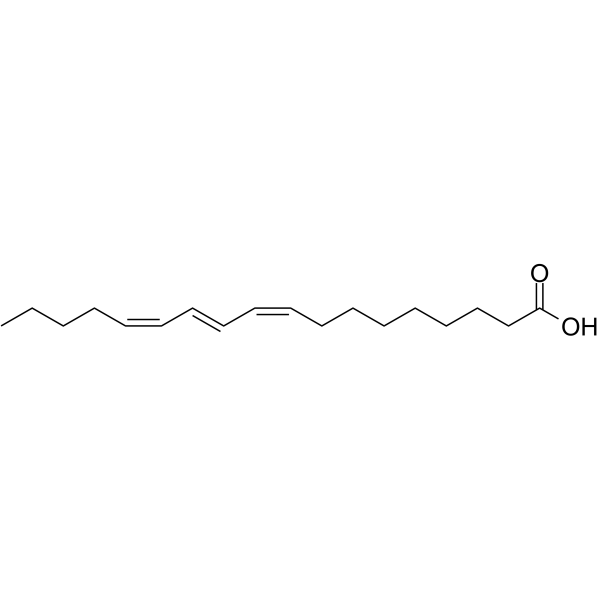
    Punicic acid
    1 Publications Verification

    Trichosanic acid

    TNF Receptor GLUT Proteasome Tau Protein PKC Neurological Disease Metabolic Disease Inflammation/Immunology
    Punicic acid is a bioactive compound of pomegranate seed oil. Punicic acid is an isomer of conjugated α-linolenic acid and ω-5 polyunsaturated fatty acids. Punicic acid has anti-inflammatory and antioxidant activities and can inhibit the expression of inflammatory mediators such as tumor necrosis factor α (TNF-α). Punicic acid can also reduce the formation of β-amyloid deposits and hyperphosphorylation of tau by increasing the expression of GLUT4 protein and inhibiting the overactivation of calpain, and is used to prevent and treat neurodegenerative diseases. In addition, punicic acid also has breast cancer inhibitor properties that depend on lipid peroxidation and PKC pathways .
    Punicic acid
  • HY-P4882A

    Amyloid-β Neurological Disease
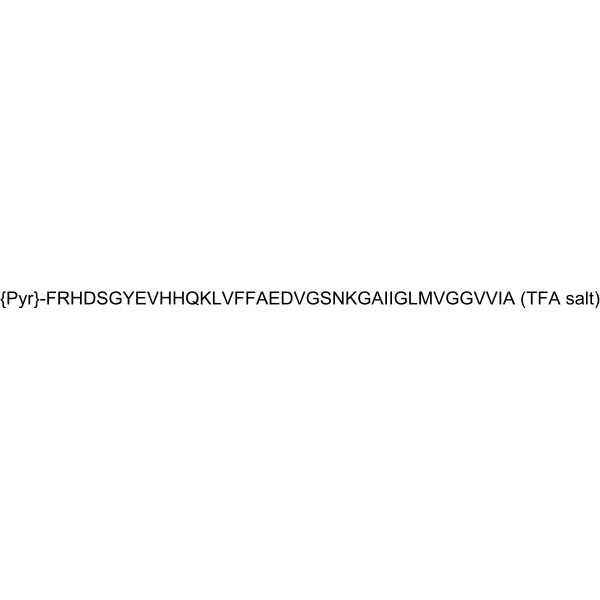
    (Pyr3)-Amyloid β-Protein (3-42) TFA is the predominant amyloid β-peptide structure deposited in human brain of Alzheimer's disease and Down's syndrome patients. (Pyr3)-Amyloid β-Protein (3-42) TFA is suggested to accumulate in the brain and to trigger the formation of insoluble amyloid β-peptide deposits .
    (Pyr3)-Amyloid β-Protein (3-42) TFA
  • HY-P1047

    [Pro18, Asp21] β-Amyloid (17-21)

    Amyloid-β Neurological Disease
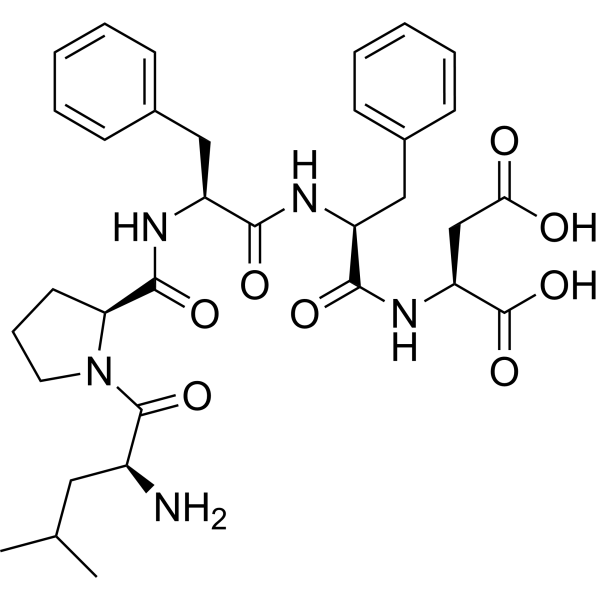
    β-Sheet Breaker Peptide iAβ5 is an effective brain amyloid-β (Abeta) degrader. Abeta deposits are associated with Alzheimer's disease (AD), and the related toxicity arises from its β-sheet conformation and aggregation. β-Sheet Breaker Peptide iAβ5 can repeatedly induce the degradation of fibrillary amyloid deposits in vivo. Therefore, β-Sheet Breaker Peptide iAβ5 can prevent and/or reverse neuronal contraction caused by Abeta and reduce the range of interleukin IL-1beta positive microglial-like cells around Abeta deposits. β-Sheet Breaker Peptide iAβ5 can reduce the size and/or number of brain amyloid plaques in AD. β-Sheet Breaker Peptide iAβ5 is labeled with a hydrophobic benzyl alcohol (HBA) tag and shows a bright blue color under acidic conditions, which can be used for quantitative determination.
    β-Sheet Breaker Peptide iAβ5
  • HY-P1173

    Myristoylated L 803; GSK-3β Inhibitor XIII

    GSK-3 Amyloid-β Neurological Disease
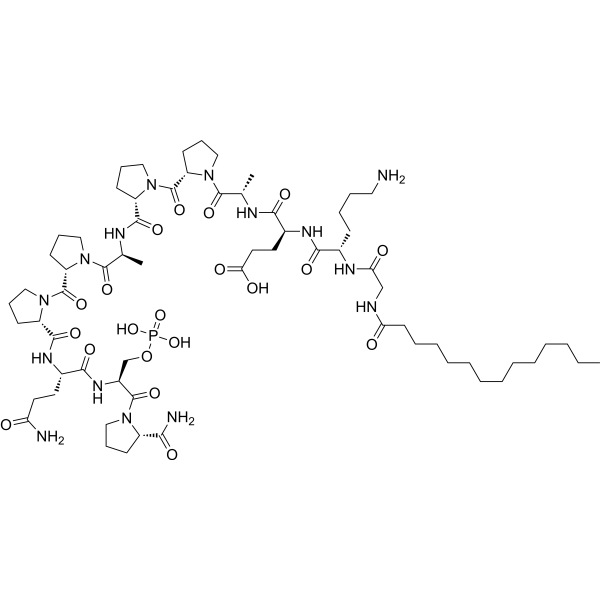
    L803-mts (Myristoylated L 803) is a selective and substrate-competitive GSK-3 peptide inhibitor (IC50: 40 μM). L803-mts also reduces Aβ deposits and ameliorates cognitive deficits in 5XFAD mice. L803-mts shows antidepressive effect in the forced swimming test .
    L803-mts
  • HY-148547

    Amyloid-β Neurological Disease
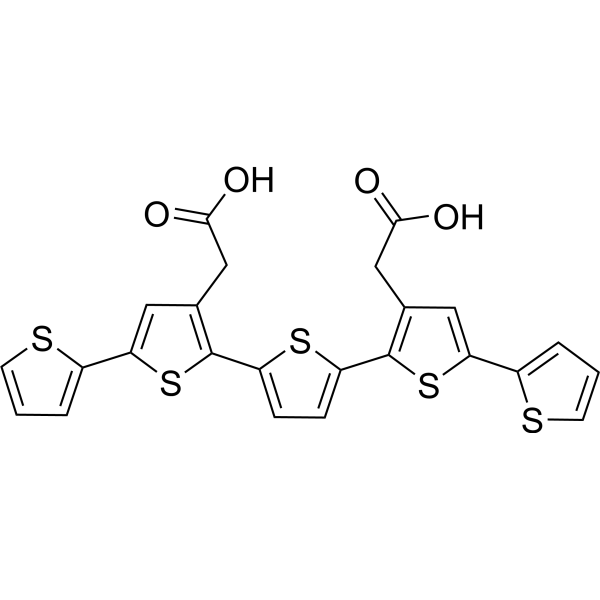
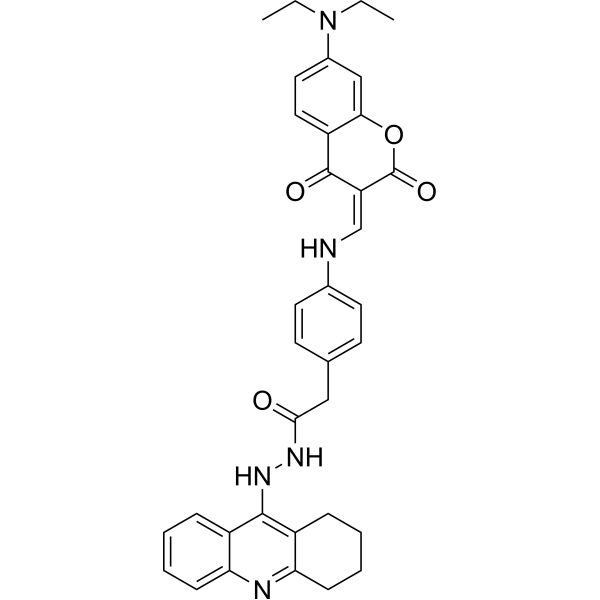
    q-FTAA is an oligothiophene. q-FTAA competes for binding to the X-34 binding site on fibrils. q-FTAA is applicable to research related to Alzheimer's disease .
    q-FTAA
  • HY-P1387

    Amyloid-β Apoptosis Neurological Disease
    β-Amyloid (1-40) (rat) is a rat form of the amyloid β-peptide, which accumulates as an insoluble extracellular deposit around neurons, giving rise to the senile plaques associated with Alzheimer's disease (AD). β-Amyloid (1-40) (rat) increases 45Ca 2+ influx, induces neurodegeneration in the rat hippocampal neurons of the CA1 subfield. β-Amyloid (1-40) (rat) induces apoptosis. β-Amyloid (1-40) (rat) can be used for the research of Alzheimer's disease .
    β-Amyloid (1-40) (rat)
  • HY-P4882

    Amyloid-β Neurological Disease
    (Pyr3)-Amyloid β-Protein (3-42) is the predominant amyloid β-peptide structure deposited in human brain of Alzheimer's disease and Down's syndrome patients. (Pyr3)-Amyloid β-Protein (3-42) is suggested to accumulate in the brain and to trigger the formation of insoluble amyloid β-peptide deposits .
    (Pyr3)-Amyloid β-Protein (3-42)
  • HY-P3846

    Amyloid-β Neurological Disease
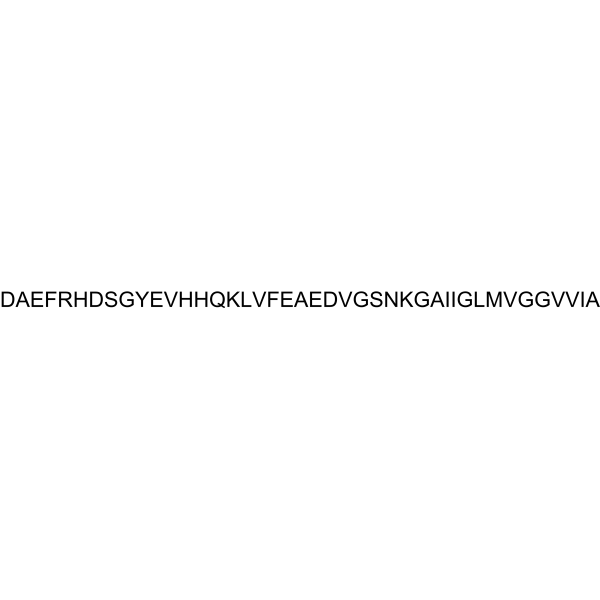
    (Glu20)-Amyloid β-Protein (1-42) is a slower fibrillizing variant of amyloid β-protein (Aβ). The Glu20 mutation reduces the aggregation propensity of Aβ42 and prevents accumulation of the slowly fibrillizing peptide. Amyloid β-protein is the primary component of both vascular and parenchymal amyloid deposits in Alzheimer's disease .
    (Glu20)-Amyloid β-Protein (1-42)
  • HY-148548

    Amyloid-β Neurological Disease
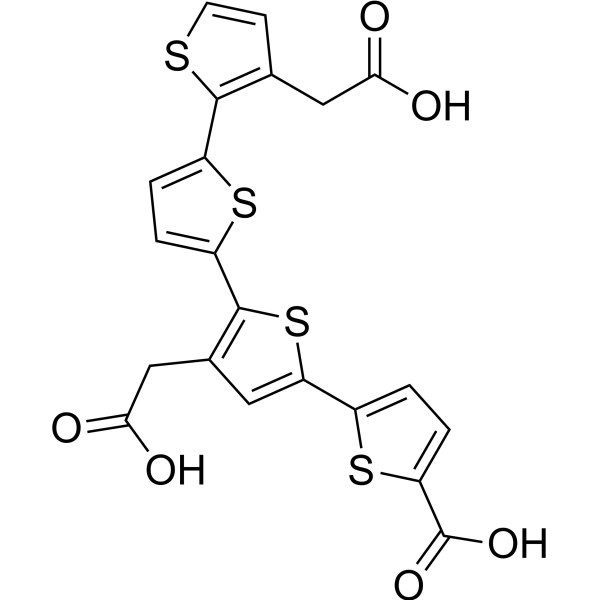
    p-HTAA is a pentamer hydrogen thiophene acetic acid. p-HTAA specifically labels Aβ deposits in the mice living brain .
    p-HTAA
  • HY-P3858

    Amyloid-β Neurological Disease
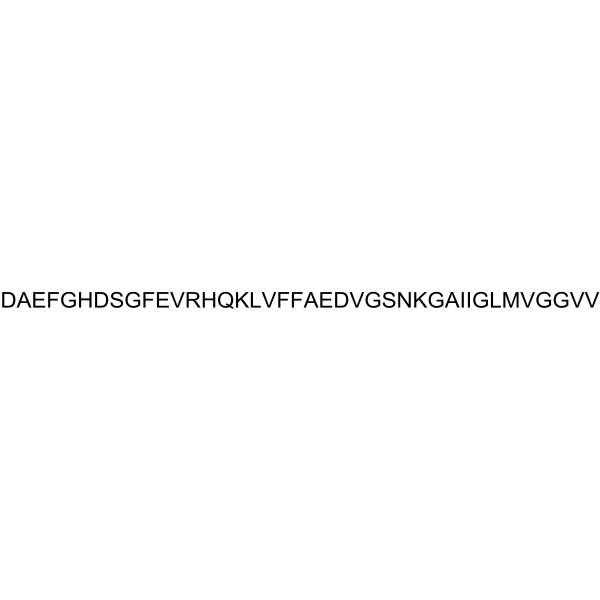
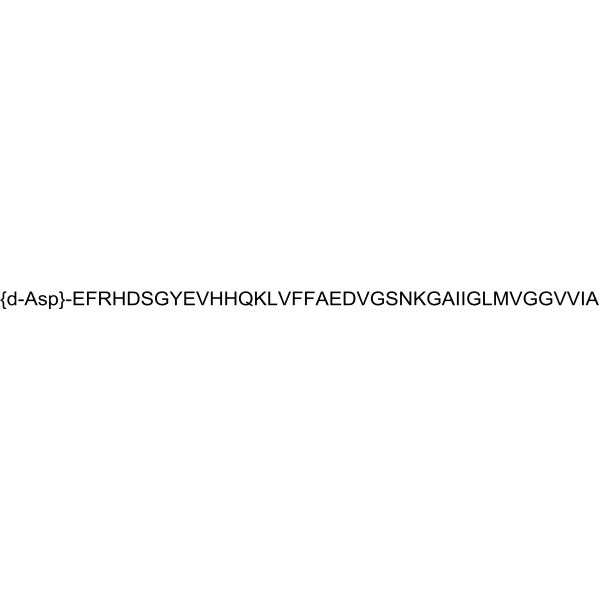
    (D-Asp1)-Amyloid β-Protein (1-42) is a peptide fragment of amyloid β-protein (Aβ). Amyloid β-protein is the primary component of both vascular and parenchymal amyloid deposits in Alzheimer's disease .
    (D-Asp1)-Amyloid β-Protein (1-42)
  • HY-P3845

    Amyloid-β Neurological Disease
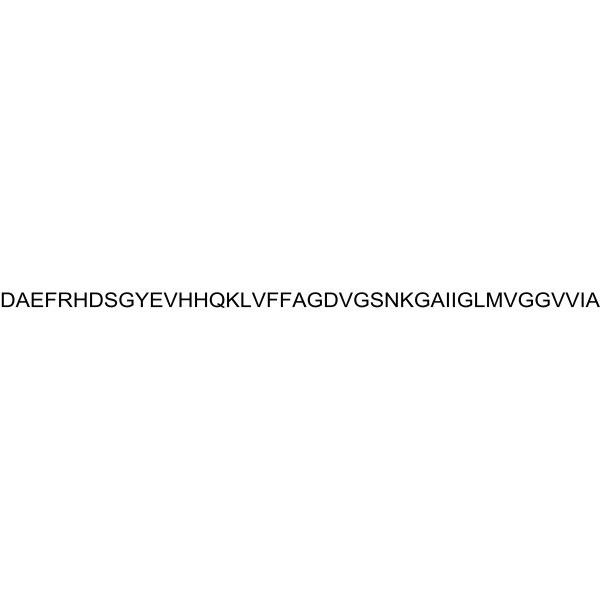
    (Gly22)-Amyloid β-Protein (1-42) is a peptide fragment of amyloid β-protein (Aβ). Amyloid β-protein is the primary component of both vascular and parenchymal amyloid deposits in Alzheimer's disease. Mutation of Glu22 to Gly22 in Aβ can increase aggregation .
    (Gly22)-Amyloid β-Protein (1-42)
  • HY-114613

    Amyloid-β α-synuclein CGRP Receptor Amylin Receptor Neurological Disease Inflammation/Immunology
    D-Trp-Aib is a dipeptide and amyloid-β inhibitor with a Kd of 29.6 nM. D-Trp-Aib triggers formation of non-toxic, non-β-sheet, amorphous amyloid β clusters from misfolded amyloid β monomers and toxic amyloid β oligomers, and reduces toxic amyloid β1-42 deposits. D-Trp-Aib inhibits amyloid fibril formation of α‑synuclein, IAPP and calcitonin. D-Trp-Aib can be used for the research of Alzheimer's disease .
    D-Trp-Aib

オンラインお問い合わせ

入力情報は安全に管理されます. 必須入力項目.

タイトル


国或いは地域 *

お名前 *


組纖名 *

デパートメント *


メールアドレス *


製品名 *

製品番号


カスタマ需要量 *

電話番号 *


必ず会社名を記載ください。個人への返信は行いません。

備考

バルクお問い合わせ

Inquiry Information

製品名:
製品番号:
数量:
MCE 日本正規代理店:

