1. Search Result
Search Result
Results for "

Central neuroinflammation

" in MedChemExpress (MCE) Product Catalog:

10

Inhibitors & Agonists

1

Fluorescent Dyes

1

Biochemical Assay Reagents

1

Inhibitory Antibodies

1

Natural
Products

1

GMP Molecules

Cat. No. Product Name Target Research Areas Chemical Structure
  • HY-16900
    Rolipram
    Maximum Cited Publications
    19 Publications Verification

    (R,S)-Rolipram; (±)-Rolipram; ZK 62711

    Bacterial HIV Phosphodiesterase (PDE) Epigenetic Reader Domain Amyloid-β Infection Neurological Disease Cancer
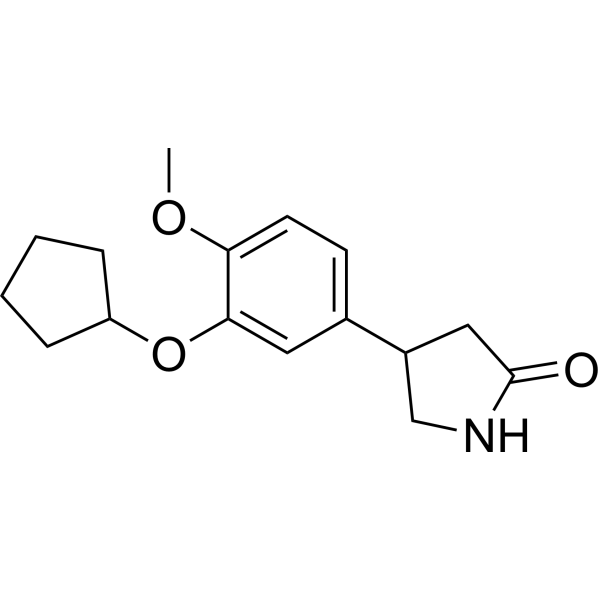
    Rolipram is a PDE4 inhibitor, with blood-brain barrier permeability, that reverses β-amyloid-induced learning and memory impairment in rats. Rolipram elevates intracellular cAMP and clevels and regulates the cAMP/CREB signaling pathway, thereby alleviating neuroinflammation and apoptotic responses. Rolipram promotes neuronal differentiation of human bone marrow mesenchymal stem cells and inhibits Methamphetamine- and morphine-induced hyperlocomotion in mice. Rolipram also reduces the viability of glioblastoma stem-like cells and enhances Bevacizumab (HY-P9906)-induced cell death. Rolipram inhibits the expression of proinflammatory cytokines and enhances central noradrenergic transmission. Rolipram is mainly used in studies related to various central nervous system diseases including Alzheimer's disease, major depressive disorder, glioblastoma multiforme, and multiple sclerosis .
    Rolipram
  • HY-B2132
    Tryptamine
    1 Publications Verification

    3-(2-Aminoethyl)indole~2-(3-Indolyl)ethylamine

    Endogenous Metabolite 5-HT Receptor Aryl Hydrocarbon Receptor Neurological Disease Metabolic Disease
    Tryptamine is a selective, blood-brain-penetrating 5-HT4 receptor agonist (EC50=1-3 mM) and an endogenous ligand of the aryl hydrocarbon receptor (AHR) (Kd=10-50 nM). Tryptamine promotes intestinal anion secretion and fluid transport by activating G protein-coupled receptors (GPCRs) and accelerates gastrointestinal motility. Tryptamine regulates Th17/Treg balance to inhibit neuroinflammation, competitively binds to 5-HT receptors to regulate central nervous system activity, and participates in temperature regulation and spinal reflex regulation as a neuromodulator. Tryptamine can be used to study intestinal motility disorders such as functional constipation, and has shown significant efficacy in multiple sclerosis models .
    Tryptamine
  • HY-149555

    Eukaryotic Initiation Factor (eIF) Neurological Disease
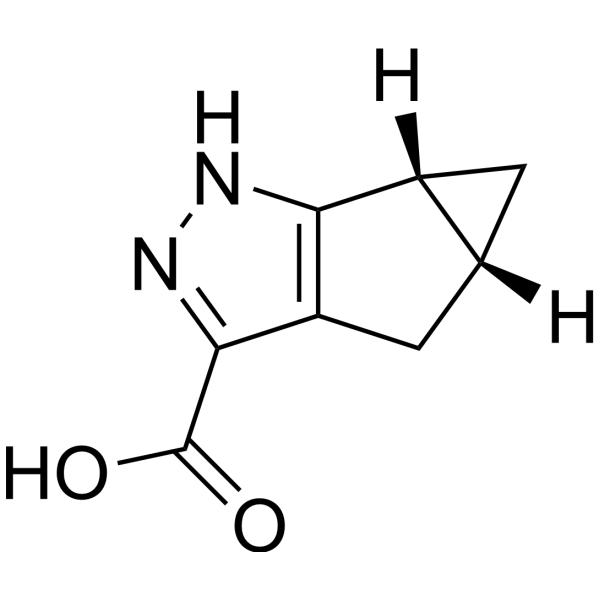
    DNL343 is a potent, selective, orally active and brain-penetrant activator of eukaryotic initiation factor eIF2B. DNL343 inhibits the activity of the integrated stress response (ISR) in the central nervous system (CNS) and reverses neurodegeneration and neuroinflammation. DNL343 also prevents motor dysfunction and premature death in eIF2B loss-of-function (LOF) mutant mice. DNL343 can be used in the study of neurodegenerative diseases .
    DNL343
  • HY-107581
    MK-1903
    1 Publications Verification

    GPR109A MMP Metabolic Disease Inflammation/Immunology
    MK-1903 is an orally active full agonist of GPR109a/HCAR2, with an EC50 of 12.9 nM. MK-1903 activates antilipolytic and vasodilatory pathways, reduces plasma free fatty acid levels, and induces skin flushing. MK-1903 stimulates the expression of HCAR2 protein and regulates the inflammatory response of microglia. MK-1903 prevents the enhanced firing activity of spinal nociceptive neurons. MK-1903 triggers the release of MMP-9 and the formation of NET. MK-1903 can be used in the research of dyslipidemia and neuroinflammation-based central nervous system diseases .
    MK-1903
  • HY-400882

    Drug Derivative Drug Intermediate TSPO Neurological Disease Inflammation/Immunology
    Tosylate-DPA-714 is a GMP-grade precursor for the radiosynthesis of DPA-714 (HY-122607). It crosses the blood-brain barrier and exhibits steroidogenic activity. DPA-714 is a specific ligand for the 18 kDa translocator protein (TSPO) with a Ki of 7.0 nM. Tosylate-DPA-714 is safe and does not bind to central benzodiazepine receptors (benzodiazepine receptor). As a radiolabeling precursor, Tosylate-DPA-714 reacts with 18F via nucleophilic aliphatic substitution to form 18F-DPA-714, enabling specific targeted binding to TSPO. 18F-DPA-714 accurately reflects the level of neuroinflammation mediated by microglial activation, and is used for PET molecular imaging of neurological diseases such as Alzheimer's disease and multiple sclerosis .
    Tosylate-DPA-714
  • HY-164049

    Prostaglandin Receptor Inflammation/Immunology
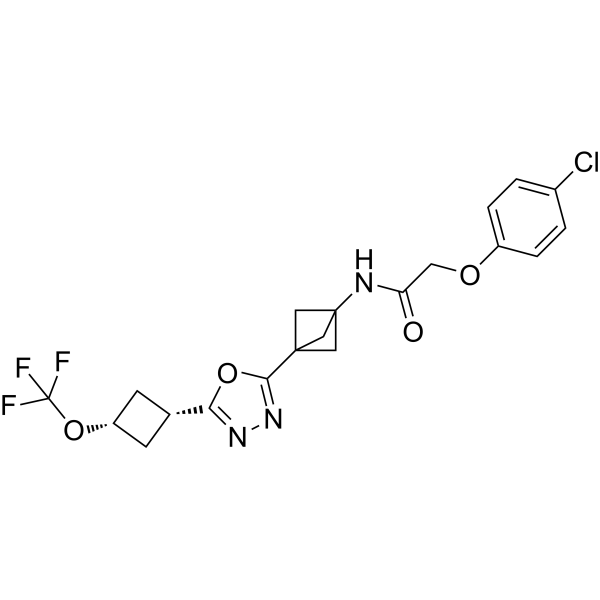
    TG8-260 is a second-generation EP2 antagonist developed to alleviate the pathology of central nervous system and peripheral diseases driven by inflammation. TG8-260 can reduce neuroinflammation and gliosis in the hippocampus of rats after pilocarpine-induced persistent epileptic status. Pharmacokinetic data of TG8-260 showed that its plasma half-life was 2.14 hours and its oral bioavailability was 77.3%. TG8-260 is also a potent inhibitor of CYP450 and shows antagonistic activity in inhibiting EP2 receptor-mediated inflammatory gene expression in BV2-hEP2 microglia, which is suitable for studying anti-inflammatory pathways in animal models of peripheral inflammatory diseases .
    TG8-260
  • HY-P991711

    Trk Receptor Neurological Disease Inflammation/Immunology
    Povovetug is a humanized IgG1κ chimeric monoclonal antibody inhibitor targeting NGF/bNGF. Povovetug has a significant analgesic activity. Povovetug can be used for central neuroinflammation like chronic radicular pain research .
    Povovetug
  • HY-16900R

    (R,S)-Rolipram (Standard); (±)-Rolipram (Standard); ZK 62711 (Standard)

    Reference Standards Bacterial HIV Phosphodiesterase (PDE) Epigenetic Reader Domain Amyloid-β Neurological Disease Cancer
    Rolipram (Standard) is the analytical standard of Rolipram (HY-16900). This product is intended for research and analytical applications. Rolipram is a PDE4 inhibitor, with blood-brain barrier permeability, that reverses β-amyloid-induced learning and memory impairment in rats. Rolipram elevates intracellular cAMP and clevels and regulates the cAMP/CREB signaling pathway, thereby alleviating neuroinflammation and apoptotic responses. Rolipram promotes neuronal differentiation of human bone marrow mesenchymal stem cells and inhibits Methamphetamine- and morphine-induced hyperlocomotion in mice. Rolipram also reduces the viability of glioblastoma stem-like cells and enhances Bevacizumab (HY-P9906)-induced cell death. Rolipram inhibits the expression of proinflammatory cytokines and enhances central noradrenergic transmission. Rolipram is mainly used in studies related to various central nervous system diseases including Alzheimer's disease, major depressive disorder, glioblastoma multiforme, and multiple sclerosis .
    Rolipram (Standard)
  • HY-16900G

    Phosphodiesterase (PDE) Epigenetic Reader Domain Amyloid-β Neurological Disease Inflammation/Immunology Cancer
    Rolipram GMP is Rolipram (HY-16900) produced by using GMP guidelines. GMP small molecules works appropriately as an auxiliary reagent for cell therapy manufacture. Rolipram is a PDE4 inhibitor, with blood-brain barrier permeability, that reverses β-amyloid-induced learning and memory impairment in rats. Rolipram elevates intracellular cAMP and clevels and regulates the cAMP/CREB signaling pathway, thereby alleviating neuroinflammation and apoptotic responses. Rolipram promotes neuronal differentiation of human bone marrow mesenchymal stem cells and inhibits Methamphetamine- and morphine-induced hyperlocomotion in mice. Rolipram also reduces the viability of glioblastoma stem-like cells and enhances Bevacizumab (HY-P9906)-induced cell death. Rolipram inhibits the expression of proinflammatory cytokines and enhances central noradrenergic transmission. Rolipram is mainly used in studies related to various central nervous system diseases including Alzheimer's disease, major depressive disorder, glioblastoma multiforme, and multiple sclerosis .
    Rolipram
  • HY-107581R

    Reference Standards GPR109A MMP Metabolic Disease Inflammation/Immunology
    MK-1903 (Standard) is the analytical standard of MK-1903 (HY-107581). This product is intended for research and analytical applications. MK-1903 is an orally active full agonist of GPR109a/HCAR2, with an EC50 of 12.9 nM. MK-1903 activates antilipolytic and vasodilatory pathways, reduces plasma free fatty acid levels, and induces skin flushing. MK-1903 stimulates the expression of HCAR2 protein and regulates the inflammatory response of microglia. MK-1903 prevents the enhanced firing activity of spinal nociceptive neurons. MK-1903 triggers the release of MMP-9 and the formation of NET. MK-1903 can be used in the research of dyslipidemia and neuroinflammation-based central nervous system diseases.
    MK-1903 (Standard)

Inquiry Online

Your information is safe with us. * Required Fields.

Salutation


Country or Region *

Applicant Name *


Organization Name *

Department *


Email Address *


Product Name *

Cat. No.


Requested quantity *

Phone Number *


Remarks

Inquiry Online

Inquiry Information

Product Name:
Cat. No.:
Quantity:
MCE Japan Authorized Agent:

