1. Search Result
Search Result
Results for "

NOD1-IN-1

" in MedChemExpress (MCE) Product Catalog:

7

Inhibitors & Agonists

2

Peptides

Cat. No. Product Name Target Research Areas Chemical Structure
  • HY-168023

    NOD-like Receptor (NLR) Inflammation/Immunology
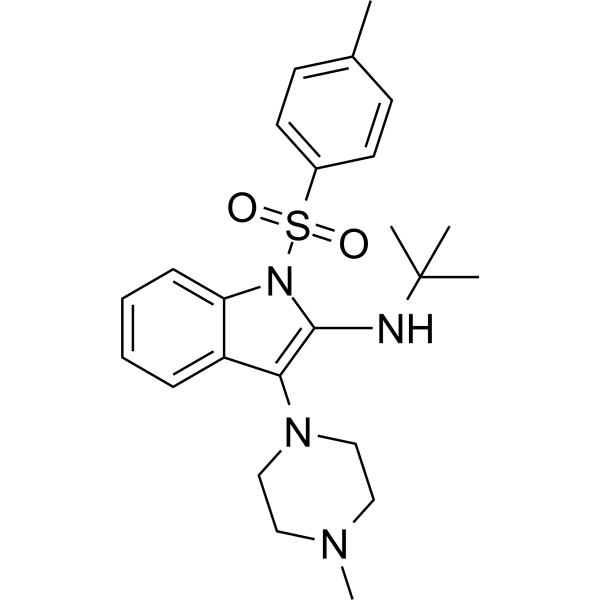
    NOD1/-IN-1 (Compound 2) is a potent RIPK2 inhibitor with an IC50 value of 0.65 nM determined by ADP-Glo assays. NOD1/-IN-1 selectively inhibits the NOD1 pathway (with an IC50 of 33 nM for NOD1), blocking the production of pro-inflammatory cytokines and thereby reducing inflammation. NOD1/-IN-1 is applicable for research in the field of colitis .
    NOD1-IN-1
  • HY-P5522A
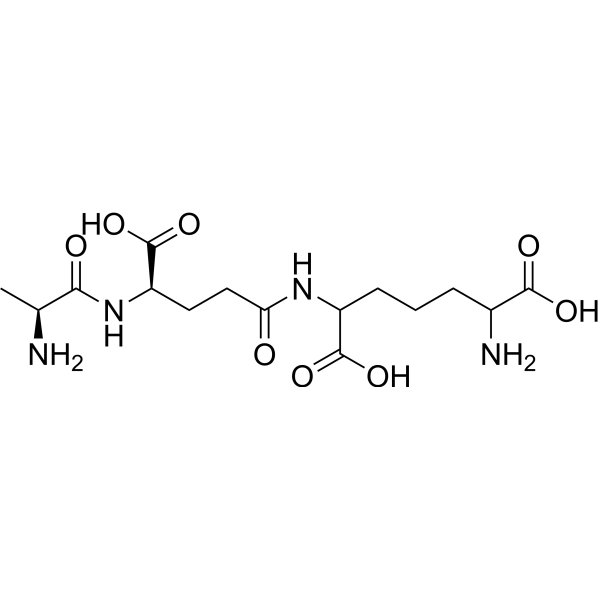
    TriDAP dihydrochloride
    1 Publications Verification

    L-Ala-γ-D-Glu-meso-diamINopimelic acid dihydrochloride

    NOD-like Receptor (NLR) NF-κB MAP3K MEK ERK p38 MAPK Interleukin Related SARS-CoV Infection Inflammation/Immunology
    TriDAP dihydrochloride (L-Ala-γ-D-Glu-meso-diaminopimelic acid dihydrochloride) is a NOD1 agonist with a Kd value of 34.5 μM. TriDAP dihydrochloride enhances the binding of NOD1-RICK, promotes RICK phosphorylation, and activates the NF-κB, TAK1, MEK/ERK, p38 and interferon response pathways. TriDAP dihydrochloride downregulates Runx2 via increasing ubiquitination and reduces trabecular bone parameters. TriDAP dihydrochloride decreases IκBα levels and increases p65 levels. TriDAP dihydrochloride induces the secretion of proinflammatory mediators IL-8 and prostaglandins, triggers tissue inflammation and innate immune activation, and inhibits SARS-CoV-2 replication in lung epithelial cells. TriDAP dihydrochloride increases the RANKL/OPG ratio in mice, reduces bone mass and enhances osteoclast activity, and inhibits new bone formation by decreasing the mineralization deposition rate in mice. TriDAP dihydrochloride can be used in research related to pulpitis, chronic ulcerative colitis, Crohn's disease and SARS-CoV-2 infection .
    TriDAP dihydrochloride
  • HY-P5522

    L-Ala-γ-D-Glu-meso-diamINopimelic acid

    NOD-like Receptor (NLR) NF-κB MAP3K MEK ERK p38 MAPK Interleukin Related SARS-CoV Infection Inflammation/Immunology
    TriDAP (L-Ala-γ-D-Glu-meso-diaminopimelic acid) is a NOD1 agonist with a Kd value of 34.5 μM. TriDAP enhances the binding of NOD1-RICK, promotes RICK phosphorylation, and activates the NF-κB, TAK1, MEK/ERK, p38 and interferon response pathways. TriDAP downregulates Runx2 via increasing ubiquitination and reduces trabecular bone parameters. TriDAP decreases IκBα levels and increases p65 levels. TriDAP induces the secretion of proinflammatory mediators IL-8 and prostaglandins, triggers tissue inflammation and innate immune activation, and inhibits SARS-CoV-2 replication in lung epithelial cells. TriDAP increases the RANKL/OPG ratio in mice, reduces bone mass and enhances osteoclast activity, and inhibits new bone formation by decreasing the mineralization deposition rate in mice. TriDAP can be used in research related to pulpitis, chronic ulcerative colitis, Crohn's disease and SARS-CoV-2 infection .
    TriDAP
  • HY-170447

    NOD-like Receptor (NLR) Inflammation/Immunology
    NOD1 antagonist-2 (compound 66) is an orally active selective antagonist of both human and mouse NOD1. NOD1 antagonist-2 (compound 66) antagonizes NOD1-induced NF-κB and MAPK pathways .
    NOD1 antagonist-2
  • HY-163274

    NOD-like Receptor (NLR) Inflammation/Immunology
    NOD1 antagonist-1 (compound 37) exhibits an antagonistic activity towards NOD1 and a weak NOD1/NOD2 selectivity, with IC50s of 9.18 μM and 20.8 μM, respectively .
    NOD1 antagonist-1
  • HY-155151

    RIP kinase Inflammation/Immunology
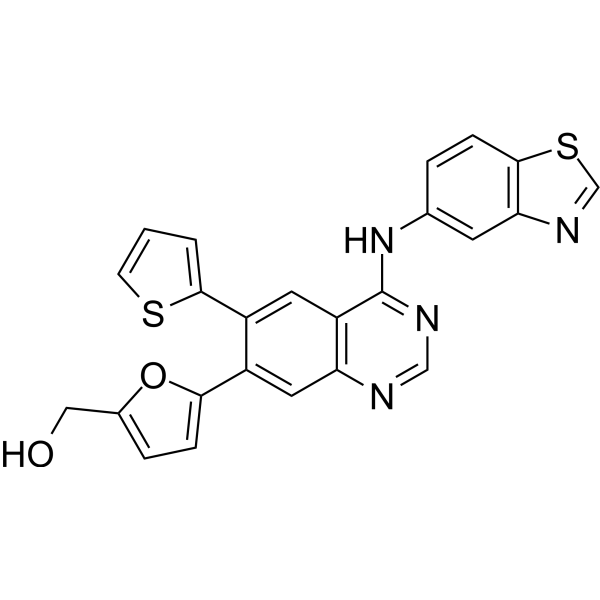
    RIPK2/3-IN-1 is a potent dual RIPK2/3 kinases inhibitor with IC50 values of 3 nM and 117 nM, respectively. RIPK2/3-IN-1 is against RIPK2 with IC50 value 14 nM in 14-TriLAN-Gly/NOD1 THP-1 cell-based NF-κB reporter assay .
    RIPK2/3-IN-1
  • HY-123925

    RIP kinase IAP NOD-like Receptor (NLR) Inflammation/Immunology
    CSLP43 is a selective RIPK2 and XIAP inhibitor with an IC50 of 19.9 nM against human RIPK2. CSLP43 binds to the ATP-binding pocket of RIPK2 and disrupts the interaction between RIPK2 and the BIR2 domain of XIAP or cIAP1. CSLP43 inhibits RIPK2 ubiquitination, NOD1-dependent inflammatory signaling pathways, NOD2-dependent inflammatory signaling pathways, as well as NF-κB activation associated with NOD agonists. CSLP43 is selective for the NOD1/NOD2 signaling pathway and does not inhibit the kinase activity of RIPK1 or RIPK3. CSLP43 is applicable to research related to Crohn's disease, Blau syndrome, early-onset sarcoidosis and early-onset inflammatory bowel disease .
    CSLP43

Inquiry Online

Your information is safe with us. * Required Fields.

Salutation


Country or Region *

Applicant Name *


Organization Name *

Department *


Email Address *


Product Name *

Cat. No.


Requested quantity *

Phone Number *


Remarks

Inquiry Online

Inquiry Information

Product Name:
Cat. No.:
Quantity:
MCE Japan Authorized Agent:

