1. Search Result
Search Result
Pathways Recommended: Antibody-drug Conjugate/ADC Related
Results for "

antimitotic drugs

" in MedChemExpress (MCE) Product Catalog:

9

Inhibitors & Agonists

1

Inhibitory Antibodies

1

Natural
Products

1

Oligonucleotides

Cat. No. Product Name Target Research Areas Chemical Structure
  • HY-P990673

    DSTP-3086S Antibody; RG-7450 Antibody

    ADC Antibody Transmembrane Glycoprotein Mitosis Cancer
    Vandortuzumab (DSTP-3086S Antibody; RG-7450 Antibody) is a humanized anti-STEAP1 IgG1 antibody and antimitotic agent that can be conjugated with MMAE (HY-15162) to form the antibody-drug conjugate (ADC) Vandortuzumab vedotin. Vandortuzumab vedotin specifically binds to STEAP1 and drives internalization of the complex, releasing the MMAE (HY-15162) payload intracellularly. After binding to tubulin, MMAE inhibits cell division and induces cell death. Vandortuzumab exhibits antitumor activity in preclinical xenograft models of prostate cancer and can be used for research related to metastatic castration-resistant prostate cancer (mCRPC) .
    Vandortuzumab
  • HY-117371

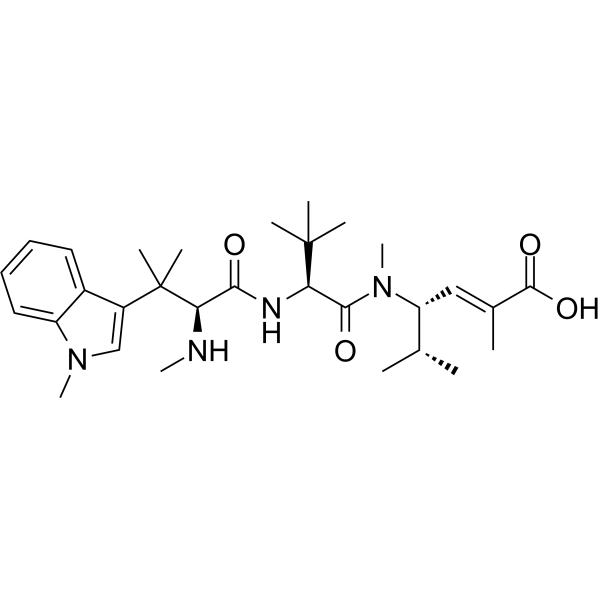
    (-)-Hemiasterlin; Milnamide B

    ADC Payload Cancer
    Hemiasterlin ((-)-Hemiasterlin) is an antimitotic marine natural product with potent anticancer effects. Hemiasterlin can be used as a cytotoxic payload (ADC Cytotoxin) in antibody-drug conjugates (ADCs) .
    Hemiasterlin
  • HY-148870

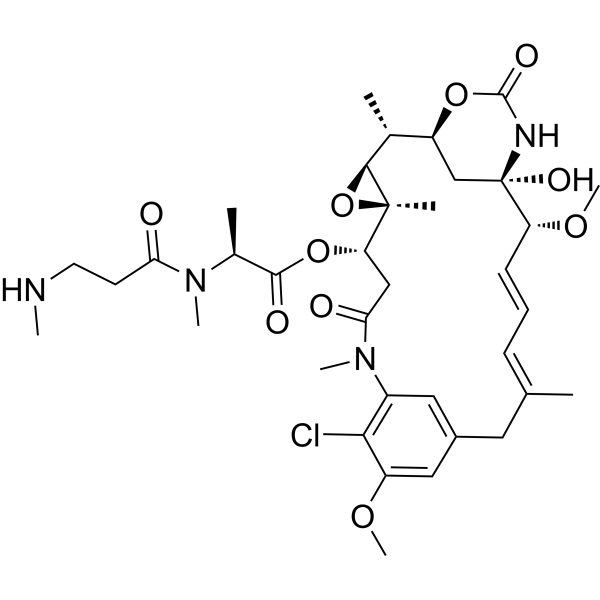
    ADC Payload Cancer
    Maytansinoid B is a kind of ADC Cytotoxin. Maytansinoid B can be used to conjugates with antibodies to form antibody-drug conjugates (ADCs). Maytansinoids are known as antimitotic agents, binding to tubulin and inhibiting microtubule assembly. Maytansinoids induces G2/M arrest in the cell cycle to induce apoptosis .
    Maytansinoid B
  • HY-130841

    APC Ligands for Target Protein for PROTAC Cancer
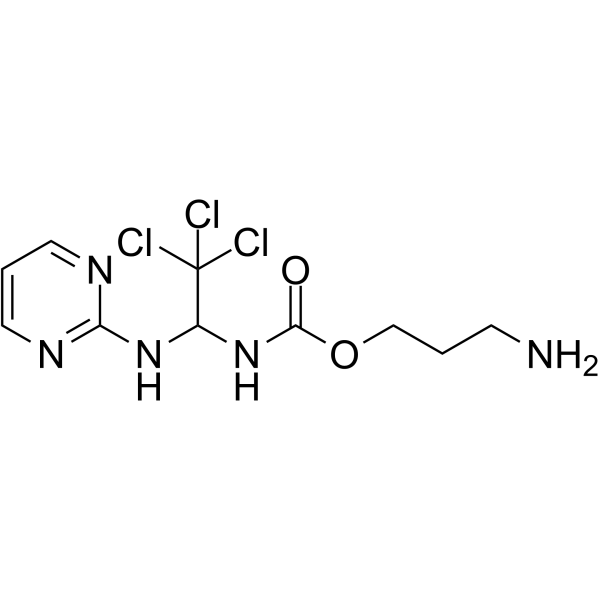
    Apcin-A is a small molecule inhibitor that selectively targets the cell division cycle protein Cdc20 and is a derivative of Apcin (HY-110287). Apcin-A competitively binds to the D-box binding pocket of Cdc20 and inhibits substrate ubiquitination mediated by the anaphase promoting complex APC/C-Cdc20. Apcin-A also blocks the binding of Cdc20 to substrates (such as securin and cyclin B1), inhibiting anaphase initiation and cell cycle exit. Apcin-A can promote or prolong mitotic slippage in coordination with p31 comet under conditions of high spindle assembly checkpoint (SAC) activity. Apcin-A can be used to develop anti-mitotic drugs and overcome tumor chemotherapy resistance. Apcin-A can be used to synthesize PROTAC CP5V (HY-130257)[1][2][3].
    Apcin-A
  • HY-P99705

    RG-7599; DNIB-0600A; NaPi2b-ADC

    Antibody-Drug Conjugates (ADCs) Cancer
    Lifastuzumab vedotin (RG-7599; DNIB0600A) is an antibody-drug conjugate (ADC) that comprises a humanized IgG1 anti-NaPi2b monoclonal antibody (MNIB2126A) and a potent antimitotic agent, monomethyl auristatin E (MMAE), which inhibits cell division by blocking the polymerization of tubulin. Lifastuzumab vedotin has the potential for non-small cell lung cancer (NSCLC) and platinum-resistant ovarian cancer (PROC) research .
    Lifastuzumab vedotin
  • HY-147193A

    NAMPT Cancer
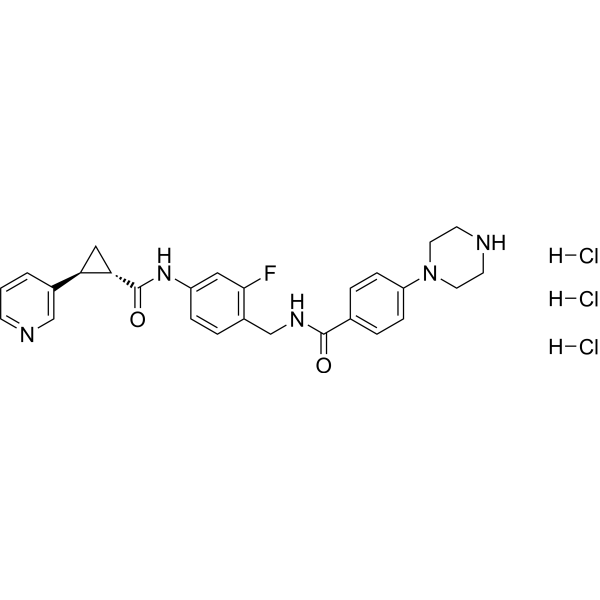
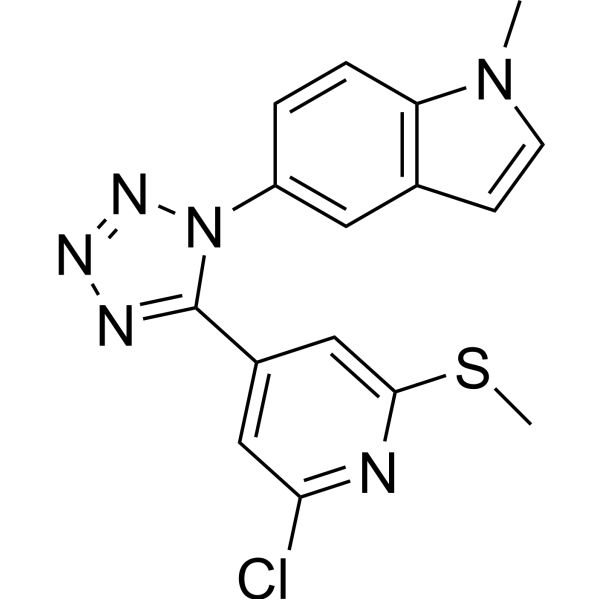
    Nampt-IN-10 trihydrochloride (compound 4) is a Nicotinamide Phosphoribosyltransferase (NAMPT) inhibitor. Nampt-IN-10 trihydrochloride shows cellular potency to A2780 and CORL23 cell lines with IC50 values of 5 and 19 nM, respectively. Nampt-IN-10 trihydrochloride can be used as a novel non-antimitotic payload for antibody-drug conjugate (ADC) .
    Nampt-IN-10 trihydrochloride
  • HY-177285

    Kinesin ADC Payload Cancer
    NVP-BQS481 (Compound 1) is a selective Kinesin spindle protein-5 (Eg5) inhibitor with an IC50< 0.5 nM. NVP-BQS481 has significant antimitotic and antitumor activity (IC50: 0.0.9 nM for SK-OV-3ip cells). NVP-BQS481 can be used as a cytotoxic payload for synthesis of antibody-drug conjugates (ADCs) .
    NVP-BQS481
  • HY-101741

    A-289099

    Microtubule/Tubulin Apoptosis Cancer
    A-259745 is an orally active antimitotic agent that binds to the colchicine-binding site of tubulin. A-259745 exhibits potent in vitro cytotoxic activity against both multi-drug-resistant and non-multi-drug-resistant cancer cell lines, with ED50 values of 0.018 μM against HCT-15 and 0.028 μM against NCI-H460 cell lines. A-259745 inhibits tubulin polymerization, disrupts the dynamic equilibrium of the mitotic spindle, arrests dividing cells in metaphase, and subsequently induces apoptosis. A-259745 shows dose-dependent antitumor efficacy in murine tumor models. A-259745 can be used for the study of cancer .
    A-259745
  • HY-149374

    Microtubule/Tubulin Cancer
    Tubulin inhibitor 36 (Compound 10) is a novel and potent tubulin inhibitor and inhibits the polymerization of microtubular protein then induces apoptosis with an IC50 value of 1.5±0.1 μM. Tubulin inhibitor 36 (Compound 10) has significant anti-mitotic effect and exhibits activities against glioblastoma cells. Tubulin inhibitor 36 (Compound 10) has anti-tumor effects and can be used for glioblastoma multiforme (GBM) research .
    Tubulin inhibitor 36

Inquiry Online

Your information is safe with us. * Required Fields.

Salutation


Country or Region *

Applicant Name *


Organization Name *

Department *


Email Address *


Product Name *

Cat. No.


Requested quantity *

Phone Number *


Remarks

Inquiry Online

Inquiry Information

Product Name:
Cat. No.:
Quantity:
MCE Japan Authorized Agent:

