1. Search Result
Search Result
Results for "

base excision repair

" in MedChemExpress (MCE) Product Catalog:

8

阻害剤およびアゴニスト

1

生化学アッセイ試薬

1

同位体標識化合物

製品番号 製品名 Target 研究分野 構造式
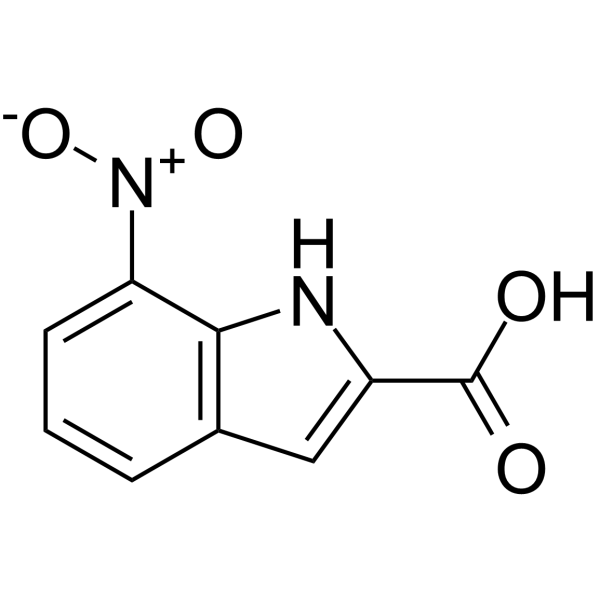
  • HY-W014622
    CRT0044876
    2 Publications Verification

    DNA/RNA Synthesis Cancer
    CRT0044876 is a potent and selective apurinic/apyrimidinic endonuclease 1 (APE1) inhibitor (IC50=~3 μM). CRT0044876 inhibits the AP endonuclease, 3′-phosphodiesterase and 3′-phosphatase activities of APE1, and is a specific inhibitor of the exonuclease III family of enzymes to which APE1 belongs. CRT0044876 potentiates the cytotoxicity of several DNA base-targeting compounds .
    CRT0044876
  • HY-Y0958
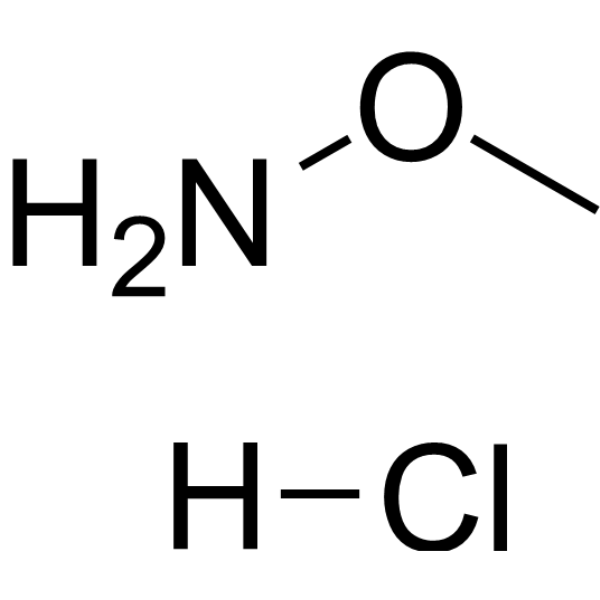
    Methoxyamine hydrochloride
    1 Publications Verification

    O-Methylhydroxylamine hydrochloride

    DNA/RNA Synthesis Apoptosis Cancer
    Methoxyamine (O-Methylhydroxylamine) hydrochloride is an orally active and potent base excision repair (BER) inhibitor. Methoxyamine hydrochloride binds to 3’ hydroxyl groups that are left behind by 3-methylpurine-DNA glycosylase (MPG) following excision of the damaged base and thus inhibits BER activity. Methoxyamine hydrochloride binds directly to the apyrimidinic (AP) sites. Methoxyamine hydrochloride synergistically enhances the therapeutic efficacy of DNA-damaging agents .
    Methoxyamine hydrochloride
  • HY-Y0958S

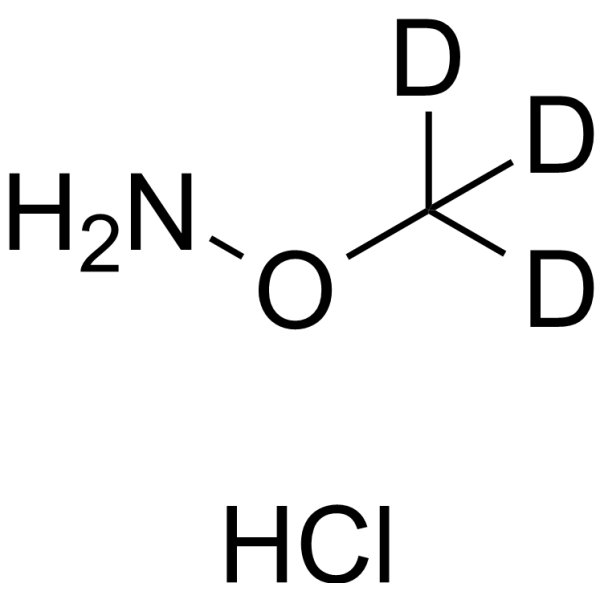
    O-Methylhydroxylamine-d3 hydrochloride

    DNA/RNA Synthesis Apoptosis Isotope-Labeled Compounds Cancer
    Methoxyamine-d3 (O-Methylhydroxylamine-d3) hydrochloride is the deuterium labeled Methoxyamine hydrochloride. Methoxyamine hydrochloride is an orally active and potent base excision repair (BER) inhibitor .
    Methoxyamine-d3 Hydrochloride
  • HY-W011425

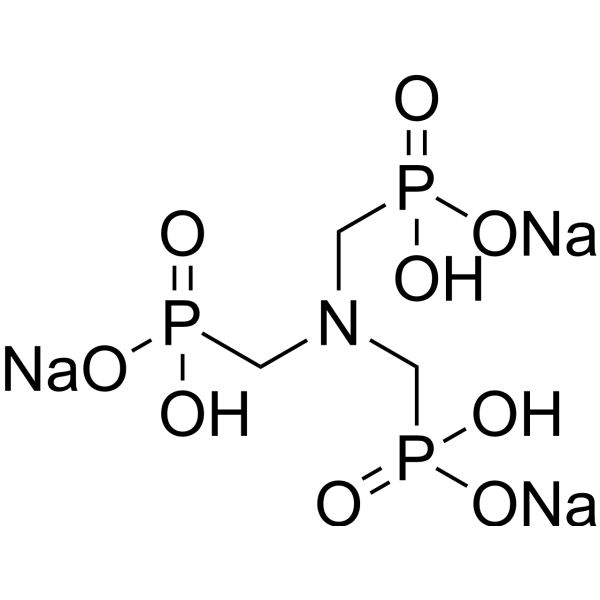
    Nitrilotris(methylenephosphonic acid)

    Environmental Pollutants DNA Alkylator/Crosslinker MOFs Cancer
    NTPO (Nitrilotris methylenephosphonic acid) is a DNA damage inducer, causing genomic DNA damage and fragmentation, activating ATR-mediated cell cycle checkpoints. The DNA damaging effects of NTPO are abrogated by base excision repair (BER) but not nucleotide excision repair (NER) .
    NTPO
  • HY-175466

    PARP DNA/RNA Synthesis Apoptosis Cancer
    BER-IN-1 is a base excision repair (BER) inhibtor, targeting DNA abasic sites. BER-IN-1 cleaves abasic sites via β- and β,δ-elimination mechanisms, disrupts the base excision repair (BER) pathway and leads to DNA double-strand breaks (DSBs). BER-IN-1 can enhance the effectiveness of the PARP inhibitor Olaparib (HY-10162) in homologous recombination (HR)-proficient cancer cells (MDA-MB-231, HeLa, and SKOV3). BER-IN-1 induces an S-phase arrest and apoptosis companied with Olaparib (HY-10162). BER-IN-1 can be used for the research of cancer, such as breast, cervical and ovarian cancer .
    BER-IN-1
  • HY-Y0958R

    O-Methylhydroxylamine hydrochloride (Standard)

    Reference Standards DNA/RNA Synthesis Apoptosis Cancer
    Methoxyamine hydrochloride (Standard) is the analytical standard of Methoxyamine hydrochloride. This product is intended for research and analytical applications. Methoxyamine (O-Methylhydroxylamine) hydrochloride is an orally active and potent base excision repair (BER) inhibitor. Methoxyamine hydrochloride binds to 3’ hydroxyl groups that are left behind by 3-methylpurine-DNA glycosylase (MPG) following excision of the damaged base and thus inhibits BER activity. Methoxyamine hydrochloride binds directly to the apyrimidinic (AP) sites. Methoxyamine hydrochloride synergistically enhances the therapeutic efficacy of DNA-damaging agents .
    Methoxyamine hydrochloride (Standard)
  • HY-W974306

    DNA/RNA Synthesis Cancer
    DML3, a 5-methylcytosine DNA glycosylase, is a DNA demethylating agent. DML3 specifically recognizes and excises 5-methylcytosine (5-meC) from DNA through a base excision repair mechanism. DML3 is promising for research of plant epigenetic regulation and cancers .
    DML3
  • HY-181967

    PROTACs PARP DNA/RNA Synthesis PD-1/PD-L1 Cancer
    PROTAC PARP1 degrader-5 is a PARP1 PROTAC degrader with a DC50 of 0.12 μM. PROTAC PARP1 degrader-5 hijacks the ubiquitin-proteasome system via catalytic ternary complex formation to drive sustained PARP1 degradation. PROTAC PARP1 degrader-5 induces DNA damage, drives marginal cytosolic double-stranded DNA accumulation in tumor cells, and up-regulates PD-L1 surface expression in tumor cells. PROTAC PARP1 degrader-5 shows tumor growth inhibition activity in murine melanoma models when encapsulated in lipid nanoparticles. PROTAC PARP1 degrader-5 can be used for the research of cancer, such as melanoma .
    PROTAC PARP1 degrader-5

オンラインお問い合わせ

入力情報は安全に管理されます. 必須入力項目.

タイトル


国或いは地域 *

お名前 *


組纖名 *

デパートメント *


メールアドレス *


製品名 *

製品番号


カスタマ需要量 *

電話番号 *


必ず会社名を記載ください。個人への返信は行いません。

備考

バルクお問い合わせ

Inquiry Information

製品名:
製品番号:
数量:
MCE 日本正規代理店:

