



MOFs
Metal-Organic Frameworks
MOFs (Metal-Organic Frameworks) have significant applications in biomedicine, such as serving as drug carriers for targeted delivery and controlled release to enhance therapeutic efficacy and reduce side effects. They are also used in bioimaging, disease diagnosis, and catalytic therapies (e.g., for cancer treatment).
-
MOFs 関連製品 (3081)
関連製品 (3081)

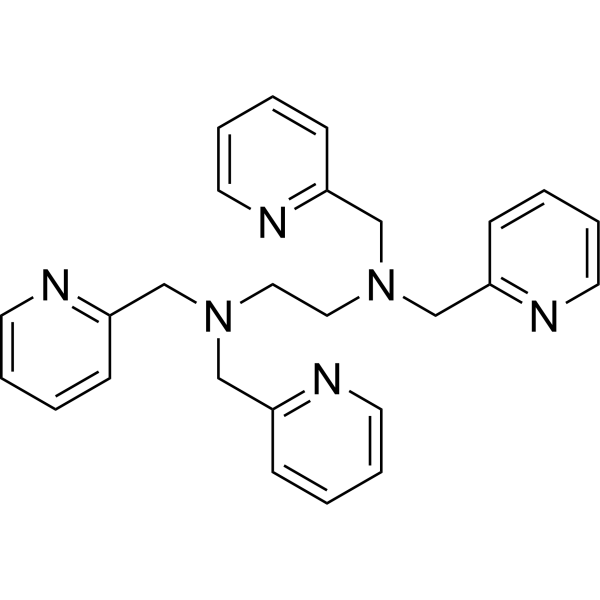
-
Chlorin e6
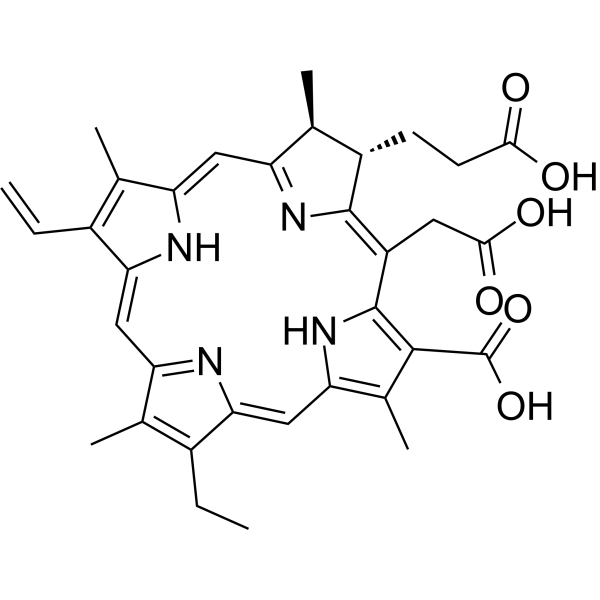 0 Images別名: Ce6Chlorin e6 is a photosensitizer and has strong absorption peaks at wavelength of 402 and 662 nm, as well as exhibiting intense fluorescence at 668 nm. Chlorin e6 has antimicrobial efficacy and anticancer activity. Chlorin e6 induces cell apoptosis via caspase-3 activation and can be used for the research of cancer.
-
Niacin
(Niacin)
 0 ImagesNiacin (Vitamin B3) is an orally active water-soluble B3 vitamin that is an essential nutrient for humans. Niacin (Vitamin B3) plays a key role in energy metabolism, cell signaling cascades regulating gene expression and apoptosis. Niacin (Vitamin B3) is also used in the study of cardiovascular diseases.
-
Imidazole
(イミダゾール)
 0 ImagesImidazole (Glyoxaline; 1,3-Diaza-2,4-cyclopentadiene) is a heterocyclic aromatic compound. Imidazole bearing molecules have been used as corrosion, acetylcholinesterase (AChEI) and xanthine oxidase (XO) inhibitors, performing biological activities such as antifungal, antituberculosis, anti-inflammatory, antioxidant, and analgesic, amongst many others. Imidazole inhibits the enzymatic conversion of the endoperoxides (PGG2 and PGH2) to thromboxane A2 by platelet microsomes. Imidazole derivatives exhibits inhibition on SARS-CoV-2 3CLPro enzyme, which is promising for research in the field of Alzheimer’s disease, gout, COVID-19 and thrombo-embolic disease.
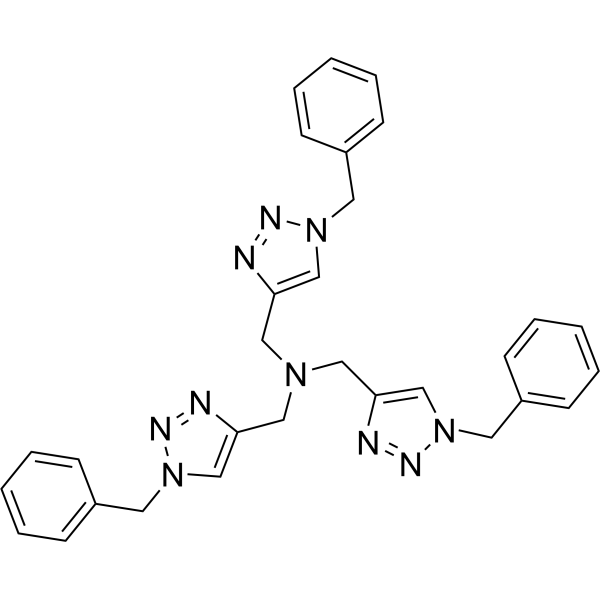
- Tris(benzyltriazolylmethyl)amine (Tris(benzyltriazolylmethyl)amine)
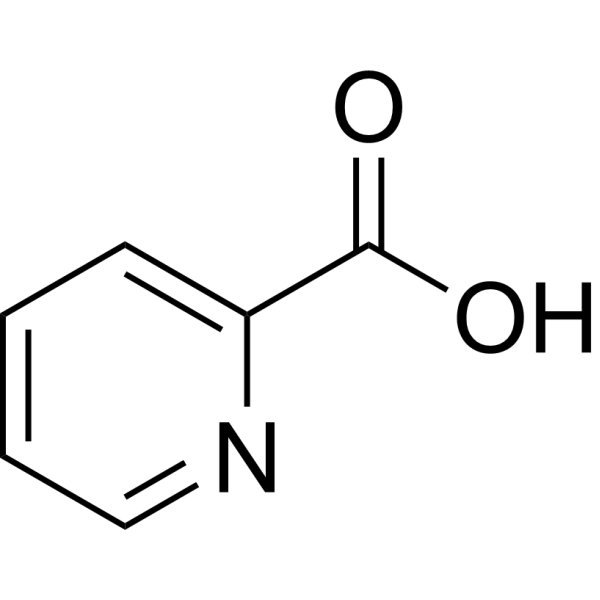
- Picolinic acid (ピコリン酸)
-
Tetrakis (4-carboxyphenyl) porphyrin
(Tetrakis (4-carboxyphenyl) porphyrin)
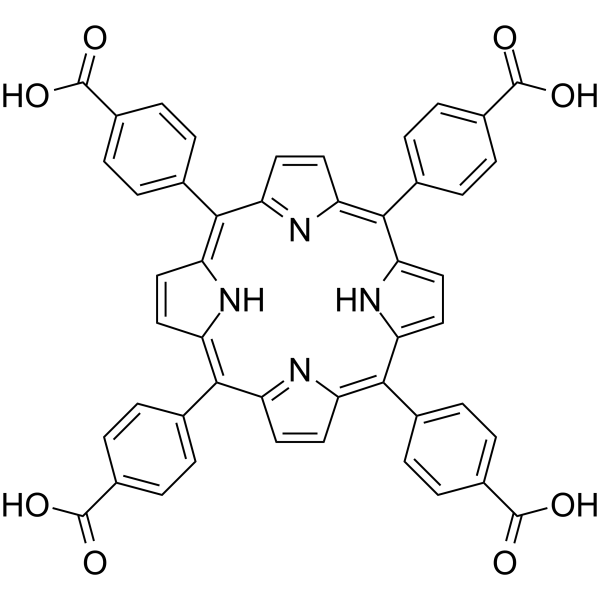 0 Images別名: TCPPTetrakis (4-carboxyphenyl) porphyrin (TCPP) plays the role of a metal remover.
-
Quinolinic acid
(Quinolinic acid)
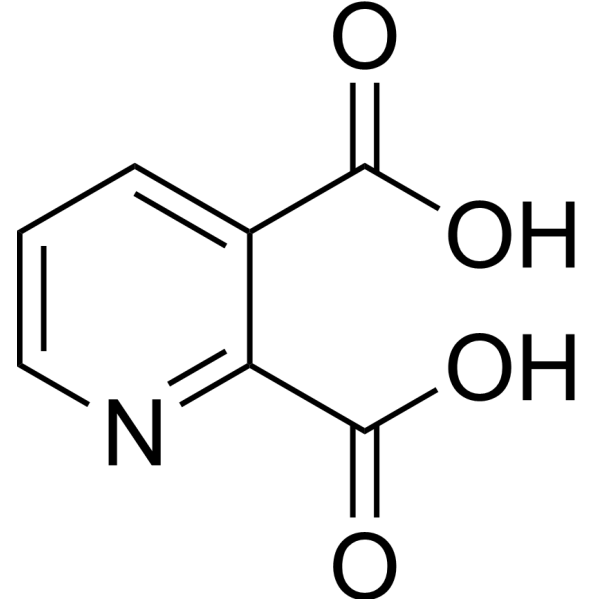 0 ImagesQuinolinic acid, an endogenous metabolite of tryptophan, is a N-methyl-D-aspartate receptor (NMDA receptor) agonist. Quinolinic acid increases glutamate efflux, induces the generation of ROS, activates nitric oxide synthase, produces excessive NO, leading to calcium ion influx and neuronal apoptosis.
-
2,2'-Bipyridine
(2,2'-Bipyridine)
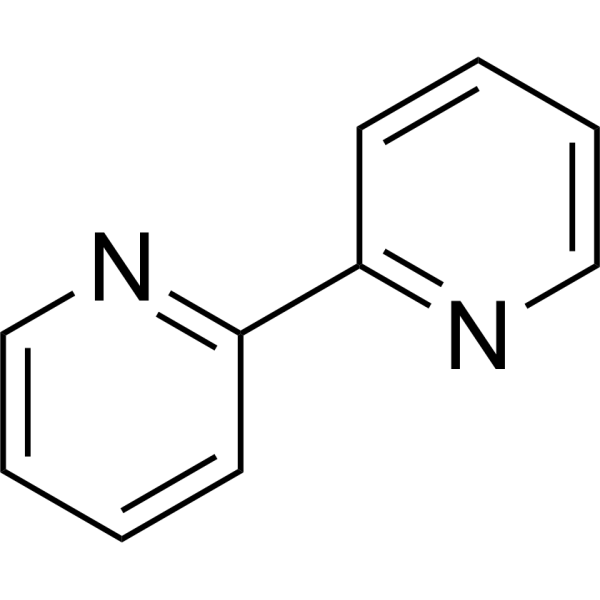 0 Images2,2'-Bipyridine is the unique molecular scaffold of the bioactive natural products. 2,2'-Bipyridine is extensively used as the core structure of many chelating ligands by acting as a bridge in the arrangement of the catalytic center. 2,2'-Bipyridine shows robust redox stability and hyperglycemic activity.
-
9,10-Anthracenediyl-bis(methylene)dimalonic acid
(9,10-Anthracenediyl-bis(methylene)dimalonic acid)
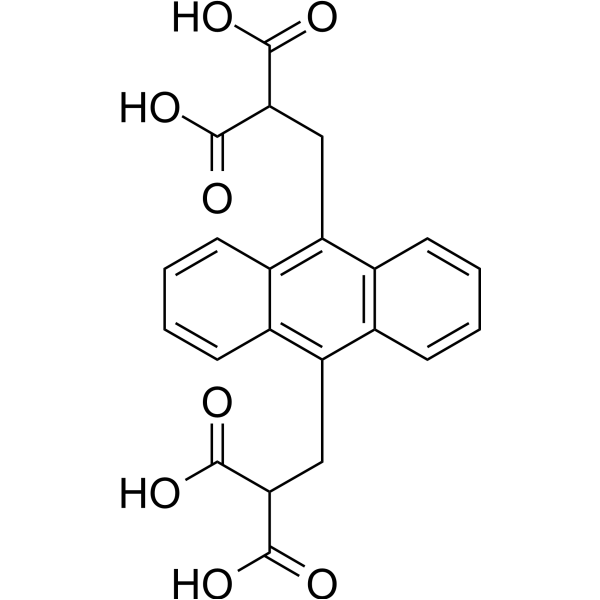 0 Images別名: ABMDMA9,10-Anthracenediyl-bis(methylene)dimalonic acid (ABMDMA) is a biological dye and indicator used to detect singlet oxygen generation (SOG). 9,10-Anthracenediyl-bis(methylene)dimalonic acid is water-soluble derivative of anthracene. 9,10-Anthracenediyl-bis(methylene)dimalonic acid can be photobleached by singlet oxygen to its corresponding endoperoxide. This reaction can be monitored spectrophotometrically by recording the decrease of absorbance at 400 nm.
-
Coproporphyrin III
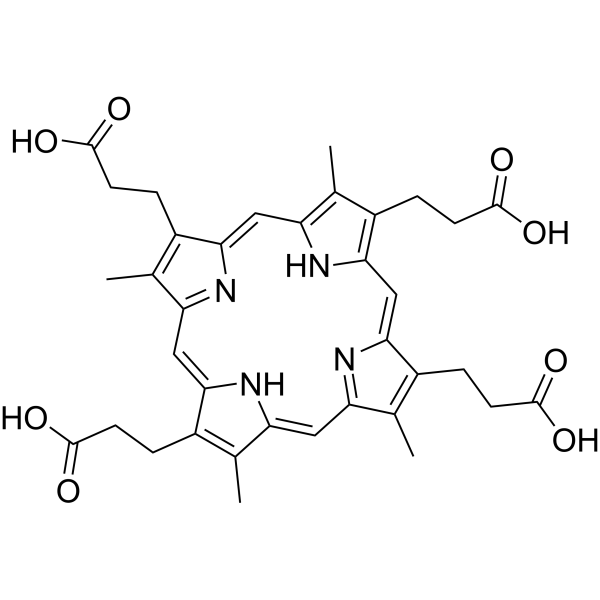 0 Images別名: ZincphyrinCoproporphyrin III (Zincphyrin) is a naturally occurring porphyrin derivative that is mainly found in urine.
-
TMB
(TMB)
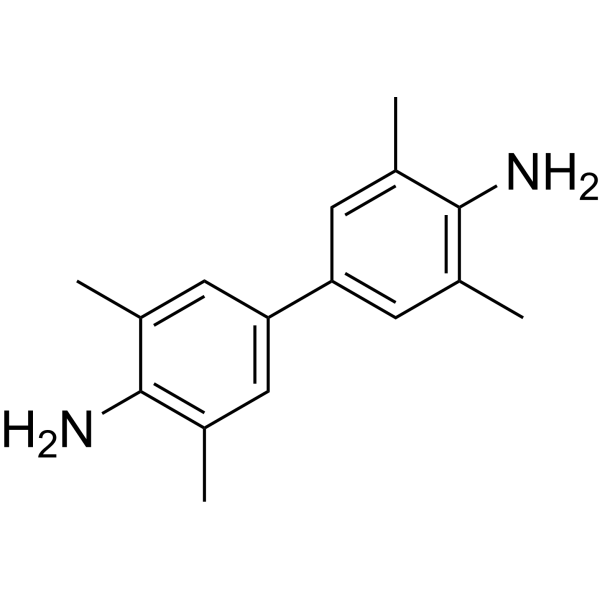 0 Images別名: BM blue; Sure Blue TMB; 3,3′,5,5′-テトラメチルベンジジンTMB is a non-toxic, non-mutagenic, colorless dye that is also used as a chromogenic agent in enzyme detection systems based on horseradish peroxidase (HRP). TMB can function as a photoacoustic probe for reactive oxygen and nitrogen species (ROS/RNS), reacting with hypochlorite, hydrogen peroxide, singlet oxygen, and nitrogen dioxide to produce blue oxidation products. TMB can detect the singlet oxygen produced by the outer membrane of Escherichia coli ATCC 25922.
-
Phytic acid sodium salt
(Sodium phytate)
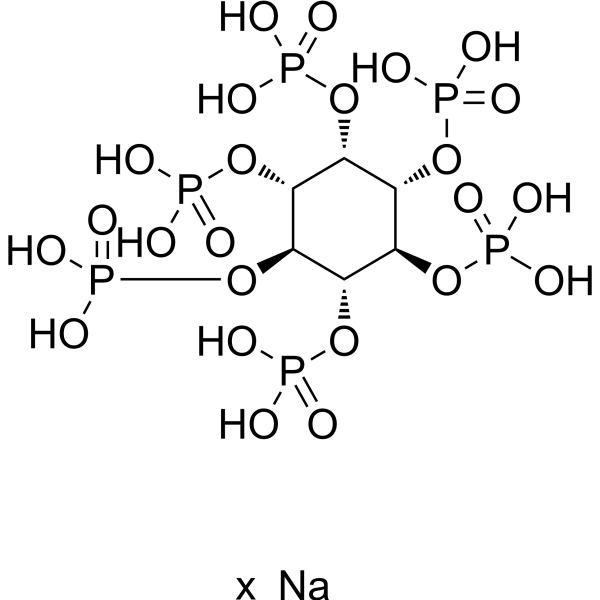 0 Images製品番号: HY-N2581CAS 番号: 14306-25-3別名: Phytic acid (sodium salt); myo-Inositol, hexakis(dihydrogen phosphate) (sodium salt); Inositol hexaphosphate (sodium salt)Phytic acid (myo-Inositol; hexakis dihydrogen phosphate; Inositol hexaphosphate) sodium salt is an orally active compound. Phytic acid sodium salt can be derived from the seeds of legumes. Phytic acid sodium salt is a [PO4]3- storage depot and precursor for other inositol phosphates and pyrophosphates. Phytic acid sodium salt attenuates Aβ oligomers and upregulates autophagy protein. Phytic acid sodium salt can be used in cardiovascular disease, metabolic disease, nervous system disease and cancer research.
-
4,6-Dioxoheptanoic acid
(4,6-Dioxoheptanoic acid)
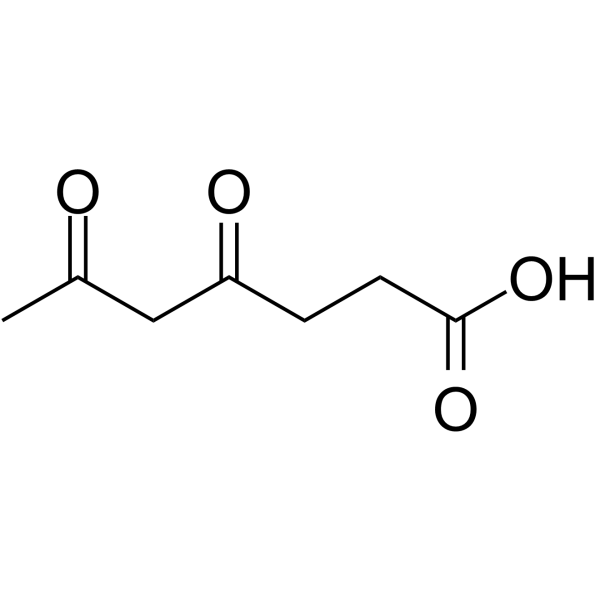 0 Images別名: スクシニルアセトン; 4,6-ジオキソへプタン酸4,6-Dioxoheptanoic acid is a potent inhibitor of heme biosynthesis.
-
1,3,6,8-Tetrakis[p-benzoic acid]pyrene
![1,3,6,8-Tetrakis[p-benzoic acid]pyrene](https://file.medchemexpress.com/product_pic/hy-w074644.gif "Click to View 1,3,6,8-Tetrakis[p-benzoic acid]pyrene Product Detail") 0 Images別名: 4,4',4'',4'''-(Pyrene-1,3,6,8-tetrayl)tetrabenzoic acid1,3,6,8-Tetrakis[p-benzoic acid]pyrene (4,4',4'',4'''-(Pyrene-1,3,6,8-tetrayl)tetrabenzoic acid) is a metal-organic framework (MOF).
0 Images別名: 4,4',4'',4'''-(Pyrene-1,3,6,8-tetrayl)tetrabenzoic acid1,3,6,8-Tetrakis[p-benzoic acid]pyrene (4,4',4'',4'''-(Pyrene-1,3,6,8-tetrayl)tetrabenzoic acid) is a metal-organic framework (MOF).
-
ZIF-8
 0 Images製品番号: HY-W075517CAS 番号: 59061-53-9別名: 2-Methylimidazole zinc saltZIF-8 (2-Methylimidazole zinc salt) is a caspase-1/Gasdermin D activator and a pH- and stimulus-responsive inducer of drug release, which serves as a highly efficient drug delivery carrier. ZIF-8 is a metal-organic framework (MOF). ZIF-8 activates the caspase-1/Gasdermin D-dependent pyroptosis pathway, induces pyroptosis, necrosis and immunogenic cell death, initiates in situ anti-tumor immunity, reprograms the immunosuppressive tumor microenvironment and inhibits tumor proliferation. ZIF-8 is applicable to related research on multiple cancers including colorectal cancer and breast cancer.
-
Tetraphenylporphyrin
(Tetraphenylporphyrin)
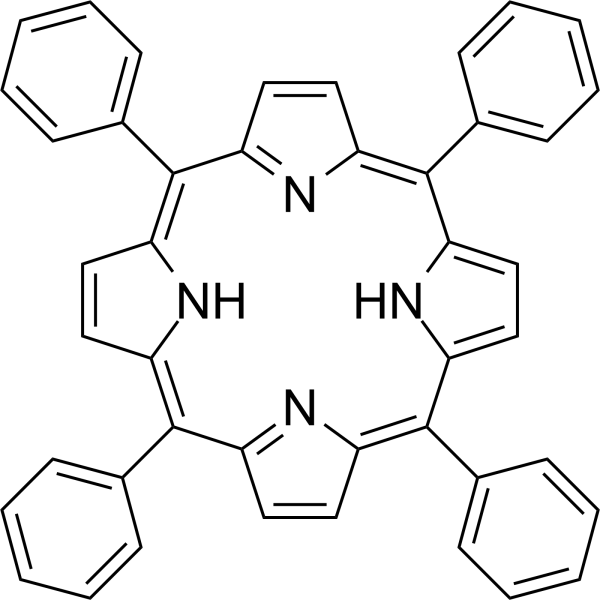 0 Images別名: TPP; Tetraphenylporphine; meso-Tetraphenylporphyrin; 5,10,15,20-テトラフェニル-21H,23H-ポルフィンTetraphenylporphyrin (TPP) is a symmetrically substituted porphyrin-based heterocyclic compound and used as a structural block for supramolecular synthesis. Tetraphenylporphyrin derivatives can be used for cancer research.
-
Thiocarbonyldiimidazole
 0 ImagesThiocarbonyldiimidazole is a synthetic chemical reagent that serves as a nitrogen-containing MOF ligand for synthetic applications. Thiocarbonyldiimidazole enables the preparation of thiocarbonyl imidazolides from alcohols, and is used in the Barton-McCombie deoxygenation reaction and natural product synthesis.
![1,4-Diazabicyclo[2.2.2]octane](https://file.medchemexpress.com/product_pic/hy-y0566.gif "Click to View 1,4-Diazabicyclo[2.2.2]octane Product Detail")
-
2,6-Di(1-pyrazolyl)pyridine
 0 Images製品番号: HY-W038413CAS 番号: 123640-38-0別名: 2,6-Bis(pyrazol-1-yl)pyridine2,6-Di(1-pyrazolyl)pyridine (2,6-Bis(pyrazol-1-yl)pyridine) is a metal-organic framework (MOF).



