



TMB
Based on 8 publication(s) in Google Scholar
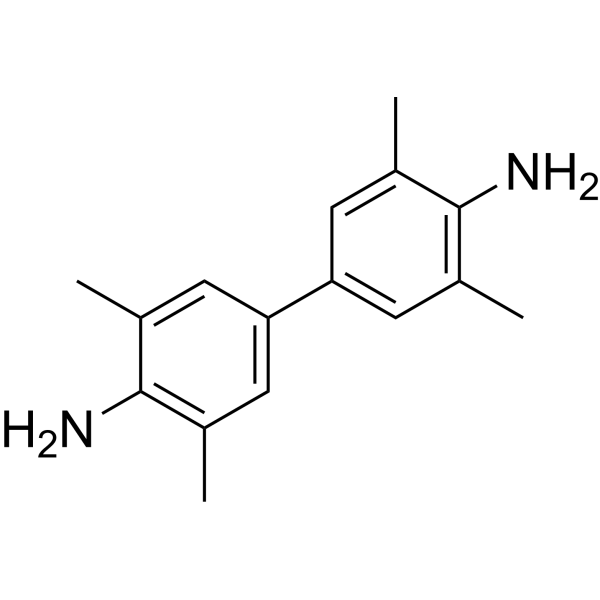
TMB is a non-toxic, non-mutagenic, colorless dye that is also used as a chromogenic agent in enzyme detection systems based on horseradish peroxidase (HRP). TMB can function as a photoacoustic probe for reactive oxygen and nitrogen species (ROS/RNS), reacting with hypochlorite, hydrogen peroxide, singlet oxygen, and nitrogen dioxide to produce blue oxidation products. TMB can detect the singlet oxygen produced by the outer membrane of Escherichia coli ATCC 25922.
Nur für Forschungszwecke. Wir verkaufen nicht an Patienten.
- Reinheit : 99.98%
- CAS. Nr.: 54827-17-7
- Formel: C16H20N2
- Molecular Weight:240.34
-
Speicherung:
4°C, protect from light
* In solvent : -80°C, 6 months; -20°C, 1 month (protect from light)

To place orders, for customer services and technical support, please contact: MedChemExpress USA
Tel: 609-228-6898 E-mail: [email protected] [email protected]


-
 Biologische Aktivität
-
Chemical Information
-
Lösungsmittel & Löslichkeit
- Protokoll
- Reinheit & Dokumentation
- Verweise
-
 Help & FAQs


-
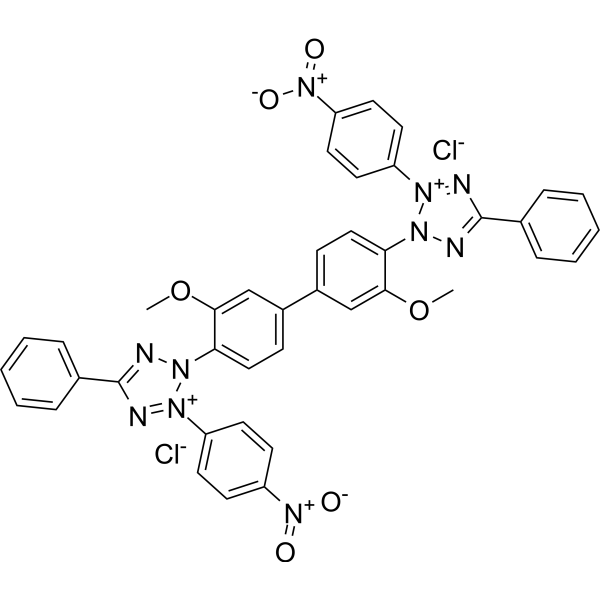
HY-15925
Nitro blue tetrazolium chlorideDehydrogenases Substrate -

HY-125859
Peroxidase, HorseradishPeroxidase -
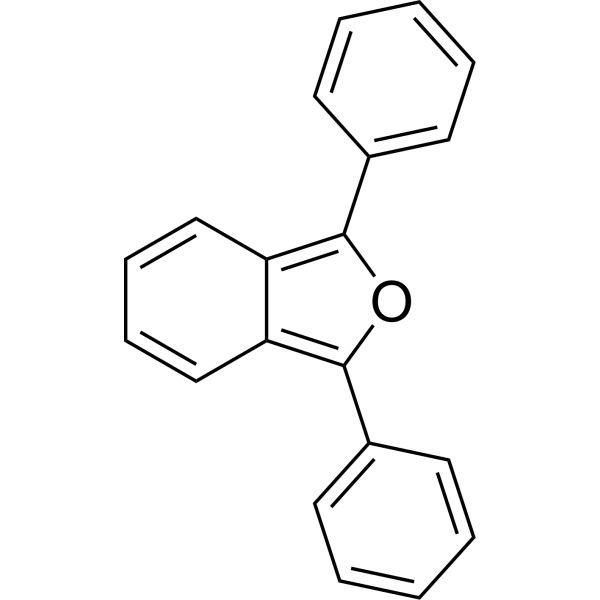
HY-W011664
1,3-DiphenylisobenzofuranFluorochrome -
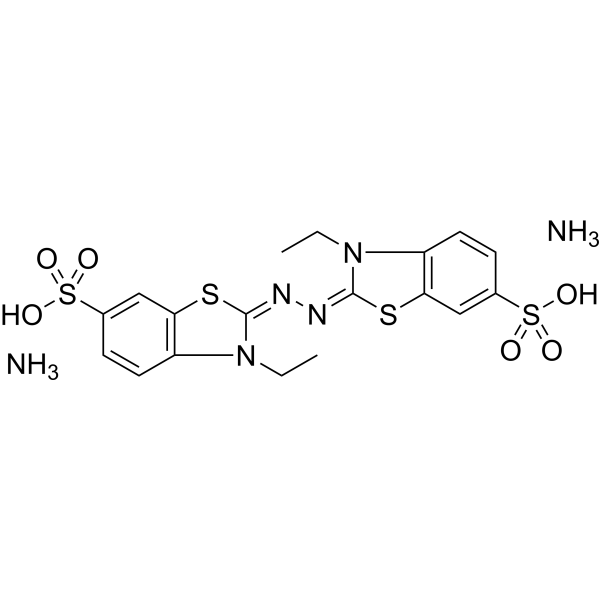
HY-15902
ABTS diammonium saltHRP Substrate -
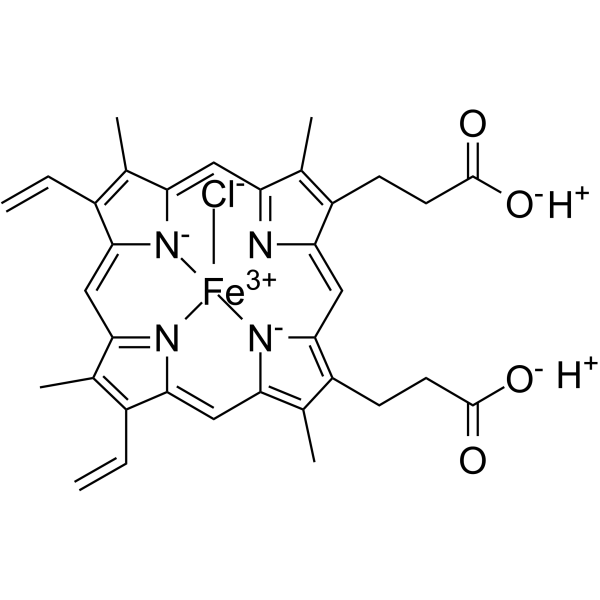
HY-19424
HeminHeme Oxygenase-1 Inducer -
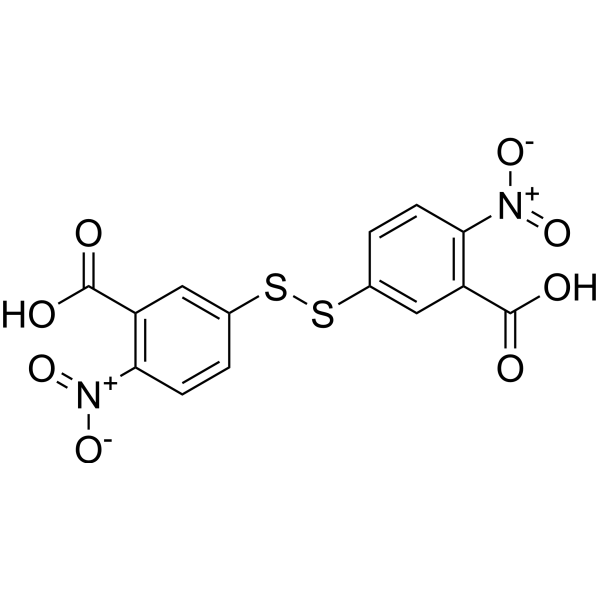
HY-15915
DTNBThiol Reactant -

HY-Y0320C
Dimethyl sulfoxideAprotic Solvent -
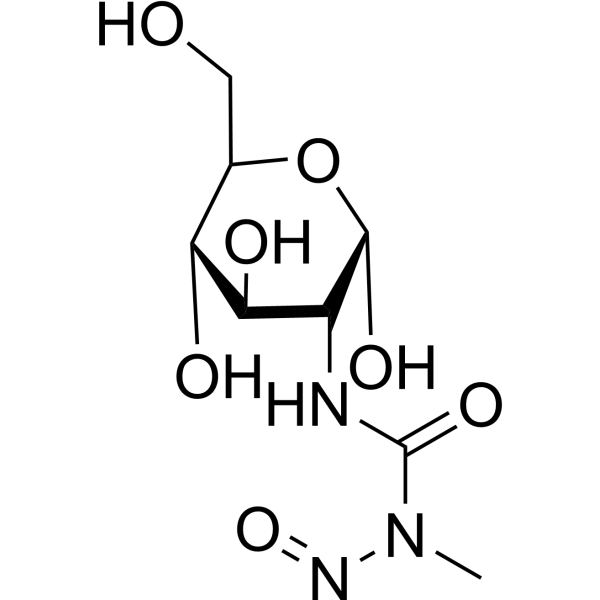
HY-13753
StreptozotocinDiabetes Modeling Agent -
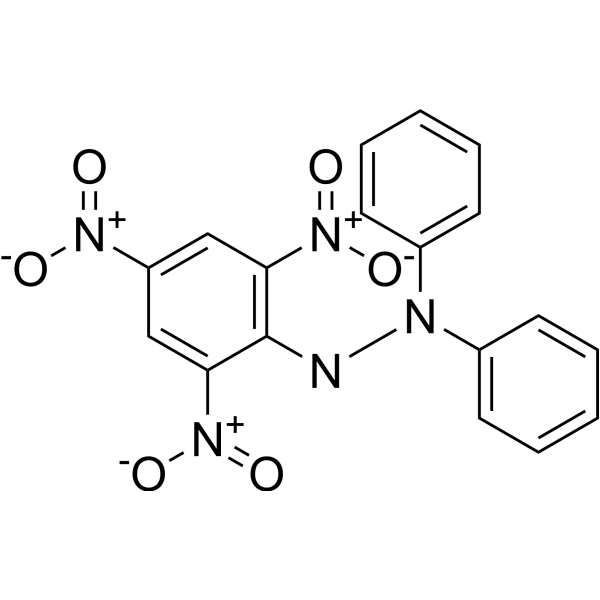
HY-112053
DPPHFree Radical Scavenger -
HY-136927
MSA-2STING Agonist -
HY-107690
DMPOROS detector -
HY-K3005
PBS Buffer (1×)
Publications Citing Use of MedChemExpress (MCE) TMB
More Customer Validation & Images

-
Bio/Physico-chemical Assay
-
Bio/Physico-chemical Assay
-
Bio/Physico-chemical Assay


Biologische Aktivität
Beschreibung
In Vitro
TMB can tightly bind to Escherichia coli ATCC 25922 cells instead of being internalized to detect singlet oxygen produced by the outer membrane[1].
MedChemExpress (MCE) has not independently confirmed the accuracy of these methods. They are for reference only.


Chemical Information
-
CAS. Nr. 54827-17-7
-
Appearance Solid
-
Molecular Weight 240.34
-
Formel C16H20N2
-
Color Off-white to light yellow
-
SMILES
NC1=C(C)C=C(C2=CC(C)=C(N)C(C)=C2)C=C1C
-
Synonyms
BM blue; Sure Blue TMB
-
Versand
Room temperature in continental US; may vary elsewhere.
-
Speicherung
4°C, protect from light
* In solvent : -80°C, 6 months; -20°C, 1 month (protect from light)


Publications (8)
-
Journal Impact Factor
-
Most Recent
-
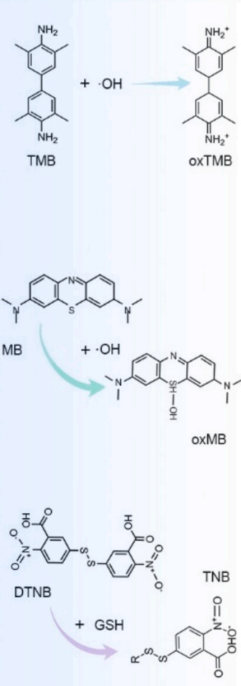
TMB purchased from MedChemExpress. Usage Cited in: Chem Eng J. 2025 Nov 24;526:171230.
A diagram showing the chemical reaction formula of TMB assay, MB assay, and DTNB assay.
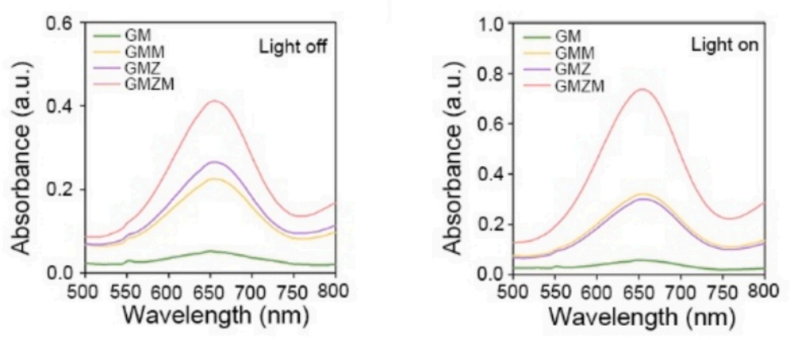
TMB purchased from MedChemExpress. Usage Cited in: Chem Eng J. 2025 Nov 24;526:171230.
The results of TMB assay.
-
J Control Release
Synergistic photothermal-sonodynamic therapy for antibacterial and immune reprogramming in chronic osteomyelitis. [Abstract]2025 May 10:381:113612. PMID: 40073945 -
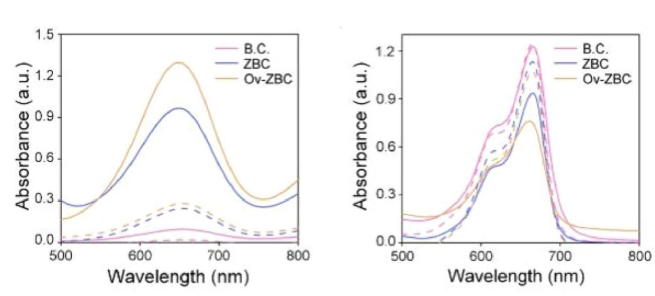
TMB purchased from MedChemExpress. Usage Cited in: Nano Res. 2026 Feb 6.
Ov-ZBC showed strong characteristic peaks, indicating its higher photocatalytic ROS generation capability. The results of TMB and MB chromogenic reactions shown in Fig.
-
Int J Biol Macromol
Construction and characterization of a novel single-chain variable fragment against Bacillus thuringiensis vegetative insecticidal protein. [Abstract]2025 Sep 14;328(Pt 1):147690. PMID: 40957516 -
-
-
J Invertebr Pathol
Characterization of the individual domains of the Bacillus thuringiensis Cry2Aa implicates Domain I as a possible binding site to Helicoverpa armigera. [Abstract]2024 Jul:205:108129. PMID: 38754546 -


Lösungsmittel & Löslichkeit
In Vitro:
DMSO : 25 mg/mL (104.02 mM; Need ultrasonic; Hygroscopic DMSO has a significant impact on the solubility of product, please use newly opened DMSO)
Please refer to the solubility information to select the appropriate solvent. Once prepared, please aliquot and store the solution to prevent product inactivation from repeated freeze-thaw cycles.
Storage method and period of stock solution: -80°C, 6 months; -20°C, 1 month (protect from light). When stored at -80°C, please use it within 6 months. When stored at -20°C, please use it within 1 month.
Please refer to the solubility information to select the appropriate solvent. Once prepared, please aliquot and store the solution to prevent product inactivation from repeated freeze-thaw cycles.
Storage method and period of stock solution: -80°C, 6 months; -20°C, 1 month (protect from light). When stored at -80°C, please use it within 6 months. When stored at -20°C, please use it within 1 month.
Konzentration (Stammlösung) × Volumen (Stammlösung) = Konzentration (Ziellösung) × Volumen (Ziellösung)


Reinheit & Dokumentation
-
Data Sheet (273 KB)
-
SDS (557 KB)
- English - EN (557 KB)
- Français - FR (557 KB)
- Deutsch - DE (557 KB)
- Norwegian - NO (557 KB)
- Español - ES (557 KB)
- Swedish - SV (557 KB)
- Italian - IT (557 KB)
- Korean - KR (557 KB)
- Portuguese - PT (557 KB)
-
Handling Instructions (2659 KB)
Verweise
[1]. Bresolí-Obach R, et al. Tetramethylbenzidine: An Acoustogenic Photoacoustic Probe for Reactive Oxygen Species Detection. Sensors (Basel). 2020 Oct 21;20(20):5952. [Content Brief]
[2]. Frey A, et al. A stable and highly sensitive 3,3',5,5'-tetramethylbenzidine-based substrate reagent for enzyme-linked immunosorbent assays. J Immunol Methods. 2000 Jan 13;233(1-2):47-56. [Content Brief]


Complete Stock Solution Preparation Table
Please refer to the solubility information to select the appropriate solvent. Once prepared, please aliquot and store the solution to prevent product inactivation from repeated freeze-thaw cycles.
Storage method and period of stock solution: -80°C, 6 months; -20°C, 1 month (protect from light). When stored at -80°C, please use it within 6 months. When stored at -20°C, please use it within 1 month.
| Optional Solvent | Concentration Solvent Mass | 1 mg | 5 mg | 10 mg | 25 mg |
|---|---|---|---|---|---|
| DMSO | 1 mM | 4.1608 mL | 20.8039 mL | 41.6077 mL | 104.0193 mL |
| 5 mM | 0.8322 mL | 4.1608 mL | 8.3215 mL | 20.8039 mL | |
| 10 mM | 0.4161 mL | 2.0804 mL | 4.1608 mL | 10.4019 mL | |
| 15 mM | 0.2774 mL | 1.3869 mL | 2.7738 mL | 6.9346 mL | |
| 20 mM | 0.2080 mL | 1.0402 mL | 2.0804 mL | 5.2010 mL | |
| 25 mM | 0.1664 mL | 0.8322 mL | 1.6643 mL | 4.1608 mL | |
| 30 mM | 0.1387 mL | 0.6935 mL | 1.3869 mL | 3.4673 mL | |
| 40 mM | 0.1040 mL | 0.5201 mL | 1.0402 mL | 2.6005 mL | |
| 50 mM | 0.0832 mL | 0.4161 mL | 0.8322 mL | 2.0804 mL | |
| 60 mM | 0.0693 mL | 0.3467 mL | 0.6935 mL | 1.7337 mL | |
| 80 mM | 0.0520 mL | 0.2600 mL | 0.5201 mL | 1.3002 mL | |
| 100 mM | 0.0416 mL | 0.2080 mL | 0.4161 mL | 1.0402 mL |


TMB Related Classifications
HY-15930 Related Classifications
 Powered by Bioz