



TMB dihydrochloride
Based on 8 publication(s) in Google Scholar
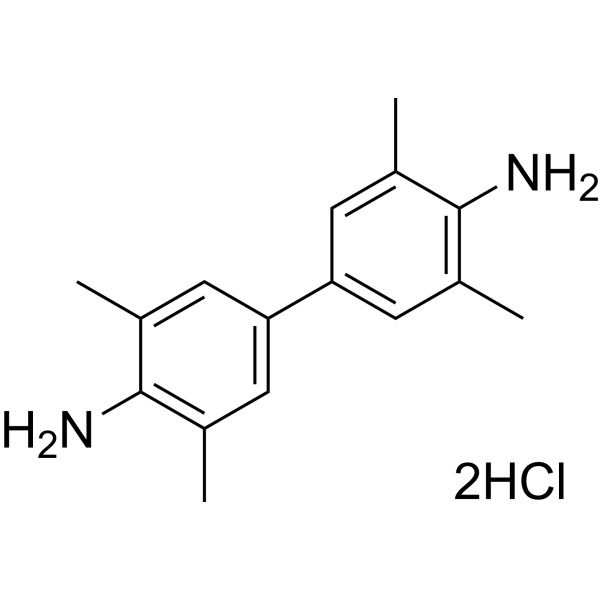
TMB dihydrochloride is the dihydrochloride form of TMB (HY-15930). TMB dihydrochloride is a non-toxic, non-mutagenic, colorless dye that is also used as a chromogenic agent in enzyme detection systems based on horseradish peroxidase (HRP). TMB dihydrochloride can function as a photoacoustic probe for reactive oxygen and nitrogen species (ROS/RNS), reacting with hypochlorite, hydrogen peroxide, singlet oxygen, and nitrogen dioxide to produce blue oxidation products. TMB dihydrochloride can detect the singlet oxygen produced by the outer membrane of Escherichia coli ATCC 25922.
For research use only. We do not sell to patients.
- Purity : 99.89%
- CAS No.: 64285-73-0
- Formula: C16H22Cl2N2
- Molecular Weight:313.27
-
Storage:
4°C, sealed storage, away from moisture and light
* In solvent : -80°C, 6 months; -20°C, 1 month (sealed storage, away from moisture and light)

To place orders, for customer services and technical support, please contact: MedChemExpress USA
Tel: 609-228-6898 E-mail: [email protected] [email protected]


-
 Biological Activity
-
Chemical Information
-
Solvent & Solubility
- Protocols
- Purity & Documentation
- References
-
 Help & FAQs


-
HY-15902
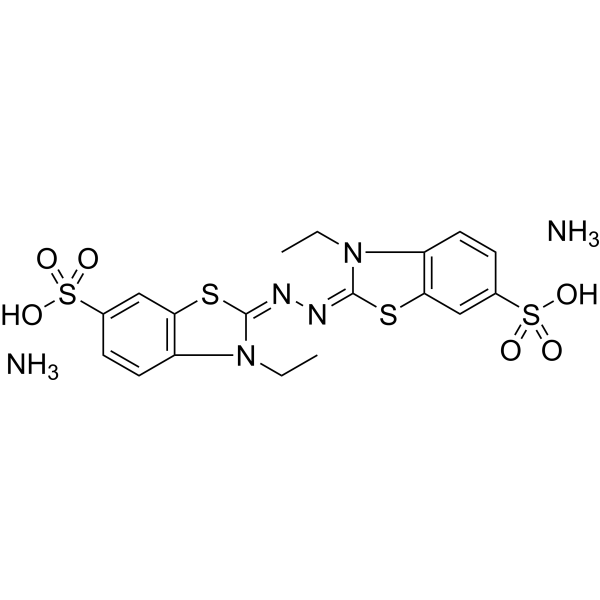
ABTS diammonium saltHRP Substrate -
HY-17589A
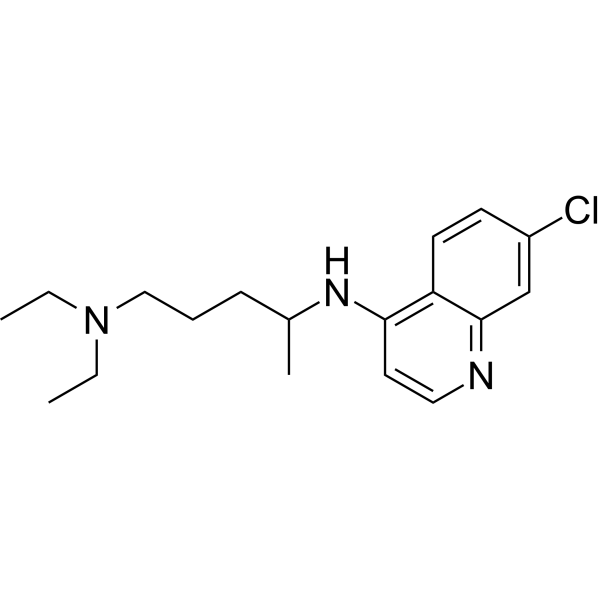
ChloroquineAntimalarial Agent -
HY-15930
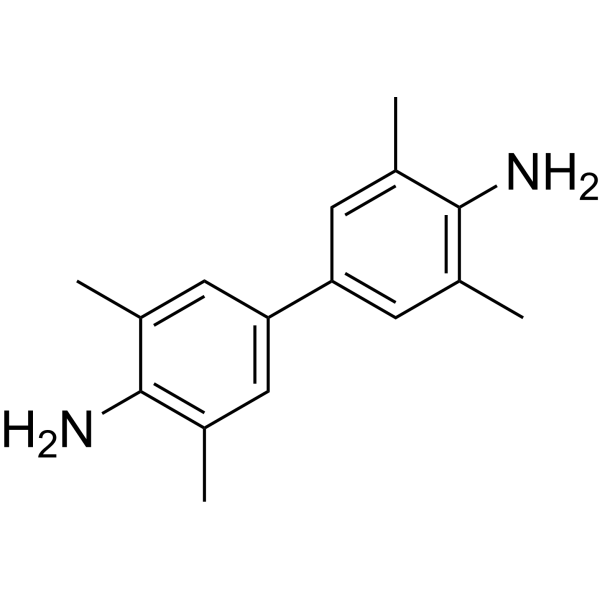
TMBChromogenic Agent -
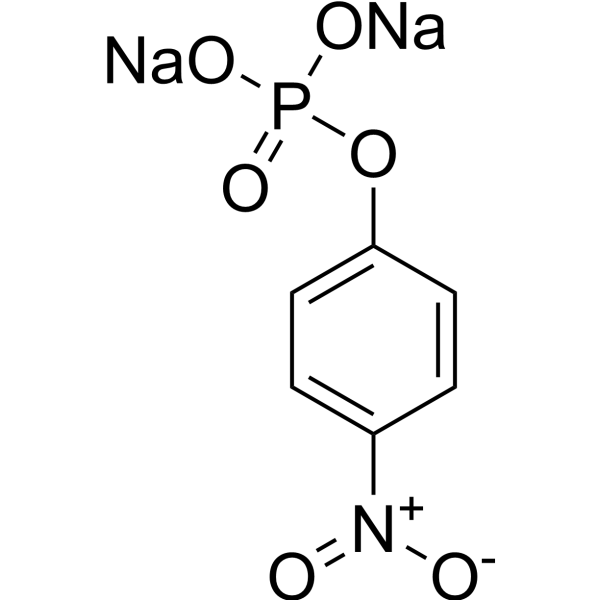
HY-15928
4-Nitrophenyl phosphate disodiumPhosphatases Substrate -
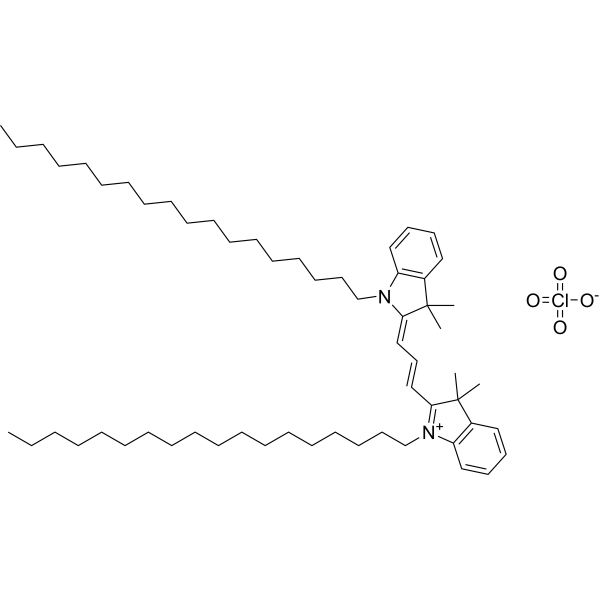
HY-D0083
DiIFluorescent Dye -
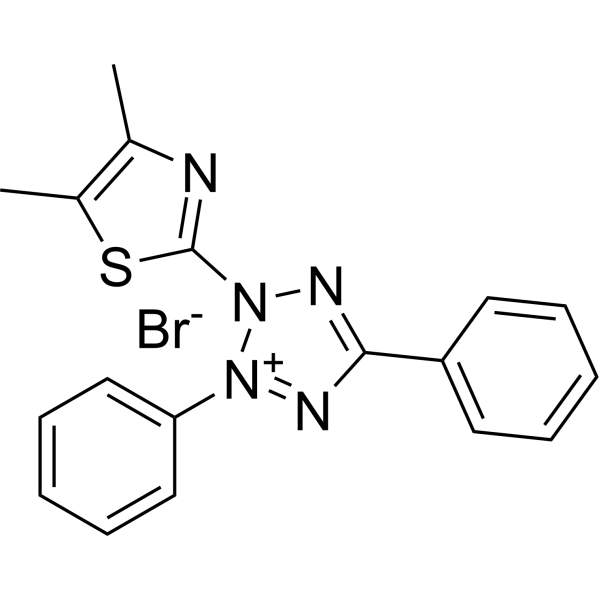
HY-15924
Thiazolyl BlueCytotoxicity Detection Reagent -
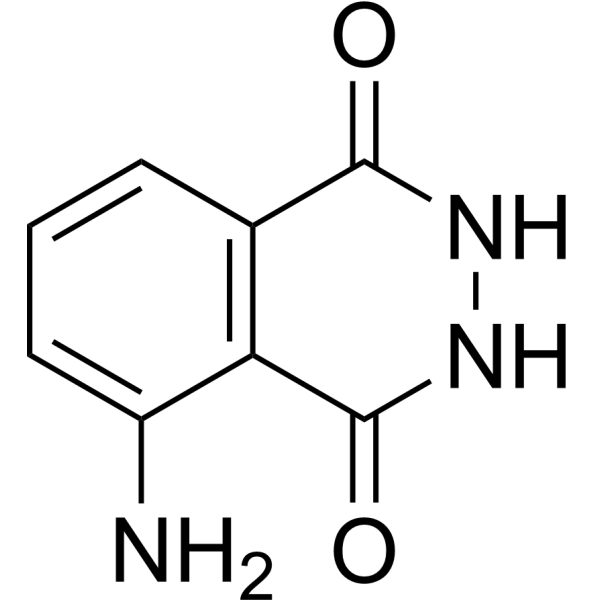
HY-15922
LuminolChemiluminescent Substance -
HY-D0021
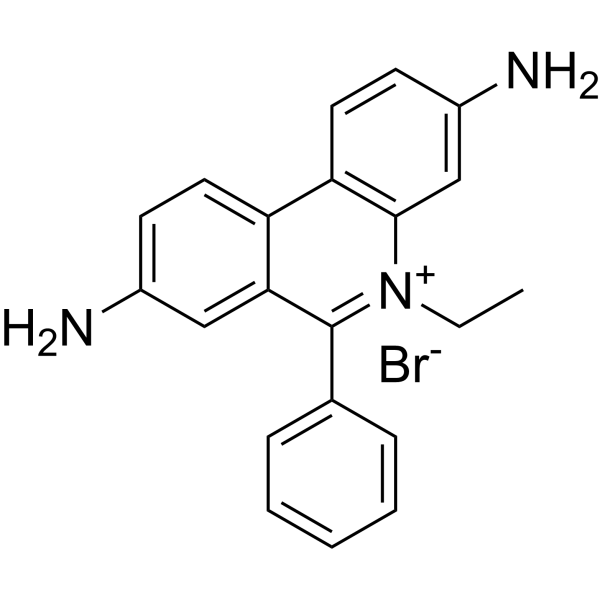
EthD bromideFluorescent Tag -

HY-15930B
TMB dihydrochloride x.hydrateChromogenic Agent -

HY-DY1012
DiI (solution)Fluorescent Dye -
HY-A0070A
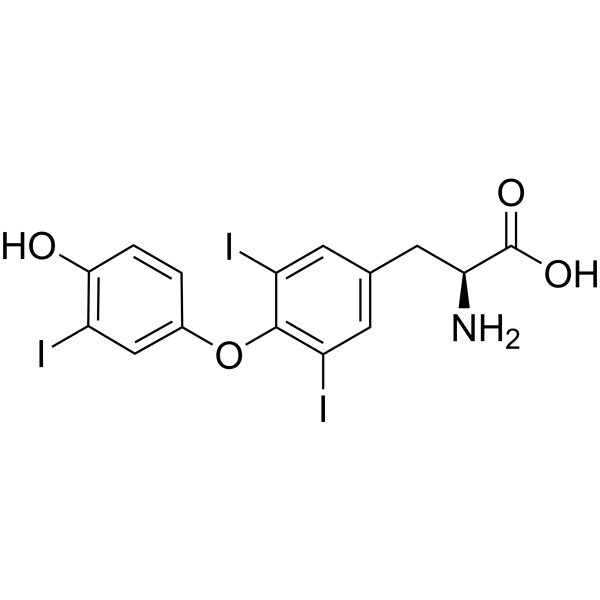
LiothyronineTIGIT/PVR Blocker -
HY-15934
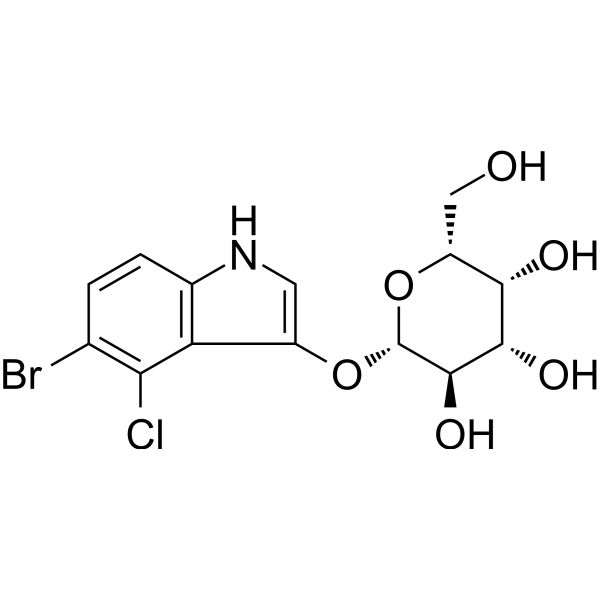
X-GALβ-Galactosidase Substrate
Publications Citing Use of MedChemExpress (MCE) TMB dihydrochloride
More Customer Validation & Images

-
Bio/Physico-chemical Assay
-
Bio/Physico-chemical Assay
-
Bio/Physico-chemical Assay


Biological Activity
Description
In Vitro
TMB dihydrochloride can tightly bind to Escherichia coli ATCC 25922 cells instead of being internalized to detect singlet oxygen produced by the outer membrane[1].
MedChemExpress (MCE) has not independently confirmed the accuracy of these methods. They are for reference only. Further protocols information, click here.


Chemical Information
-
CAS No. 64285-73-0
-
Appearance Solid
-
Molecular Weight 313.27
-
Formula C16H22Cl2N2
-
Color White to off-white
-
SMILES
NC1=C(C)C=C(C2=CC(C)=C(N)C(C)=C2)C=C1C.[2HCl]
-
Synonyms
BM blue dihydrochloride; Sure Blue TMB dihydrochloride
-
Shipping
Room temperature in continental US; may vary elsewhere.
-
Storage
4°C, sealed storage, away from moisture and light
* In solvent : -80°C, 6 months; -20°C, 1 month (sealed storage, away from moisture and light)


Publications (8)
-
Journal Impact Factor
-
Most Recent
-
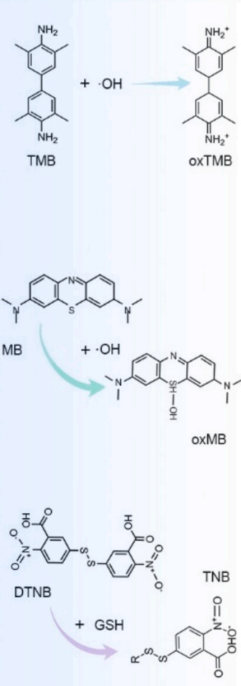
TMB dihydrochloride purchased from MedChemExpress. Usage Cited in: Chem Eng J. 2025 Nov 24;526:171230.
A diagram showing the chemical reaction formula of TMB assay, MB assay, and DTNB assay.
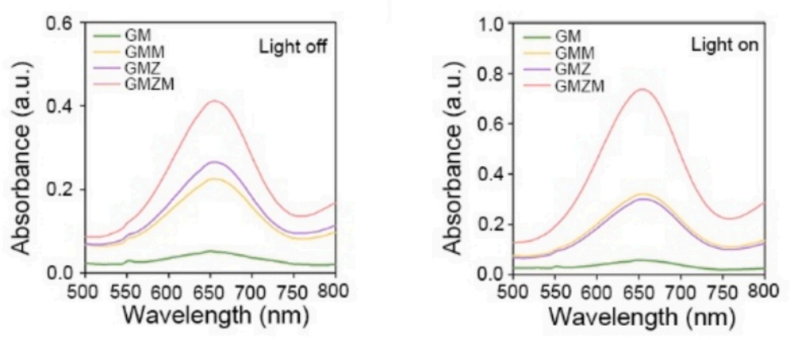
TMB dihydrochloride purchased from MedChemExpress. Usage Cited in: Chem Eng J. 2025 Nov 24;526:171230.
The results of TMB assay.
-
J Control Release
Synergistic photothermal-sonodynamic therapy for antibacterial and immune reprogramming in chronic osteomyelitis. [Abstract]2025 May 10:381:113612. PMID: 40073945 -
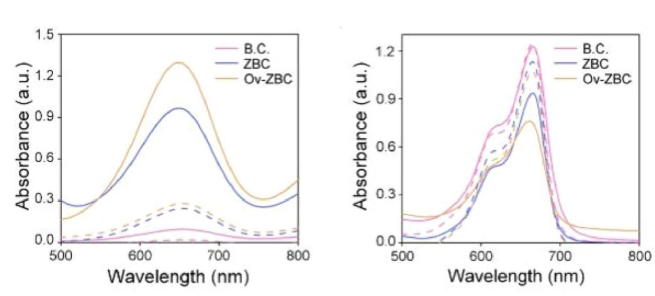
TMB dihydrochloride purchased from MedChemExpress. Usage Cited in: Nano Res. 2026 Feb 6.
Ov-ZBC showed strong characteristic peaks, indicating its higher photocatalytic ROS generation capability. The results of TMB and MB chromogenic reactions shown in Fig.
-
Int J Biol Macromol
Construction and characterization of a novel single-chain variable fragment against Bacillus thuringiensis vegetative insecticidal protein. [Abstract]2025 Sep 14;328(Pt 1):147690. PMID: 40957516 -
-
-
J Invertebr Pathol
Characterization of the individual domains of the Bacillus thuringiensis Cry2Aa implicates Domain I as a possible binding site to Helicoverpa armigera. [Abstract]2024 Jul:205:108129. PMID: 38754546 -


Solvent & Solubility
In Vitro:
DMSO : 11.67 mg/mL (37.25 mM; ultrasonic and warming and heat to 60°C; Hygroscopic DMSO has a significant impact on the solubility of product, please use newly opened DMSO)
H2O : 11.11 mg/mL (35.46 mM; Need ultrasonic)
Please refer to the solubility information to select the appropriate solvent. Once prepared, please aliquot and store the solution to prevent product inactivation from repeated freeze-thaw cycles.
Storage method and period of stock solution: -80°C, 6 months; -20°C, 1 month (sealed storage, away from moisture and light). When stored at -80°C, please use it within 6 months. When stored at -20°C, please use it within 1 month.
* Note: If you choose water as the stock solution, please dilute it to the working solution, then filter and sterilize it with a 0.22 μm filter before use.
Please refer to the solubility information to select the appropriate solvent. Once prepared, please aliquot and store the solution to prevent product inactivation from repeated freeze-thaw cycles.
Storage method and period of stock solution: -80°C, 6 months; -20°C, 1 month (sealed storage, away from moisture and light). When stored at -80°C, please use it within 6 months. When stored at -20°C, please use it within 1 month.
* Note: If you choose water as the stock solution, please dilute it to the working solution, then filter and sterilize it with a 0.22 μm filter before use.
Concentration (start) × Volume (start) = Concentration (final) × Volume (final)

Protocols
-
ROS/oxidative-stress fluorescent staining
ROS/oxidative-stress fluorescent staining uses cell-permeant fluorogenic probes that become fluorescent after oxidation inside cells or tissues; commonly used examples include DCFH-DA/DCFDA for broad cellular oxidant detection, DHE for superoxide-related signal detection, MitoSOX for mitochondrial superoxide-related signal detection, and CellROX probes for oxidative-stress-associated fluorescence readouts. The assay detects probe oxidation rather than a single ROS species unless the probe and analysis method have been chemically validated for that species. DCFH-DA enters cells, is deacetylated by intracellular esterases to DCFH, and produces fluorescent DCF after oxidation, so the readout is used as an operational measure of total cellular oxidative stress rather than a species-specific ROS measurement. DHE and MitoSOX can report superoxide-related oxidation, but red fluorescence alone can include non-specific ethidium-like oxidation products; HPLC or optimized spectral approaches are
-
Genotoxicity/Mutagenicity Study
The bacterial reverse mutation assay detects point mutations that restore amino-acid prototrophy in auxotrophic Salmonella typhimurium or Escherichia coli tester strains; after exposure to a test article, mutagenic activity is read out as an increased number of revertant colonies on minimal agar compared with the vehicle control. The assay uses tester strains with different mutation targets so that base-substitution and frameshift mutagens can be detected, and testing is performed with and without exogenous mammalian metabolic activation because some chemicals require biotransformation to become mutagenic.


Purity & Documentation
-
Data Sheet (273 KB)
-
SDS (396 KB)
- English - EN (396 KB)
- Français - FR (396 KB)
- Deutsch - DE (396 KB)
- Norwegian - NO (396 KB)
- Español - ES (396 KB)
- Swedish - SV (396 KB)
- Italian - IT (396 KB)
- Korean - KR (396 KB)
- Portuguese - PT (396 KB)
-
Handling Instructions (2659 KB)
References
[1]. Bresolí-Obach R, et al. Tetramethylbenzidine: An Acoustogenic Photoacoustic Probe for Reactive Oxygen Species Detection. Sensors (Basel). 2020 Oct 21;20(20):5952. [Content Brief]
[2]. Frey A, et al. A stable and highly sensitive 3,3',5,5'-tetramethylbenzidine-based substrate reagent for enzyme-linked immunosorbent assays. J Immunol Methods. 2000 Jan 13;233(1-2):47-56. [Content Brief]


Complete Stock Solution Preparation Table
Please refer to the solubility information to select the appropriate solvent. Once prepared, please aliquot and store the solution to prevent product inactivation from repeated freeze-thaw cycles.
Storage method and period of stock solution: -80°C, 6 months; -20°C, 1 month (sealed storage, away from moisture and light). When stored at -80°C, please use it within 6 months. When stored at -20°C, please use it within 1 month.
| Optional Solvent | Concentration Solvent Mass | 1 mg | 5 mg | 10 mg | 25 mg |
|---|---|---|---|---|---|
| H2O / DMSO | 1 mM | 3.1921 mL | 15.9607 mL | 31.9213 mL | 79.8034 mL |
| 5 mM | 0.6384 mL | 3.1921 mL | 6.3843 mL | 15.9607 mL | |
| 10 mM | 0.3192 mL | 1.5961 mL | 3.1921 mL | 7.9803 mL | |
| 15 mM | 0.2128 mL | 1.0640 mL | 2.1281 mL | 5.3202 mL | |
| 20 mM | 0.1596 mL | 0.7980 mL | 1.5961 mL | 3.9902 mL | |
| 25 mM | 0.1277 mL | 0.6384 mL | 1.2769 mL | 3.1921 mL | |
| 30 mM | 0.1064 mL | 0.5320 mL | 1.0640 mL | 2.6601 mL |
* Note: If you choose water as the stock solution, please dilute it to the working solution, then filter and sterilize it with a 0.22 μm filter before use.


TMB dihydrochloride Related Classifications
HY-15930A Related Classifications
 Powered by Bioz