



Phytic acid sodium salt
Based on 1 publication(s) in Google Scholar
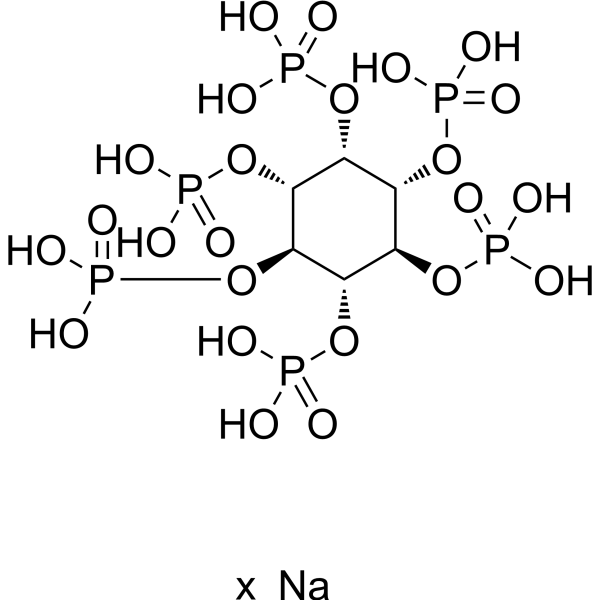
Phytic acid (myo-Inositol; hexakis dihydrogen phosphate; Inositol hexaphosphate) sodium salt is an orally active compound. Phytic acid sodium salt can be derived from the seeds of legumes. Phytic acid sodium salt is a [PO4]3- storage depot and precursor for other inositol phosphates and pyrophosphates. Phytic acid sodium salt attenuates Aβ oligomers and upregulates autophagy protein. Phytic acid sodium salt can be used in cardiovascular disease, metabolic disease, nervous system disease and cancer research.
For research use only. We do not sell to patients.
- Purity : 95.0%
- CAS No.: 14306-25-3
- Formula: C6H18O24P6.xNa
-
Storage:
4°C, sealed storage, away from moisture
* In solvent : -80°C, 6 months; -20°C, 1 month (sealed storage, away from moisture)

To place orders, for customer services and technical support, please contact: MedChemExpress USA
Tel: 609-228-6898 E-mail: [email protected] [email protected]


-
 Biological Activity
-
Chemical Information
-
Solvent & Solubility
- Protocols
- Purity & Documentation
- References
-
 Help & FAQs


-
HY-N0067
γ-Aminobutyric acidNeurotransmitter -
HY-N0139
TroxerutinNOD-like Receptor (NLR) Inhibitor -
HY-113273A
Diadenosine pentaphosphate pentasodiumDiadenosine Polyphosphate -

HY-107859
Tris(2-chloroethyl) phosphateFlame-retardant Plasticizer -

HY-Y1322
Triphenyl phosphateEndocrine Disruptor -

HY-W016414
Triethyl phosphateSmooth Muscle Relaxant -

HY-135604
Dibutyl phosphateOrganophosphate esters metabolite -

HY-W016414R
Triethyl phosphate (Standard) -

HY-W034681R
Tributylphosphine oxide (Standard)
Publications Citing Use of MedChemExpress (MCE) Phytic acid sodium salt
MoreAll Endogenous Metabolite Isoforms
More

Biological Activity
Description
IC50 & Target
IC50: precursor for inositol phosphates and pyrophosphates[1]
In Vitro
Phytic acid (0.05%-0.4% (wt/wt), 5 min) sodium salt and sodium chloride show marked synergistic bactericidal effects against nonadapted and acid-adapted Escherichia coli O157:H7 strains[2].
Phytic acid (1-5 mM, 2-3 h) sodium salt decreases the integrity of Caco-2 cell monolayers by modulating the TJ proteins' localization and down-regulating the expression levels of TJ proteins, and does not cause cytotoxicity to Caco-2 cells[3].
Phytic acid (48-72 h) sodium salt provides complete protection against amyloid precursor protein-C-terminal fragment-induced cytotoxicity by attenuating levels of increased intracellular calcium, hydrogen peroxide, superoxide, Aβ oligomers, and moderately upregulated the expression of autophagy (beclin-1) protein in MC65 cells[5].
Phytic acid (≥1 mM) sodium salt stimulates suicidal human erythrocyte death[6].
MedChemExpress (MCE) has not independently confirmed the accuracy of these methods. They are for reference only. Further protocols information, click here.
-
Cell Line:Caco-2
-
Concentration:1, 2, 2.5, 3.5, 5 mM
-
Incubation Time:3 h
-
Result:Showed over 90% of the cells were viable when IP6 concentrations of 1-5 mM were used during the experiments.
In Vivo
Phytic acid (2%, drinking water, 6 months) sodium salt improves Alzheimer's pathology (AP180, beclin-1, LC3B, sirtuin 1) in Tg2576 mice[5].
Phytic acid (20 mg/kg, i.p., pretreatment at 5 h before coronary artery occlusion) sodium salt suppresses ischemia-induced hydroxyl radical generation in rat myocardium[7].
Phytic acid (100 mg/kg/d, gavage, five days a week, 8 weeks) sodium salt shows protective effects against CCl4-induced liver fibrosis in mice[8].
Phytic acid (4% of rodent chow, diet, 30 days) sodium salt reduces lipogenic enzyme activities in diabetic rats[9].
Phytic acid (1-2 g/100 g, in water, 13 weeks) sodium salt shows anticarcinogenic effect in colon carcinoma rats, with 36% (1 g/100 g Phytic acid) and 42% (2 g/100 g Phytic acid) reduction in ACF, respectively[10].
MedChemExpress (MCE) has not independently confirmed the accuracy of these methods. They are for reference only.
-
Animal Model:Piglets with an initial BW of 7.40 kg[4]
-
Dosage:2% (Phytic acid/food)
-
Administration:diet, 21 days
-
Result:Did not affect the blood plasma glucose and Na concentrations.
Reduced total potential difference and total short-circuit current.
Did not affect the blood plasma glucose and Na concentrations.
Did not affect the SGLT1 protein expression.


Chemical Information
-
CAS No. 14306-25-3
-
Appearance Solid
-
Formula C6H18O24P6.xNa
-
Color White to off-white
-
SMILES
O=P(O)(O)O[C@H]([C@H]([C@H](OP(O)(O)=O)[C@H]1OP(O)(O)=O)OP(O)(O)=O)[C@H]([C@H]1OP(O)(O)=O)OP(O)(O)=O.[x].[Na]
-
Synonyms
myo-Inositol, hexakisdihydrogen phosphate sodium salt; Inositol hexaphosphate sodium salt
-
Structure Classification
-
Initial Source
-
Shipping
Room temperature in continental US; may vary elsewhere.
-
Storage
4°C, sealed storage, away from moisture
* In solvent : -80°C, 6 months; -20°C, 1 month (sealed storage, away from moisture)


Publications (1)
-
Journal Impact Factor
-
Most Recent


Solvent & Solubility
In Vitro:
H2O : 100 mg/mL (ultrasonic and warming and heat to 41°C)

Protocols
-
Autophagy
Autophagy is a process in which eukaryotic cells use lysosomes to degrade their own cytoplasmic proteins and damaged organelles under the regulation of autophagy related gene (Atg). Microtubule-associated proteins light chain 3 (LC3) is recognized as autophagy marker, which transfers from cytoplasmic LC3 (LC3-I) to membrane type (LC3-II). LC3-II/I ratio could be detected by Western Blot and fluorescence microscopy.
-
Research Protocol for Cardiovascular Diseases
Cardiovascular disease can be modeled as maladaptive cardiac remodeling, where ischemic injury or pressure overload activates inflammatory signaling, fibroblast activation, extracellular-matrix deposition, cardiomyocyte hypertrophy, vascular remodeling, and progressive ventricular dysfunction. The TGF-β/SMAD axis is a central profibrotic pathway after myocardial injury and pressure overload, while innate immune and cytokine pathways regulate leukocyte recruitment, scar formation, and adverse remodeling. Key unresolved questions include which inflammatory signals are reparative versus harmful, when fibrosis is protective versus maladaptive, and whether pathway inhibition improves function without weakening necessary infarct healing or compensatory remodeling.
-
Lysosome and acidic-vesicle live-cell staining
Lysosome and acidic-vesicle live-cell staining detects acidic intracellular compartments by using membrane-permeant acidotropic probes that accumulate in low-pH vesicles, including lysosomes, late endosomes, autolysosomes, and acidic phagosomes. LysoTracker staining is commonly used as an intensity-based readout of acidic lysosomal compartment abundance or enlargement, while acridine orange produces green fluorescence in less concentrated compartments and red fluorescence after concentration-dependent accumulation in acidic vesicular organelles. Loss or reduction of acridine-orange red signal can be used as a readout of lysosomal membrane permeabilization or reduced acidic-vesicle integrity. This protocol is designed for live cultured cells and can be adapted for fluorescence microscopy, high-content imaging, plate-reader readout, or flow cytometry when the selected literature supports the readout. Because these dyes report acidotropic accumulation rather than lysosome identity alone,
-
Macroautophagy Solutions
Macroautophagy is a conserved lysosome-dependent degradation pathway in which cytoplasmic material is sequestered into double-membrane autophagosomes and delivered to lysosomes for degradation and recycling. The pathway supports cellular homeostasis during nutrient limitation, organelle stress, protein-aggregate accumulation, infection, differentiation, and tissue remodeling by coupling cargo sequestration, autophagosome maturation, lysosomal fusion, and degradation of cargo-derived macromolecules. The core molecular sequence includes initiation by nutrient- and stress-regulated autophagy machinery, autophagosome nucleation, LC3/ATG8-family conjugation to autophagosomal membranes, cargo selection through receptors such as SQSTM1/p62, autophagosome-lysosome fusion, and lysosomal degradation. LC3 was identified as a mammalian homolog of yeast Atg8 that localizes to autophagosomal membranes after processing, and p62/SQSTM1 was shown to connect ubiquitinated cargo with autophagic degradati
-
Research Protocol for Metabolic Diseases
AMP-activated protein kinase, AMPK, is a conserved cellular energy sensor that responds to reduced cellular energy status and coordinates metabolism by increasing ATP-generating catabolic pathways while suppressing ATP-consuming anabolic processes. In metabolic disease research, the AMPK pathway is experimentally relevant because it regulates hepatic lipid synthesis, fatty acid oxidation, glucose production, skeletal-muscle glucose disposal, mTORC1-linked biosynthesis, autophagy, mitochondrial homeostasis, and whole-body energy balance. The central pathway logic is that energy stress, metformin, exercise-like stimulation, or direct AMPK activators increase AMPKα Thr172 phosphorylation and downstream substrate phosphorylation, including ACC and RAPTOR. Phosphorylation of ACC suppresses lipogenesis and supports fatty acid oxidation, whereas phosphorylation of RAPTOR suppresses mTORC1 signaling and links cellular energy status to growth and protein synthesis control. The pathway is linked
-
Alzheimer’s Disease Modeling
Alzheimer’s Disease (AD) is a neurodegenerative disorder characterized by a progressive decline in cognitive functions and loss of specific types of neurons and synapses. Alzheimer's symptoms can be simulated in mice by injecting drugs (such as Aβ) or genetically modified.


Purity & Documentation
-
Data Sheet (289 KB)
-
SDS (394 KB)
- English - EN (394 KB)
- Français - FR (394 KB)
- Deutsch - DE (394 KB)
- Norwegian - NO (394 KB)
- Español - ES (394 KB)
- Swedish - SV (394 KB)
- Italian - IT (394 KB)
- Korean - KR (394 KB)
- Portuguese - PT (394 KB)
-
Handling Instructions (2659 KB)
References
[1]. Shears SB, et al.Assessing the omnipotence of inositol hexakisphosphate.Cell Signal. 2001 Mar;13(3):151-8. [Content Brief]
[2]. Kim NH, et al. Phytic Acid and Sodium Chloride Show Marked Synergistic Bactericidal Effects against Nonadapted and Acid-Adapted Escherichia coli O157:H7 Strains. Appl Environ Microbiol. 2015 Dec 4;82(4):1040-1049. [Content Brief]
[3]. Fu Q, et al. The effect of phytic acid on tight junctions in the human intestinal Caco-2 cell line and its mechanism. Eur J Pharm Sci. 2015 Dec 1;80:1-8. [Content Brief]
[4]. Woyengo TA, et al. Effect of dietary phytic acid on performance and nutrient uptake in the small intestine of piglets. J Anim Sci. 2012 Feb;90(2):543-9. [Content Brief]
[5]. Anekonda TS, et al. Phytic acid as a potential treatment for alzheimer's pathology: evidence from animal and in vitro models. J Alzheimers Dis. 2011;23(1):21-35. [Content Brief]
[6]. Eberhard M, et al. Effect of phytic acid on suicidal erythrocyte death. J Agric Food Chem. 2010 Feb 10;58(3):2028-33. [Content Brief]
[7]. Obata T, et al. Phytic acid suppresses ischemia-induced hydroxyl radical generation in rat myocardium. Eur J Pharmacol. 2016 Mar 5;774:20-4. [Content Brief]
[9]. Omoruyi FO, et al. The potential benefits and adverse effects of phytic Acid supplement in streptozotocin-induced diabetic rats. Adv Pharmacol Sci. 2013;2013:172494. [Content Brief]

Calculators
Concentration (start) × Volume (start) = Concentration (final) × Volume (final)


Phytic acid sodium salt Related Classifications
HY-N2581 Related Classifications
 Powered by Bioz