

14 Results for "

choroidal neovascularization macular degeneration

" in MedChemExpress (MCE) Product Catalog:
Products (14)

14 Results for "choroidal neovascularization macular degeneration" in MCE Product Catalog:

1
1 Cited Publications
Cat. No.: HY-109020
CAS No.: 1229453-99-9
Purity:  99.84%
Synonyms: LHA510
Target:  

VEGFR

Research Areas:  

Cardiovascular Disease

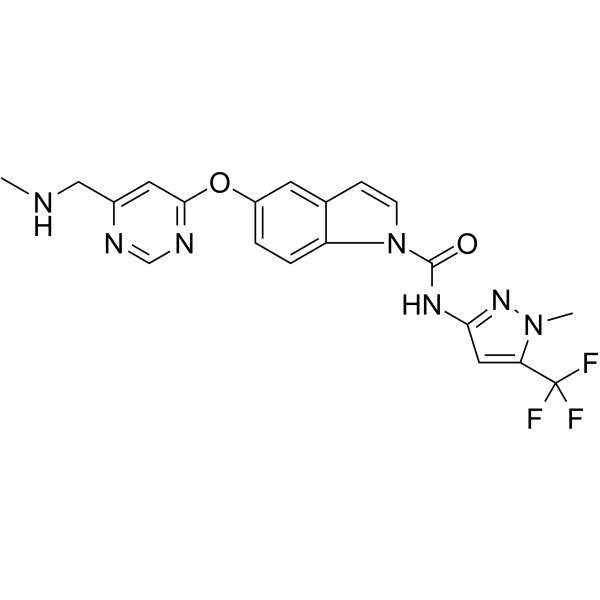
Acrizanib (LHA510) is a small-molecule vascular endothelial growth factor receptor 2 (VEGFR-2, KDR) inhibitor. Acrizanib inhibits the proliferation of BaF3-Tel-KDR cells dependent on VEGFR-2 activity, with an IC50 of 17.4 nM. Acrizanib can be used in research related to choroidal neovascularization and neovascular age-related macular degeneration .
loading...
    loading...
1
1 Cited Publications
Cat. No.: HY-15492
CAS No.: 319460-94-1
Purity:  99.71%
Synonyms: AG-013958
Target:  

VEGFR

Research Areas:  

Cardiovascular Disease

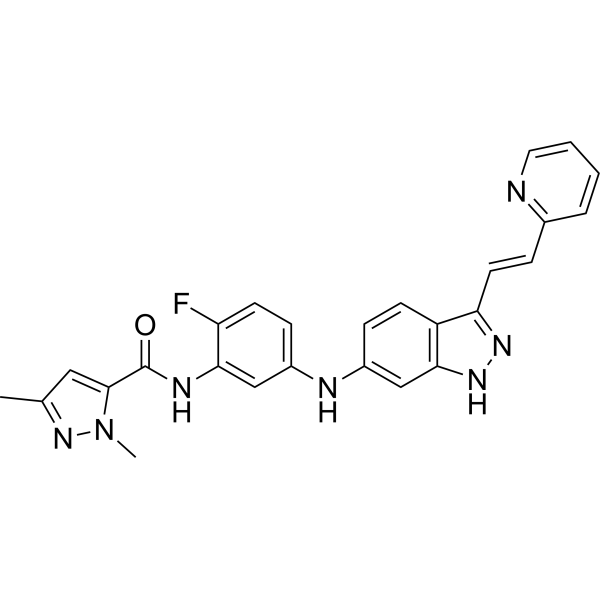
AG-13958 (AG-013958), a potent VEGFR tyrosine kinase inhibitor, is used for treatment of choroidal neovascularization associated with age-related macular degeneration (AMD) .
loading...
    loading...
Cat. No.: HY-153484A
CAS No.: 849758-52-7
Research Areas:  

Neurological Disease

Bevasiranib sodium is a siRNA that targets and silences VEGF-A. Bevasiranib sodium activates the RNA-induced silencing complex to degrade VEGF-A mRNA, mediates TLR3-related inhibition of choroidal neovascularization, and triggers RNA interference-mediated gene silencing through endogenous eukaryotic RNAi mechanisms. After intravitreal injection, Bevasiranib sodium distributes to various ocular tissues and resists degradation by intraocular nucleases, reducing choroidal neovascularization area and alleviating vascular leakage. Bevasiranib sodium can be used in research related to macular degeneration .
loading...
    loading...
Cat. No.: HY-P99830
CAS No.: 1227158-72-6
Synonyms: KH902
Conbercept (KH902) is a recombinant fusion protein composed of VEGFR-1 (second domain) and VEGFR-2 (third and fourth domains) regions fused to human IgG1 Fc. Conbercept is a VEGF inhibitor (IC50 = 8.8 pM) and is a soluble receptor decoy that blocks all isoforms of VEGF-A (Kd = 0.5 pM), VEGF-B (Kd = 8 pM), VEGF-C, and PlGF (Kd = 5 pM). Conbercept has anti-inflammatory effects, can lower the levels of VEGF, TNF-α and IL-6, and reduce the infiltration of inflammatory cells. Conbercept decreases tumor growth in several oncology studies. Conbercept can be used for various eye diseases such as polypoidal choroidal vasculopathy (PCV), diabetic macular edema (DME) and pathologic myopia choroidal neovascularization (pmCNV) .
loading...
    loading...
Cat. No.: HY-W1048555A
Mal-PEG2000-SCM is a heterobifunctional PEG crosslinker bearing maleimide and succinimidyl carboxymethyl ester functional groups. MMal-PEG2000-SCM conjugates the F3 peptide to nanoparticles: the SCM group reacts with amino groups on the nanoparticle surface to form amide groups, while the MAL group reacts with thiol groups of the F3 peptide to form carbon-sulfur bonds. Mal-PEG-SCM enables unidirectional addition of linkers, ensuring that appropriate functional groups are available for RGD incorporation. Mal-PEG2000-SCM can be used in the development of nanoparticles targeting specific tumor cells .
loading...
    loading...
Cat. No.: HY-153484
CAS No.: 959961-96-7
Research Areas:  

Neurological Disease

Bevasiranib is a siRNA that targets and silences VEGF-A. Bevasiranib activates the RNA-induced silencing complex to degrade VEGF-A mRNA, mediates TLR3-related inhibition of choroidal neovascularization, and triggers RNA interference-mediated gene silencing through endogenous eukaryotic RNAi mechanisms. After intravitreal injection, Bevasiranib distributes to various ocular tissues and resists degradation by intraocular nucleases, reducing choroidal neovascularization area and alleviating vascular leakage. Bevasiranib can be used in research related to macular degeneration .
loading...
    loading...
Cat. No.: HY-184141
CAS No.: 3037217-70-9
Target:  

VEGFR

Research Areas:  

Neurological Disease

EYE1090 is an orally active VEGFR2 inhibitor with an IC50 of 3 nM. EYE1090 inhibits angiogenesis, endothelial migration, VEGFR2-induced retinal leakage, and reduces choroidal neovascularization lesion size in mice. EYE1090 can be used for the research of age-related macular degeneration, diabetic retinopathy, choroidal neovascularization .
loading...
    loading...
Cat. No.: HY-109020A
CAS No.: 1637434-72-0
Synonyms: LHA510 hydrochloride
Target:  

VEGFR

Research Areas:  

Cardiovascular Disease

Acrizanib hydrochloride (LHA510 hydrochloride) is a small-molecule vascular endothelial growth factor receptor 2 (VEGFR-2, KDR) inhibitor. Acrizanib hydrochloride inhibits the proliferation of BaF3-Tel-KDR cells dependent on VEGFR-2 activity, with an IC50 of 17.4 nM. Acrizanib hydrochloride can be used in research related to choroidal neovascularization and neovascular age-related macular degeneration .
loading...
    loading...
Cat. No.: HY-109020R
CAS No.: 1229453-99-9
Synonyms: LHA510 (Standard)
Research Areas:  

Cardiovascular Disease

Acrizanib (Standard) (LHA510 (Standard)) is the analytical standard of Acrizanib (HY-109020). This product is intended for research and analytical applications. Acrizanib (LHA510) is a small-molecule vascular endothelial growth factor receptor 2 (VEGFR-2, KDR) inhibitor. Acrizanib inhibits the proliferation of BaF3-Tel-KDR cells dependent on VEGFR-2 activity, with an IC50 of 17.4 nM. Acrizanib can be used in research related to choroidal neovascularization and neovascular age-related macular degeneration .
loading...
    loading...
Cat. No.: HY-P992151
Synonyms: LT1002
Sphingomab (LT1002) is a mouse-derived IgG1 κ monoclonal antibody and also an inhibitor targeting S1P, with high affinity for S1P and a Kd value of 0.03 ± 0.002 nM. Sphingomab blocks S1P-mediated IL-8 release in ovarian cancer cells. Sphingomab exhibits anti-angiogenic activity in a mouse model of choroidal neovascularization. Sphingomab reduces peripheral blood lymphocyte counts. Sphingomab can be used in the research of ovarian cancer and age-related macular degeneration .
loading...
    loading...
Cat. No.: HY-183377
CAS No.: 1260071-76-8
DMBT is an orally effective anti-tumor metastasis and anti-angiogenesis agent. DMBT downregulates key molecules such as EGFR/p-Akt/HIF-1α/VEGF/MMP-9, inhibits the HIF-1α/VE-cadherin (cadherin)/MMPs and Nrf2/HO-1 signaling pathways, and reduces hypoxia-induced ROS levels as well as the secretion and activity of MMP-9. DMBT inhibits hypoxia-induced vasculogenic mimicry, cancer cell migration, invasion and metastasis, and exhibits no obvious cytotoxicity to normal cells. DMBT reduces the area of laser-induced choroidal neovascularization lesions. DMBT can be used in studies related to breast cancer, melanoma and macular degeneration .
loading...
    loading...
Cat. No.: HY-15492A
CAS No.: 319463-49-5
Synonyms: AG-013958 monohydrochloride
Target:  

VEGFR

Research Areas:  

Cardiovascular Disease

AG-13958 monohydrochloride, a potent VEGFR tyrosine kinase inhibitor, is used for treatment of choroidal neovascularization associated with age-related macular degeneration (AMD) .
loading...
    loading...
Cat. No.: HY-184142
CAS No.: 3037217-73-2
Target:  

VEGFR

EYE1118 is an orally active, photoactivatable VEGFR2 inhibitor without acute hepatotoxicity. EYE1118 mediates light-enhanced inhibition via azide-functionalized receptor binding, and can utilize light-guided targeting to regulate its biodistribution in vivo. EYE1118 effectively inhibits angiogenesis, endothelial cell migration, VEGF-induced retinal leakage, and the size of choroidal neovascular lesions. EYE1118 has been applied in studies related to age-related macular degeneration, diabetic retinopathy, and choroidal neovascularization .
loading...
    loading...
Cat. No.: HY-113040B
Synonyms: (±)-17(S),18(R)-EETeTr
Target:  

Drug Isomer

Research Areas:  

Others

(±)-(17S,18R)-Epoxyeicosatetraenoic acid ((±)-17 (S),18 (R)-EETeTr) is one of the constituent enantiomers of (±) 17 (18)-EpETE. (±) 17 (18)-EpETE is an active metabolite of the ω-3 fatty acid eicosapentaenoic acid, and also an agonist of sphingosine-1-phosphate receptor 1 (S1P1) .
loading...
    loading...
  • 1

