1. Search Result
Search Result
Results for "

cortical neurones

" in MedChemExpress (MCE) Product Catalog:

5

Inhibitors & Agonists

1

Peptides

2

Natural
Products

Cat. No. Product Name Target Research Areas Chemical Structure
  • HY-N8572
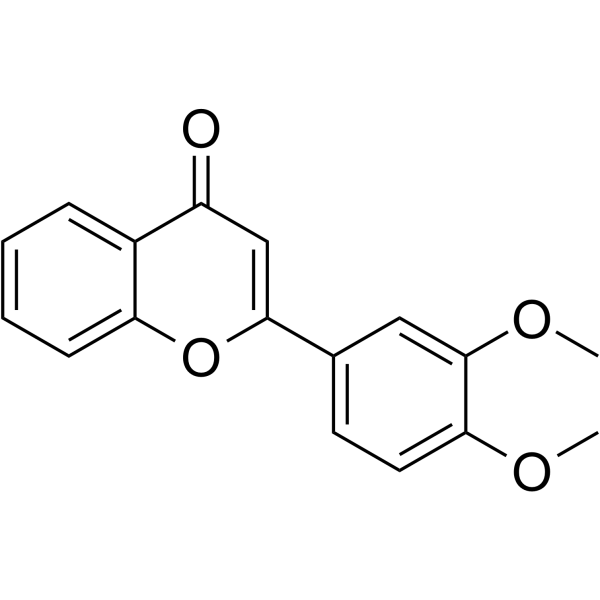
    3',4'-Dimethoxyflavone
    1 Publications Verification

    PARP Reactive Oxygen Species (ROS) Aryl Hydrocarbon Receptor Cardiovascular Disease Neurological Disease Inflammation/Immunology Cancer
    3',4'-Dimethoxyflavone is a lipophilic flavone, can be isolated from the leaves of Primula veris. 3',4'-Dimethoxyflavone can reduce the synthesis and accumulation of PARP and protect cortical neurones against cell death induced by Parthanatos. 3',4'-Dimethoxyflavone is also an aryl hydrocarbon receptor antagonist in human breast cancer cells. 3',4'-Dimethoxyflavone can promote the proliferation of human hematopoietic stem cells. 3',4'-Dimethoxyflavone has various biological activities, including antioxidant, anti-cancer, anti-inflammatory, anti-atherogenic, hypolipidaemic, and neuroprotective or neurotrophic effects .
    3',4'-Dimethoxyflavone
  • HY-141867

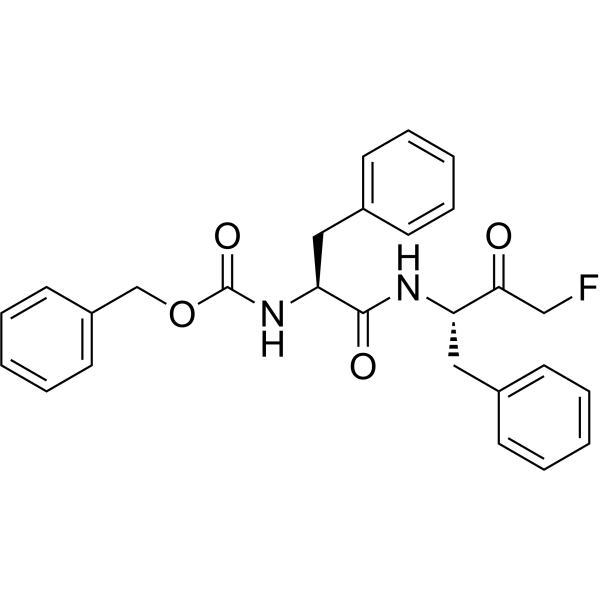
    Z-Phe-Phe-FMK

    Cathepsin MEK Caspase DNA/RNA Synthesis Apoptosis Cardiovascular Disease Neurological Disease
    Z-FF-FMK (Z-Phe-Phe-FMK) is a cell-permeable, irreversible, and cysteine protease inhibitor targeting cathepsin-L. Z-FF-FMK inhibits angiotensin II-induced MEK activation in vascular walls, aortic medial remodeling, blood pressure elevation, and upregulation of cystatin C in aortic walls. Z-FF-FMK prevents β-amyloid-mediated caspase-3 activation, poly (ADP-ribose) polymerase cleavage, DNA fragmentation, and apoptosis of cortical neurons (apoptosis). Z-FF-FMK can be used in research related to hypertension and Alzheimer's disease .
    Z-FF-FMK
  • HY-107712

    iGluR Neurological Disease
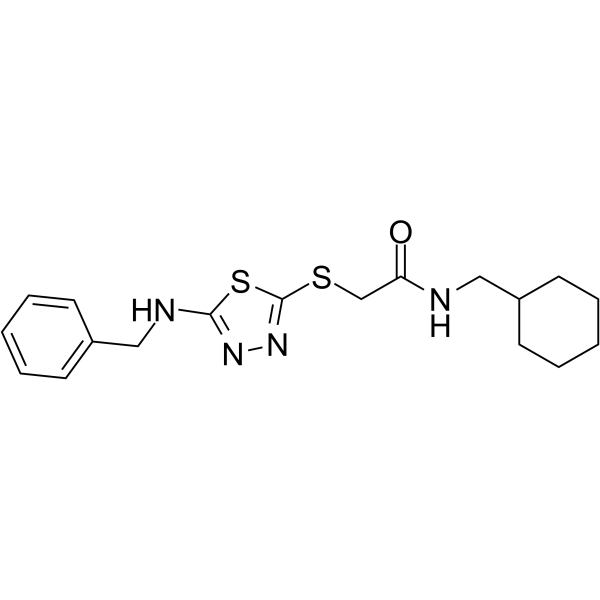
    TCN 213 is a selective, surmountable, glycine-dependentlly GluN1/GluN2A NMDAR antagonist with IC50s of 0.55, 3.5, 40 μM in the presence of 75, 750, 7500 nM glycine, respectively. TCN 213 can be used to monitor, pharmacologically, the switch in NMDAR expression in developing cortical neurones .
    TCN 213
  • HY-N8572R

    Reference Standards PARP Reactive Oxygen Species (ROS) Aryl Hydrocarbon Receptor Cardiovascular Disease Neurological Disease Inflammation/Immunology Cancer
    3',4'-Dimethoxyflavone is a lipophilic flavone, can be isolated from the leaves of Primula veris. 3',4'-Dimethoxyflavone can reduce the synthesis and accumulation of PARP and protect cortical neurones against cell death induced by Parthanatos. 3',4'-Dimethoxyflavone is also an aryl hydrocarbon receptor antagonist in human breast cancer cells. 3',4'-Dimethoxyflavone can promote the proliferation of human hematopoietic stem cells. 3',4'-Dimethoxyflavone has various biological activities, including antioxidant, anti-cancer, anti-inflammatory, anti-atherogenic, hypolipidaemic, and neuroprotective or neurotrophic effects .
    3',4'-Dimethoxyflavone (Standard)
  • HY-16713

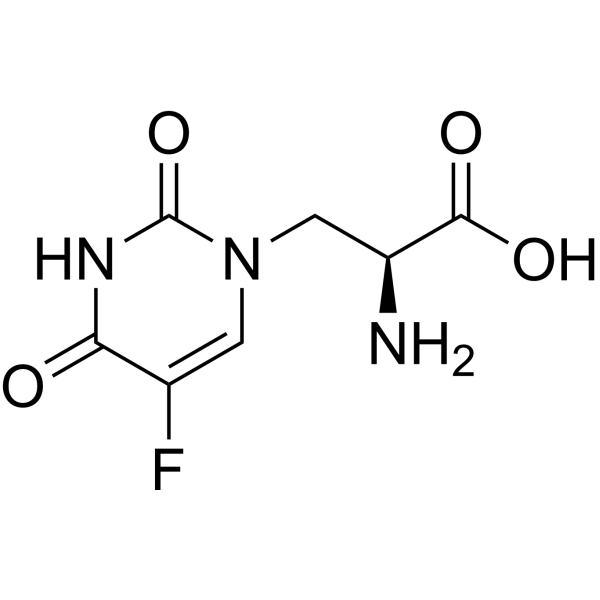
    (5S)-Fluorowillardiine; (S)-5-Fluorowillardiine

    iGluR Neurological Disease
    (S)-(-)-5-Fluorowillardiine ((5S)-Fluorowillardiine; (S)-5-Fluorowillardiine) is a potent, highly selective non-NMDA ionotropic glutamate receptor (iGluR, AMPA/Kainate receptor) agonist . (S)-(-)-5-Fluorowillardiine activates high-affinity AMPA-preferring receptors (EC50 = 0.70 μM) and low-affinity kainate-preferring receptors (EC50 = 170 μM), thereby inducing biphasic dose-dependent neurotoxicity/excitotoxicity. (S)-(-)-5-Fluorowillardiine is applicable to research related to schizophrenia, temporal lobe epilepsy, and bipolar disorder .
    (S)-(-)-5-Fluorowillardiine

Inquiry Online

Your information is safe with us. * Required Fields.

Salutation


Country or Region *

Applicant Name *


Organization Name *

Department *


Email Address *


Product Name *

Cat. No.


Requested quantity *

Phone Number *


Remarks

Inquiry Online

Inquiry Information

Product Name:
Cat. No.:
Quantity:
MCE Japan Authorized Agent:

