




1. Search Result
Search Result
Results for "

demyelinating disease

" in MedChemExpress (MCE) Product Catalog:

8

Inhibitors & Agonists

2

Peptides

2

Inhibitory Antibodies

Cat. No. Product Name Target Research Areas Chemical Structure
  • HY-108831A
    Natalizumab (Anti-CD49d)
    3 Publications Verification

    AN100226; BG00002

    Integrin Inflammation/Immunology Cancer
    Natalizumab (Anti-CD49d) (AN100226; BG00002) Solution is a humanized monoclonal IgG4 antibody inhibitor that selectively targets α4 integrin (CD49d), blocking the interaction of integrins such as α4β1 (VLA-4) with vascular cell adhesion molecule VCAM-1, intercellular adhesion molecule ICAM-1, and fibronectin by competitively binding to the α4 subunit. Natalizumab solution inhibits the adhesion, retention, and transendothelial migration of immune cells (such as CD4 + T cells), reducing the infiltration of inflammatory cells into the central nervous system or lesion sites, thereby exerting anti-inflammatory and immunomodulatory activity. Natalizumab (Anti-CD49d) solution is used in the study of relapsing-remitting multiple sclerosis (RRMS) and is also applied in the research of autoimmune or inflammation-related diseases such as Crohn's disease, B-cell lymphoma, and non-infectious uveitis. Natalizumab (Anti-CD49d) can also prevent lymphocytes from entering the central nervous system, thus preventing acute demyelinating relapses .
    Natalizumab (Anti-CD49d)
  • HY-125222

    Dynamin Others
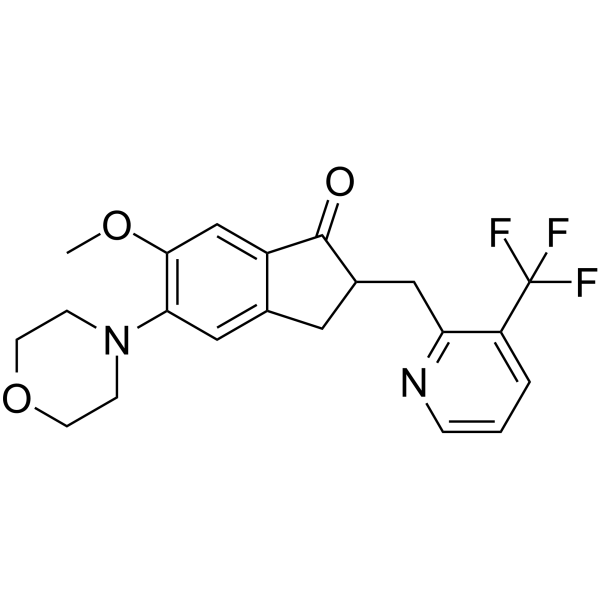
    Drp1-IN-1 is a dynamin-1-like protein (Drp1) inhibitor with an IC50 of 0.91 μM. Drp1 mediates the fission of the outer mitochondrial membrane. Drp1-IN-1 can be used to study diseases associated with mitochondrial dysfunction .
    Drp1-IN-1
  • HY-108831
    Natalizumab
    3 Publications Verification

    Integrin Inflammation/Immunology Cancer
    Natalizumab (AN100226; BG00002) is a humanized monoclonal IgG4 antibody inhibitor that selectively targets α4 integrin (CD49d). It blocks the interaction of integrins such as α4β1 (VLA-4) with vascular cell adhesion molecule VCAM-1, intercellular adhesion molecule ICAM-1, and fibronectin by competitively binding to the α4 subunit. Natalizumab inhibits the adhesion, retention, and transendothelial migration of immune cells (such as CD4 + T cells), reducing the infiltration of inflammatory cells into the central nervous system or lesion sites, thus exerting anti-inflammatory and immunomodulatory activity. Natalizumab is used in the study of relapsing-remitting multiple sclerosis (RRMS) and also has applications in the study of autoimmune or inflammation-related diseases such as Crohn's disease, B-cell lymphoma, and non-infectious uveitis. Natalizumab can also prevent lymphocytes from entering the central nervous system, thereby preventing acute demyelinating relapses .
    Natalizumab
  • HY-170035

    C18 Glucosyl(β) ceramide (d18:1/18:0); D-glucosyl-β-1,1' N-stearoyl-D-erythro-sphingosine

    Fungal Wnt β-catenin Infection Neurological Disease Cancer
    GlcCer (d18:1/18:0) (C18 Glucosyl(β) ceramide (d18:1/18:0)) is a glycosphingolipids that activates the Wnt/β-catenin pathway by targeting LRP6. GlcCer (d18:1/18:0) drives EMT, migration, invasion and GBA1-mediated liver cancer metastasis. GlcCer (d18:1/18:0) accumulates to impair lysosomal function and induce toxic α-synuclein aggregation. GlcCer (d18:1/18:0) supports growth, sporulation, germination and virulence in Penicillium digitatum. GlcCer (d18:1/18:0) is reduced in demyelinated mouse corpus callosum. GlcCer (d18:1/18:0) can be used for the research of liver cancer, synucleinopathies, fungal, Parkinson’s disease and Gaucher disease .
    GlcCer (d18:1/18:0)
  • HY-107901

    PPAR Cardiovascular Disease Metabolic Disease
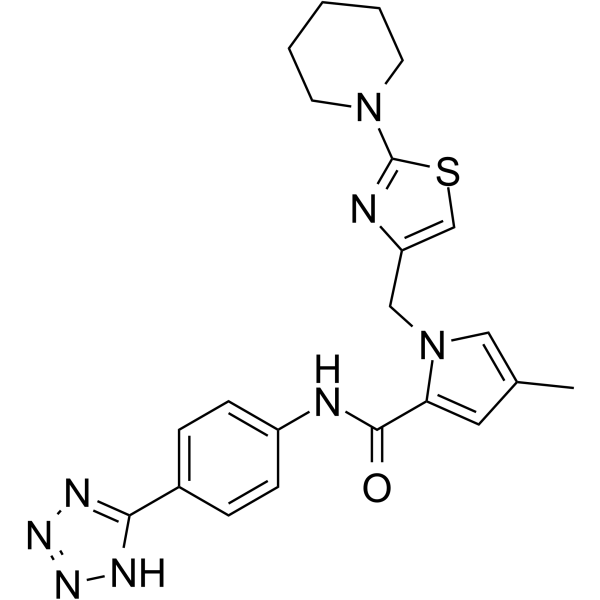
    Pparδ agonist 1 is a PPAR-δ agonist, with an EC50 of 5.06 nM, used in the research of PPAR-delta related diseases, such as mitochondrial diseases, muscular diseases, vascular diseases, demyelinating diseases and metabolic diseases.
    Pparδ agonist 1
  • HY-125313

    Orphan GPCR Cardiovascular Disease Inflammation/Immunology
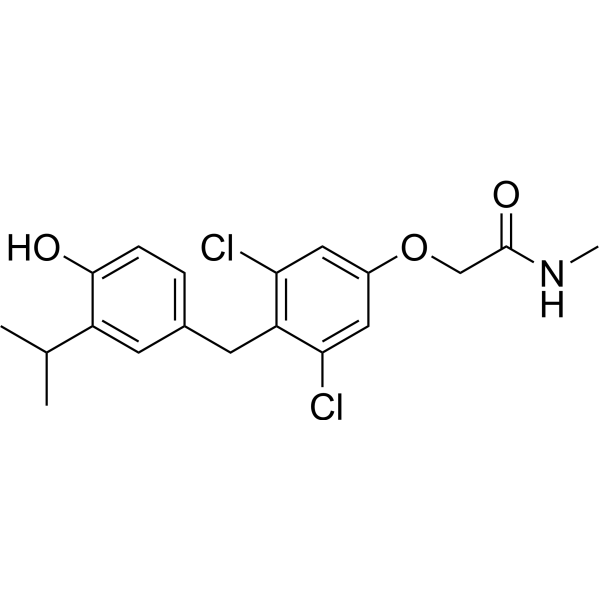
    PSB-1737 is a human-selective GPR17 agonist with an EC50 for human GPR17 of 270 nM, and its activity on murine GPR17 is relatively weak (EC50 > 10 μM). PSB-1737 shows no significant inhibition at the glycine binding site of NMDA receptors, and has no significant agonistic or antagonistic activity on P2Y receptor subtypes. PSB-1737 can be used in demyelinating diseases (such as multiple sclerosis) or inflammatory-related anemia .
    PSB-1737
  • HY-115777

    ROR Neurological Disease
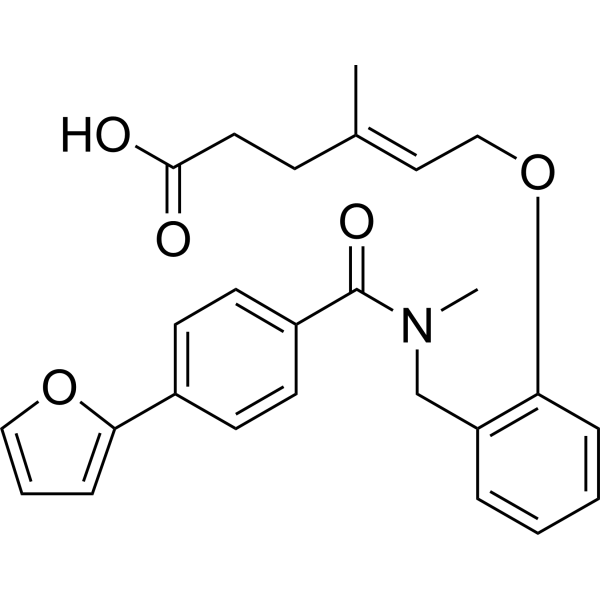
    ARN-6039 is an orally available inverse agonist of RORγ for autoimmune demyelinating disease.
    ARN-6039
  • HY-176784

    Others Neurological Disease Inflammation/Immunology
    Human MOG-specifying DNA is located at chromosome 6 within the human leukocyte antigen (HLA) gene locus. Human MOG-specifying DNA is exclusively expressed in the central nervous system (CNS) on the surface of myelin sheaths and oligodendrocytes (ODCs) processes, with unique methylation patterns in ODCs. Human MOG-specifying DNA can be used for inflammatory demyelinating diseases such as multiple sclerosis (MS) research .
    Human MOG-specifying DNA

Inquiry Online

Your information is safe with us. * Required Fields.

Salutation


Country or Region *

Applicant Name *


Organization Name *

Department *


Email Address *


Product Name *

Cat. No.


Requested quantity *

Phone Number *


Remarks

Inquiry Online

Inquiry Information

Product Name:
Cat. No.:
Quantity:
MCE Japan Authorized Agent:

